Категории
A blanket order that looks like a good deal on paper can become the most expensive purchase of the year — if the material does not survive your actual use conditions. We have seen buyers order 5,000 wool blend blankets for a shelter program, only to discover the wool felts and shrinks after the first hot-water wash. The mismatch almost always comes from choosing a material by name alone, without checking the fibre ratio, GSM, construction, or care requirements. This guide compares five blanket materials — wool, polyester flannel, Raschel, cotton blend, and recycled rPET — so you can match the right material to your use case before placing a wholesale order.
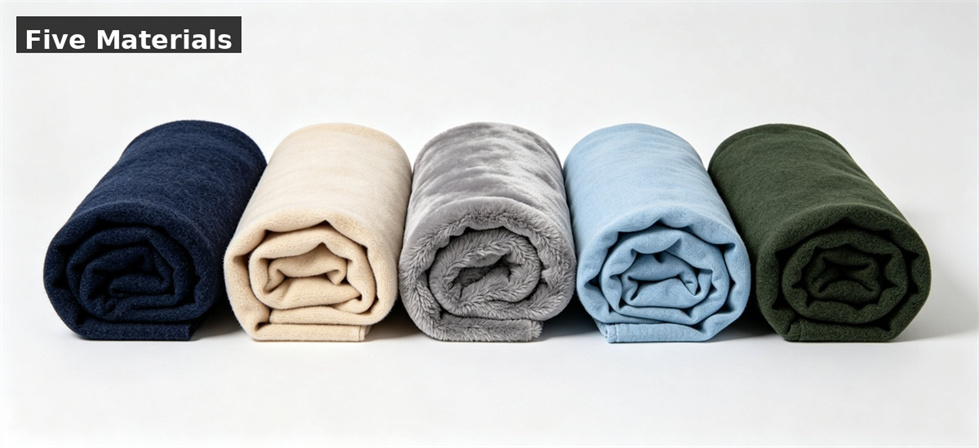
Before comparing prices or GSM, understand what each name means. A material name alone does not tell you the quality — the fibre ratio, construction, and finish do.
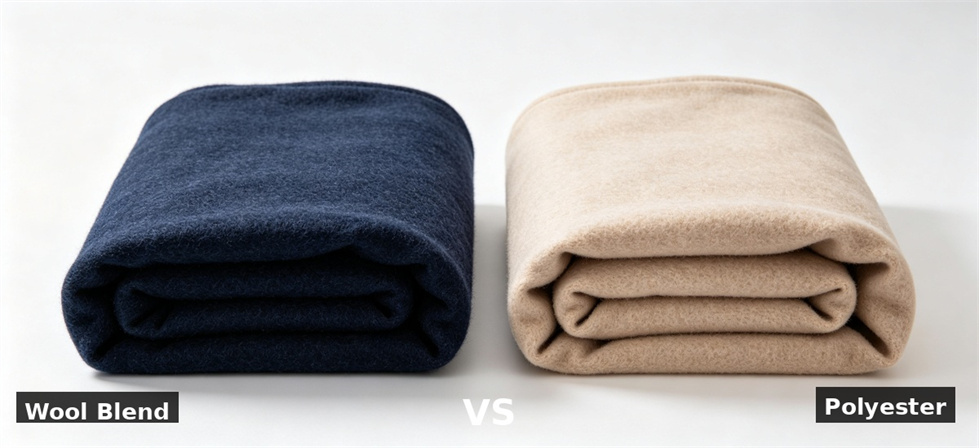
Wool blend is a combination of wool and synthetic fibre. The wool percentage matters more than the word "wool" on the label. A 5% wool blend is legally allowed to say "wool blend" but performs very differently from a 30% wool blend.
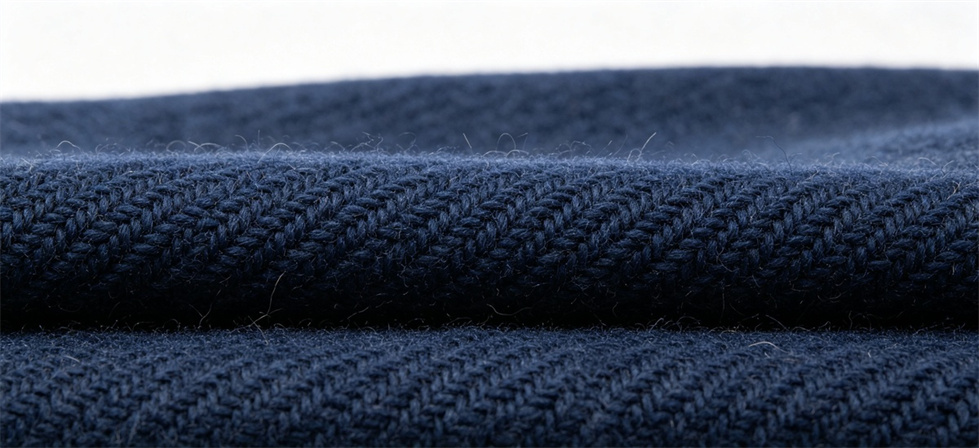
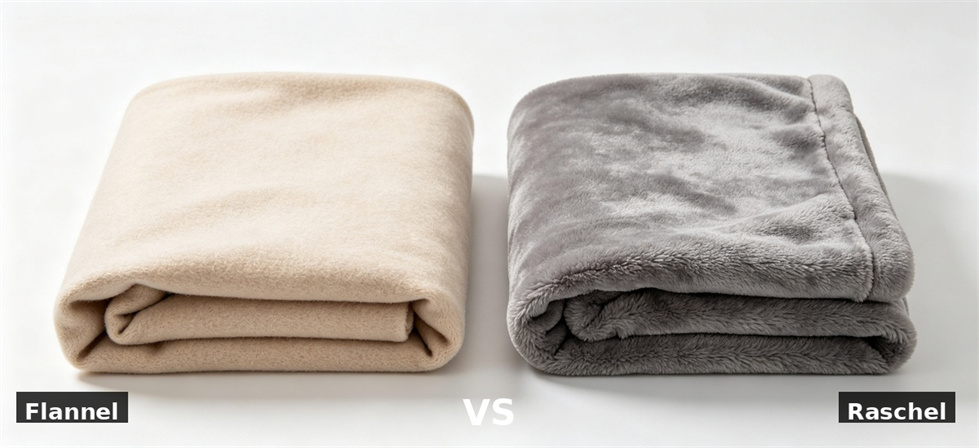
Polyester flannel is 100% polyester with a brushed surface on one or both sides. It is the most common institutional blanket material because it is affordable, durable, and easy to wash.
Raschel describes a knitting construction, not a fibre type. Raschel blankets are thick and plush, but the fibre content can be 100% polyester or a blend. Always ask for the composition separately — "Raschel" alone does not tell you what is inside.
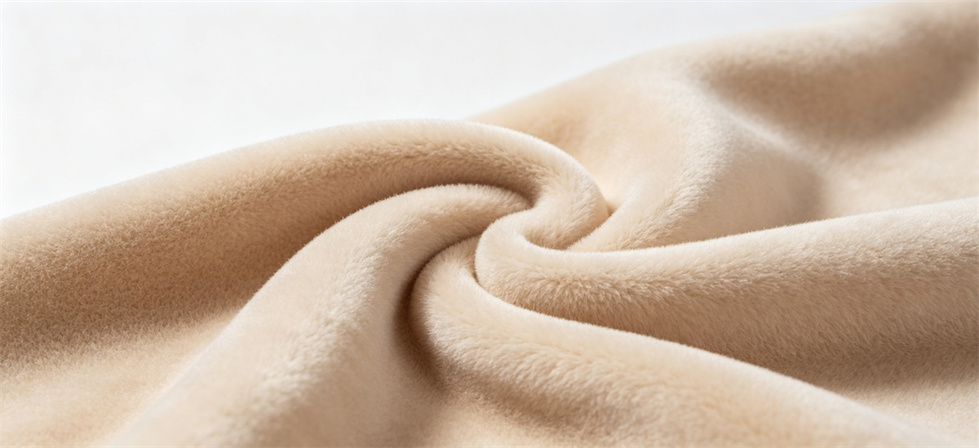
Cotton blend combines cotton with polyester for breathability and natural feel. It is less common in emergency relief because of shrinkage and lower durability, but works well for mild-climate indoor shelters.
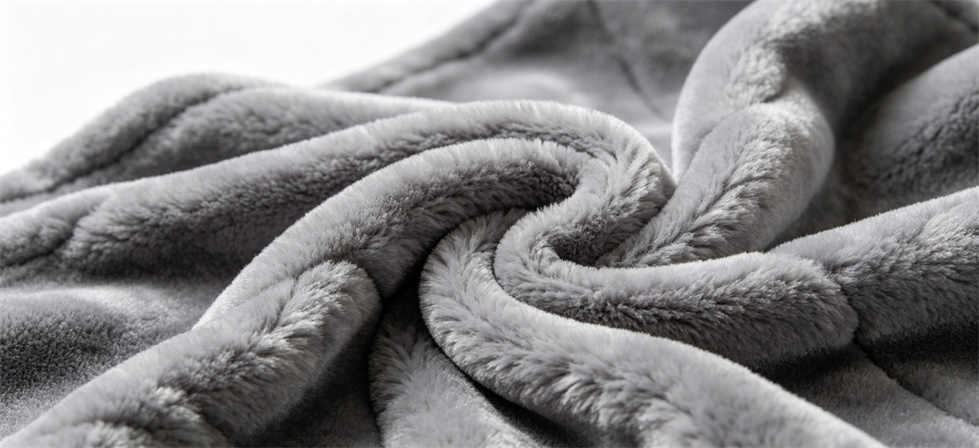
Recycled rPET is made from recycled plastic bottles (polyethylene terephthalate). It has the same durability as virgin polyester but with a lower environmental footprint. rPET blankets are increasingly requested by NGOs and government programs with sustainability targets. Look for GRS (Global Recycled Standard) certification if the recycled content claim matters for your project.
100% wool is rare in bulk relief procurement because of cost and care requirements. Most "wool blankets" in the institutional market are wool blends.
|
Material |
Typical Composition |
GSM Range |
Feel |
Durability |
Best For |
|
Wool Blend |
20–50% wool + polyester |
600–1000 GSM |
Warm, slightly textured |
Good with proper care |
Cold climate, long-term use |
|
Polyester Flannel |
100% polyester, brushed |
200–400 GSM |
Soft, smooth |
Excellent, washable |
Institutional, reserve stock, frequent use |
|
Raschel |
Usually 100% polyester knit |
400–800 GSM |
Thick, plush, fuzzy |
Moderate, pills with heavy use |
Cold weather, gift/retail, occasional use |
|
Cotton Blend |
50–80% cotton + polyester |
250–500 GSM |
Breathable, natural feel |
Moderate, shrinks with wash |
Indoor shelter, mild climate |
|
Recycled rPET |
100% recycled polyester |
200–350 GSM |
Soft, similar to virgin polyester |
Good, washable |
Sustainability-focused programs, general relief |
These ranges are industry averages. Always confirm the exact specification with your supplier — a 300 GSM flannel from one factory may feel different from a 300 GSM flannel from another due to yarn quality and brushing depth.
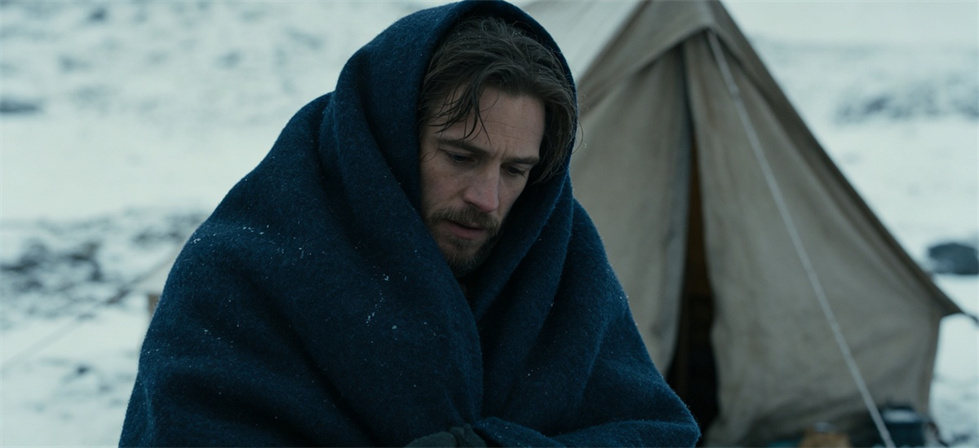
Step 1 — What is the indoor temperature? Below 0°C → wool blend. 0–10°C → wool blend or Raschel. 10–20°C → polyester flannel. Above 20°C → polyester flannel or rPET.
Step 2 — Will the blankets be washed frequently? Yes (50+ times) → polyester flannel with anti-pilling treatment. No or occasional → any material works.
Step 3 — Is shipping volume a concern? Yes → lower GSM polyester or rPET, vacuum packed. No → wool blend or Raschel for maximum warmth.
Step 4 — Does the project require sustainability certification? Yes → rPET with GRS certification. No → choose by temperature and wash needs.
Emergency relief and institutional blanket buyers often ask about flame retardant (FR) treatment. Polyester and rPET are inherently less flammable than cotton or wool, but none of these materials meet a formal FR standard without additional treatment. If your project requires FR certification (such as California TB 117 or EN ISO 12952), specify it in the purchase order — FR treatment adds cost and may change the feel of the blanket. Wool has natural fire-resistant properties (it self-extinguishes and does not melt), which is why wool blend is sometimes preferred for high-risk shelters even without formal FR treatment.
|
Material |
Approx. tog (200 GSM) |
Breathability |
Moisture absorption |
Allergy note |
|
Wool blend |
3.0–4.0 tog |
High |
Absorbs up to 30% of weight |
Lanolin in wool may irritate sensitive skin; test before large orders |
|
Polyester flannel |
1.5–2.5 tog |
Low–moderate |
Low — wicks but does not absorb |
Hypoallergenic; rare reactions |
|
Raschel |
2.5–3.5 tog |
Low |
Low |
Hypoallergenic; plush surface may trap dust mites |
|
Cotton blend |
1.0–2.0 tog |
Very high |
Absorbs up to 25% of weight |
Hypoallergenic; natural fibre |
|
Recycled rPET |
1.5–2.5 tog |
Low–moderate |
Low — same as virgin polyester |
Hypoallergenic; verify no chemical residue from recycling process |
Tog measures thermal insulation — higher tog means warmer. A 300 GSM polyester flannel blanket is approximately 2.0–2.5 tog, while a 600 GSM wool blend blanket can reach 4.0 tog. For reference, a typical household duvet is 7–10 tog. Blanket tog values are lower because blankets are used over other bedding layers.
|
Indoor temperature |
Recommended material |
Recommended GSM |
Notes |
|
Below 0°C |
Wool blend |
800–1000 |
Warmth per gram is highest; pair with sleeping bag |
|
0–10°C |
Wool blend or Raschel |
600–800 |
Raschel if budget is tight; wool if durability matters |
|
10–20°C |
Polyester flannel |
250–350 |
Standard for most NGO and government programs |
|
Above 20°C |
Polyester flannel or rPET |
200–250 |
Lightweight; breathability matters more than warmth |
|
Mild climate indoor |
Cotton blend or rPET |
200–300 |
Natural feel; accept 3–5% shrinkage for cotton |
|
Material |
Expected wash cycles |
Wash temp |
Key weakness |
|
Polyester flannel (anti-pilling) |
50–100 |
Up to 60°C |
Pilling if no anti-pilling treatment |
|
Recycled rPET |
40–70 |
Up to 60°C |
Similar to polyester; verify GRS content |
|
Cotton blend |
30–50 |
Up to 40°C |
Shrinks 3–5% first wash; wears faster |
|
Raschel |
10–20 |
30°C only |
Plush surface mats and pills with washing |
|
Wool blend |
20–40 (cold wash only) |
30°C max, no tumble dry |
Felts and shrinks with hot water; high-heat drying ruins it |
|
Material |
Storage life (dry conditions) |
Shrinkage after first wash |
Pest / moisture risk |
|
Polyester flannel |
5–8 years |
0–2% |
Low — resists moisture and moths |
|
Recycled rPET |
5–8 years |
0–2% |
Low — same as polyester |
|
Cotton blend |
3–5 years |
3–5% |
Moderate — can mildew if stored damp |
|
Raschel |
3–5 years |
2–4% |
Low — plush surface can compress over time |
|
Wool blend |
2–4 years (with care) |
5–10% if hot-washed |
Moderate — moths and moisture can damage |
Pilling is measured by the ISO 12945-2 standard (Martindale test), rated 1–5 where 5 is no pilling. For institutional use, request a pilling grade of 3 or higher. Colour fastness is measured by ISO 105-C06 (wash fastness) and ISO 105-X12 (rub fastness). For blankets that will be washed frequently, request wash fastness grade 3–4 or higher.
Wool blend blankets are warmer per gram than polyester because wool traps more air. A 600 GSM wool blend can feel as warm as an 800 GSM polyester Raschel. This matters when shipping volume and weight are constrained.
The downside is care. Wool requires cooler washing temperatures and cannot be tumble-dried on high heat. For institutions that wash blankets frequently with hot water and disinfectant, wool blend may felt or shrink over time. Reserve wool blend for cold-climate programs where the warmth benefit outweighs the care cost.
Always ask for the exact wool percentage. A "wool blend" with 5% wool is mostly polyester with a wool label. For genuine cold-weather performance, look for 20% wool or higher.
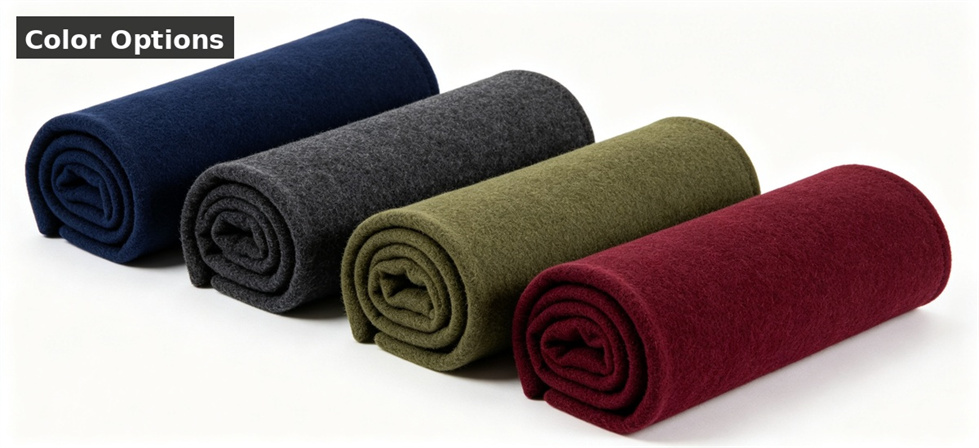
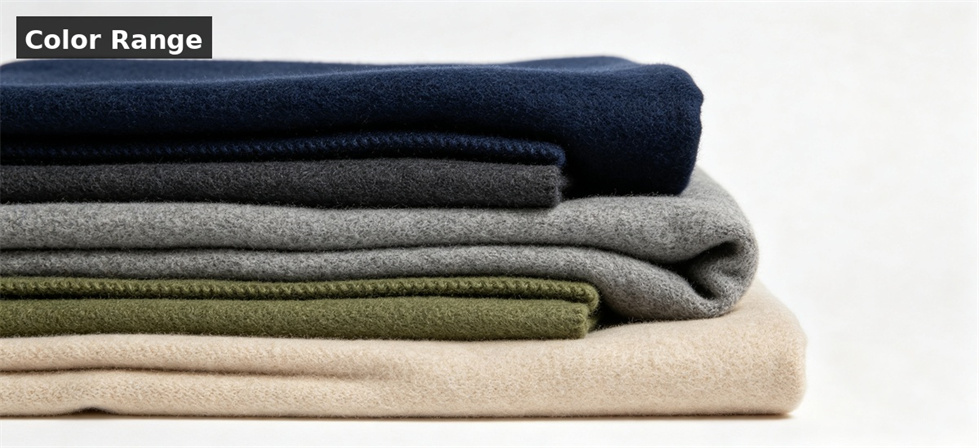
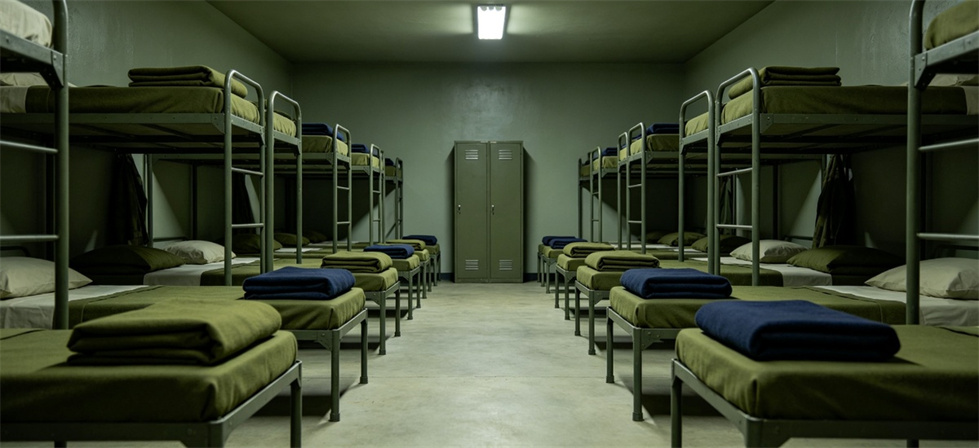
Typical wool blend GSM tiers: 600 GSM (lightweight), 800 GSM (standard), 1000 GSM (heavy cold-weather). The 800 GSM tier is the most common for government and NGO cold-weather programs. Olive green and navy blue are standard colours for military and police dormitory use.
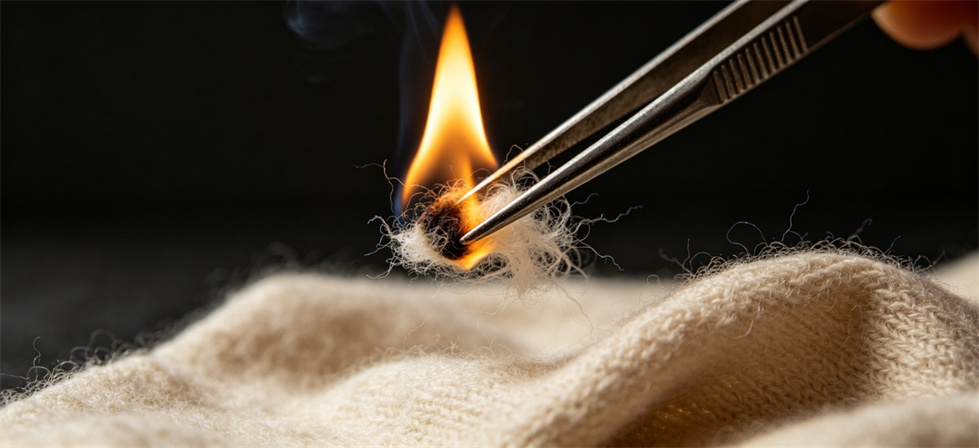
How to verify wool content yourself: Pull a few fibres from an edge and burn them with a lighter. Wool fibres smell like burning hair, curl away from the flame, and leave a crushable black ash. Polyester fibres melt into a hard plastic bead and smell like chemicals. This burn test confirms whether wool is present but cannot tell you the exact percentage — for that you need a lab fibre composition test.
Polyester flannel is the most widely used material for emergency and institutional blankets because it balances cost, durability, and ease of care. It can be washed repeatedly at high temperatures with disinfectant without significant damage.
A 300 GSM double-sided brushed flannel at 150 × 200 cm weighs approximately 900 grams. This is the standard setup for most relief programs. At 180 × 220 cm, the same GSM gives about 1188 grams — the size difference changes the piece weight even though the GSM is the same.
Polyester flannel is not as warm as wool blend at the same GSM, but it is more predictable in production and easier to maintain consistent quality across large orders. For reserve stockpiles that may be stored 3–5 years, polyester resists moisture and pest damage better than wool.
The main weakness is pilling with heavy use. Anti-pilling treatment is available but adds cost. For programs that wash blankets 50+ times, specify anti-pilling yarn in the purchase order.
▶ Sample approval for institutional emergency blanket orders often determines the quality of subsequent bulk production. Our article *Sample Approval Checklist for Institutional Emergency Blanket Orders* covers every verification item from sample receipt to sign-off, ready to use for standardizing your team's workflow.
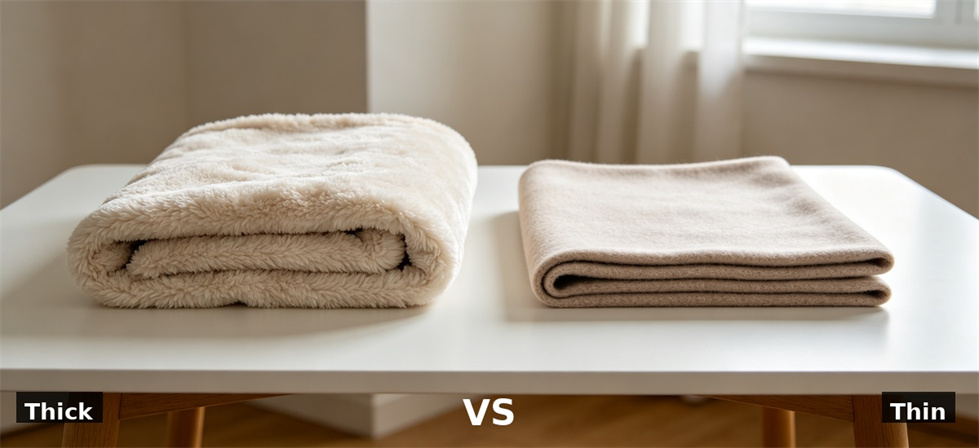
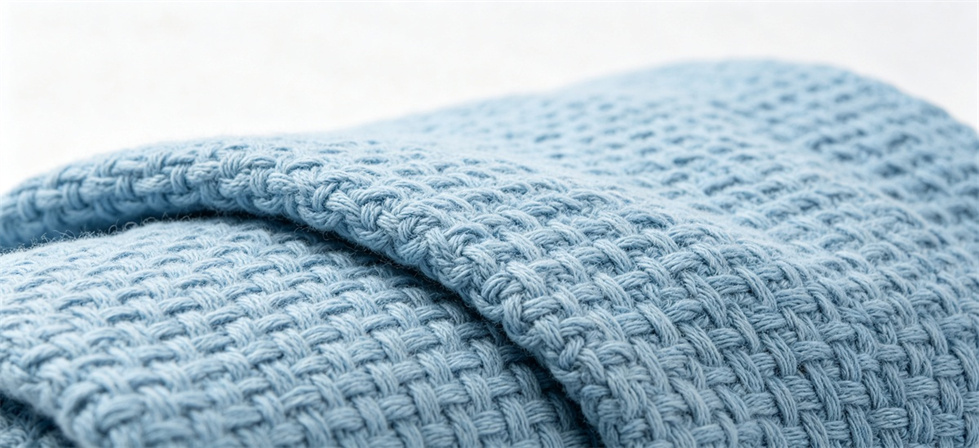
Raschel blankets look thick and luxurious because of the plush knitted construction. The visual thickness can be misleading — a 500 GSM Raschel may look as thick as an 800 GSM wool blend but will not perform the same in cold weather.
Raschel construction uses a knitting method that creates a fuzzy, velvet-like surface. The fibre content is usually 100% polyester, but always confirm. Some suppliers use recycled polyester or lower-grade fibre that pills faster.
Raschel blankets are best for cold-weather occasional use, gift programs, or retail. They are less suitable for frequent institutional washing because the plush surface mats and pills with repeated laundering.
When comparing Raschel quotes, check the knitting density (needles per inch) as well as GSM. Two Raschel blankets at the same GSM can feel very different if one uses a looser knit.
Cotton blend blankets offer a natural, breathable feel that some users prefer over synthetic materials. They are best for mild-climate indoor shelters where comfort is prioritised over maximum durability. Expect 3–5% shrinkage after the first wash, and plan for a shorter service life than polyester.
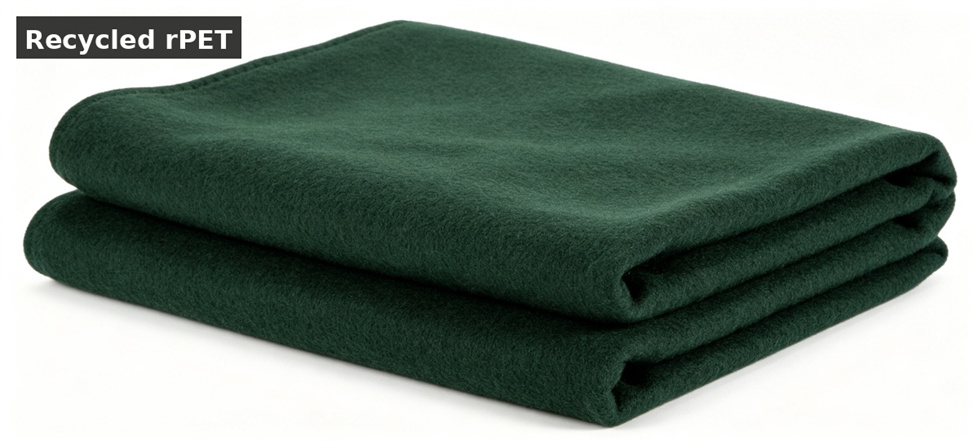
rPET blankets are made from recycled plastic bottles and offer the same durability as virgin polyester with a lower environmental footprint. They are increasingly requested by NGOs, UN agencies, and corporate sustainability programs. If the recycled content matters for your project's reporting, request GRS (Global Recycled Standard) certification from the supplier. OEKO-TEX Standard 100 certification confirms the product is free of harmful substances — useful for programs that require safety documentation, especially when blankets will be used by children or infants in shelters.
|
Project type |
Common certification requested |
Why it matters |
|
UN / international NGO |
GRS (if rPET), OEKO-TEX, ISO 9001 |
Reporting and donor requirements |
|
Government tender |
ISO 9001, flame retardant (if specified) |
Compliance with tender specifications |
|
Children / infant shelter |
OEKO-TEX Standard 100 Class 1 |
Safety for skin contact |
|
Sustainability program |
GRS, bluesign |
Environmental impact reporting |
|
Retail / gift program |
OEKO-TEX, REACH compliance |
Consumer safety regulations |
Static electricity note: Polyester and rPET blankets can build up static in very dry environments (below 30% humidity). This is usually not a problem in emergency shelters, but if your program operates in extremely dry climates, ask the supplier about anti-static treatment. Wool and cotton blend naturally resist static buildup.
 |

|
▶ Ultra‑Soft, Lightweight, Affordable Prices Flannel Blanket Experience ult. Click the title link to view soft‑touch fabric features, weight options, sample policy and delivery timeline for wholesale humanitarian projects.
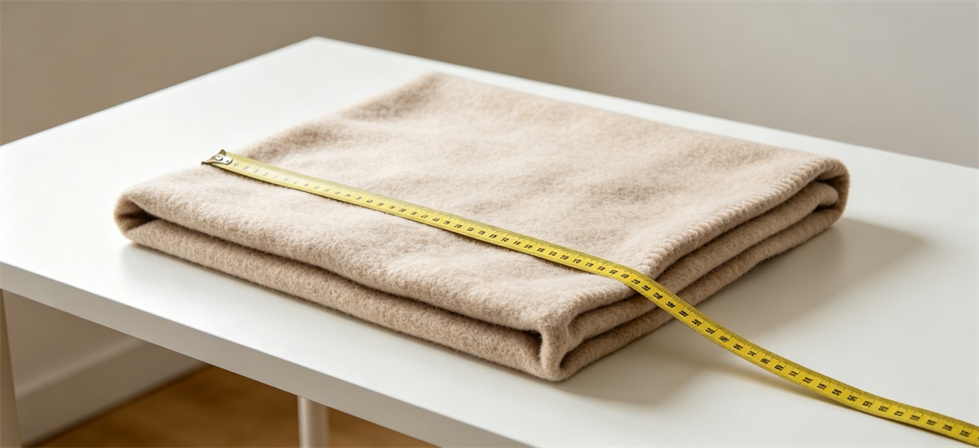
GSM (grams per square metre) tells you the fabric weight, not the finished blanket weight. Two blankets with the same GSM can have different finished weights if the sizes are different.
Example: a 300 GSM blanket at 150 × 200 cm has 3 square metres of fabric, so the theoretical fabric weight is about 900 g. The same 300 GSM at 180 × 220 cm has 3.96 square metres, giving about 1188 g. The larger blanket is not a higher GSM product — it is just bigger.
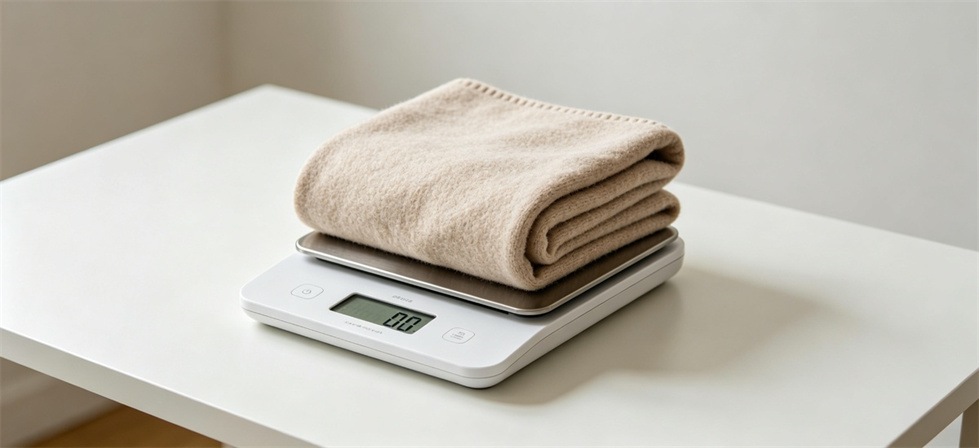
Always compare GSM, finished dimensions, and measured piece weight together on the same quotation line. A supplier who quotes only GSM may be using a smaller size than you expect. Request the measured piece weight from an actual sample, not just the theoretical calculation.
|
Material / GSM |
Pieces per carton |
Carton volume |
Est. pieces per 20ft container |
Notes |
|
Polyester flannel 250 GSM |
20–30 |
0.10–0.12 m³ |
5,000–7,000 |
Most compact; vacuum packing adds 30% |
|
rPET 250 GSM |
20–30 |
0.10–0.12 m³ |
5,000–7,000 |
Same as polyester flannel |
|
Cotton blend 300 GSM |
15–20 |
0.12–0.15 m³ |
3,500–5,000 |
Slightly bulkier than polyester |
|
Raschel 500 GSM |
10–15 |
0.15–0.20 m³ |
2,500–3,500 |
Plush construction takes more space |
|
Wool blend 800 GSM |
8–12 |
0.18–0.22 m³ |
2,000–3,000 |
Heaviest and bulkiest; warmth per kg is best |
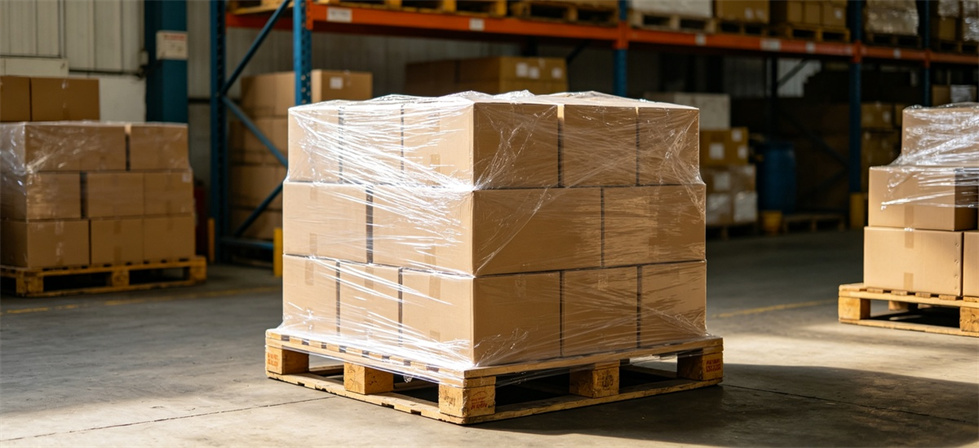
Always confirm actual carton dimensions and pieces per carton with your supplier before calculating container load. Vacuum packing can reduce volume by 30–40% for polyester and rPET, but is less effective for thick Raschel and wool blend.

|
Material |
Recommended packing |
Vacuum packing effective? |
Notes |
|
Polyester flannel |
Compressed bale or carton |
Yes — 30–40% volume reduction |
Best for high-volume shipping |
|
Recycled rPET |
Compressed bale or carton |
Yes — same as polyester |
Same packing as virgin polyester |
|
Cotton blend |
Carton, moderate compression |
Moderate — 20–30% |
Can wrinkle if over-compressed |
|
Raschel |
Loose carton, light compression |
Limited — 10–20% |
Plush surface may not fully recover |
|
Wool blend |
Loose carton, no vacuum |
No — can damage fibres |
Must breathe; store with moth repellent |
The material that looks best in a showroom may not survive institutional use. Here is how the materials typically perform under real conditions:
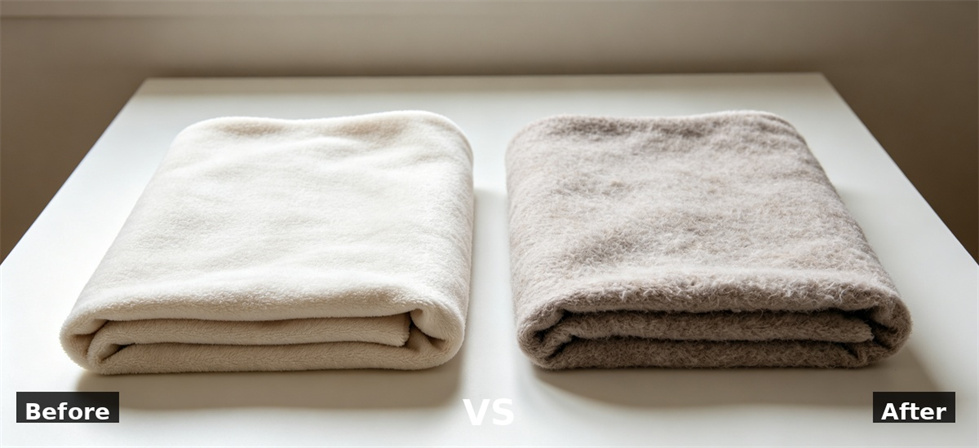
Wool blend: Warm and durable, but sensitive to high-heat washing and drying. Felted wool cannot be restored. Best for programs with controlled laundering or no-wash use.
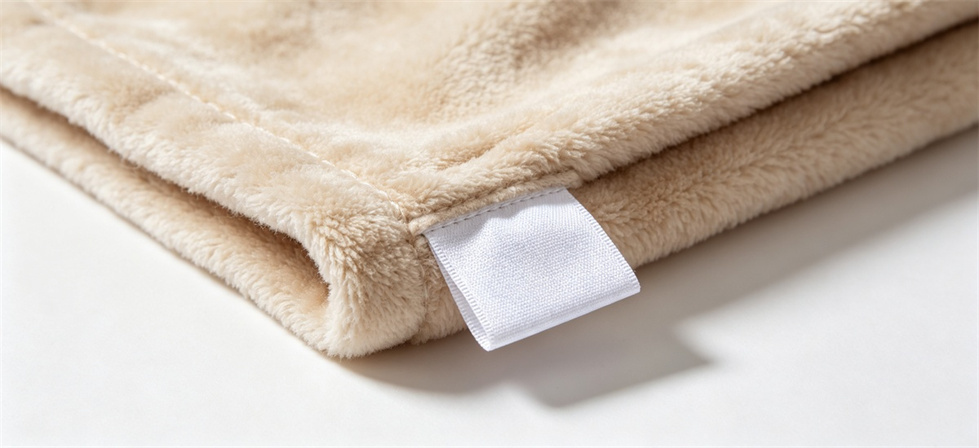
Polyester flannel: The most durable for repeated washing. Can handle 60°C washes and commercial dryers. Expect 50–100 wash cycles before visible wear, depending on GSM and yarn quality.
Raschel: Plush surface mats and pills after 10–20 institutional washes. Best for occasional use or no-wash programs.
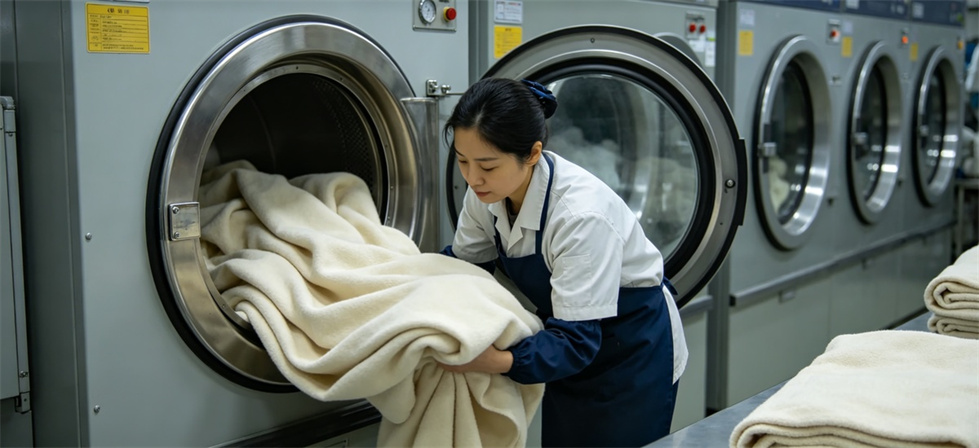
Cotton blend: Breathable and comfortable, but shrinks 3–5% after first wash and wears faster than polyester. Best for mild-climate indoor use.
Recycled rPET: Performs similarly to virgin polyester flannel. Verify the recycled content with GRS certification if it matters for project reporting.
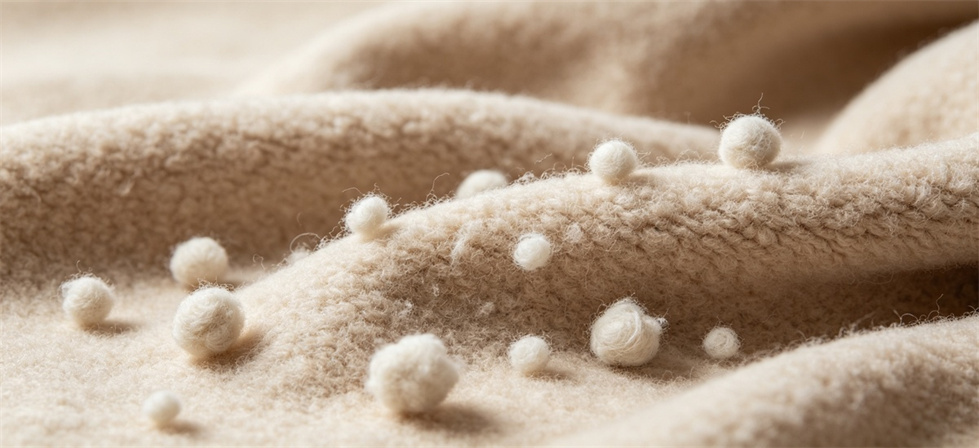
If your program washes blankets, specify the wash method in the purchase order and ask the supplier for a wash test result from the exact product setup you are ordering. A wash test from a different product line does not apply.
|
Material |
Ironing |
Bleach |
Dry cleaning |
|
Polyester flannel |
Low heat only, or no ironing needed |
Non-chlorine bleach only |
Not needed; machine washable |
|
Recycled rPET |
Low heat only |
Non-chlorine bleach only |
Not needed; machine washable |
|
Cotton blend |
Medium heat acceptable |
Chlorine bleach acceptable (may fade colours) |
Optional; machine washable |
|
Raschel |
No ironing — heat damages plush surface |
No bleach — damages fibres |
Not recommended |
|
Wool blend |
No ironing — heat causes felting |
No bleach — damages wool fibres |
Recommended for deep cleaning; use wool-safe solvent |
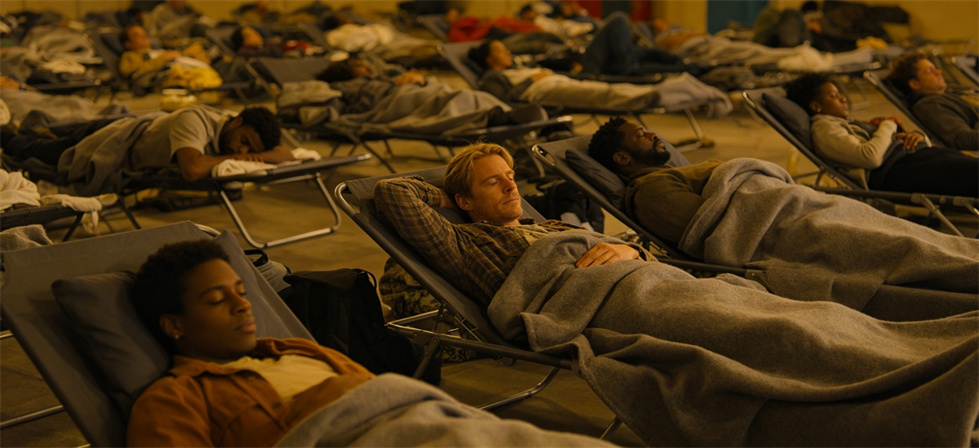
Match the material to the actual conditions, not to a generic "best blanket" idea.
|
Use case |
Recommended material |
Typical buyer |
|
Cold-weather relief (below 0°C) |
Wool blend 800–1000 GSM |
UN agencies, international NGOs |
|
General emergency relief (5–20°C) |
Polyester flannel 250–300 GSM |
Government emergency agencies, NGOs |
|
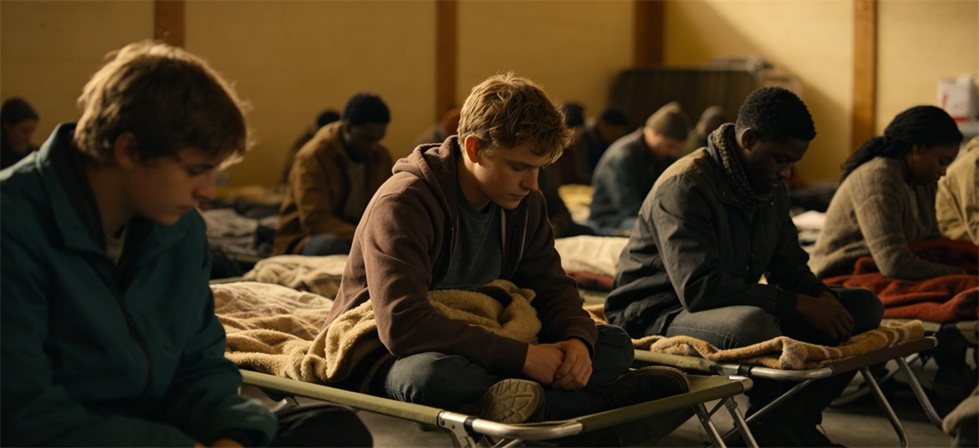
Institutional shelter (frequent washing) |
Polyester flannel 300 GSM anti-pilling |
Homeless shelters, community centres |
|
Military / police dormitory |
Wool blend or polyester flannel, olive/navy |
Defence ministry, police procurement |
|
Long-term reserve stockpile (3–5 years) |
Polyester flannel 200–250 GSM, vacuum packed |
Government civil defence reserves |
|
Indoor community shelter (mild climate) |
Cotton blend or rPET 200–250 GSM |
Local government, community organisations |
|
Sustainability-focused programs |
Recycled rPET with GRS certification |
NGOs with ESG targets, corporate donors |
|
Gift or retail programs |
Raschel 400–600 GSM |
Retail brands, corporate gifting |
Buying by material name only. "Wool blanket" could mean 5% wool or 80% wool. Always get the exact fibre ratio in writing.
Assuming higher GSM means warmer. A 500 GSM Raschel may look thick but a 400 GSM wool blend is actually warmer because wool traps more air. Compare fibre type and GSM together.
Ignoring the care method. A wool blend that gets washed at 90°C will felt and shrink. If your program uses hot-water disinfection, polyester is the practical choice regardless of the warmth benefit of wool.
Using flannel and Raschel interchangeably. They are different constructions. Flannel is a brushed woven or knit fabric; Raschel is a specific plush knit. They pack differently, weigh differently, and wear differently.
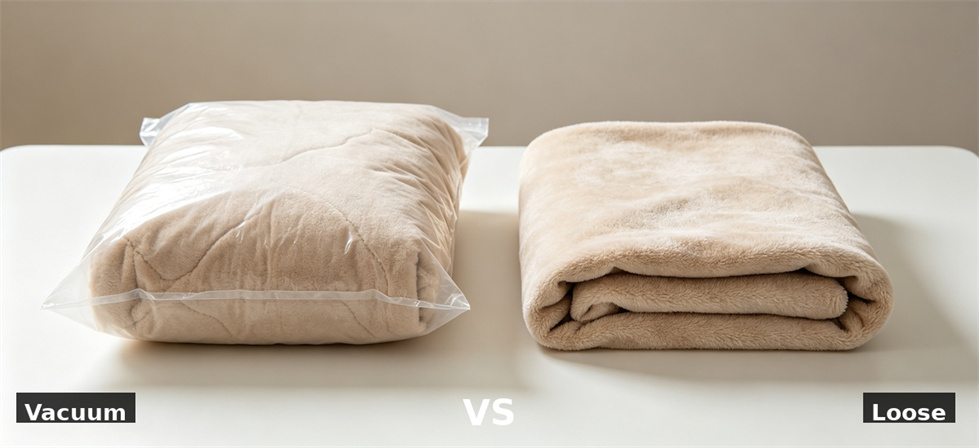
Forgetting the packing volume. A thick Raschel blanket takes 30–50% more container space than a 300 GSM flannel. For programs shipping by sea, the freight cost per blanket may make Raschel more expensive than the unit price suggests.
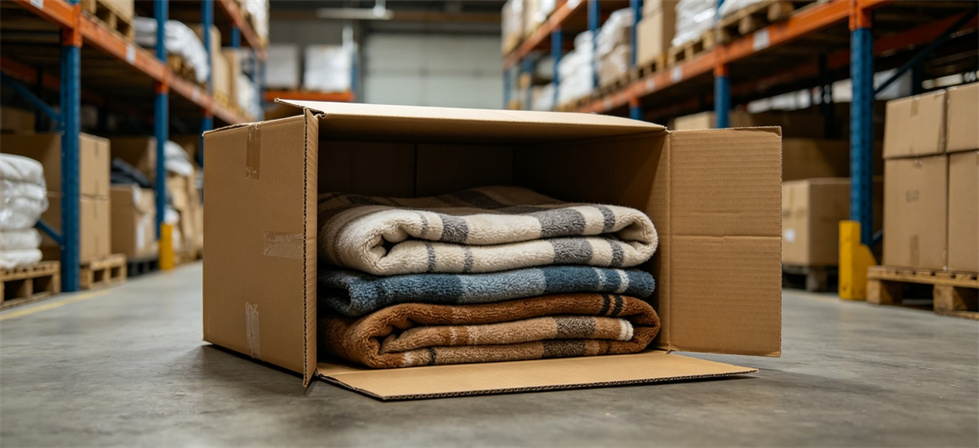
Not verifying recycled content. If you order rPET for a sustainability program, request GRS certification. A supplier may call a product "recycled" without third-party verification.
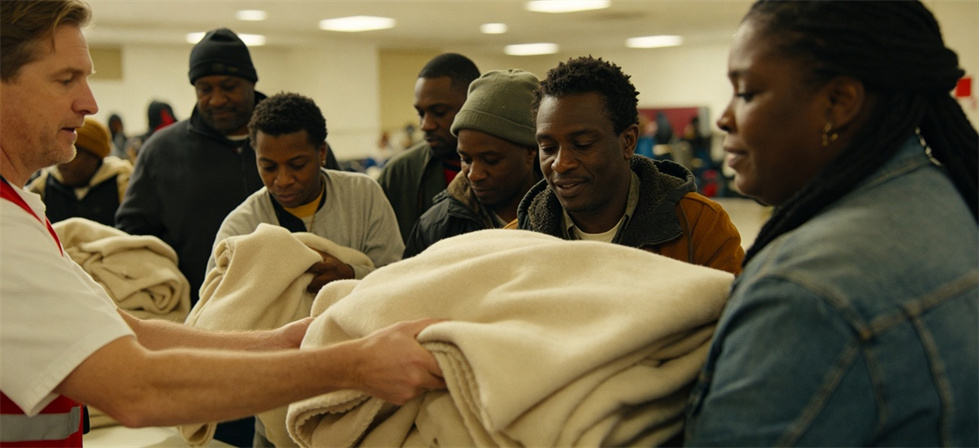
At YRF Textile, we supply all five blanket materials for wholesale and institutional bulk orders: polyester flannel (200–400 GSM), wool blend (600–1000 GSM), Raschel (400–800 GSM), cotton blend, and recycled rPET with GRS certification available. Colours include navy blue, dark grey, and olive green for military and police dormitory use.
|
Customisation |
Polyester / rPET |
Wool blend |
Raschel |
Cotton blend |
|
Logo embroidery |
Yes |
Yes |
Limited (plush surface) |
Yes |
|
Custom colour |
Yes (Pantone match) |
Limited (dye lot variation) |
Yes |
Yes |
|
Custom size |
Yes |
Yes |
Yes |
Yes |
|
Woven label / care label |
Yes |
Yes |
Yes |
Yes |
|
Custom packing |
Yes (vacuum / carton / bale) |
Carton only |
Carton only |
Yes |
|
Order size |
Recommended mix |
Use case |
|
1,000 blankets |
70% polyester flannel 300 GSM + 30% wool blend 800 GSM |
General relief with cold-weather reserve |
|
5,000 blankets |
60% polyester 250 GSM + 25% rPET 250 GSM + 15% wool blend 800 GSM |
Large NGO program with sustainability target |
|
10,000 blankets |
80% polyester 250 GSM + 20% Raschel 500 GSM |
Government stockpile, mixed climate zones |
▶ For institutional procurement requirements such as government material stockpiles, prison accommodation and military camps, we support large‑volume wholesale supply of **emergency relief blankets**. We strictly comply with project technical specifications to guarantee consistent supply capacity. To learn key points for institutional bulk purchasing, please refer to our article *Emergency Disaster Relief Blankets | For Government Stockpiles, Correctional Facility Blankets & Military Camps – Bulk Wholesale Supply*.
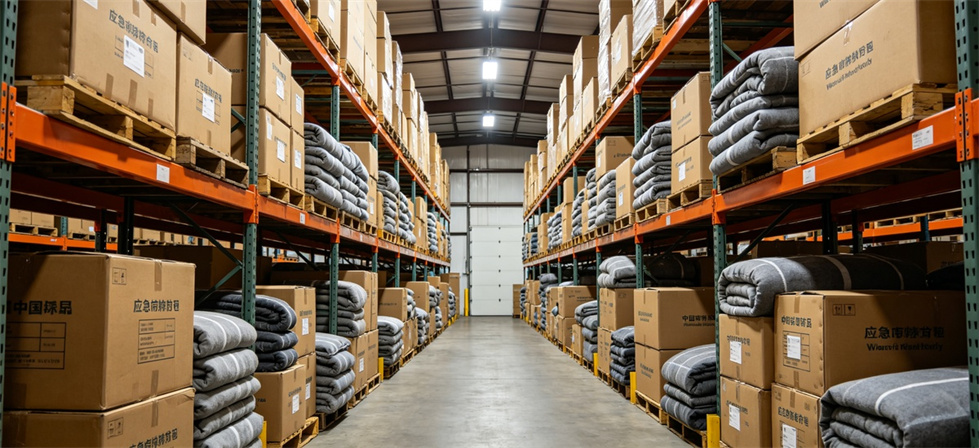
We provide material samples with specification cards showing measured GSM, fibre composition, and piece weight. Before placing a bulk order, read our blanket sample evaluation guide for a step-by-step checklist on how to test and compare material samples. We also offer complementary sleeping bags, foam mattresses, and folding beds for complete shelter kits. View our blanket range or contact us to request a material sample set.
There is no universally best blanket material — there is the right material for your use case. Compare GSM, finished size, and piece weight together, not one in isolation. Polyester flannel is the workhorse for most emergency and institutional blanket programs; wool blend wins for extreme cold; Raschel suits occasional use and gift programs; cotton blend works for mild indoor shelters; and rPET is the choice for sustainability-focused blanket buyers.
Always get the exact fibre ratio in writing, verify it against a physical sample, and factor in washing method, container load, and storage life. The cheapest unit price can become the most expensive wholesale order if the material does not survive your actual use conditions. For end-of-life, polyester and rPET blankets can be recycled through textile recycling programs, while wool blend is biodegradable and can be composted (remove any synthetic labels first). Cotton blend is also biodegradable. Raschel is the hardest to recycle due to its mixed knit construction.
At the same GSM, yes — wool traps more air per gram than polyester. But a 300 GSM wool blend may not be warmer than a 500 GSM polyester Raschel. Compare both fibre type and GSM together, not one in isolation. Wool also has natural fire-resistant properties — it self-extinguishes and does not melt or drip, which is an additional safety benefit in shelter environments.
It means the blanket contains some wool and some synthetic fibre, but the percentage is not standardised. A 5% wool blend can legally be called "wool blend." Always ask for the exact wool percentage — for cold-weather use, 20% wool or higher is recommended.
No. Flannel refers to a brushed surface finish on a woven or knit fabric. Raschel refers to a specific plush knitting construction. They have different textures, packing volumes, and durability profiles. Do not treat them as interchangeable.
Polyester flannel. It withstands high-temperature washing and commercial drying better than wool, cotton, or Raschel. For 50+ wash cycles, specify anti-pilling yarn and double-sided brushing in the purchase order.
Only within the same material. A 300 GSM wool blend and a 300 GSM polyester flannel will not feel or perform the same because the fibre density and construction differ. Use GSM to compare weight tiers within one material line, not across materials.
For most programs in 5–20°C climates, 250–300 GSM polyester flannel offers the best balance of cost, durability, and warmth. It is the standard choice for UN and NGO emergency relief programs worldwide. When calculating total cost, include shipping — a cheaper Raschel blanket may cost more per unit delivered because it takes 30–50% more container space than a compressed polyester flannel.
Yes, significantly. Two Raschel blankets at the same GSM can use different knitting densities, fibre grades, and backing materials. Always request a matched sample and check the knitting density — looser knits pill faster and feel thinner despite the same weight.
Request a fibre composition test report from an accredited lab (such as SGS or Intertek) for the exact product setup. A burn test can identify whether wool is present but cannot determine the percentage. For large orders, a third-party test is worth the cost.
Lower GSM polyester flannel, especially when vacuum packed. A 200 GSM flannel vacuum packed can fit 30–40% more pieces per container than a 500 GSM Raschel. For programs with high shipping costs, the packing density can change the total landed cost more than the unit price.
Can I mix materials in one order?
Yes, and it is often the right approach. Use polyester flannel for general distribution and reserve a smaller quantity of wool blend for cold-weather groups. Keep each material on a separate quotation line with its own sample identity, packing data, and price.
rPET is polyester made from recycled plastic bottles. It has the same durability and wash performance as virgin polyester. The difference is environmental — rPET uses less energy and water in production. If recycled content matters for your project, request GRS certification from the supplier.
Cotton blends are more breathable and feel more natural, but they shrink 3–5% after the first wash and wear faster with repeated laundering. They are best for mild-climate indoor use where comfort is prioritised over maximum durability.
Confirm the fibre composition with a burn test or lab report, measure the actual GSM by weighing a measured specimen, check the surface construction (brushed vs knit), wash a sample using your program's method, and compare the packed volume. For pilling, request the ISO 12945-2 Martindale test result — grade 3 or higher is acceptable for institutional use. A sample that looks good on a table may not survive your actual use conditions.
No. Thickness comes from either fibre density (good) or loose knitting (bad). A loosely knit Raschel may look thick but compress easily and provide less insulation. Check the GSM and knitting density, not just the visual thickness.
We supply polyester flannel, wool blend, Raschel, cotton blend, and rPET blankets with GRS certification available. Request a material sample set with specification cards and we will help you match the right material to your use case.
 |

|
Дружественные ссылки :
авторское право © Custom Disaster - Relief Bedding: Tents, Sleeping Bags, Blankets Все права защищены
профессиональная команда для обслуживания !