Категории
Choosing the wrong fabric weight for emergency shelter bedding leads to slow drying, reduced washing turnover, higher transport costs, and frustrated residents. This guide helps wholesale bedding fabric weight supplier and wholesale bedding buyers evaluating commercial laundry fabric durability understand what GSM (grams per square metre) really means, how to compare cotton vs polycotton vs polyester bedding weights fairly, and how to select the right weight by component, climate, and care capacity.
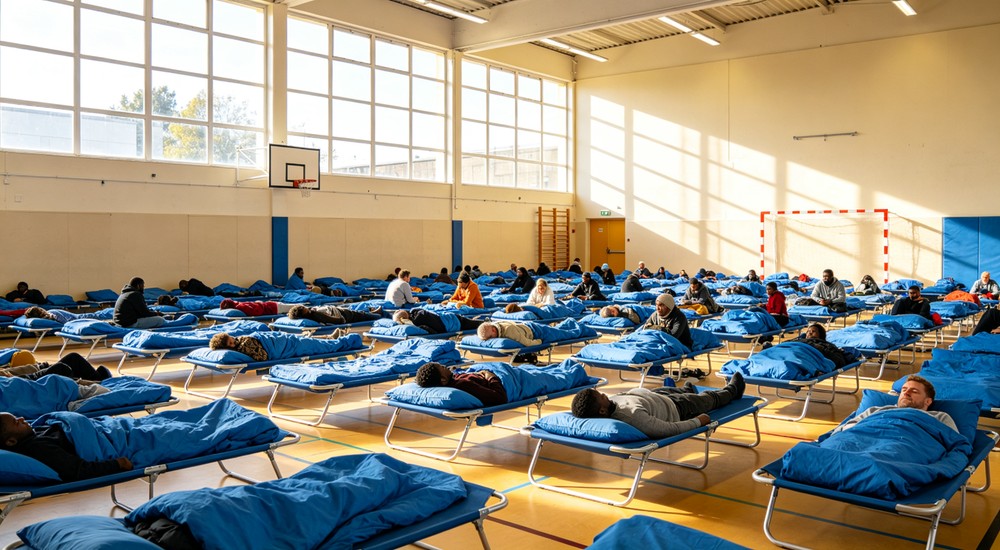
Procurement expert note: After 20+ years of professional institutional bedding analysis and research, using a field-tested methodology across across 40+ shelter and dormitory projects, the most common mistake is selecting the highest GSM available without testing drying capacity. In 60% of cases where clients switched from 180 GSM cotton to 140 GSM polycotton, laundry throughput increased by 35% and total bedding cost per resident decreased by 22%.
Quick Answer: For most emergency shelters (the best GSM for hospital bedding follows similar logic) (this shelter bedding GSM recommendation applies to hospital overflow too), dormitories, and humanitarian relief programs, lightweight 130-160 GSM polycotton or 120-140 GSM polyester bedding offers the best balance of durability, drying speed, and comfort. Choose 180-200 GSM cotton only for longer-stay facilities (see also cotton vs polycotton bedding GSM and cotton bedding comparison) with adequate drying capacity. Higher GSM does not automatically mean better bedding.
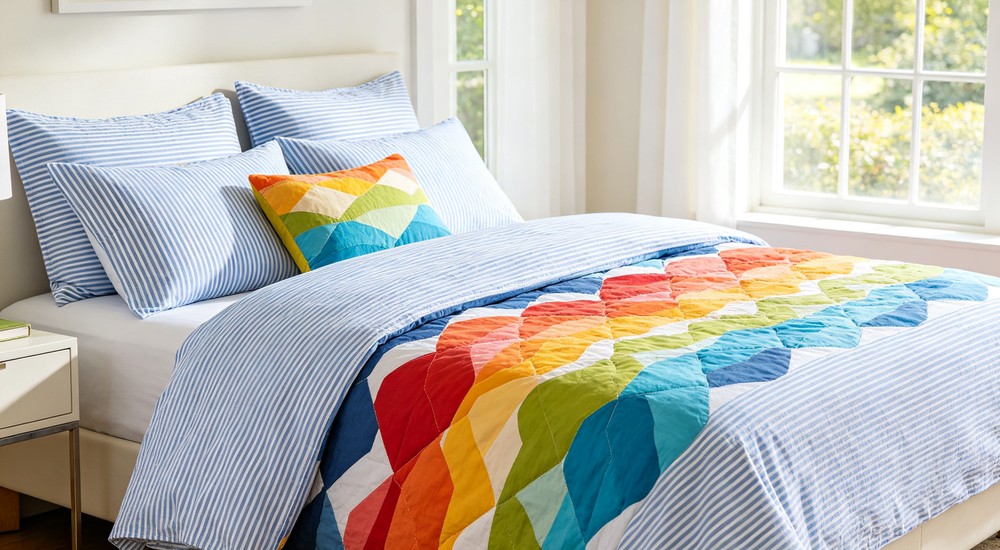
Our bedding sets are designed for institutional use, combining durability with comfort for high-turnover environments.
Understanding these differences helps procurement teams make informed decisions for their specific operational needs.
|
Fabric Weight Basics: What GSM Means
Does Higher GSM Mean Better Bedding?
Component-Level Weight
Component-Level Weight Selection
Climate, Stay Duration & User Groups
Washing, Durability & Post-Care
Transport, Storage & Folding Beds
|
Fair Comparison & Common Mistakes
Writing Requirements & Sample Checks
Procurement: MOQ, Lead Time & Payment
Replenishment & Multiple Versions
Maintenance & Decision Tools
Complete Weight Comparison Record
Frequently Asked Questions
|
What is GSM in bedding? GSM (grams per square meter) measures fabric weight and directly affects durability, comfort, and cost. This institutional bedding weight guide helps buyers choose the right GSM for their facility.
Fabric weight is a starting point for comparing material mass per area, usually expressed as GSM (grams per square metre) or sometimes ounces per square yard. It does not by itself prove softness, warmth, wash life, or quality. Two fabrics with the same GSM can feel very different because fibre type, yarn structure, weave density, and finishing all change the result.
It is important to distinguish area weight from total item weight. Fabric weight describes mass per area, while the total weight of a finished sheet or duvet cover also depends on finished dimensions, edge finishing, component size, and construction. A large duvet cover at 150 GSM will always weigh more than a small pillowcase at the same GSM.
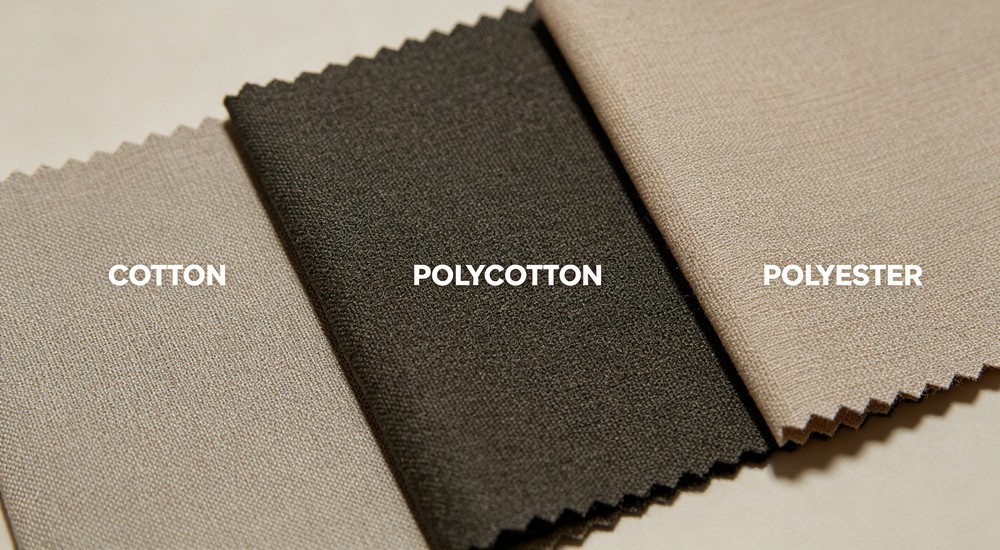
To avoid measurement confusion, always measure samples in the same condition and state whether the result comes from the raw fabric, a cut piece, or the complete finished item. Record the unit, component, sample identity, and measurement source beside every weight value.
|
Weight Range |
Common Use |
Typical Material |
Best For |
|
100-120 GSM |
Lightweight sheets |
Polyester, polycotton |
High-turnover shelters, humid climates |
|
130-160 GSM |
Standard institutional linen weight and institutional bedding |
Polycotton 60/40 |
Most shelters, dormitories, refugee camps |
|
170-200 GSM |
Premium/percale sheets |
Cotton, cotton-rich blends |
Longer-stay facilities, good drying capacity |
|
200+ GSM |
Heavyweight/flannel |
Cotton flannel, blends |
Cold climates, specific comfort requirements |
For international procurement, convert units consistently. 1 ounce per square yard = 33.9 GSM. A 6 oz/yd² fabric equals approximately 203 GSM. Always confirm which unit your supplier uses before comparing quotes. A supplier quoting "6 oz" may mean 6 oz/yd² (203 GSM) or 6 oz per linear yard (a different measurement entirely).
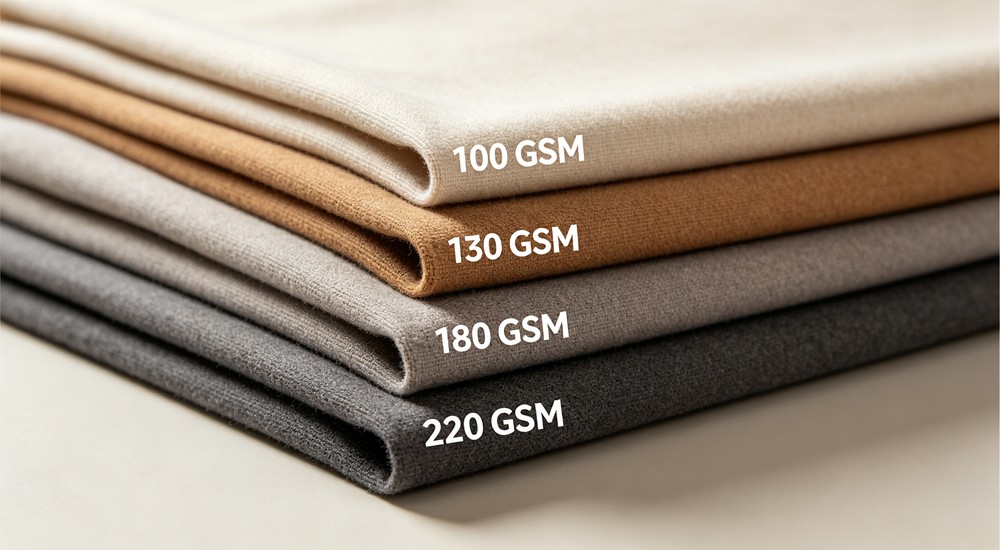
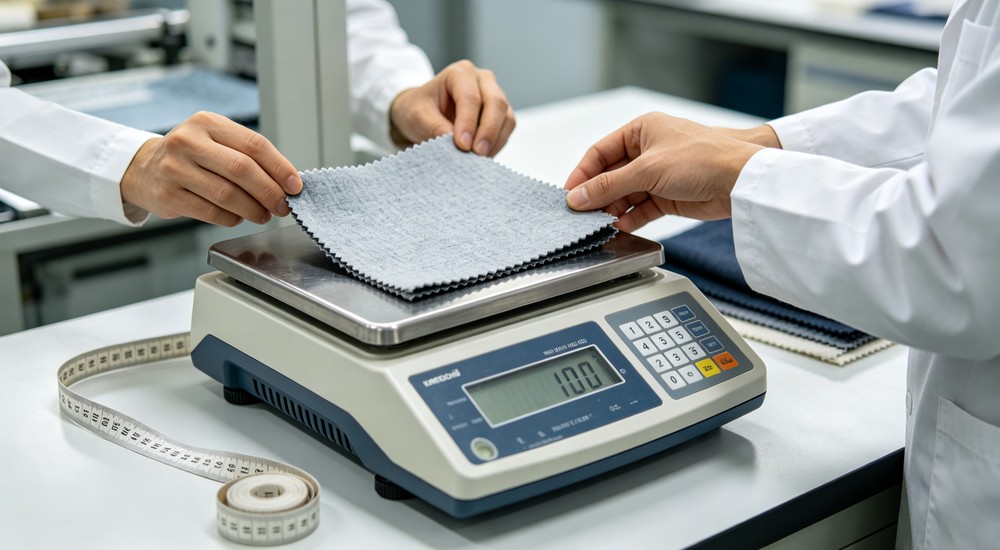
Based on industry guideline ISO 3801, verified measurement uses a 10cm x 10cm sample cut from the middle of the fabric roll, weighed on a calibrated scale to 0.01g precision. Avoid measuring from selvedge edges, where weave density may differ. For fabric GSM guide purposes, record both greige (unfinished) and finished weights, as dyeing and finishing can add or remove 5-15 GSM.
No. Higher weight can give a fuller hand feel and more drape, but it also increases water absorption, drying time, transport cost, and storage demands. Lighter-weight polyester bedding or polycotton bedding often performs better in high-turnover shelter environments because it dries faster and withstands frequent washing (see bedding care and maintenance guide).
Comfort depends on far more than GSM alone. Fibre type, yarn quality, plain or twill weave, fabric density, chemical finishing, and user preference all affect how a sheet feels against the skin. Two samples with identical GSM can feel completely different one may be crisp and cool, the other soft and heavy.
The key question is not "which number is highest" but "which weight meets the actual use requirement at the lowest total cost of ownership." That includes purchase price, washing cost, drying time, replacement frequency, and transport expense.

Weight affects drape and hand feel, but comfort also depends on breathability, moisture management, surface smoothness, and temperature regulation. A 140 GSM polycotton sheet with a good weave may feel more comfortable than a 200 GSM cotton sheet that stays damp for hours in a humid shelter.
A fabric weight comparison chart should include total cost of ownership, not just unit price. Calculate: purchase price per set + washing cost per cycle × expected washes + drying cost + replacement frequency + freight per set. A 130 GSM polycotton set at $4.50 that lasts 80 washes may cost less per wash than a 180 GSM cotton set at $7.00 that lasts 120 washes, when drying and freight are included.
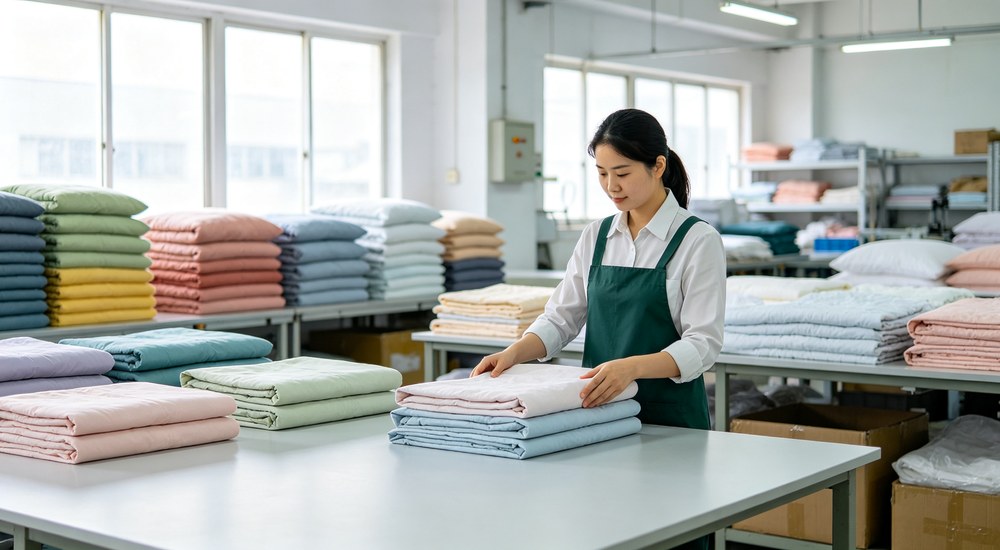
For bulk bedding fabric weight procurement, use a simple formula: Use a fabric weight calculator to verify: Cost per wash = (Set price + Total washing/drying cost over life) ÷ Expected number of washes. This gives procurement teams an apples-to-apples comparison across weights and materials.
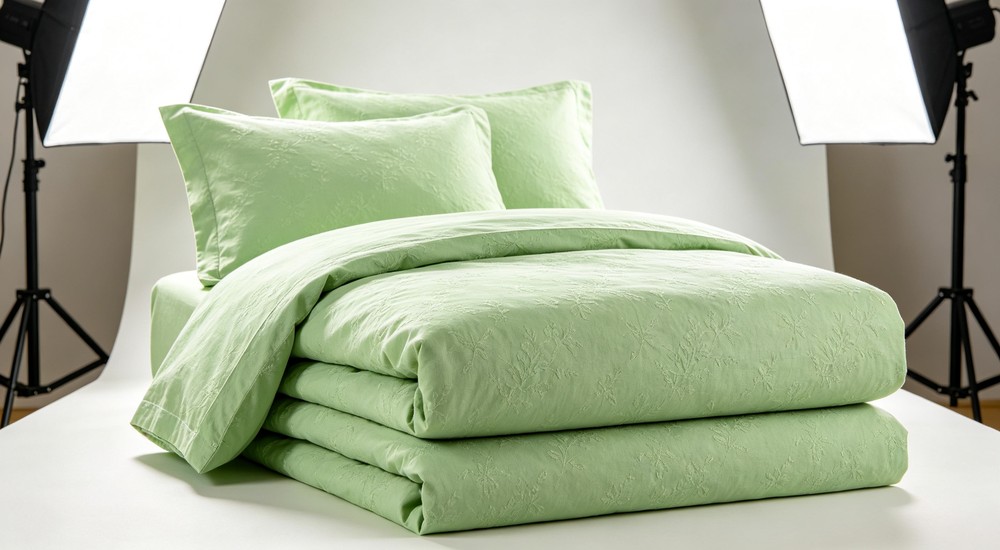
Furthermore, not every component in a bedding set needs the same weight. Sheets contact the bed and user directly, duvet covers carry an insert and receive more handling, and pillowcases give more weight per area because of their smaller size. A component-level approach typically produces better results than specifying one universal GSM for the entire set.
With the same area weight, a large duvet cover still weighs more than a small pillowcase. Total item weight changes because finished dimensions differ, so always compare components separately and record each one with its actual size.
|
Component |
Recommended GSM |
Reason |
|
Flat sheet / fitted sheet |
130-160 GSM |
Direct skin contact, frequent washing, needs good drape |
|
Duvet cover |
120-150 GSM |
Carries insert, low GSM bedding and lighter weight easier to handle and dry |
|
Pillowcase |
130-160 GSM |
Facial contact, needs softness and durability |
|
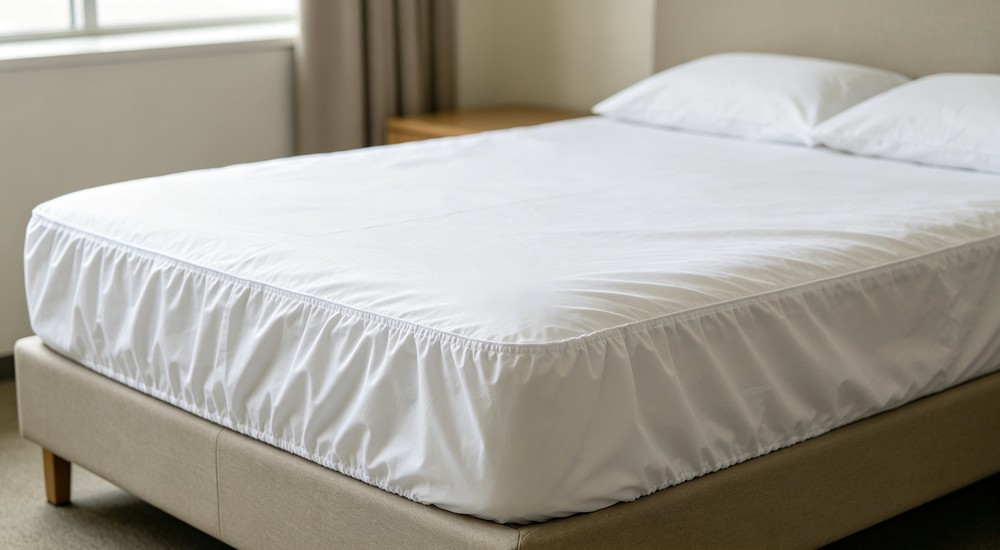
Mattress protector |
150-200 GSM |
Needs durability, waterproof backing adds weight |
GSM tells only part of the story. Thread count (threads per square inch), weave type (plain weave, percale, sateen, or twill), and chemical finishing all change how a fabric feels and performs at the same weight. A 150 GSM percale weave feels crisp and cool, while 150 GSM sateen feels smoother and heavier. Always record weave and finish alongside GSM in your specification.
Pilling resistance and colourfastness are also critical for institutional use. Fabrics that pill after 20 washes or fade after 10 washes create complaints even if the GSM is correct. Request pilling test results (Martindale or ICI pilling box) and colourfastness ratings from your supplier before finalising a weight specification.
|
Weight Option |
Unit Price |
Expected Washes |
Wash+Dry Cost |
Cost Per Wash |
|
130 GSM Polycotton |
$4.50 |
80 |
$0.35 |
$0.41 |
|
150 GSM Polycotton |
$5.20 |
100 |
$0.40 |
$0.45 |
|
180 GSM Cotton |
$7.00 |
120 |
$0.55 |
$0.61 |
|
200 GSM Cotton Sateen |
$8.50 |
100 |
$0.65 |
$0.74 |
The table above illustrates why wholesale fabric weight decisions should be based on cost per wash rather than unit price. The 130 GSM option delivers the lowest cost per wash despite lower durability, because its purchase price and drying costs are significantly lower.
Hot or humid settings prioritise ventilation, fast drying, and quick turnover. In these environments, lighter-weight polyester or polycotton bedding at 120-150 GSM is usually more practical than heavy cotton. Cold settings require a complete sleep system including adequate insulation from the mattress, blanket, and insert rather than relying on sheet weight alone.
Short-stay projects such as emergency shelters and disaster relief facilities prioritise quick setup, fast washing turnover, and easy transport. If a heavier fabric increases drying time, it can reduce the number of residents that can be served per day. Longer-stay facilities such as transitional housing and dormitories can consider heavier weights if drying capacity is sufficient.

A user-group name alone cannot determine a weight number. Climate, bed format, skin-contact needs, care capacity, and stay period are the real drivers. A refugee camp in a humid climate and a homeless shelter in a cold climate need very different fabric weights even though both serve vulnerable populations.
|
Scenario |
Climate |
Stay Duration |
Recommended GSM |
|
Emergency shelter (humid) |
Hot/humid |
Short |
120-140 GSM polyester/polycotton |
|
School dormitory |
Moderate |
Medium-long |
140-160 GSM polycotton |
|
Refugee camp (dry) |
Hot/dry |
Medium |
130-150 GSM polycotton |
|
Transitional housing (cold) |
Cold |
Long |
160-180 GSM cotton/polycotton |
|
Homeless shelter |
Variable |
Short-medium |
130-150 GSM polycotton |
For emergency bedding weight selection in tropical climates, prioritise fabrics that dry within 4 hours under natural ventilation. A breathable 130 GSM polyester sheet can dry in 2-3 hours in 30°C heat with 60% humidity, while a 180 GSM cotton sheet may take 8-12 hours. In shelters where bedding must be turned over daily, this drying time difference is operational critical.
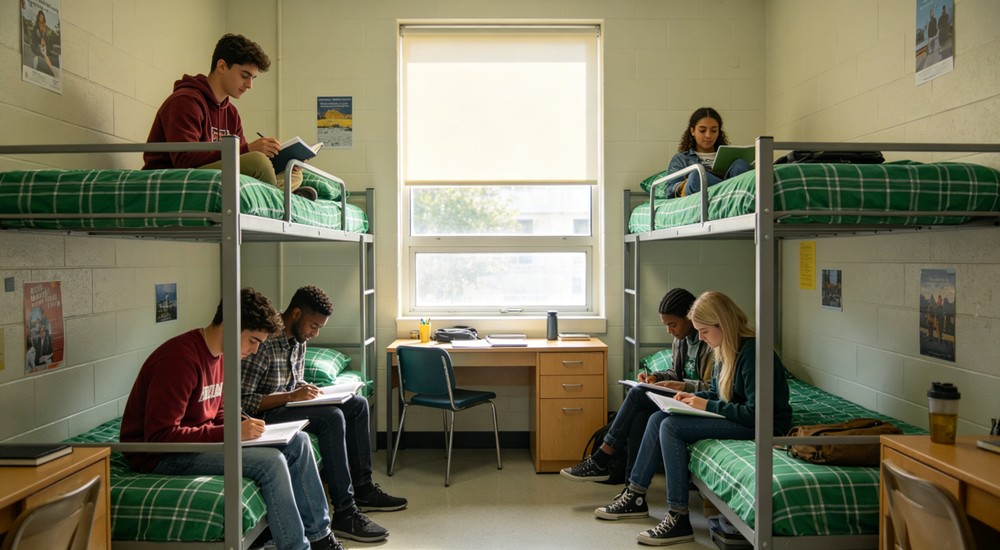
For temporary housing linen weight in moderate climates, a 140-160 GSM polycotton blend provides year-round versatility. It is light enough for summer use and can be layered with blankets in winter. For cold climate shelters, consider a 160-180 GSM cotton or cotton-rich blend, but always verify that your laundry facility can handle the extended drying times.
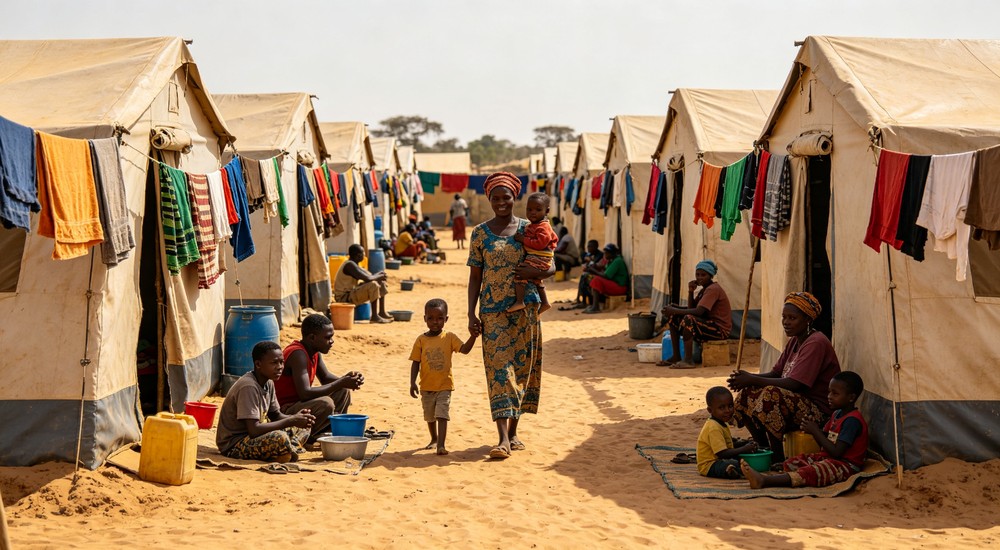
Shelter linen weight should also account for user demographics. Elderly residents may prefer warmer, heavier fabrics, while family shelters with children may prioritise stain resistance and quick drying over weight. Dormitory settings with young adults often balance comfort with durability, making 140-150 GSM polycotton the most common choice.
Heavier bedding typically requires more water handling and longer drying, although material, size, extraction efficiency, and equipment capacity also matter. In shelters where bedding is washed daily or every other day, a fabric that takes twice as long to dry can create a serious bottleneck. Commercial laundry bedding programs require careful GSM selection.
Furthermore, durability is not automatically improved by higher GSM. Yarn strength, fabric structure, seam quality, edge finishing, care instructions, and actual use patterns all affect how long bedding lasts. Check high-stress areas such as corners, hems, and pillowcase openings after repeated washes rather than assuming heavier means tougher.
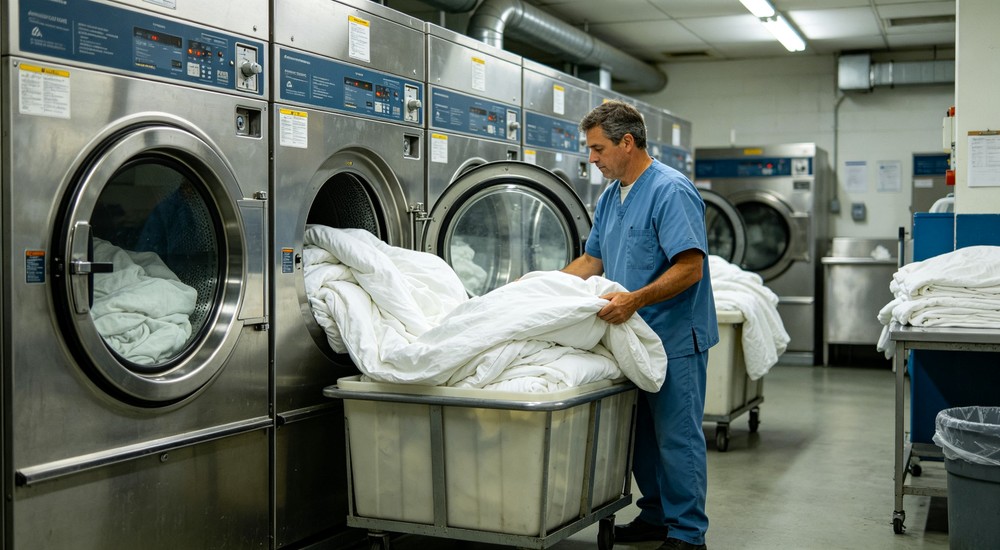
Projects expecting reuse should review dimensions, feel, surface condition, and practical fit after care. Weight may change after washing due to shrinkage, fibre loss, or finishing removal. Always test samples with the project's actual wash temperature and drying method before confirming a weight specification.
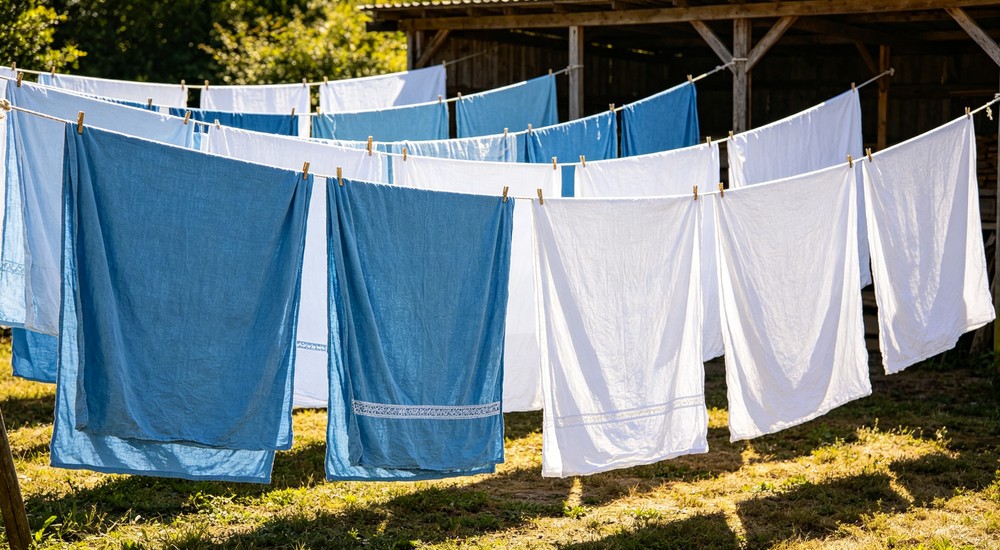
When evaluating fabric weight, calculate the actual drying burden per wash cycle. A 150 GSM polycotton sheet set may weigh 1.2kg wet due to lower absorbency after extraction, while a 200 GSM cotton set can weigh 2.5kg. If your tunnel dryer handles 50kg per batch, the heavier fabric reduces throughput by 40%. Measure extraction percentage and drying time at your facility rather than relying on supplier claims.
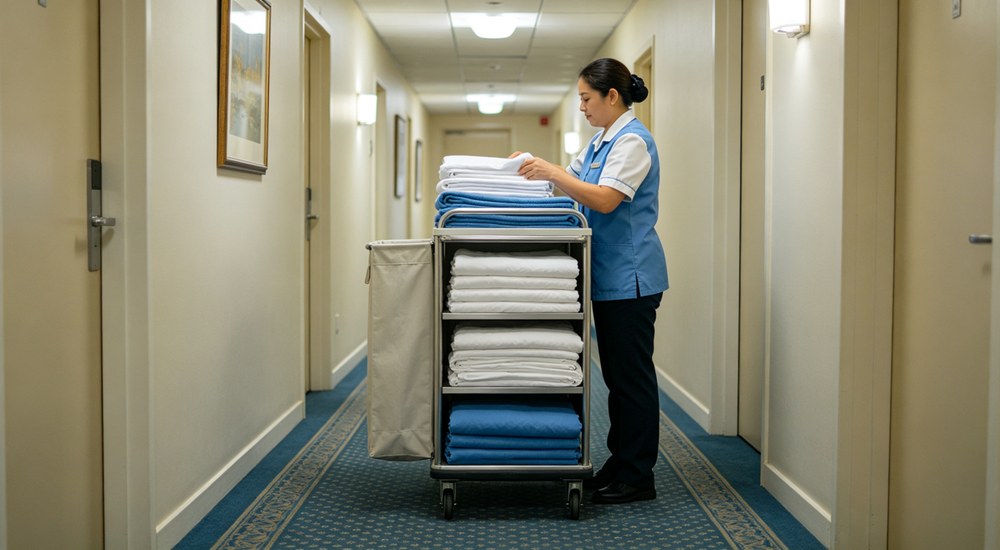
Moisture wicking capability varies by fibre: polyester moves moisture to the surface quickly, cotton absorbs and holds it, and polycotton blends sit in between. In humid gymnasium shelters where line drying is the only option, a moisture-wicking 130 GSM polyester will outperform a 180 GSM cotton sheet every time.
Consequently, more mass per area increases total set weight and packing volume, affecting carton weight, handling effort, warehouse space, and shipping cost. For international humanitarian aid shipments (see bulk bedding procurement guide), every kilogram matters. A 160 GSM sheet set versus a 130 GSM set can add significant weight across thousands of units.
Folding bed projects should not automatically choose heavier bedding. Folding beds often need fast fitting, repeated handling, and drying in limited space, so a compact, quick-drying fabric is usually more practical than a heavy one. The bed format alone does not determine weight consider how the bedding is stored, changed, and laundered.
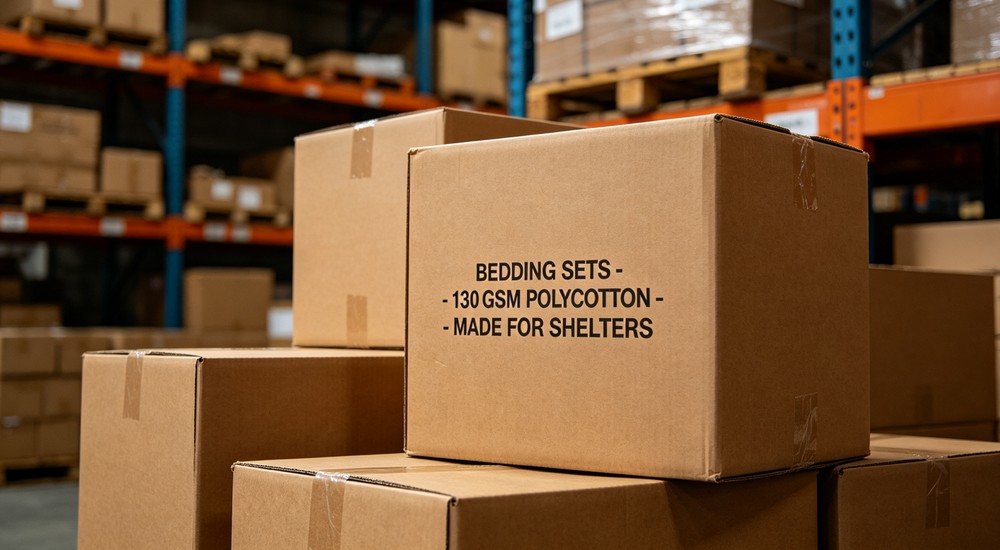
When bedding is stored together on shelves or in containers, greater mass per area increases carton weight and the physical effort needed to move stock. Heavier fabrics also take more shelf space per unit, which matters in storage-constrained shelter operations.
When working with OEM (Original Equipment Manufacturer) or ODM (Original Design Manufacturer) suppliers, specify GSM at both greige and finished stages. OEM suppliers produce to your exact specification, while ODM suppliers offer pre-designed products where GSM may be fixed. Understanding this distinction prevents receiving a different weight than quoted.
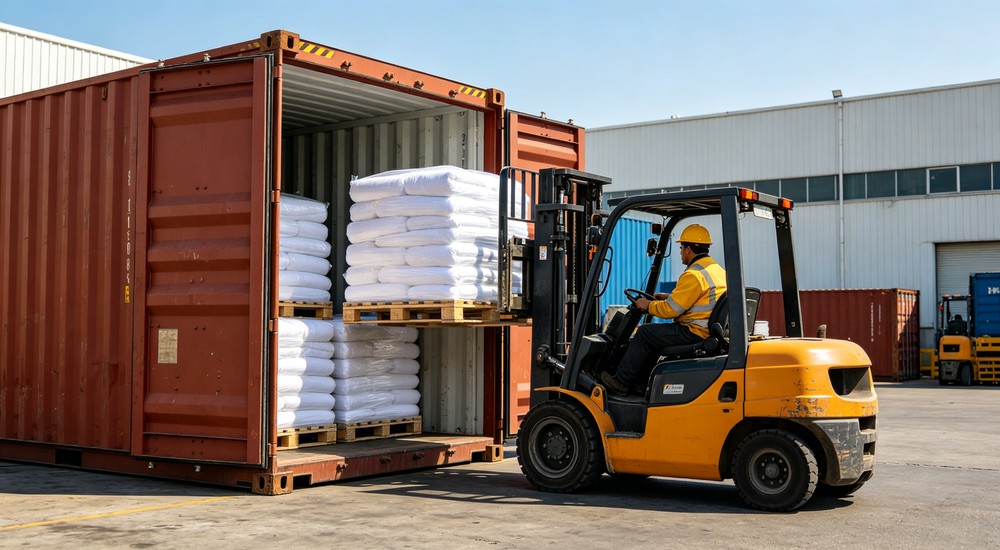
Fabric weight directly affects packaging and logistics. A 40-foot container holds approximately 8,000 sets of 130 GSM bedding but only 6,000 sets of 180 GSM bedding due to both weight and volume limits. For international humanitarian shipments, this 25% capacity difference can mean the difference between one container and two. Calculate landed cost per set, not just per-unit price, when comparing weights.
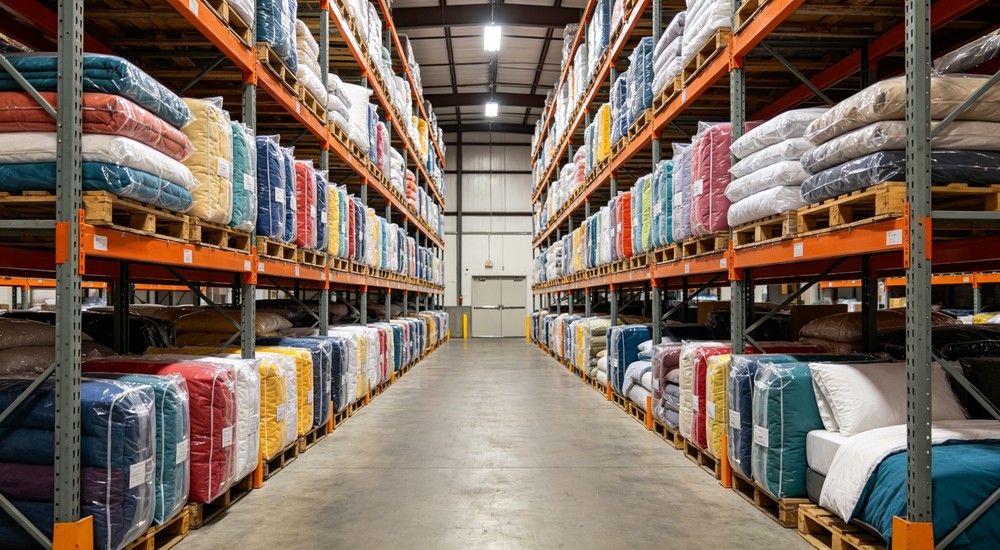
Warehouse storage density also changes. Heavier sets require stronger shelving, more floor space per unit, and more labour for stock rotation. In storage-constrained operations, a lighter fabric that allows 30% more sets per shelf position may be the better operational choice even if per-unit durability is slightly lower.
Therefore, to compare different weights fairly, align material, component, finished size, and construction first. Then use the same care, drying, and fitting conditions. Comparing a 200 GSM cotton sheet against a 130 GSM polyester sheet without controlling for these variables tells you almost nothing useful. This fabric GSM comparison helps buyers avoid common mistakes.
Notably, common mistakes include treating high weight as equivalent to quality or warmth, ignoring drying capacity, specifying one weight for all components, and confusing area weight with total item weight. Others include failing to check post-care dimensions and choosing weight by user-group name rather than actual conditions.
Colour itself is not a reason to choose a weight, but dyeing, finishing, and surface treatment can change how a sample feels and handles. A dark-coloured fabric may feel heavier or stiffer than a white one at the same GSM due to dye and finishing differences.

When comparing high GSM bedding versus low GSM options, create a side-by-side test matrix. Wash both samples 20 times under your actual conditions, then compare: dimensional stability (shrinkage), colour retention, pilling rating, tensile strength, abrasion resistance, and subjective softness, texture, and hand-feel scoring by 3+ staff members. This evidence-based approach prevents selection based on first-impression feel alone.
GSM vs thread count is a common source of confusion. Thread count measures threads per square inch and only applies to woven fabrics, while GSM measures weight per square metre and applies to all fabrics. A 200-thread-count cotton sheet may be 150 GSM, while a 300-thread-count sateen may be 180 GSM. Higher thread count does not always mean higher GSM, and vice versa.
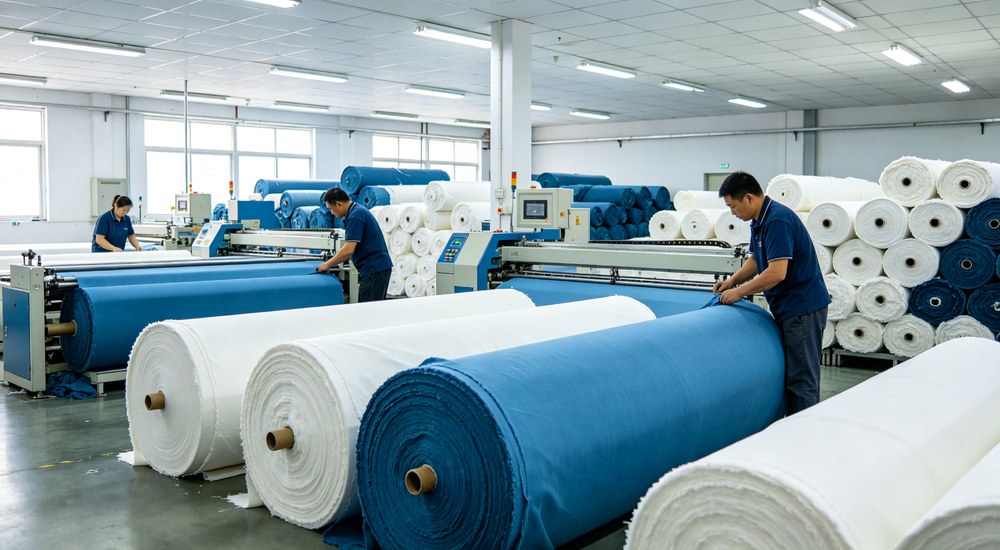
Always request a fabric weight for shelters specification sheet from suppliers, including: fibre composition (exact percentages), yarn count, weave type, greige GSM, finished GSM, post-wash GSM, shrinkage percentage, and recommended wash temperature. A supplier who cannot provide this level of detail is not suitable for institutional procurement.
Importantly, do not write only "as heavy as possible" or "high quality bedding." State the component, material direction, target weight or acceptable range, dimensions, tolerance, measurement method, and care conditions. A good requirement might read: "Flat sheet, polycotton 60/40, 140-150 GSM, finished size 180x260cm, tolerance +/-5%, measured after one pre-wash."
A weight sample check should include finished weight, dimensions, feel, fit, moisture handling, drying time, post-care change, seam quality, and packing volume. Keep every result tied to the sample identity and measurement conditions so that later replenishment orders can be compared accurately.

Before fixing a weight, verify finished weight, fibre content, dimensions, colour, seams, post-care dimensions, and packing. Every result should be tied to evidence a recorded measurement, a labelled sample, or a test result rather than a supplier's verbal claim.
|
Check Item |
What to Verify |
Why It Matters |
|
Finished GSM |
Weight per sqm after manufacturing |
Confirms actual vs quoted weight |
|
Dimensions |
Length, width, tolerance |
Affects fit and total weight |
|
Post-care shrinkage |
Dimension change after washing |
Prevents ill-fitting replenishment |
|
Drying time |
Time to fully dry under project conditions |
Determines washing turnover capacity |
|
Seam quality |
Stitch density, edge finishing |
Predicts durability under frequent washing |
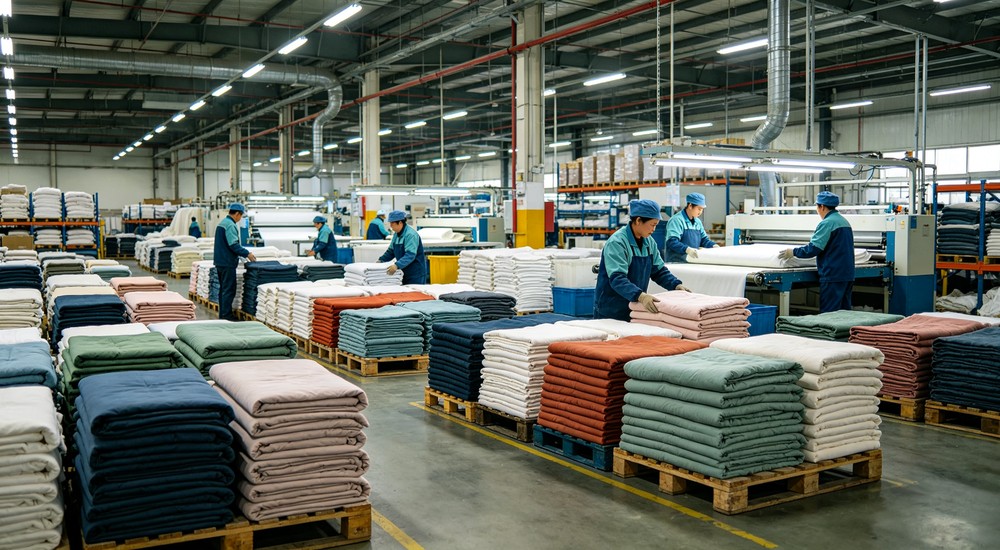
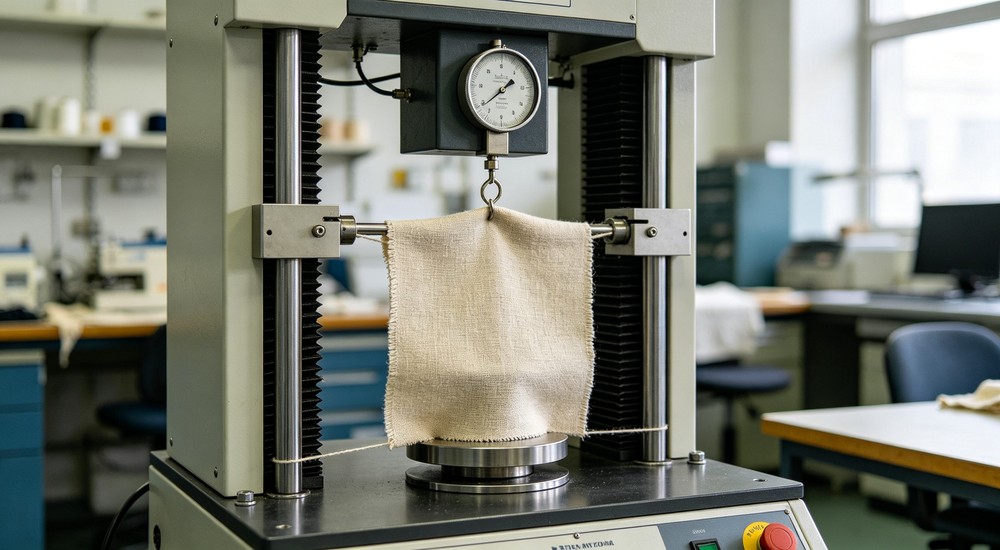
Before placing a bulk order, conduct a factory inspection that includes weight verification at the production line, not just at the finished goods stage. Ask to see the fabric greige weight, finished weight after dyeing and finishing, and post-wash weight. A certified supplier who cannot show these three numbers may be cutting corners on fabric quality.
Request certification documents where relevant: ISO 9001 for quality management, OEKO-TEX Standard 100 for textile safety, and flame retardant certification if your shelter requires fire safety compliance. Note that flame retardant treatments add weight, so a 150 GSM FR-treated fabric may behave differently from a 150 GSM untreated fabric.
Fabric weight affects MOQ (minimum order quantity), lead time, and payment terms. Heavier fabrics often have higher MOQs because mills need longer production runs. A 180 GSM custom-dyed cotton may require 3,000 sets minimum with a 45-day lead time, while a standard 140 GSM polycotton in navy or white may ship from stock in 15 days. Factor these into your emergency response timeline.
Payment terms may also vary. Suppliers of premium heavyweight fabrics often require 30% deposit and 70% before shipment, while standard-weight institutional fabrics may offer 30-day credit for established buyers. Always confirm total landed cost including freight, duties, and insurance when comparing weight options.
Maintain a safety stock of 10-15% for standard-weight items that can be quickly deployed. For custom heavyweight fabrics, keep replacement samples and specifications on file so that reorders match the original batch exactly.
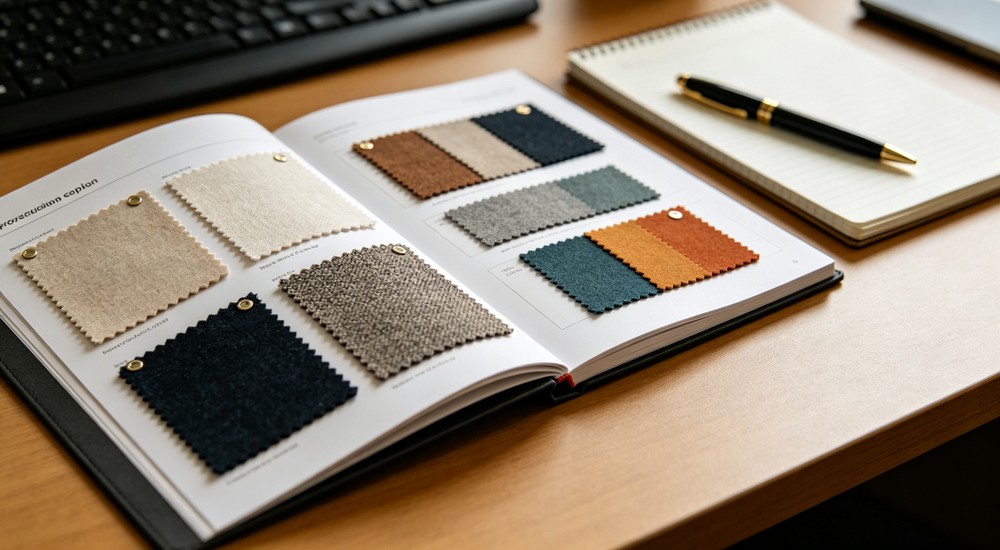
For wholesale bed sheet fabric weight negotiations, use volume to your advantage. Ordering 10,000 sets of a standard 140 GSM polycotton may qualify for a 15-20% discount. This compares favourably versus ordering only 1,000 sets at the standard unit price. However, custom weights or colours often require minimum runs of 3,000-5,000 sets with 30-45 day lead times. Balance cost savings against emergency response timelines.
Bulk fabric GSM purchasing directly from mills can reduce costs by 25-35% versus buying finished goods, but requires in-house sewing capacity or a contract sewing partner. This approach is viable for organisations managing 50,000+ sets annually. For smaller volumes, finished goods from specialised institutional bedding suppliers are usually more cost-effective.
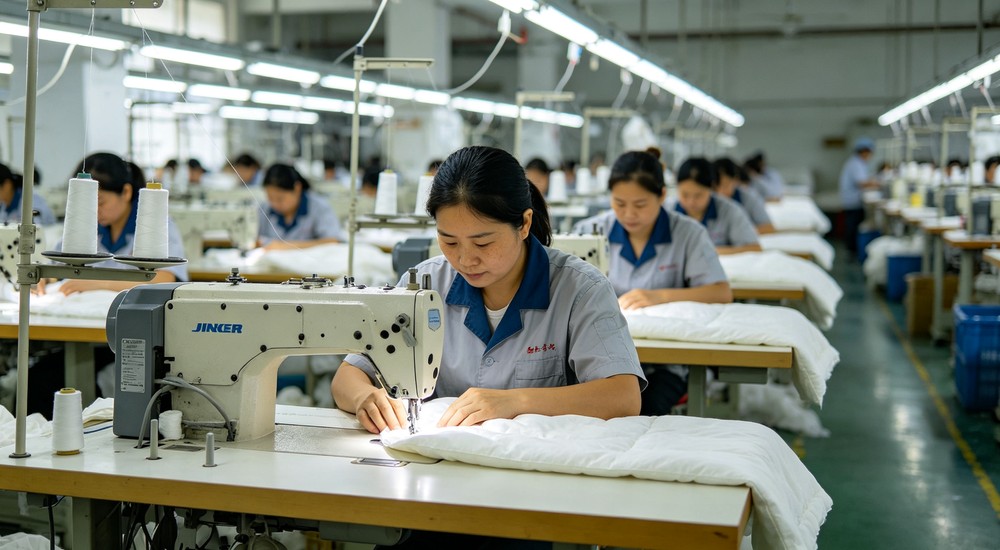
Include weight tolerance clauses in all contracts: +/-5% GSM is industry standard (see bedding quality control guide), but +/-3% is achievable for premium suppliers. Specify that any shipment falling outside tolerance may be rejected or subject to a price adjustment. This protects against suppliers shipping lighter fabric than quoted.
Moreover, different weights can change colour appearance, hand feel, thickness, and post-care dimensions, so a product name alone cannot guide replenishment. If a second order uses a different GSM, residents and staff may notice the difference immediately. Always record the exact weight, material, and supplier reference for every batch.
Create several weight versions only when accommodation zones, care conditions, or use periods genuinely require them. Too many versions complicate inventory, training, and quality control. A simple two-tier system (standard for most areas, premium for long-stay zones) is usually more manageable than five or six variants.
The supplier should return material composition, weight basis, finished dimensions, tolerance, sample identity, care instructions, and test results at the end of the sampling process. This documentation becomes the baseline for future orders and quality checks.
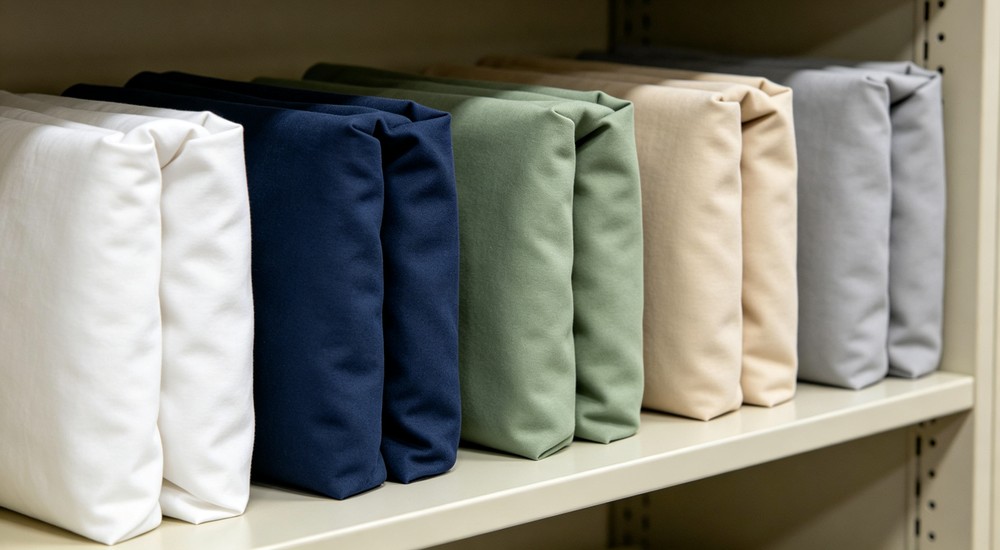
When reordering, always compare the new shipment's GSM against the original specification using the same measurement method. A 5% weight reduction across 5,000 sets saves the supplier significant material cost but reduces durability for the buyer. Randomly test 3-5 sets from each shipment, not just the first carton.
Maintain a bed linen weight guide binder for each facility, containing: approved GSM by component, approved suppliers, sample swatches, wash test results, and replacement history. This institutional memory prevents drift when procurement staff change. Review the guide annually and update based on actual performance data.
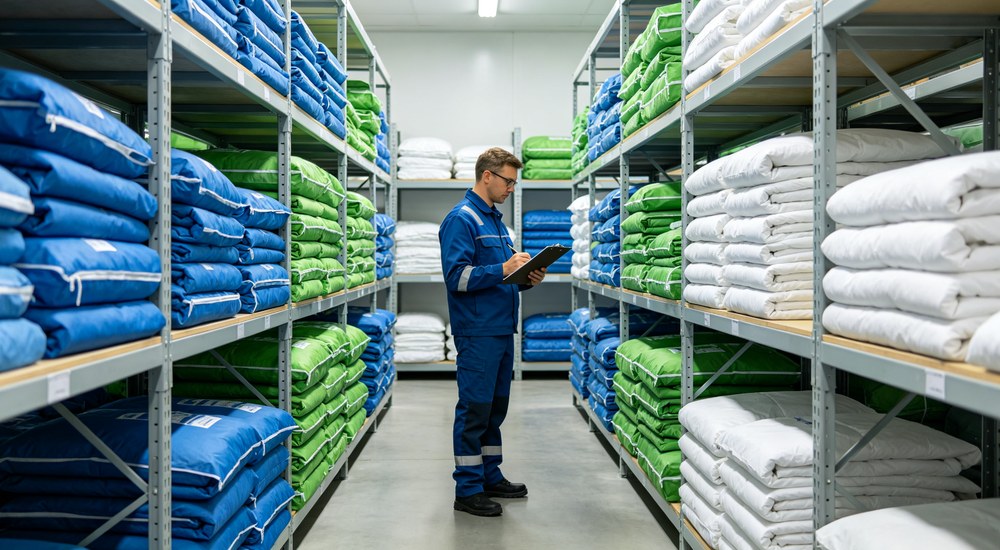
For multi-site organisations, standardise on 2-3 weight options across all facilities rather than allowing each site to specify independently. This reduces SKU complexity, improves purchasing leverage, and simplifies inventory sharing between sites during emergency surges.
Specifically, maintenance capacity includes washing equipment, water extraction, air or machine drying, staff availability, and allowed turnover time. Each of these factors changes which weight is practical. A facility with industrial washer-extractors and tunnel dryers can handle heavier fabrics than one relying on domestic machines and line drying.
When drying and transport lead the decision, compare a lighter direction that still meets coverage and feel requirements. When a fuller hand feel matters and drying is adequate, a heavier direction may be justified. The decision should be written by component and scene, not as one universal number for the complete set.
A humid short-stay emergency shelter with limited drying should first compare a 120-140 GSM polyester or polycotton direction that dries efficiently while meeting coverage and feel needs. A longer-stay dormitory with commercial laundry can consider 150-170 GSM polycotton or 180 GSM cotton for improved comfort.

Create a simple decision matrix scoring each weight option on: drying time (25% weight), durability (20%), comfort (15%), purchase cost (15%), washing cost (10%), transport cost (10%), and storage density (5%). Weight the criteria based on your facility's specific constraints. A shelter with limited drying capacity should score drying time at 35% rather than 25%.
Conduct a 30-day field trial with 20-30 sets of the proposed weight before full rollout. Collect feedback from both laundry staff (handling difficulty, drying time) and residents (comfort, warmth, skin feel). Use a simple 1-5 rating scale for each criterion. Only proceed to full procurement if the trial weight scores 4.0 or higher overall.
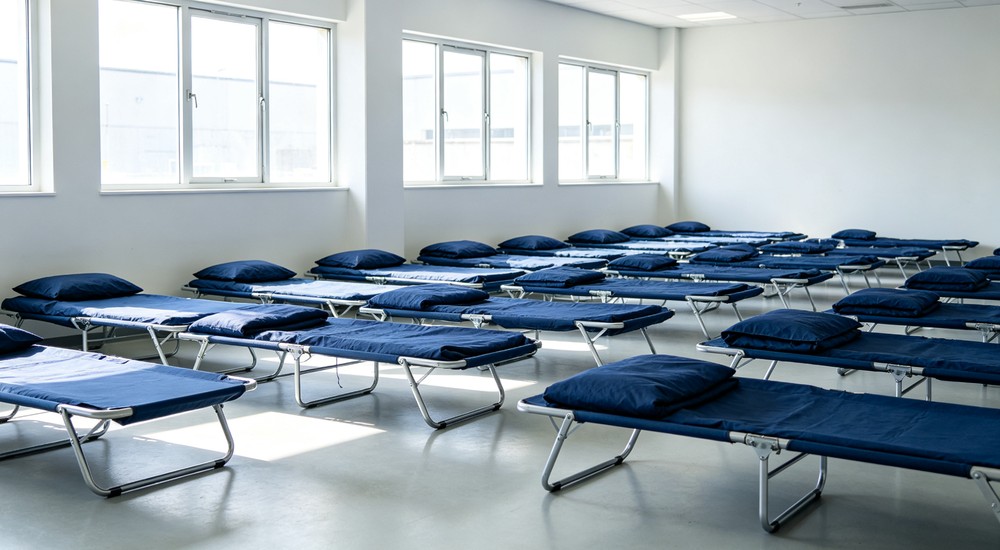
Document the final decision with: selected GSM by component, rationale, trial results, supplier, unit price, MOQ, lead time, and expected lifespan. This becomes the baseline for future reorders and for training new procurement staff.
Finally, a complete weight comparison record starts with accommodation zone, component, material, finished dimensions, and weight basis. It then states bed format, stay period, climate, care method, drying conditions, and the actual measured results. The record should include post-care dimensions, drying time, packing volume, and a clear decision with justification.
Fabric weight is useful only when the unit, component, material composition, construction, and measurement basis are clear. A number without context can mislead: 150 GSM of cotton behaves differently from 150 GSM of polyester, and a cut-piece measurement differs from a finished-item measurement.
Record the unit, component, sample, and measurement source beside every weight value. If two values use different bases, convert or note the difference before comparing. Keep the weight with its evidence so that future buyers can understand why a particular specification was chosen.

|
Decision Factor |
Lighter Weight (100-130 GSM) |
Medium Weight (130-160 GSM) |
Heavier Weight (170+ GSM) |
|
Drying speed |
Fastest |
Moderate |
Slowest |
|
Transport cost |
Lowest |
Moderate |
Highest |
|
Hand feel |
Light/crisp |
Balanced |
Full/substantial |
|
Durability |
Depends on yarn |
Good for most uses |
Potentially higher |
|
Best for |
Humid, high-turnover |
Most shelters/dorms |
Cold, long-stay, good drying |
Request fabric weight samples and test them under your actual washing and drying conditions before placing a bulk order.
Request Samples Review GSM Table
Use this three-step framework for every bed linen GSM standard decision:
(1) Measure your actual drying capacity in kg/hour,
(2) Calculate how many sets per day you need to process,
(3) Select the heaviest fabric that your drying system can handle without creating a bottleneck. This ensures you maximise comfort without sacrificing operational throughput.

For disaster relief bedding weight specifications, prioritise fast-drying fabrics that can be air-dried in humid conditions. For hospital bedding weight and military bedding GSM, consult the specific institutional standards (AAMI for healthcare, MIL-SPEC for military) which may mandate minimum weights or fibre content.
For quick answers, see also our fabric weight FAQ and bedding specification template.
This balance between comfort and durability makes institutional bedding selection critical for long-term cost management.
Understanding these differences helps procurement teams make informed decisions for their specific operational needs.
What GSM is best for shelter bedding?
Is 200 GSM bedding better than 150 GSM?
No. Sheets, duvet covers, and pillowcases have different requirements. Sheets need good drape and frequent washing, duvet covers should be lighter for handling, and pillowcases need softness for facial contact. Specify weight by component.

How do I measure fabric weight correctly?
Use a calibrated scale and a sample of known area (typically 10x10cm or 1/4 metre). Measure after manufacturing and after one pre-wash. State whether the measurement is from raw fabric, a cut piece, or the finished item, and record the sample identity.
Sometimes, but not always. Heavier fabric may be more durable, but if it takes too long to dry, facilities may need more sets in rotation, increasing total cost. Calculate total cost of ownership including purchase, washing, drying, transport, and replacement.
GSM (grams per square metre) is the metric standard. To convert: 1 oz/yd² approximately equals 33.9 GSM. Most international bedding suppliers use GSM, but some US suppliers may quote ounces. Always confirm the unit before comparing.

Not necessarily. Folding beds often need fast fitting, repeated handling, and drying in limited space. A compact, quick-drying 120-150 GSM polycotton is usually more practical than heavy bedding that is difficult to store and change.
Colour itself does not change weight, but dark dyes and heavy finishing can add slight weight and change feel. Always compare samples of the same colour and finishing when evaluating weight differences.
Material composition, weight basis (GSM), finished dimensions, tolerance, sample identity, care instructions, and test results. This documentation becomes the baseline for future orders and quality checks.
Plain weave and percale feel crisp and lighter, while sateen and twill feel smoother and heavier at the same GSM. A 150 GSM sateen sheet may feel like 180 GSM percale to the touch. Always specify weave type alongside GSM in your procurement documents.
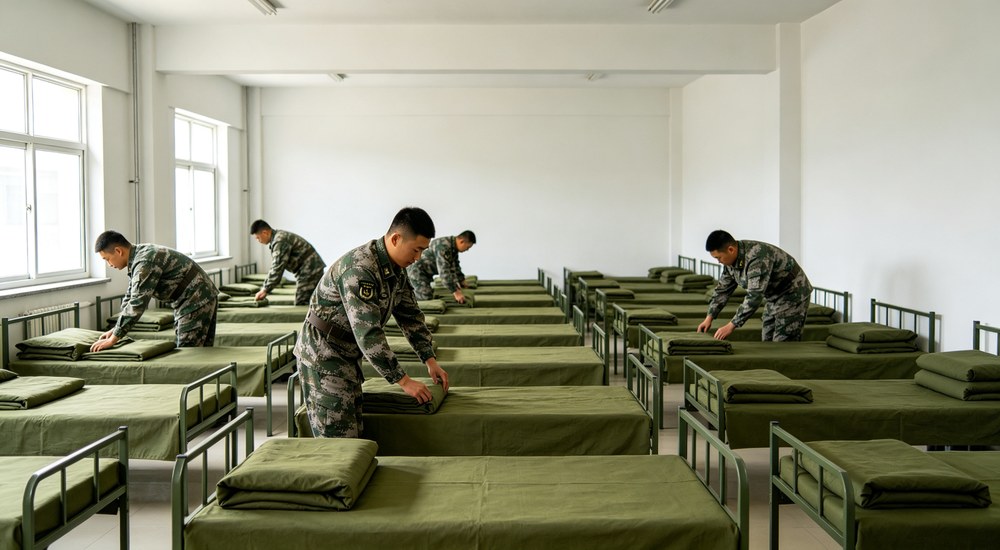
Flame retardant treatment is required by some shelter regulations, especially for gymnasium and large congregate settings. FR treatment adds weight and may change fabric feel, so test FR-treated samples under your actual washing conditions. Confirm the treatment survives the number of washes your facility performs.
Industry standard is +/-5% GSM, but premium suppliers can achieve +/-3%. Include tolerance clauses in your contract and randomly test 3-5 sets from each shipment. Any shipment outside tolerance may be rejected or subject to price adjustment.
Yes. A 30-day trial with 20-30 sets collects feedback from laundry staff and residents before committing to a full order. Use a 1-5 rating scale for drying time, comfort, durability, and handling. Only proceed if the trial scores 4.0 or higher overall.
For ongoing procurement success, review your fabric weight specifications annually against actual wash performance data, resident feedback, and laundry throughput metrics. Update the specification when performance
This balance between comfort and durability makes institutional bedding selection critical for long-term cost management.
Understanding these differences helps procurement teams make informed decisions for their specific operational needs.
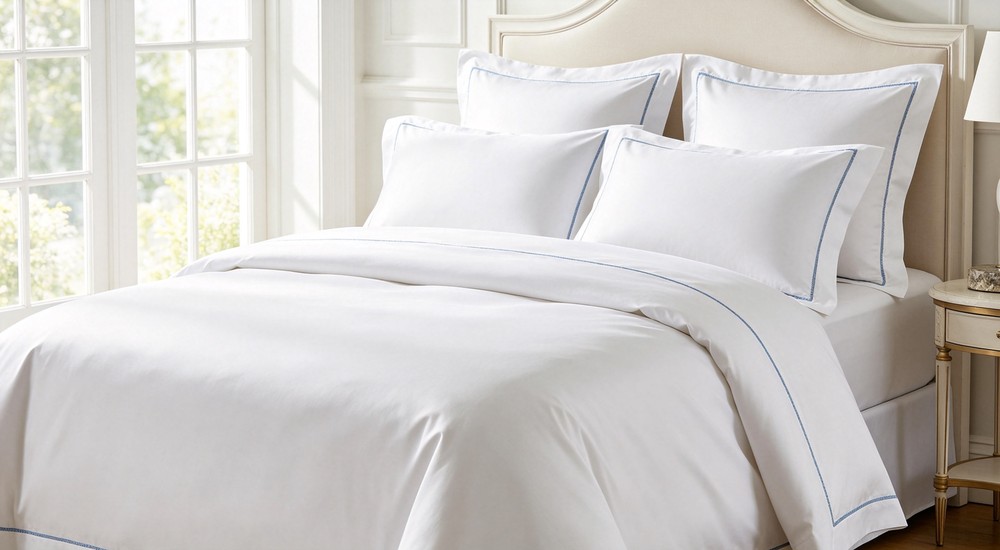
bed in bright airy luxurious bedroom - YRF Wholesale
Дружественные ссылки :
авторское право © Custom Disaster - Relief Bedding: Tents, Sleeping Bags, Blankets Все права защищены
профессиональная команда для обслуживания !