Категории
Last Updated: October 14, 2026
EMERGENCY RESCUE CLOTHING | VERSATILE RESCUE UNIFORM
One team, one shift: a collapsed building at noon, a flooded road at dusk. What uniform handles both? Which fabric dries fast but still layers for winter? And which standards should your tender reference? Emergency rescue clothing answers these questions — and the ones procurement teams ask most — before you order.
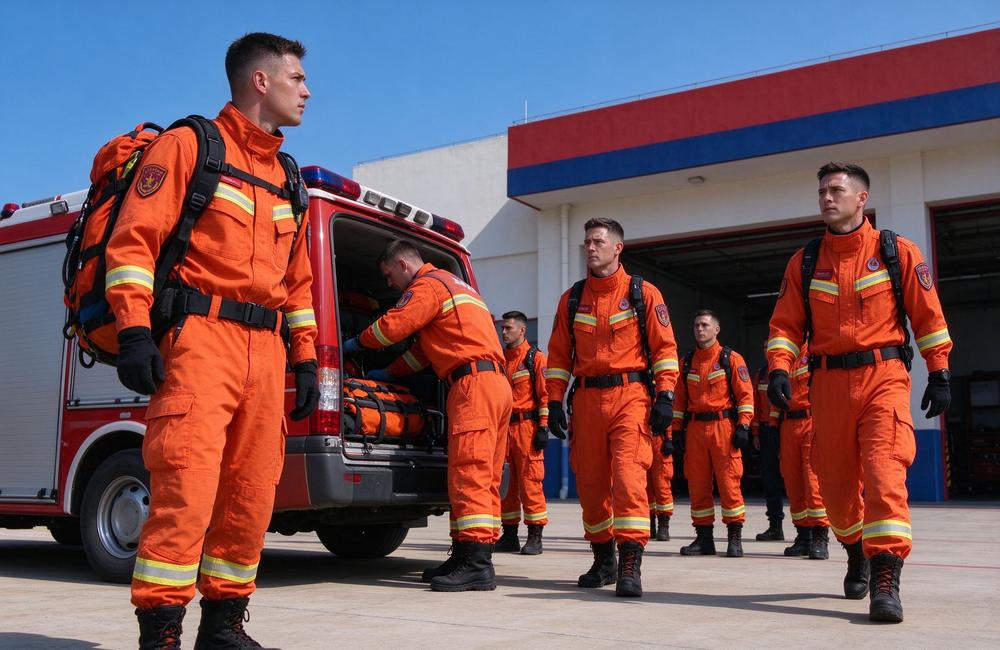
Response teams work across terrain and seasons in one versatile uniform system.
Rescue work refuses a fixed dress code: the same team may run a collapsed-structure call at noon and a flood evacuation at dusk, in summer heat or winter cold. Emergency rescue clothing answers that range with one versatile system — quick-dry fabric that breathes in summer, room for thermal layers in winter, reinforcement where ropes and rubble rub, and reflective trim that keeps the wearer visible when visibility collapses. Built and certified to GB/T 29519, this uniform is the everyday working kit behind the response: durable enough for a season of washing, presentable enough for coordination and command, and standardized so a whole team can be kitted in matched batches.
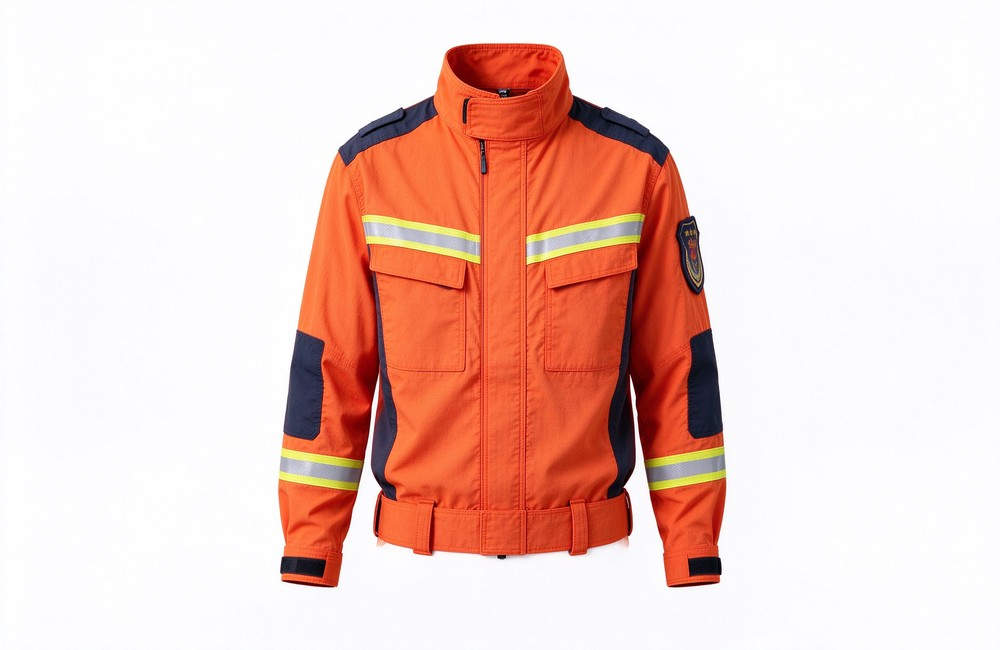
The summer fast-dry rescue suit keeps crews moving in the hottest search hours.
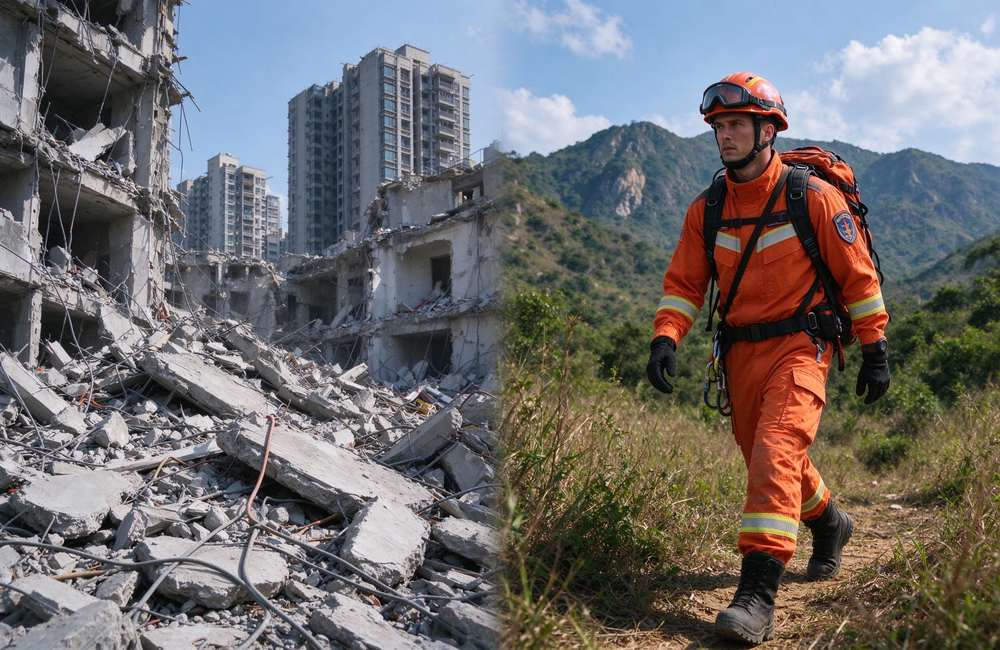
A rescue team does not choose its terrain by the calendar. The same crew may spend the morning in a collapsed building, the afternoon on a flooded road and the night on a mountain trail. Emergency response clothing has to work in all three without a change of kit, which is why the modern rescue uniform is built as a layer system: quick-dry shells for summer, thermal inserts for winter, and closures that adapt on the move.
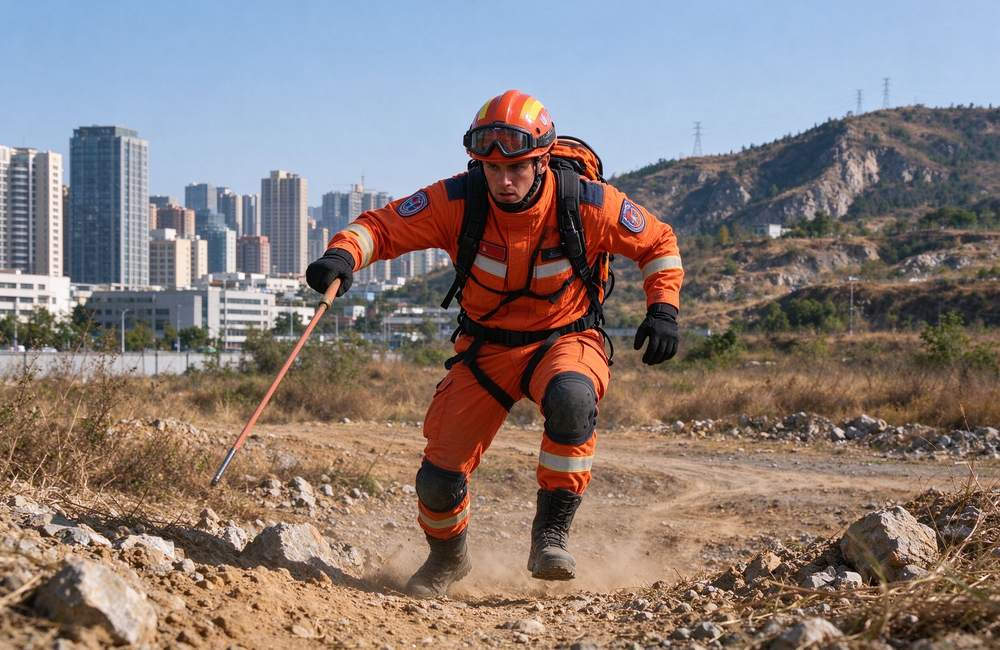
One uniform follows the crew from urban rubble to open field without a change of kit.
This article is written for emergency management agencies, rescue brigades, NGOs and procurement officers who buy rescue team uniforms for whole teams. The products referenced here are real certified Chinese lines — including the HuoYa fast-dry series, the HuoYan anti-static series and FR rescue coveralls — so the numbers can be checked against your own tender documents.
If you are specifying rescue uniforms for the first time, start with the three questions that drive everything: What seasons will the team work in? What is the duty profile — search, water, rope, vehicle? And does the agency need team identity such as badges and color coding? The answers decide the fabric, the cut and the customization.
Rescue seasons do not wait for calendars. Flood response peaks in the rainy months, wildfire support in the dry season, winter storms whenever the temperature drops — and the same team answers all of them. That is why agencies plan the uniform as a program, not a purchase: a core suit that works year-round, seasonal layers that clip on and off, and a spares policy that keeps every member matched, whatever the season brings.
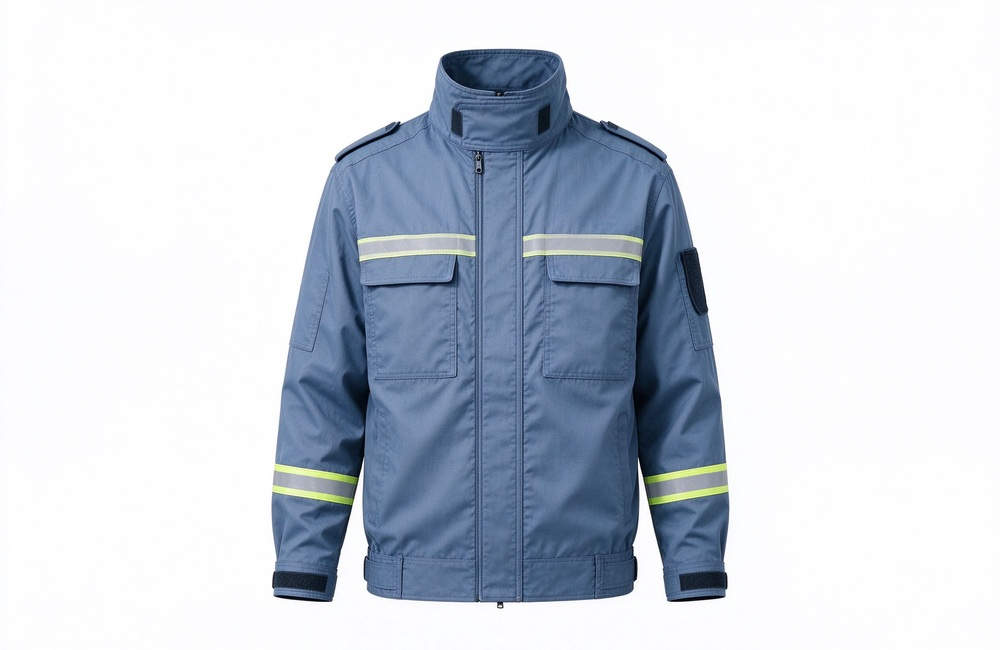
Anti-static fabric matters for teams working near electronics, fuel and dust.
Follow one team through a single shift and the uniform's job becomes obvious. Morning briefing at the station, vehicle checks in uniform; midday call to a collapsed structure, where the same emergency rescue clothing has to move through rubble; afternoon handoff to a water-rescue unit at the river; evening return with mud on the boots and the uniform ready for the wash line. Agencies that buy one versatile rescue uniform for all of it cut their kit budget, their storage space and the confusion of issuing different outfits per call type. The standard is not the cheapest set — it is the set that survives the widest range of a working day.
Emergency rescue clothing sits between firefighting PPE and general workwear. It does not need to survive a flashover, but it must handle mud, water, brush, ropes and long hours — and it must look like a uniform, because rescue teams are identified by what they wear. The cut is deliberately versatile: articulated knees and elbows for climbing and crawling, reinforced seats for rope work, and cargo pockets sized for gloves, radios and tools.
The uniform also carries the team's image. When a rescue unit appears on television, in front of officials or at a public event, the uniform is what the public reads first. Agencies choose fabric that photographs well, colors that identify the unit, and a cut that looks professional in formation and performs in the field — one garment that does not embarrass the team in either role.
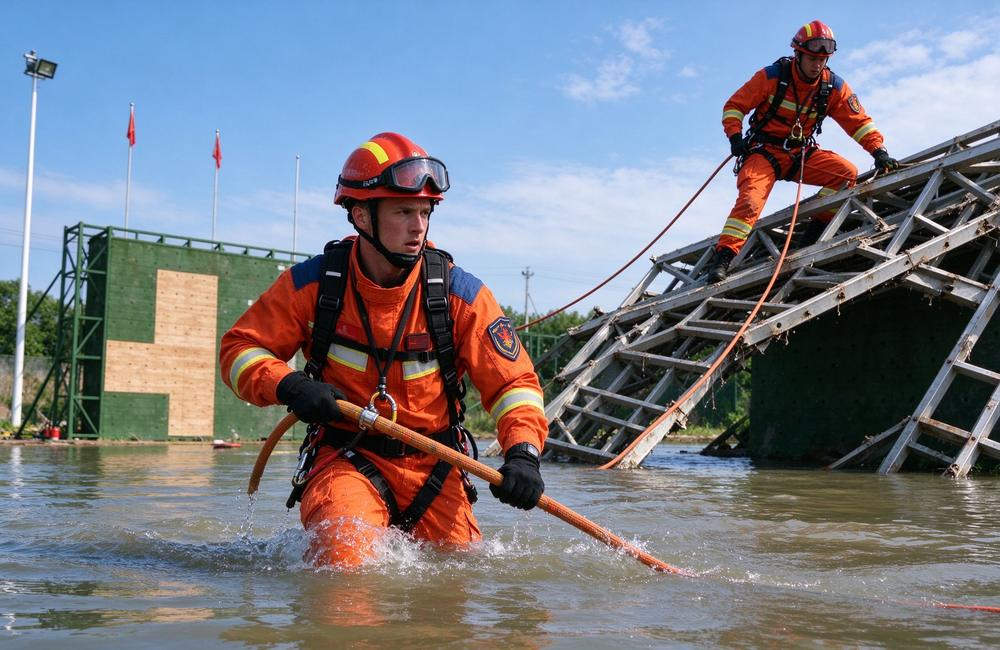
Water and rope work demand quick-dry fabric and articulated movement.
Government emergency response departments, urban search-and-rescue teams, fire rescue brigades, wilderness SAR groups, NGOs and volunteer networks all issue rescue worker uniforms. The shared requirement is a durable, presentable uniform that performs across seasons and can be ordered in matched team batches with badges and identification.
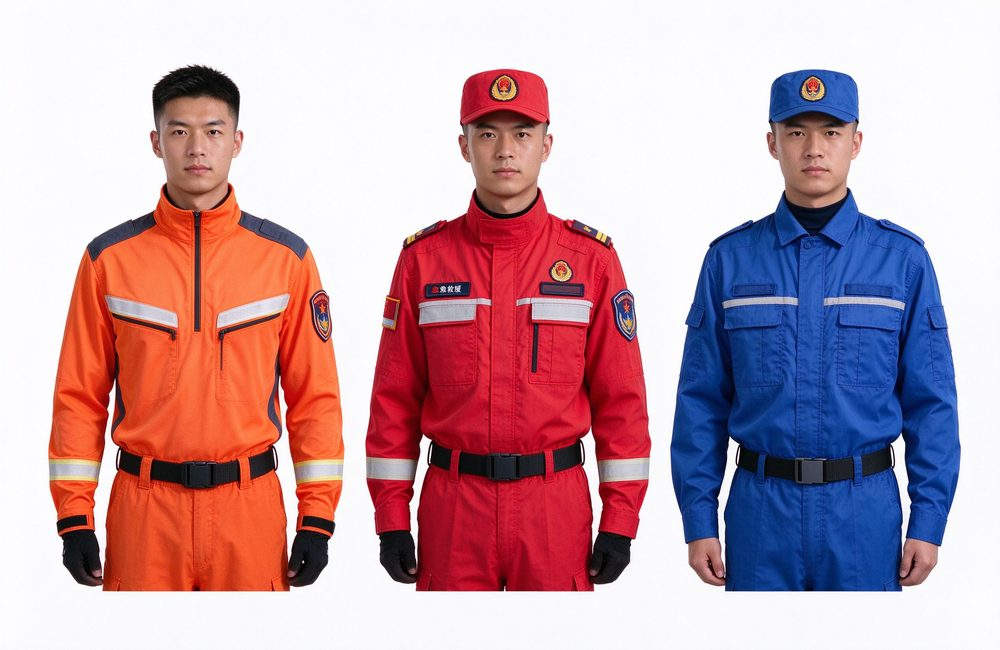
Rescue clothing styles side by side for team selection.
The complete field ensemble extends beyond the suit: FR or technical shirt, trousers, helmet, gloves, boots and a weather shell. The suit carries the identity and the core protection; the accessories close the gaps at head, hands and feet. When agencies issue rescue worker uniforms, they usually order the whole system from one supplier so sizing, colors and certification stay consistent.
Station duty and field work share one uniform with different accessories.
Urban and field rescue set different demands on one garment. The table below maps the practical requirements a versatile rescue uniform must satisfy in both environments.
|
Requirement |
Urban / Station |
Field / Outdoor |
|
Fabric |
Neat, wrinkle-resistant, professional |
Abrasion-resistant, quick-dry, breathable |
|
Pockets |
Document and radio pockets |
Tool, glove and map pockets |
|
Movement |
Normal duty motion |
Articulated knees, full stride, crawl |
|
Visibility |
Badges, name bars, team color |
Reflective trim, high-vis panels |
The summer fast-dry rescue suit SHC-R01 answers both sides: 70% polyester and 30% viscose at 170 g/m², quick-dry and abrasion-resistant for the field, with a neat professional cut and rear-shoulder reflective design for the station.
Station life and field life wear a uniform differently. Station duty is about sitting, driving and paperwork — fabric that resists creasing and keeps its color. Field work is about kneeling, crawling and brushing against debris — fabric that survives abrasion and dries fast. A versatile rescue uniform picks materials that pass both tests, which is why the fabric spec, not the price, is the first line of comparison between suppliers.
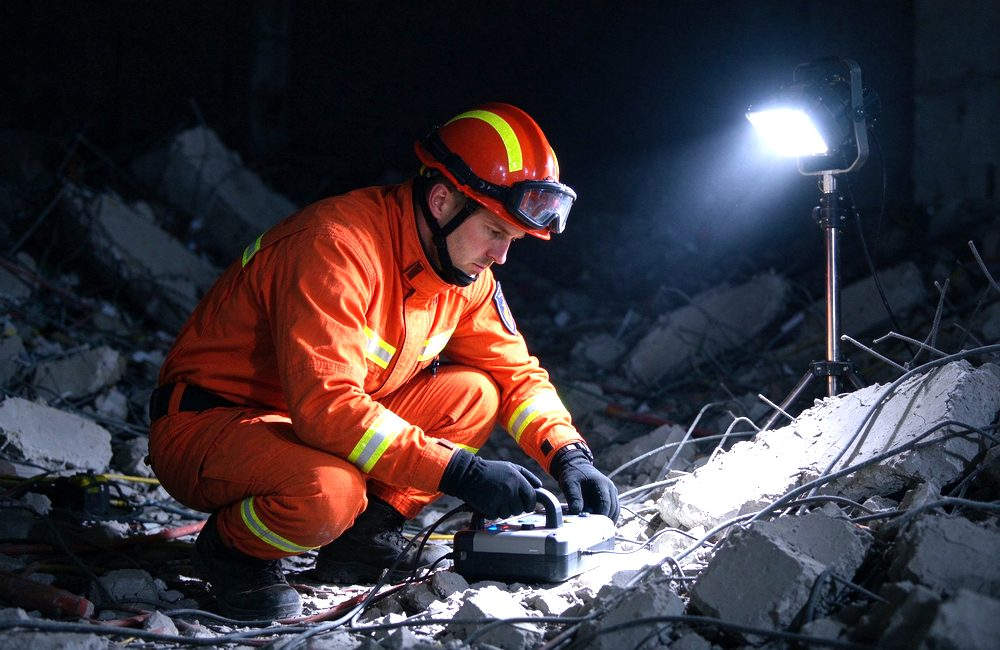
Night field operation in high-vis rescue uniforms.
Urban rescue clothing lives half its life indoors.
Urban work is about presence: a uniform that photographs well, carries badges correctly and does not wrinkle in a vehicle. Field work is about performance: fabric that dries after a river crossing, knees that survive kneeling on rubble, and trim that shows up in low light. The modern rescue uniform refuses to choose — it is cut and finished to pass both tests.
Specialist teams do not stop being rescue teams when they change terrain. A rope-rescue member who spends the morning on a cliff face may spend the afternoon on flood boats, and the uniform has to follow. Multi-mission rescue clothing answers with convertible features: removable hoods, roll-up sleeves, drainage-friendly fabric and pockets that close under tension. Water work adds its own demands — quick-dry weave that does not stay heavy and cold, and seams that hold after immersion. When the same crew rotates between rope, water and mountain callouts, one all-season rescue uniform keeps the team equipped without a second locker.
Adaptive details stretch one uniform across the year: detachable thermal liners, zip-off ventilation, adjustable cuffs and waist, and pockets that close over gear in water work. The autumn/winter composite rescue suit 2130043 uses 96% nylon and 4% spandex for thick, warm, waterproof-breathable performance, while the mesh riding coverall YJ-J13/P13 keeps summer scouts ventilated at 170 g.
Pocket design is where field crews notice quality first. Radio pockets with flaps and drain holes, glove pockets that close over wet gloves, map pockets with secure closures, and internal document pockets for IDs — each one is a small decision that adds up to a uniform that works on a flooded road instead of fighting the wearer. The best rescue suits are the ones crews stop complaining about within a week.
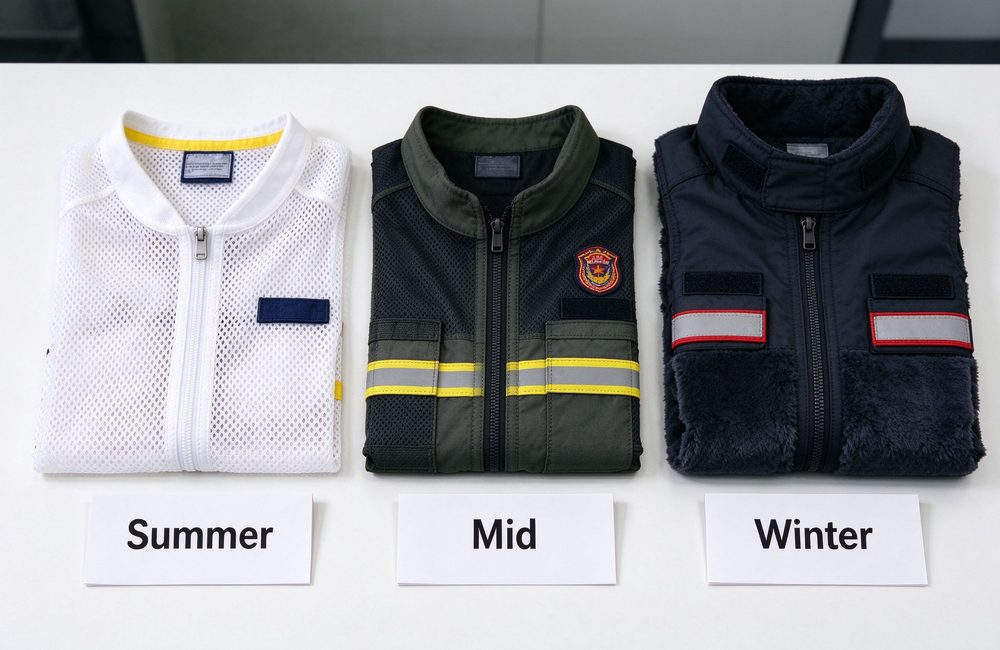
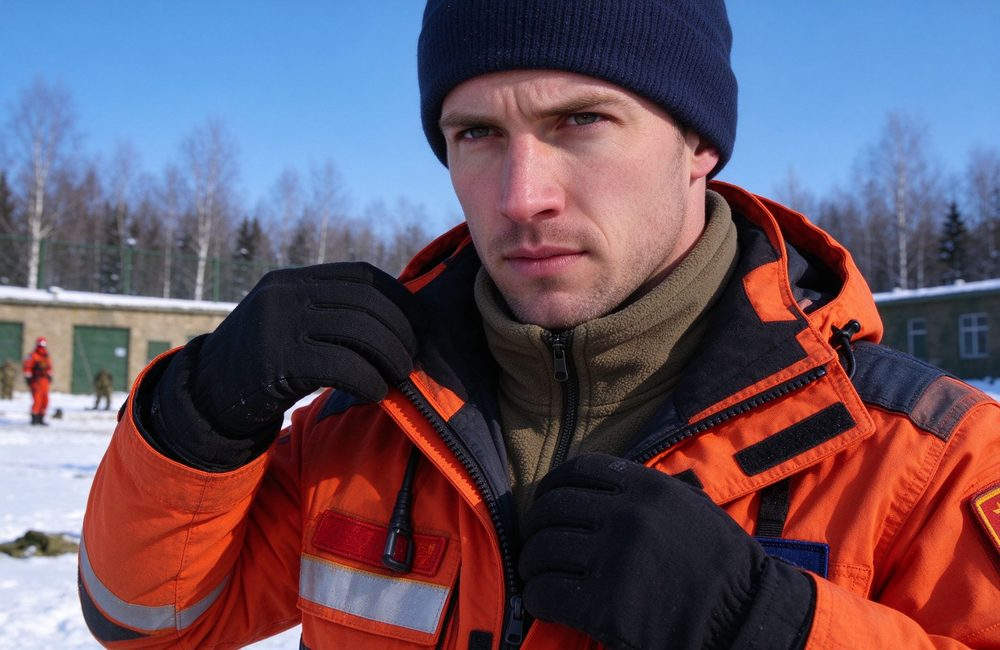
Summer, autumn and winter layers cover the full rescue year.
Seasonal rescue is a layering problem. The same crew needs a ventilated summer shell, a warm winter system and everything between. The table below compares the layer options in a full rescue uniform program.
|
Layer |
Fabric |
Weight / Fill |
Season |
|
Summer fast-dry suit |
70% polyester + 30% viscose |
170 g/m² |
Spring to autumn, hottest months |
|
Anti-static rescue suit |
Cotton-poly 35% + polyester 65% + conductive yarn |
Standard duty weight |
Year-round technical rescue |
|
Autumn/winter composite |
96% nylon + 4% spandex |
Thick warm layer |
Cool and wet months |
|
Winter down jacket |
100% polyester shell; 80% duck down + 20% feather |
Insulated parka |
Deep winter standby |
The summer suit answers the quick-dry requirement directly: 170 g/m² polyester-viscose dries fast, ventilates well and resists abrasion. An anti-static rescue suit model adds 12% conductive yarn for teams working near electronics, fuel or dust.
Thermal layer worn under the quick-dry rescue suit.
Rescue work generates sweat the way it generates calls — without warning. A quick-dry rescue suit moves moisture from the skin to the surface where it evaporates, so a crew member who has been working in a flooded basement for an hour does not head into the next call wet and chilled. The same weave cuts drying time after washing, which matters for teams that rotate two sets of fast-dry rescue clothing across a seven-day deployment. Compare fabrics by what they do in the field: dry against the skin, breathe under load and dry on a line in hours, not days.
Heat exhaustion ends searches faster than any equipment failure. Summer rescue uniforms open up with mesh panels, back vents and breathable shells, and they dry on the wearer after a water crossing so the team keeps moving. The fast-dry rescue suit is the workhorse of this season in red, blue, navy, orange, grey and green from XS to 6XL.
Plan the summer kit around the longest exposure, not the average. A search team that hikes in the morning and works a riverbank in the afternoon needs a suit that handles both: quick-dry for the water, breathable for the hike, and abrasion-resistant for the brush. The 170 g fast-dry suit was designed around exactly that profile, and the mesh riding version takes it further for the hottest roles.
Cold-weather rescue is a layering problem, not a fabric-thickness problem. A thermal rescue suit works as a system: a moisture-moving base layer against the skin, a mid layer that traps warmth, and an outer shell that blocks wind and wet while still breathing. The same outer shell used in summer gains winter capability when the right mid layer goes underneath — which is why agencies buy the program, not just the jacket. Fit has to allow the extra layer without binding shoulders, and cuffs need closures that seal cold and water while gloves are on. Teams that layer deliberately stay effective through the season that other teams sit out.
Winter standby is a cold management problem: crews wait hours, then work hard for minutes. The winter down jacket with 80% duck down insulation and the winter cotton parka cover static standby, while the autumn/winter composite suit covers active work in cold wet weather. The layer system lets a team move between all three without changing their whole wardrobe.
Cold injury is a slow, quiet failure: hands lose dexterity, decisions slow, and a team that was capable at noon is fumbling at dusk. The uniform answer is layering plus matching accessories — insulated liner, thermal gloves, neck gaiters and a wind shell that seals the cuffs. Buying the layers with the suit, rather than improvising at the truck, is what keeps a crew warm through the long hours of a winter standby.
Color coding and badges let incident commanders read a team at a glance.
A rescue uniform is also an identity system. Color codes identify units, badges identify roles, and reflective trim identifies the wearer at night. Customization is where agencies make the uniform their own — without touching the certified performance of the fabric.
Most rescue calls that need a uniform for identification happen in poor light. High-visibility rescue uniforms carry reflective trim on shoulders, cuffs and chest that catches headlamps, vehicle lights and camera flashes at a briefing, and trim placement decides whether a crew member is seen from the side, the front or not at all. The trim is tested with the garment — it has to survive laundering without cracking and reflect from angles, not only straight on. When you order rescue clothing in bulk, specify trim placement in the spec, because the difference between a good uniform and a visible one is usually measured in centimetres.
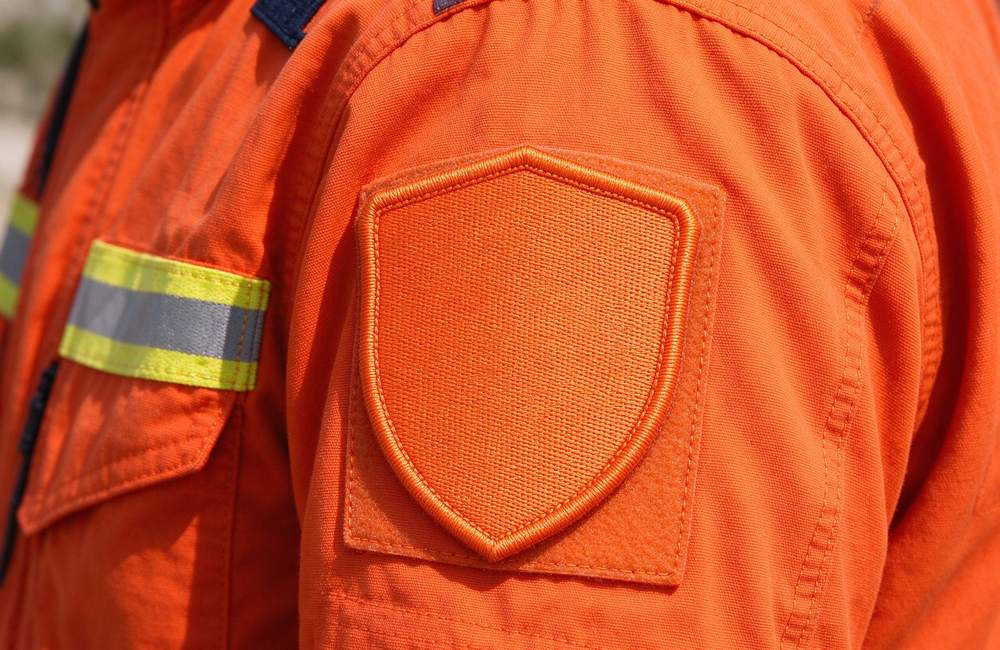
Badge and armband detail for team identity.
On a multi-unit scene, identity is logistics. Team colors, unit badges and shoulder patches tell the command post who is doing what, and they work best when they follow one scheme across the whole uniform program. Team identity uniforms make the scheme official: embroidered badges that survive industrial washing, color-coded trim that separates search from medical from command units, and name strips that read from a distance. Badges are applied to certified fabric without weakening it — placement, backing and stitch density are part of the garment spec, not decoration added later. A uniform that names its wearer saves minutes on scene, and minutes are the unit of rescue.
Badges, name bars, chest patches and embroidered unit marks are the standard customization package. They are applied after the fabric is certified, so the FR, anti-static and reflective performance stays intact. Confirm the artwork on a sample before production, and check that badge placement does not cover ventilation panels or reflective trim.
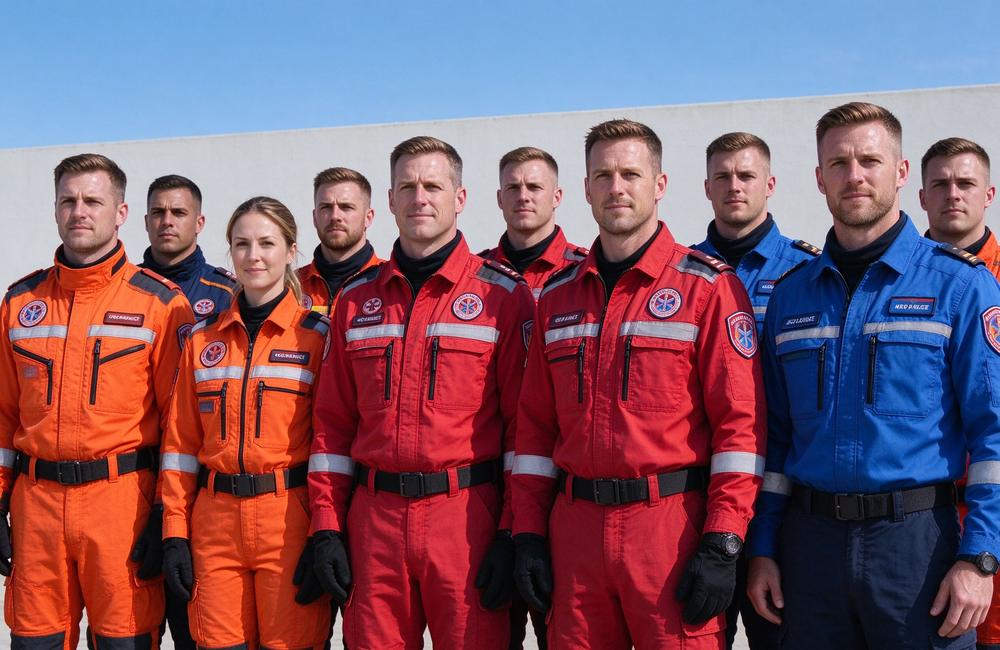
Color coding carries command information in multi-unit deployments: orange for line teams, navy for support, red for specialist units. High-visibility trim on shoulders, chest and back keeps the silhouette readable in smoke, rain and darkness. Most rescue lines offer red, blue, navy, orange, grey and green, so an agency can build a complete color plan from one supplier.
Identity is also accountability. In a multi-agency response, uniforms with unit badges, name bars and role marks let the incident command tell exactly who is on which task — and who should not be there. Agencies that standardize the identity package before an incident avoid the scramble of improvised markers during one.
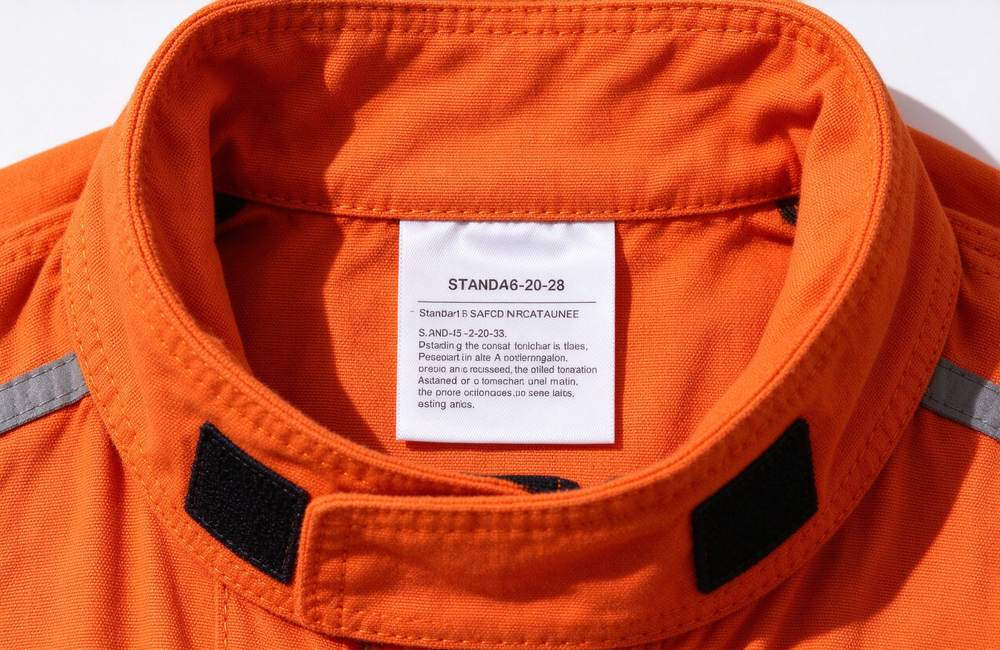
Verify the label names the standard, model and fabric before ordering.
Standards turn "rescue-grade" into a testable claim. The Chinese reference for emergency rescue clothing is GB/T 29519, the national standard for protective clothing for emergency rescue, supported by FR, anti-static and high-visibility garment standards. The table below maps the common references.
|
Standard |
Scope |
Typical Claim |
|
GB/T 29519 |
Emergency rescue protective clothing |
Rescue suits, coveralls |
|
GB/T 8965.1 |
Flame retardant protective clothing |
FR rescue uniforms |
|
GB 12014 |
Anti-static protective clothing |
Anti-static rescue suits |
|
High-visibility clothing |
International high-vis rescue wear |
When a supplier quotes a standard, ask for the test report naming the exact model. The certificate, the label and the actual garment must line up. For international programs, NFPA 1951 (US technical rescue) and NFPA 1999 (emergency medical) are the familiar North American benchmarks.
Certification is not a one-time event in a well-run program. Re-test or re-verify at intervals, keep the reports with each batch, and check the newest shipment against the certificate that was quoted. The same model can be manufactured to different standards over time, so the receiving team should verify every batch, not trust the first one.
Rescue clothing standards compared for procurement.
A rescue uniform certificate is read in three lines. The first is the standard and version — GB/T 29519 for emergency rescue clothing in China — because standards get revised and an old citation ages the bid. The second is the model number, which must match the garment you are buying, since a factory certificate for one model does not cover another. The third is what was actually tested: physical strength, seams, anti-static properties and the fabric weight behind the claim. Agencies that compare certificates line by line, rather than by the phrase "certified", end up with uniforms that defend themselves in an audit.
Most rescue programs combine standards: FR fabric for fire-rescue units, anti-static performance for technical teams, high-visibility for roadside and night work. Read the report line by line — flame spread, thermal stability, physical strength, electrical resistance and reflectance — and compare values between quotes, because every number corresponds to a moment in the field.
A common mistake in tenders is mixing up the standard families: quoting a structural fire standard for a rescue suit, or an anti-static claim without the matching fabric construction. The rescue uniform is its own category, defined by GB/T 29519 and supported by FR and anti-static references — and the supplier's report should show the rescue standard clearly, not a generic workwear certificate.
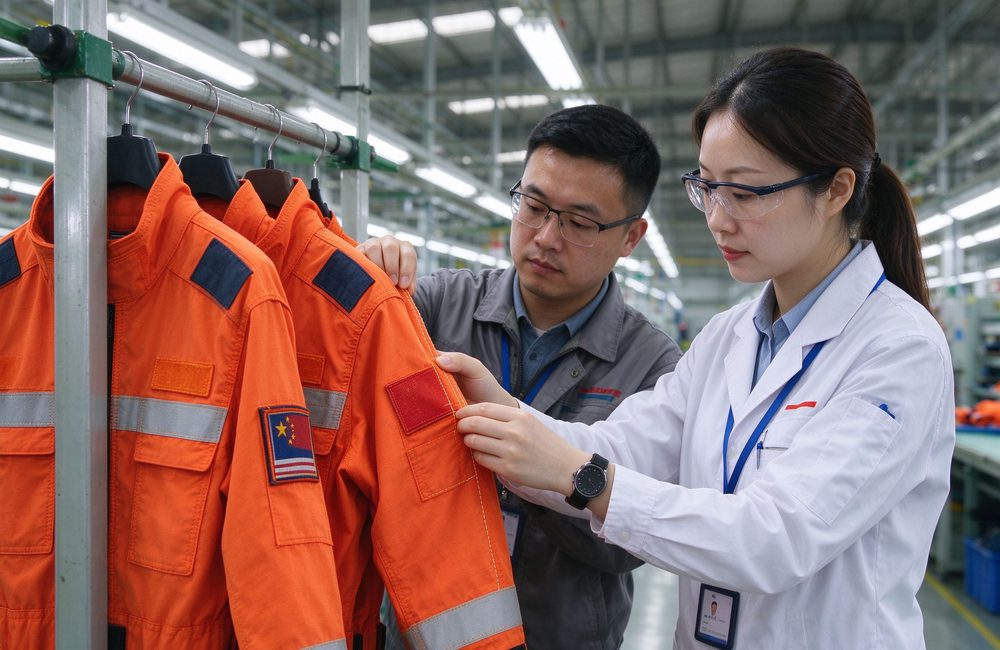
Inspection covers seams, badge placement and certificate matching.
Choosing a rescue clothing supplier is a checklist exercise: certificates, samples, size matrix and customization. We supply firefighter clothing wholesale including rescue suits, FR coveralls and seasonal layers for agencies, brigades and NGOs.
|
Check |
What to Verify |
Red Flag |
|
Certificates |
Report names the exact model |
Generic report without model |
|
Sample |
Fit, fabric hand, trim quality |
Sample differs from bulk |
|
Size matrix |
XS-7XL coverage for whole team |
Missing half sizes |
|
Customization |
Badges, embroidery, color plan |
Artwork changes certified fabric |
Order one sample per size and run the real motions — climbing, crawling, lifting, radio use. Check that badges sit correctly, closures close over gear, and the fabric does not bind at the shoulder. A uniform that fails a practice drill will be abandoned in the field.
Ask the supplier how the bulk run will differ from the sample: same fabric roll, same trim, same stitching? Samples are often made with extra care, so confirm the production standard in writing. A supplier who cannot explain the difference between sample and bulk is a risk before the first box arrives.
Sample room visit when choosing a supplier.
Build a receiving habit: weigh a sample against the stated fabric weight, hold the reflective trim to a light, and check the label against the certificate. Ten minutes of checks protects a season of deployment. Keep the test reports on file with the batch — receiving teams, auditors and future tenders all ask for them.
Include the receiving check in the tender documents themselves. When the acceptance criteria are written into the contract — fabric weight within tolerance, reflective reflectance above threshold, badge placement as approved — the supplier knows the shipment will be measured, and the quality arrives with the delivery instead of being negotiated afterward.
Bulk rescue clothing fails most often on fit, and fit fails most often on assumptions. Teams include men and women, tall and short builds, members who layer over winter kit and members who run hot — so a size chart ordered to the average leaves a third of the crew re-fitting. The practical sequence is a sample session before the bulk order: measure ten team members, compare against the chart, then order the distribution rather than a flat size run. The certified emergency rescue clothing line covers a full range from 160 cm to 190 cm, with separate tall and short cuts, and spare trousers for the fastest-wearing parts belong in the same order.
Comparing rescue clothing suppliers means comparing what happens after the quote. Check that the certificate names the exact model you are buying, that sample approval comes with a written spec, and that batch changes are communicated before shipment rather than after. Emergency rescue clothing suppliers who keep consistent dye lots and sizing across batches make the next season's reorder a one-page task; suppliers who treat every order as a fresh negotiation make it a project. Ask for the garment history on a sample: fabric source, wash-test results and the defects found and fixed in the last batch. The paper trail is the uniform's warranty.
Team sizing is a matrix problem, not an average. Measure the actual crew, build a size distribution, and order spares for the fastest-wearing items. Sizes from XS to 7XL cover mixed teams, and half sizes matter more than most buyers expect — a suit that fits the chest but ends short at the wrist fails the first rope test.
Gender-inclusive sizing matters for mixed teams: cut and proportions differ beyond the label, and a uniform that fits poorly on any member is a safety gap. Ask for the full size run and test across body types before committing to a bulk order.
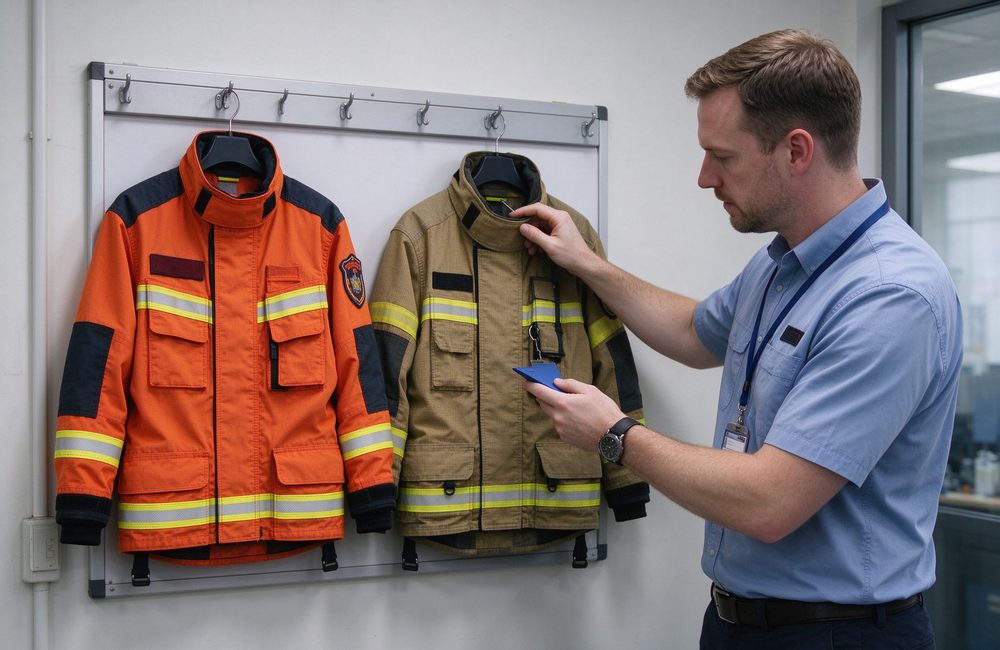
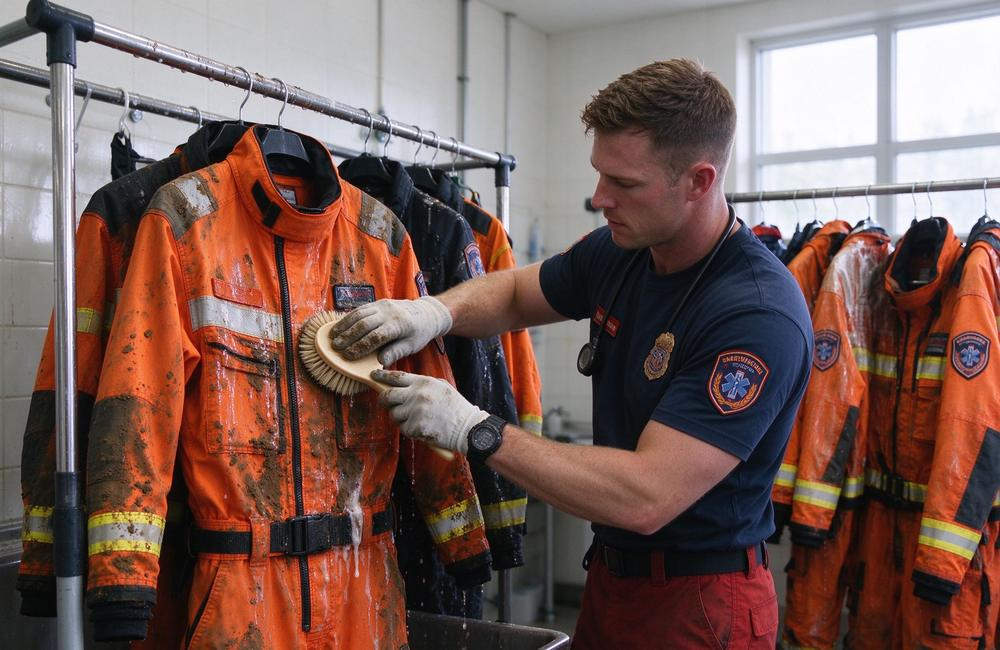
Air-drying in shade preserves quick-dry and reflective performance.
Rescue uniforms take mud, water, sweat and repeated washing, and care determines how long the performance lasts. Correct washing keeps the certificate promises true.
Rescue uniforms wear out on a cycle that laundry schedules cannot stop. Sun, washing and field abrasion age technical fabric even when the uniform looks whole, which is why agencies log service time and replace by season rather than by looks. A healthy program holds a standing stock for emergency callouts, rotates the oldest uniforms into training and keeps spare zippers, badges and reflective trim for field repairs. When the order is for emergency rescue clothing in bulk, plan the replacement cycle as part of the contract: consistent dye lots and consistent sizing across batches keep next season's uniforms matching this season's kit.
Uniforms in rescue service deserve the same records as other field equipment. A per-garment service file logs issue date, deployments, wash cycles and repairs — so the team knows when a jacket is due for replacement instead of discovering it on a call. The file also catches batch problems early: if three zippers fail in the same batch, the pattern shows up in the records before it costs an incident. Rescue uniform care includes storage rules too — hang uniforms away from sunlight and heat, store seasonal layers with closures open, and keep the wash line routine the same for every member so the whole team ages together.
Follow the care label: neutral detergent, no bleach or fabric softener, air-dry in shade. High-heat drying ages technical fabric and reflective trim faster than field use does. Inspect seams, zippers, hook-and-loop and reflective trim after every deployment, and mark each garment with its service start date so replacements arrive before the old stock fails.
Store uniforms loose and dry, away from direct sunlight and chemical containers, with badges protected. Keep a simple service log per garment: purchase date, washing count, inspection notes and replacement date. Agencies that track the cycle replace uniforms on schedule instead of discovering failures at the worst moment of the year.
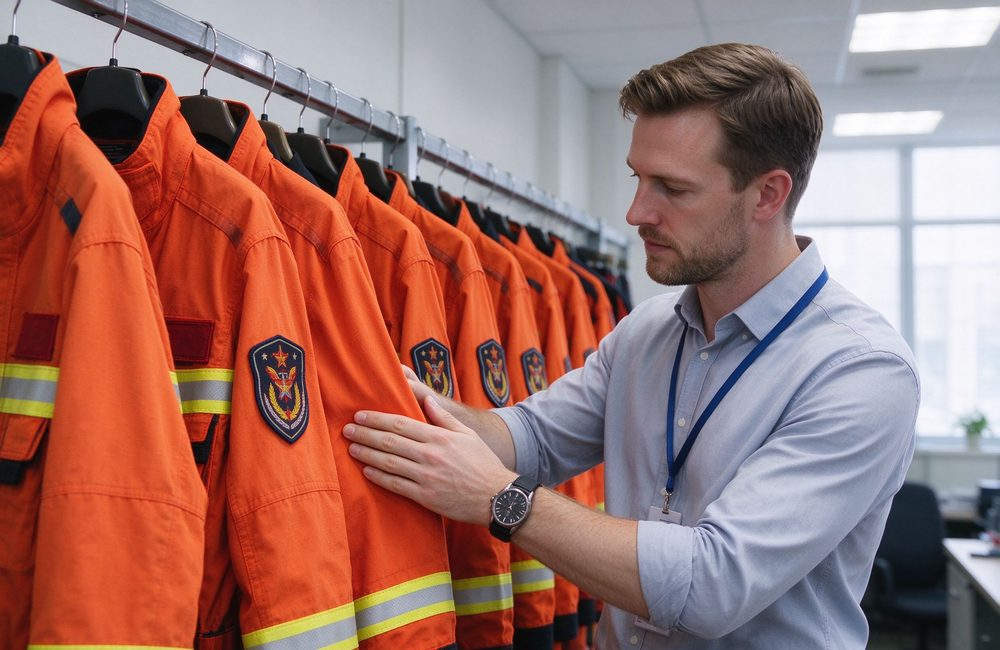
Uniform inspection at the maintenance station.
Agencies and NGOs buy bulk emergency rescue clothing as a system: matched uniforms for every member, seasonal layers, spares and a color plan that identifies units at a glance. Bulk ordering also makes customization economical — badges, embroidery and team colors become affordable at team volume.
The procurement calendar follows the risk calendar. Flood-prone regions order waterproof and quick-dry layers before the rainy months; mountain teams order thermal layers before winter; multi-season agencies order the whole program once and reissue per member. Getting seasonal lead times confirmed with the supplier in advance keeps the uniform program on schedule — and keeps crews equipped when the season actually arrives.
Start the size matrix from actual crew measurements, select the seasonal layers for your climate, and add spares for trousers, gloves and reflective trim. An agency kit is delivered as a matched set — uniforms, seasonal layers, badges and spares — and quantity, customization and lead time are confirmed in the sales contract. Send your size matrix, color plan and badge artwork for an accurate quote.
Certificates and test reports are packed with the delivery so receiving teams can match each unit against the tender documents. For agencies that reissue uniforms every season, a standing order with fixed sizes, colors and badge artwork keeps the team uniform year after year — and keeps the next tender response one page shorter.
Budget planning is easier with a program price: uniforms, seasonal layers, spares and accessories priced as a per-member package, so the agency can forecast next season's cost from this season's roster.
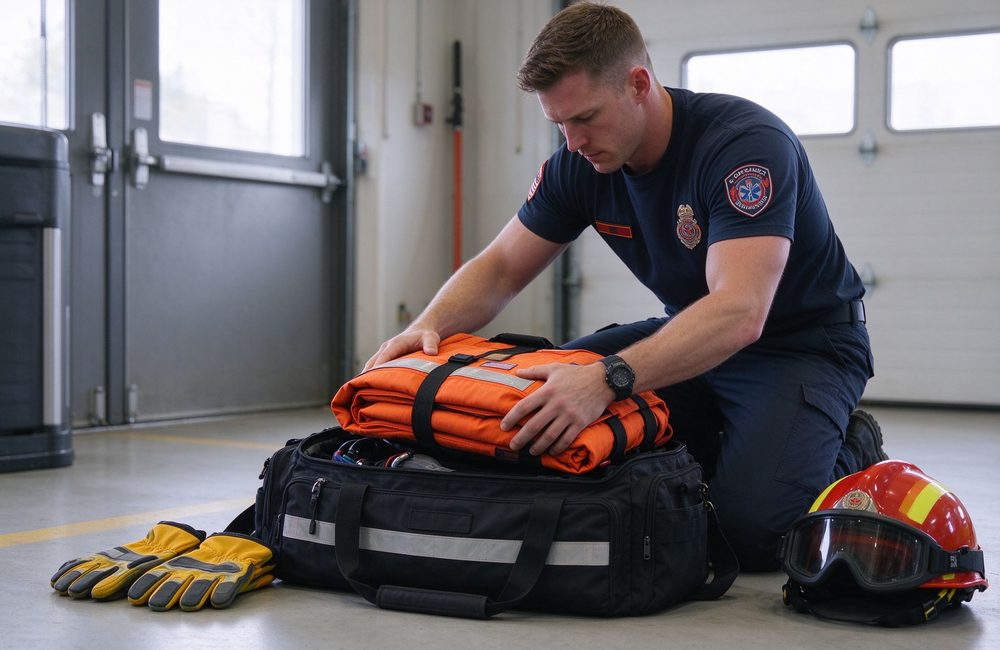
Bulk programs cover uniforms, seasonal layers and spare parts in one order.
Answers to the questions agencies, brigades and NGOs ask most when buying rescue team uniforms. Most come from real tenders, so they are written to be copied straight into a bid response or a purchasing checklist.
If a question you need is not listed, send it to the supplier with the same level of detail — standard, quantity, seasons and customization — and the answer will come back in the same format. Keep the returned answers with your procurement file so the next round starts from confirmed facts.
Emergency rescue clothing is the working uniform for search-and-rescue and response teams: quick-dry, abrasion-resistant, articulated for climbing and crawling, with pockets for tools and reflective trim for visibility. It sits between firefighting PPE and general workwear.
Any organization that sends people toward an incident in uniform: government emergency response departments, urban SAR teams, fire rescue brigades, wilderness SAR groups, NGOs and volunteer networks. What unites them is not the incident type but the everyday reality of a uniform that has to look right at a press briefing, survive a muddy field shift and come back ready for the next call — and be re-orderable in matched team batches when a season of operations wears it out.
Turnout gear protects against flashover for short intense attacks. Rescue clothing handles mud, water, brush and long hours — it does not need to survive a fire room, but it must dry fast, move freely and identify the wearer as part of a team.
Versatile rescue uniforms use layer systems: quick-dry summer shells, anti-static technical suits, autumn/winter composite layers and winter down insulation. Adaptive details — detachable liners, zip vents, adjustable cuffs — stretch one system across the year.
Summer rescue work punishes heavy fabric twice: it heats the wearer on the scene and takes too long to dry between scenes. The summer fast-dry rescue suit solves both with a 70% polyester / 30% viscose blend at 170 g/m² — light enough to breathe, quick to dry, still abrasion-resistant for rubble and rope work. Color and size choices (XS to 6XL, six colors) are a distribution question, not a performance one.
Anti-static rescue clothing uses conductive yarn — the HuoYan Gen.1 suit carries 12% conductive yarn in a cotton-polyester blend — for teams working near electronics, fuel, dust or explosive atmospheres where static discharge is a risk.
A full winter program has three pieces: the autumn/winter composite suit (96% nylon + 4% spandex) for active cold-wet work, the winter down jacket (80% duck down) for deep cold standby, and the winter cotton parka as a workhorse layer.
Customization and certification are handled as two steps on the same garment. The fabric is tested and certified first, then badges, name bars and unit patches are applied with stitch patterns that do not cut into the barrier or seam structure — so the uniform that carries a team identity still carries its tested performance. The workflow is confirmed on a sample before bulk production, which is how agencies keep both the look and the certificate.
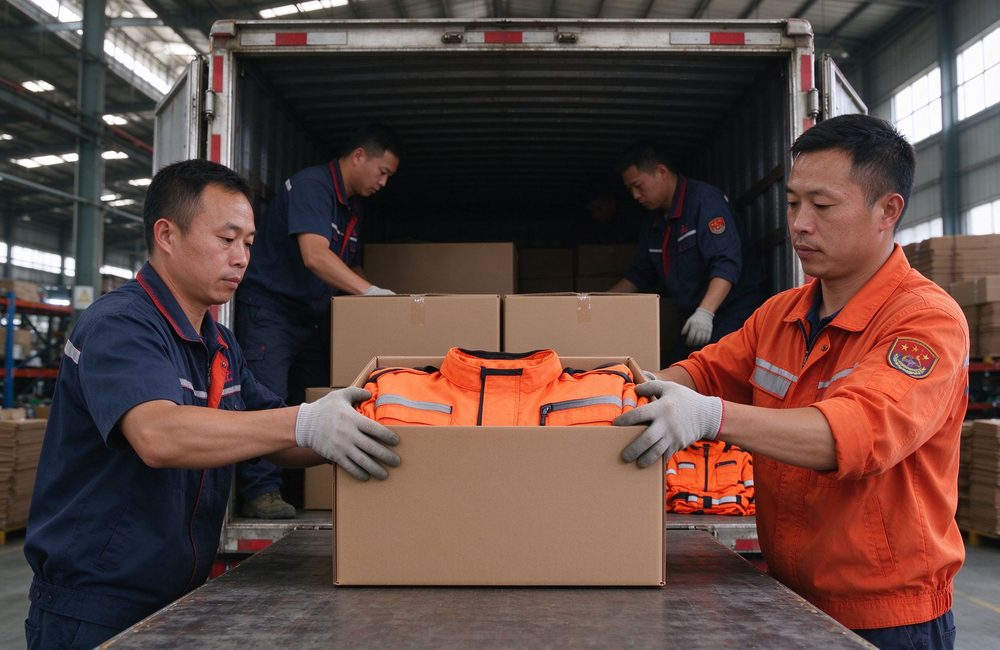
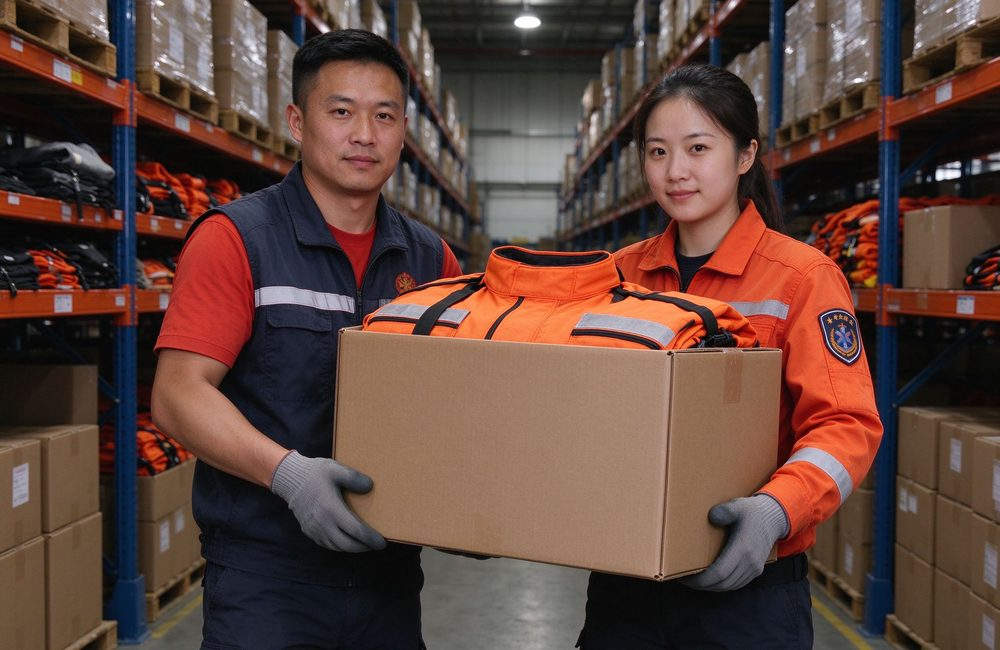
Bulk rescue uniforms loaded for export.
A rescue scene at night is decided by who is visible. Trim on the shoulders, chest and back keeps the crew member readable from every approach angle — front, side and rear — in smoke, rain and darkness. Certified retroreflective material holds its brightness through repeated washing, which is why the trim is part of the tested specification: the silhouette that disappears in the first rain is not a uniform defect, it is a specification failure.
The Chinese reference is GB/T 29519 for emergency rescue protective clothing, plus GB/T 8965.1 for FR and GB 12014 for anti-static. International programs often reference EN ISO 20471 for high-visibility and NFPA 1951 for technical rescue.
Ask for the test report naming the exact model, then check the label against it: same standard number, same model, same fabric description. Weigh a sample, test the reflective trim, and keep reports on file with the batch.
Treat the uniform as field equipment with a maintenance routine. Follow the care label exactly: neutral detergent only, no bleach and no fabric softener, and air-dry in shade — machine heat ages technical fabric and reflective trim faster than the field does. After every deployment, run the seams, zippers, badges and reflective bands under a light before the uniform goes back into service; a small tear logged early costs minutes to fix, and a uniform sent out damaged costs an incident.
Rescue lines typically cover XS to 7XL so mixed teams get a matched set. Build the size matrix from actual crew measurements, not averages, and order spares for the fastest-wearing items.
For agencies the uniform is planned as a project: core suits, seasonal layers and spares are quoted together, and the minimum order is confirmed in the contract rather than fixed up front. Send your size matrix, color plan and badge artwork for an accurate quote and delivery schedule.
Compare uniforms on the same tender sheet: standard number, certificate, fabric composition, weight and reflective class, then price. A low price that drops the certificate or trim quality is not the same uniform.
 |

|
Дружественные ссылки :
авторское право © Custom Disaster - Relief Bedding: Tents, Sleeping Bags, Blankets Все права защищены
профессиональная команда для обслуживания !