Категории
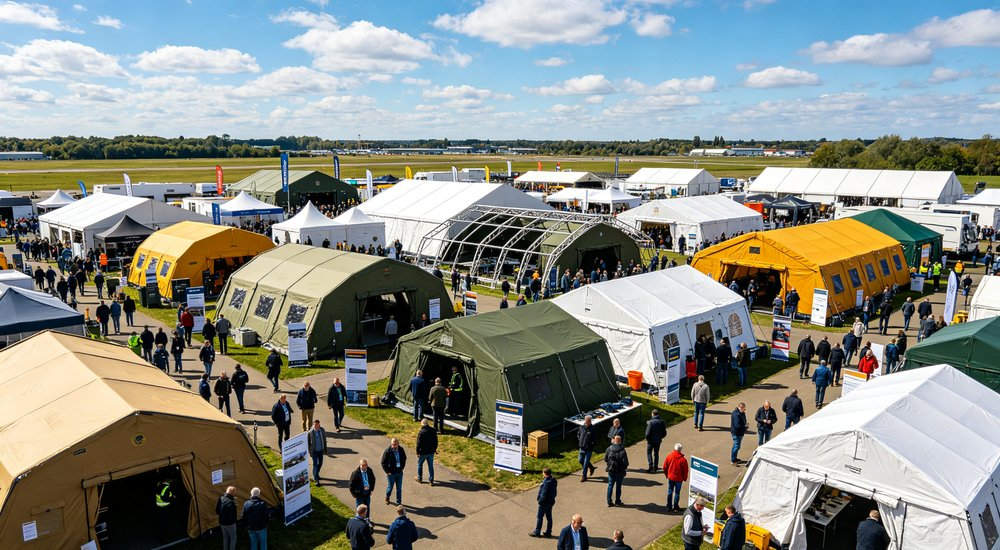
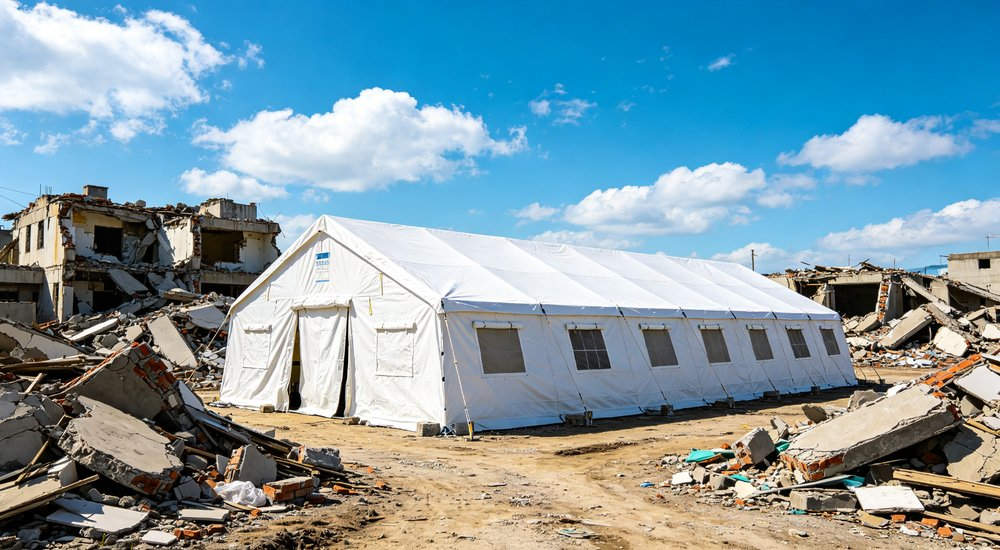
Picture this: A 7.8 magnitude earthquake strikes in the middle of the night. Within hours, 50,000 homes are destroyed. By morning, aid agencies are scrambling — not just for food and water, but for shelter. Tens of thousands of families need somewhere to sleep, and they need it this week, not next month.
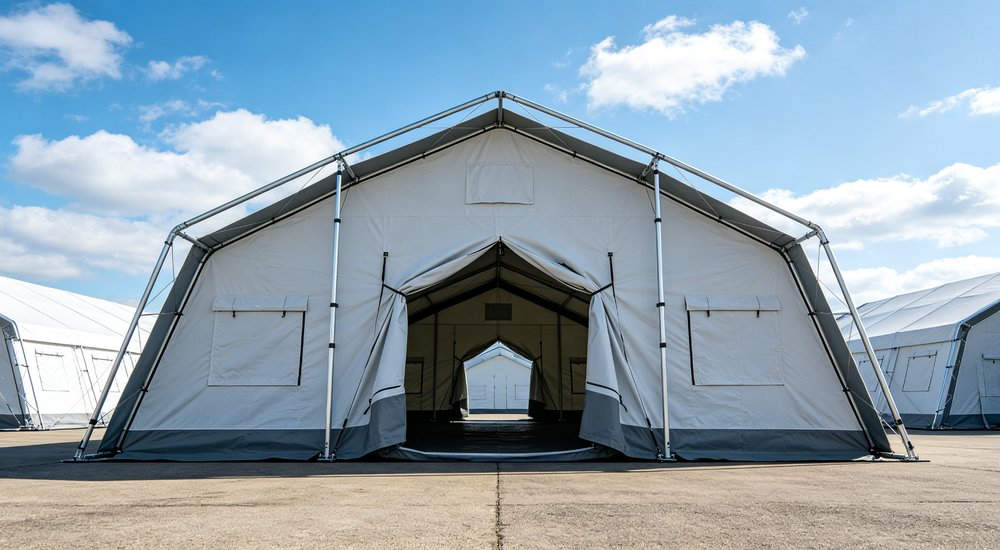
Here is what that means: is the world emergency tent buyers live in. And it is changing fast. Ten years ago, you bought a standard canvas tent and that was it.
Today? Donors ask about carbon footprint. Field teams demand tents that set up in 10 minutes, not 2 hours. Procurement officers juggle 5 different suppliers for tents, raincoats, blankets, and boots — and someone always delivers late.
The emergency tent market is changing faster than most buyers realize. Climate-driven disasters are increasing demand. New fabric technologies are changing what is possible. And procurement patterns are shifting as NGOs and governments plan for longer-term camp operations. Here is what matters for your next buying cycle.
In plain terms: The emergency tent business is booming because disasters are getting worse, and the old way of doing things doesn't work anymore.
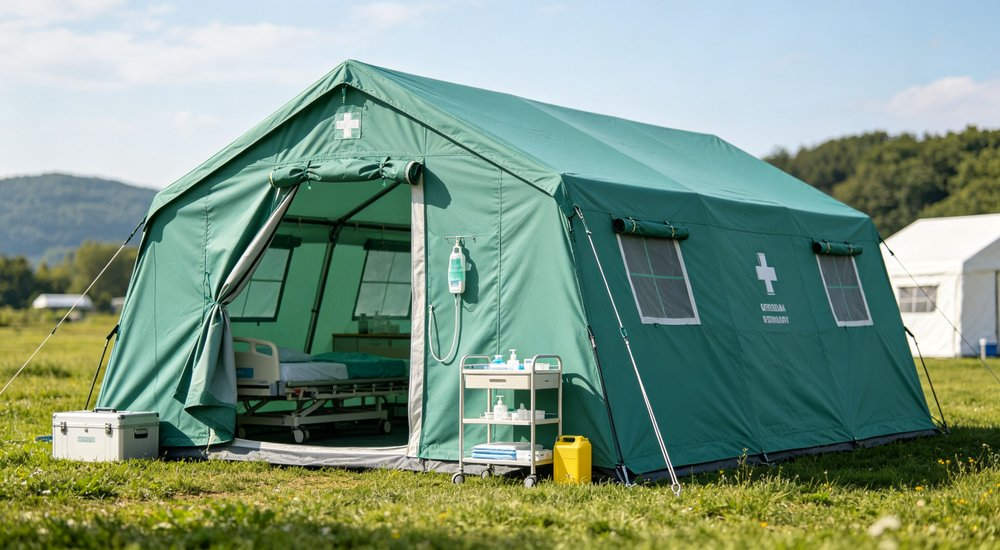
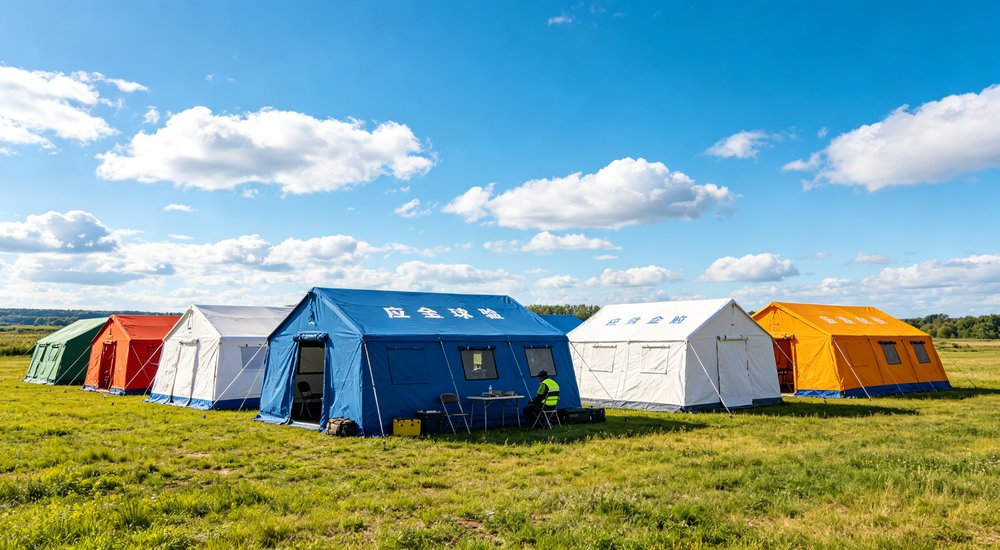
Consider this: emergency tent industry sits at the intersection of humanitarian response, military logistics, and disaster preparedness. Unlike commercial outdoor camping tents, emergency shelter tents are engineered for rapid deployment, durability in extreme conditions, and compliance with international humanitarian standards. The industry has evolved significantly since the 2010 Haiti earthquake, when the limitations of traditional relief tents were exposed on a global stage.
Today, the industry is shaped by five megatrends: climate change accelerating demand, material science enabling better performance, sustainability mandates from major donors, supply chain diversification away from single-source dependence, and digital transformation in manufacturing and procurement. These trends are creating both challenges and opportunities for manufacturers, suppliers, and procurement organizations worldwide.
|
Segment |
Market Share |
Growth Rate |
Primary Buyers |
|
Family/household tents |
38% |
5.2% |
UNHCR, IFRC, NGOs |
|
Community/large tents |
22% |
7.1% |
UNICEF, IOM, camp management |
|
Medical/field hospital tents |
15% |
8.5% |
WHO, MSF, military medical |
|
Military/field tents |
18% |
4.8% |
Defense ministries, NATO |
|
Winterized/insulated tents |
7% |
9.2% |
Humanitarian orgs, cold climate |
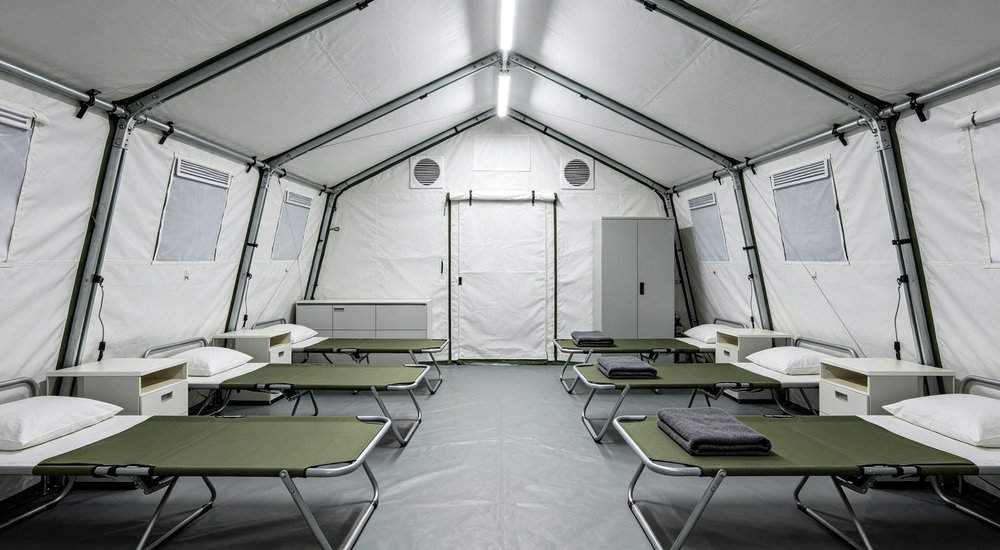
In plain terms: This is a $2.3 billion market today, and it will be $3.2 billion in 4 years. Here's where the growth is coming from.
Consider this: global emergency tent market was valued at approximately $2.3 billion in 2025 and is projected to reach $3.2 billion by 2028. This growth is not uniform across regions or product categories, with significant variation driven by geopolitical events, climate patterns, and donor funding cycles.
|
Region |
2025 Market Size |
2028 Projection |
Key Drivers |
|
Middle East & North Africa |
$620M |
$890M |
Protracted conflicts, refugee crises |
|
Sub-Saharan Africa |
$480M |
$720M |
Climate disasters, population growth |
|
Asia-Pacific |
$510M |
$680M |
Monsoon floods, earthquake zones |
|
Europe |
$340M |
$450M |
Ukraine crisis, refugee reception |
|
Americas |
$250M |
$320M |
Hurricane preparedness, wildfires |
|
Other regions |
$100M |
$140M |
Various humanitarian needs |
In plain terms: Four forces are pushing demand up — more storms, more wars, more donor money, and better standards.
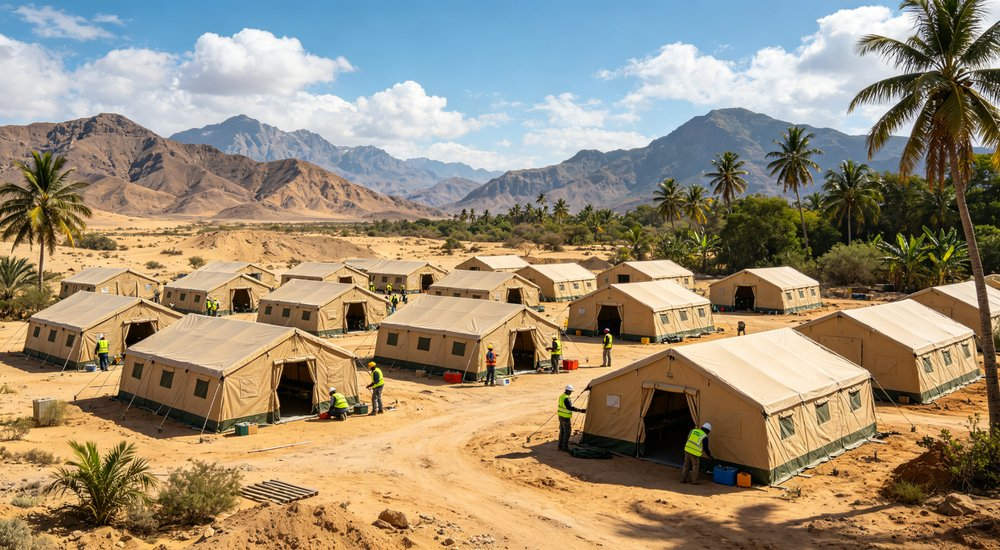
Understanding demand drivers is critical for both manufacturers planning production capacity and procurement organizations planning inventory. The emergency tent demand is driven by a complex interplay of natural disasters, conflict, policy decisions, and funding availability.
|
Driver |
Impact Level |
Trend Direction |
Notes |
|
Climate-related disasters |
Very High |
↑ Increasing |
Floods, storms, wildfires up 35% since 2015 |
|
Armed conflict & displacement |
Very High |
→ Stable-High |
108M+ forcibly displaced globally |
|
Donor funding levels |
High |
→ Variable |
Humanitarian aid budget cycles |
|
Government preparedness |
Medium |
↑ Increasing |
National disaster reserve stockpiles |
|
Urbanization & density |
Medium |
↑ Increasing |
Urban disaster risk growing |
|
Pandemic & health crises |
Medium |
↓ Decreasing |
Medical tent demand normalizing |
|
Military operations |
Medium |
→ Stable |
Field deployment requirements |
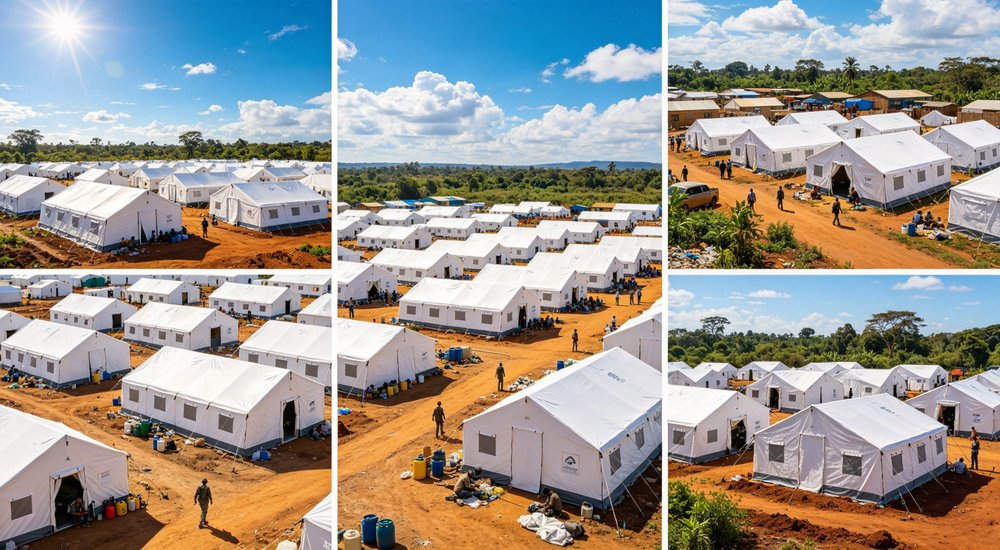
What this means for your buying decisions
If you are still buying the same tent specifications you used 5 years ago, you are probably overpaying for features nobody needs and under-specifying the things that matter now — like winter insulation, quick-setup frames, and sustainable emergency shelter materials. The buyers who get this right win tenders. The ones who don't, lose to competitors who read the trends.
|
Technology |
Maturity Level |
Impact |
Timeline to Mainstream |
|
Modular tent systems |
Commercial |
High |
Now available |
|
Inflatable frame structures |
Growing |
High |
2026-2027 |
|
Integrated solar power |
Emerging |
Medium |
2027-2028 |
|
Smart sensor monitoring |
Pilot |
Medium |
2028-2029 |
|
3D-printed components |
R&D |
Low-Medium |
2029+ |
|
Nano-coating fabrics |
Commercial |
Medium |
Now available |
|
Phase-change insulation |
Emerging |
Medium |
2027-2028 |
Note: All price ranges are reference estimates based on 2025 market data and may vary based on order quantity, specifications, shipping terms, and market conditions. Actual pricing should be confirmed with suppliers through formal quotation.
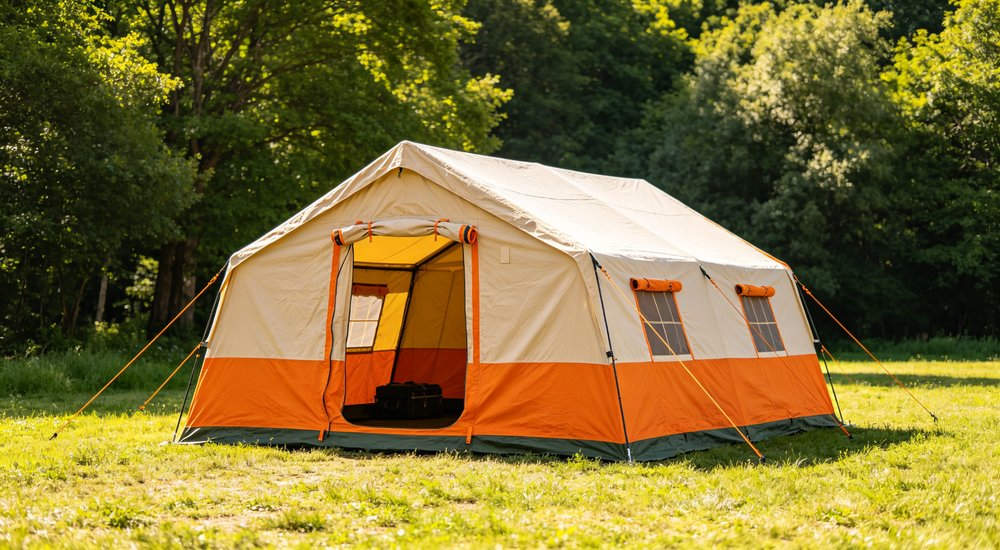
Looking ahead, prices are expected to gradually increase 3-5% annually through 2028, driven by labor cost inflation, sustainability investment requirements, and quality standard upgrades. However, increased manufacturing competition from new entrants in Vietnam and India may offset some of these increases. Procurement organizations can mitigate price risk through long-term contracts, volume commitments, and dual sourcing strategies.
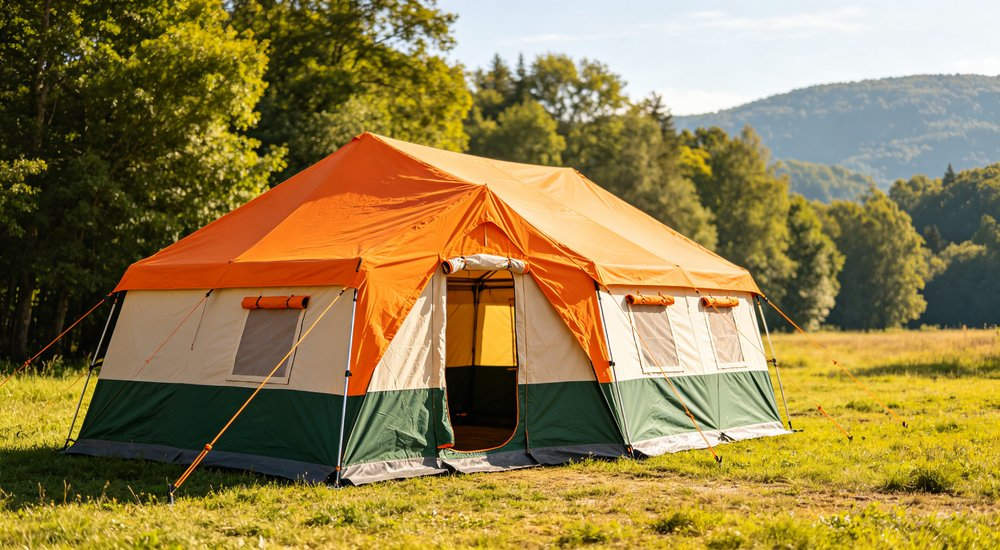
Understanding tent certification standards plays an increasingly important role in emergency tent procurement, as buyers seek objective verification of quality, safety, and performance. The standards environment is evolving, with new standards addressing sustainability, digital accessibility, and climate-specific performance.
|
Material |
Weight (g/m²) |
Waterproof |
UV Resistance |
Flame Retardant |
Lifespan |
|
Standard polyester 150D |
150 |
2000mm |
300hrs |
Yes (treated) |
1-2 years |
|
Heavy polyester 300D |
300 |
3000mm |
500hrs |
Yes (treated) |
2-3 years |
|
PVC laminated polyester |
450 |
5000mm |
1000hrs |
Yes (inherent) |
5-7 years |
|
canvas tent using Cotton canvas 380gsm |
380 |
1500mm |
800hrs |
Yes (treated) |
3-5 years |
|
Nano-coated polyester |
180 |
5000mm |
800hrs |
Yes (treated) |
3-4 years |
|
Recycled PET polyester |
200 |
3000mm |
500hrs |
Yes (treated) |
2-3 years |

Several new certification areas are emerging that will shape future procurement requirements:
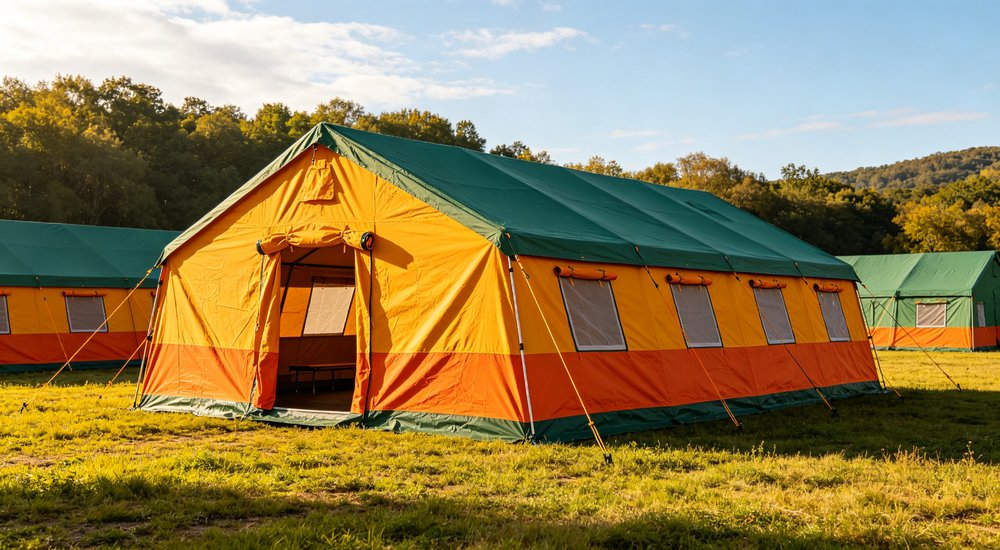
In plain terms: Best case: $3.8B market by 2030. Worst case: $2.9B. Most likely: $3.4B. Here's what drives each scenario.
Based on the trends analyzed above, the following forecast outlines the expected trajectory of the emergency tent industry through 2030.
|
Initiative |
Organization |
Requirement |
Impact on Procurement |
|
Greening the Blue |
UN system |
Carbon footprint reporting |
Suppliers must provide emissions data |
|
Sustainable procurement policy |
USAID/BHA |
Environmental compliance |
Preference for recycled materials |
|
Eco-friendly procurement |
ECHO |
Life cycle assessment |
Durability and recyclability scored |
|
Circular economy commitment |
IFRC |
Reuse and recycle targets |
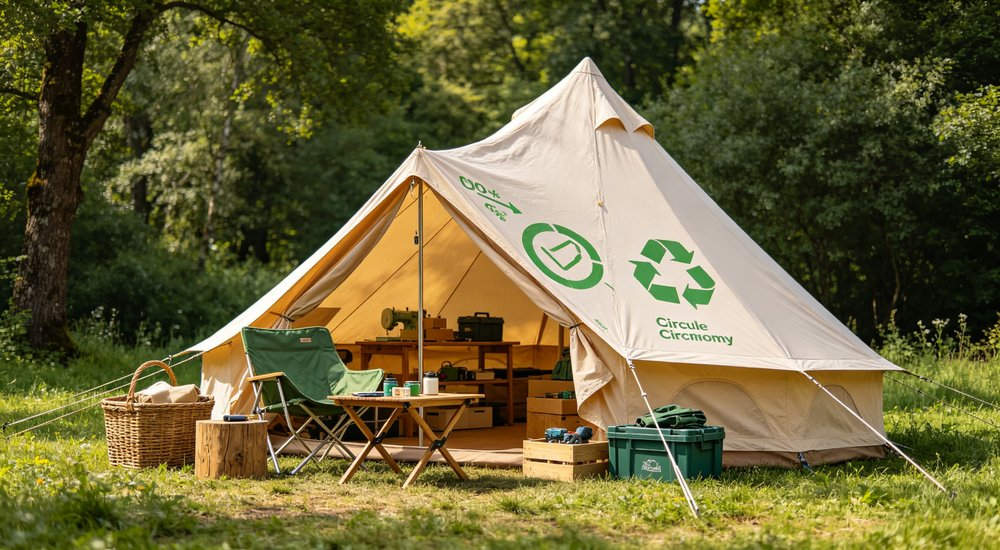
Take-back and recycling programs |
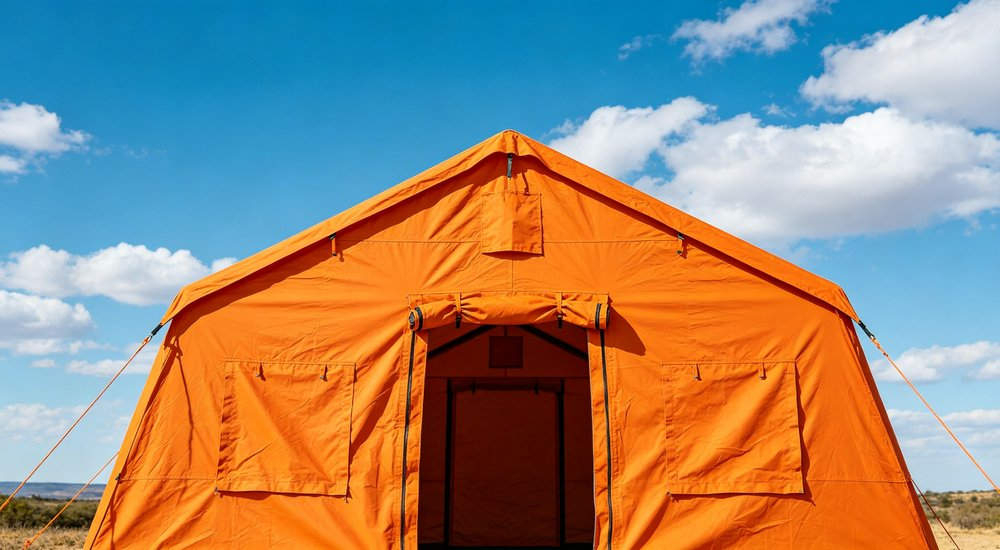
Base case (60% probability): Market grows at 6-7% CAGR, driven by climate disasters and ongoing conflicts. Material costs stable, gradual price increases. Sustainability requirements become mainstream but not mandatory.
Upside case (25% probability): Accelerated climate disasters and new large-scale conflicts drive 8-10% growth. Government preparedness investments surge. Modular and sustainable solutions gain rapid adoption.
Downside case (15% probability): Global economic downturn reduces donor funding. Peace agreements reduce conflict-driven demand. Price competition intensifies, compressing margins.
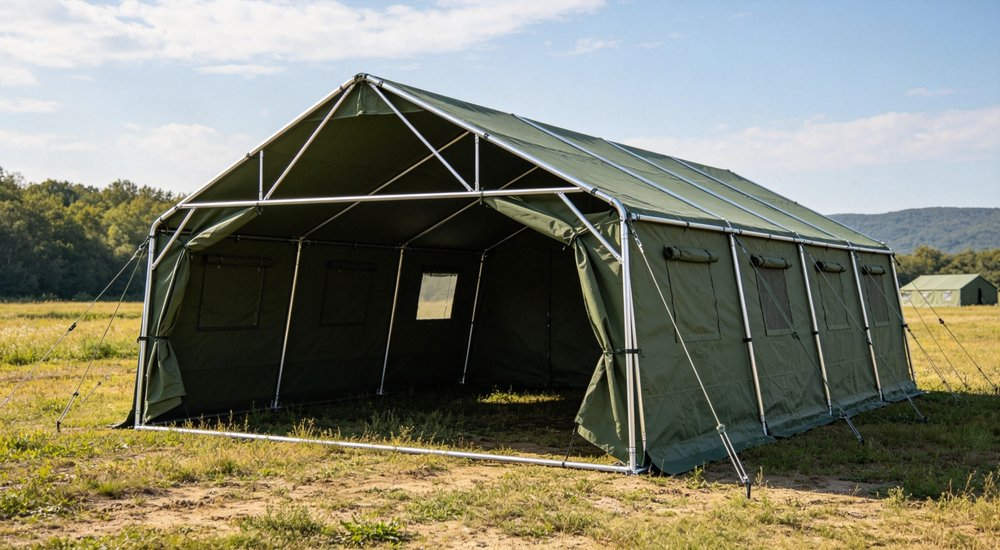
Based on the industry trends analyzed, the following procurement strategy recommendations are designed to help organizations navigate the evolving emergency tent market effectively.
|
Area |
Technology |
Adoption Rate |
Benefits |
|
Production planning |
ERP/MES systems |
45% |
30% faster order fulfillment |
|
Quality control |
AI visual inspection |
20% |
50% fewer defects escaping |
|
Inventory management |
RFID tracking |
30% |
Real-time stock visibility |
|
Customer communication |
Digital portals |
35% |
Order tracking, document sharing |
|
Product design |
3D CAD/CAM |
55% |
Faster prototyping, less waste |
|
Supply chain visibility |
Blockchain/IoT |
10% |
Traceability and compliance |
When evaluating suppliers in the current market, procurement teams should weight criteria differently than in the past. The recommended weighting for 2026-2027-2028 tenders is:
In plain terms: We make the fabric ourselves (not just assemble), we do tents AND emergency kits AND protective gear, and we've been doing this for 20+ years.
Understanding industry trends is valuable, but choosing the right manufacturing partner determines whether you can capitalize on these trends. As an emergency shelter manufacturer with 20+ years of experience, we have navigated every major industry shift — from the 2010 Haiti earthquake response to the COVID-19 medical tent surge to the Ukraine winterization demand. Here is how we align with the trends shaping this industry:

|
Industry Trend |
Our Capability |
Your Benefit |
|
Modular shelter systems |
Custom modular design & connector manufacturing |
Scalable solutions that adapt to changing needs |
|
Sustainability requirements |
Recycled PET fabric options, solar-powered factory |
Donor compliance, lower carbon footprint |
|
Supply chain diversification |
Integrated textile factory + component sourcing network |
Quality control, reliable capacity, competitive pricing |
|
Rapid deployment demand |
4-week standard delivery, 2-week rush capability |
Meet emergency response timelines |
|
Certification evolution |
ISO 9001, flame retardant, EN 13782 compliance |
Pass tender evaluations, reduce compliance risk |
|
Customization needs |
OEM/ODM, custom sizes, branding, accessory integration |
Tailored solutions for specific operational requirements |
|
Winterized emergency tent segment growth |
Insulated tent manufacturing capability |
Address cold-climate displacement needs |
|
Medical tent demand |
Field hospital tent production experience |
Serve health emergency response requirements |
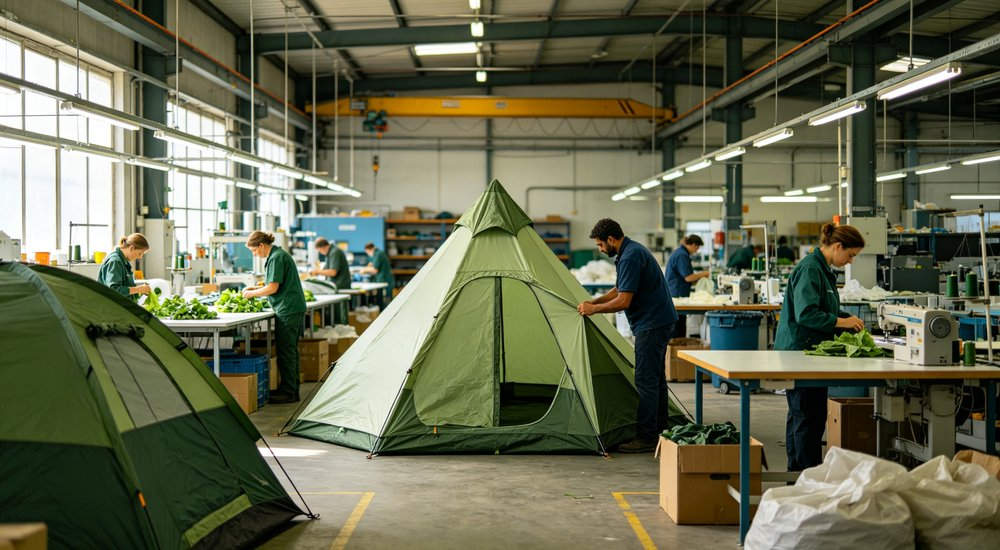
Beyond emergency tents, we manufacture and supply a full range of emergency response products, enabling consolidated procurement for our clients:
|
Category |
Products |
Production |
|
Shelter systems |
Family tents, community tents, medical emergency tent solutions, winterized tents, modular shelter systems |
In-house textile factory |
|
Emergency kits |
First aid kits, survival kits, hygiene kits, disaster response kits, vehicle emergency kits |
Assembly & quality control |
|
Protective wear |
Raincoats, rain boots, protective suits, work gloves, safety helmets, face masks |
In-house + partner network |
|
Life support |
Emergency blankets, sleeping mats, sleeping bags, thermal insulation |
In-house textile factory |
|
Rescue equipment |
Life jackets, rescue ropes, emergency lighting, whistles, multi-tools |
Established partner network |
This product breadth means our clients can issue a single purchase order covering all emergency response needs, with one quality standard, one delivery schedule, and one point of contact for after-sales support.
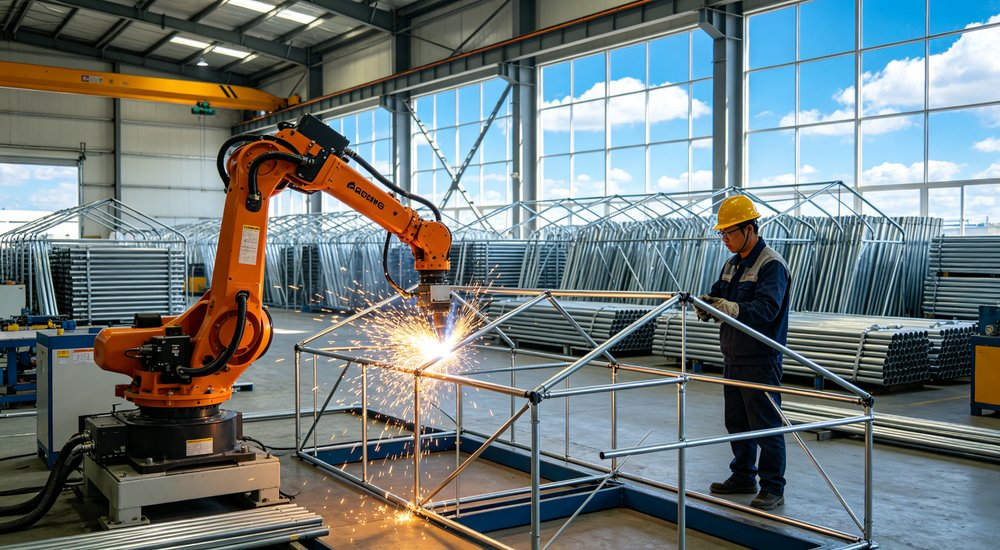
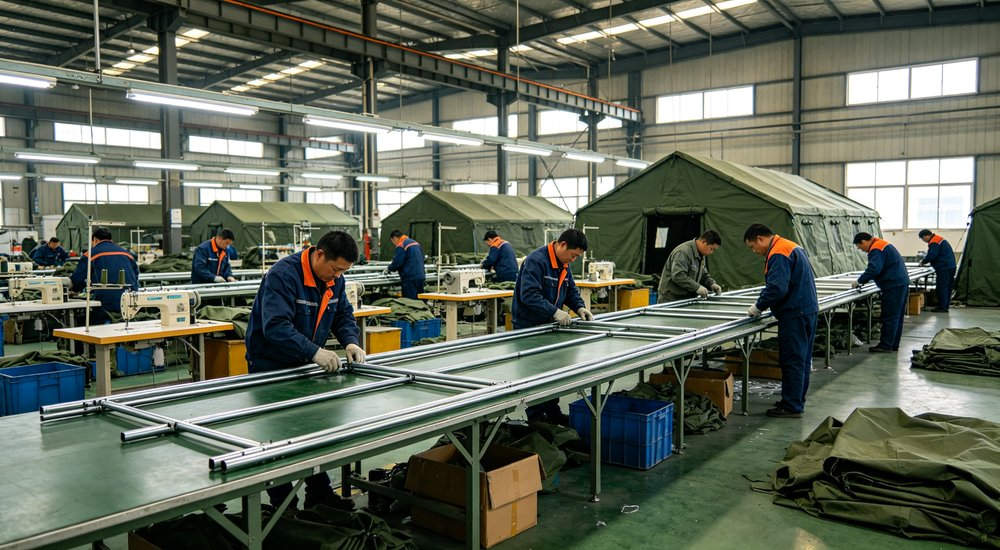
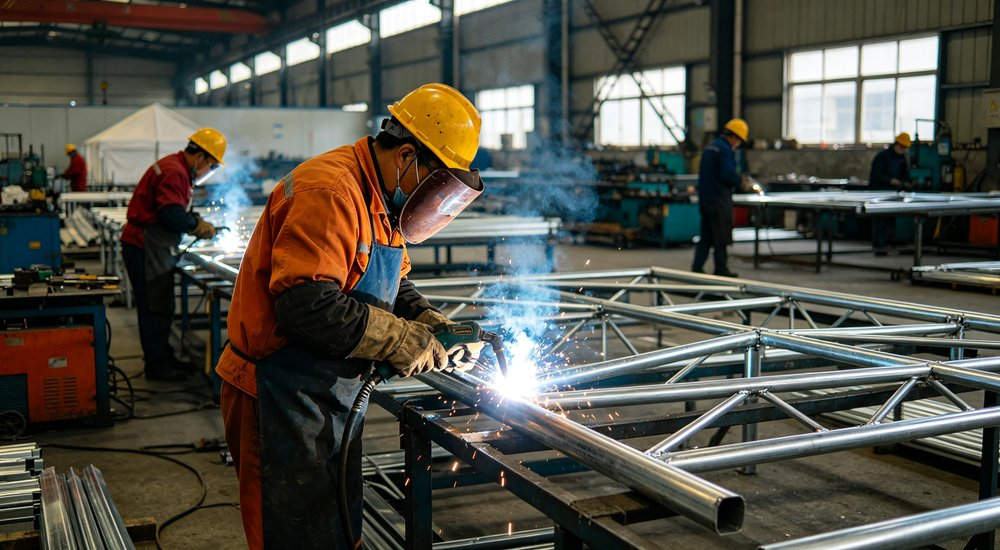
Unlike trading companies that simply broker orders, we operate our own textile production facility where we manufacture tent fabrics in-house. This vertical integration gives us three critical advantages:
(1) quality control at every production stage, from yarn to finished tent;
(2) cost efficiency by eliminating middleman margins; and
(3) production flexibility to adjust specifications, quantities, and delivery schedules without waiting on third-party fabric suppliers.
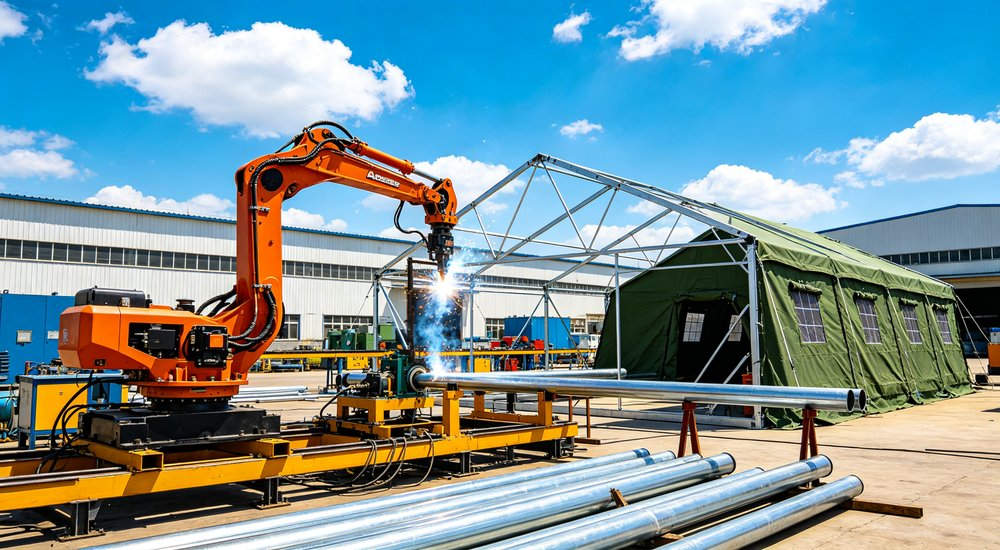
Our production capacity supports both large-volume framework agreements (50,000+ units annually) and customized smaller orders for specialized applications. We maintain raw material safety stock to enable rapid response orders, and our quality inspection team conducts multi-stage testing including waterproof verification, flame retardant testing, and structural load assessment before shipment.
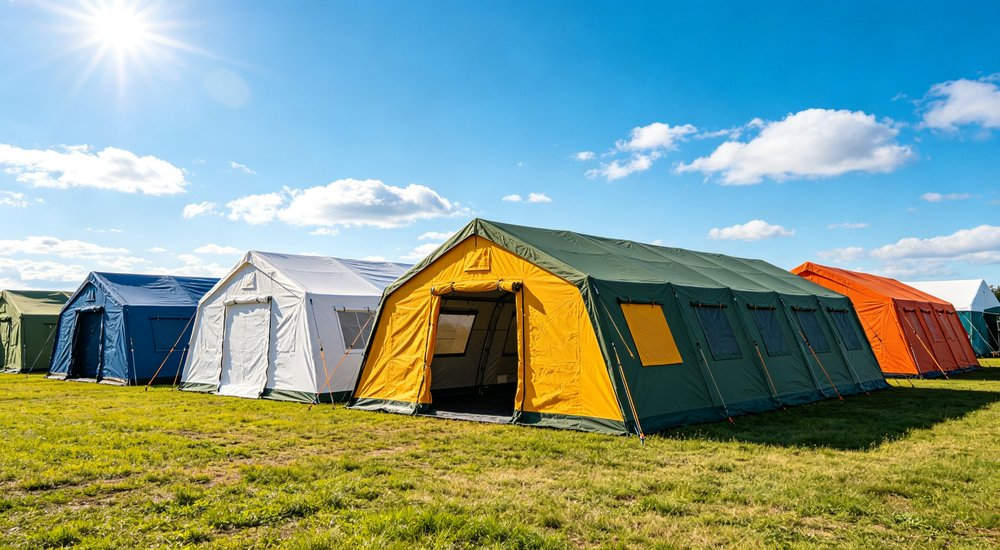
Q: What is driving the growth in emergency tent demand?
The primary drivers are disaster relief tent demand from climate-related disasters (displacing 21.5 million people annually), refugee tent demand from humanitarian crisis and protracted conflicts (108+ million forcibly displaced), and growing government investment in disaster preparedness. Climate change is the most significant long-term driver, with flood, storm, and wildfire events increasing in frequency and severity.
Key technological changes include modular scalable systems that can be reconfigured, inflatable emergency shelter frame structures reducing weight and setup time, nano-coated fabrics improving durability, and integrated solar power and lighting. The industry is moving from fixed single-purpose tents to adaptable, multi-use shelter systems.
Sustainable materials (recycled polyester, organic cotton) currently cost 10-15% more than conventional materials. However, total cost of ownership can be lower due to improved durability and potential donor preference. As demand scales and production efficiency improves, the price premium is expected to decrease to 5-8% by 2028.
Q: Which regions offer the best manufacturing value currently?
China remains the leader in scale and supply chain depth, but Vietnam and India offer competitive pricing with growing capacity. Turkey provides proximity advantage for European and MENA buyers. The optimal strategy is dual sourcing across two regions rather than choosing a single lowest-cost location.
Beyond established standards (ISO 9001, flame retardant certifications), the fastest-growing requirements are ISO 14001 (environmental management), product carbon footprint declarations, and social accountability certifications. EU buyers will increasingly require digital product passports and circularity documentation.
Q: How will pricing trend over the next 3 years?
Prices are expected to increase 3-5% annually through 2028, driven by labor inflation, sustainability investment, and quality upgrades. A standard 12m² family tent FOB price is forecast to rise from $135-200 in 2025 to $150-225 by 2028. Long-term contracts can lock in current pricing.
Inflatable tents are gaining share in specific applications (medical, military, rapid response) but are not replacing frame tents for general humanitarian use. Frame tents remain dominant due to lower cost, repairability, and proven durability. The market is segmenting rather than converging on a single technology.
Key strategies include: dual sourcing across countries, long-term framework agreements locking capacity, strategic stockpiles in regional hubs, alternative specifications for substitution, and real-time supply chain monitoring. Organizations that invested in resilience before 2020 fared significantly better during subsequent disruptions.
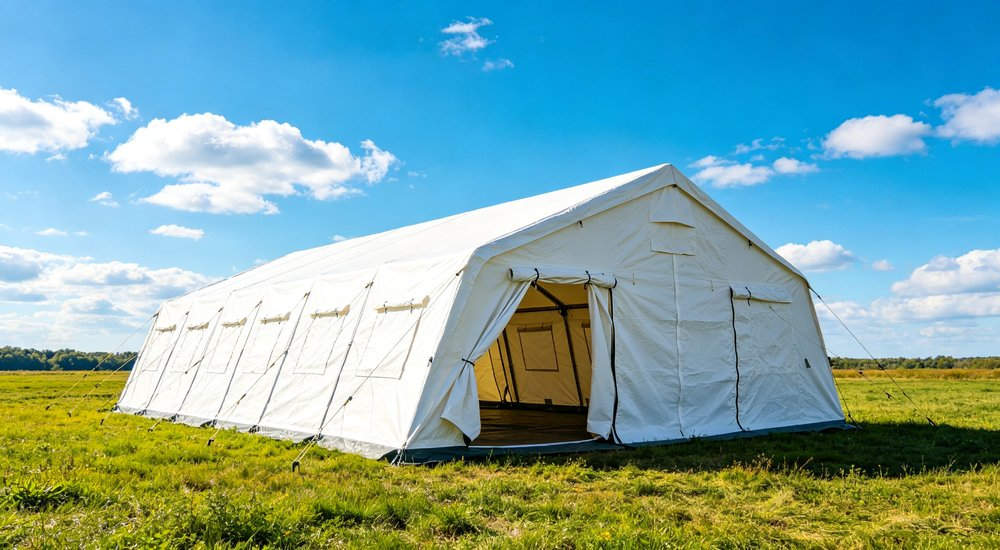
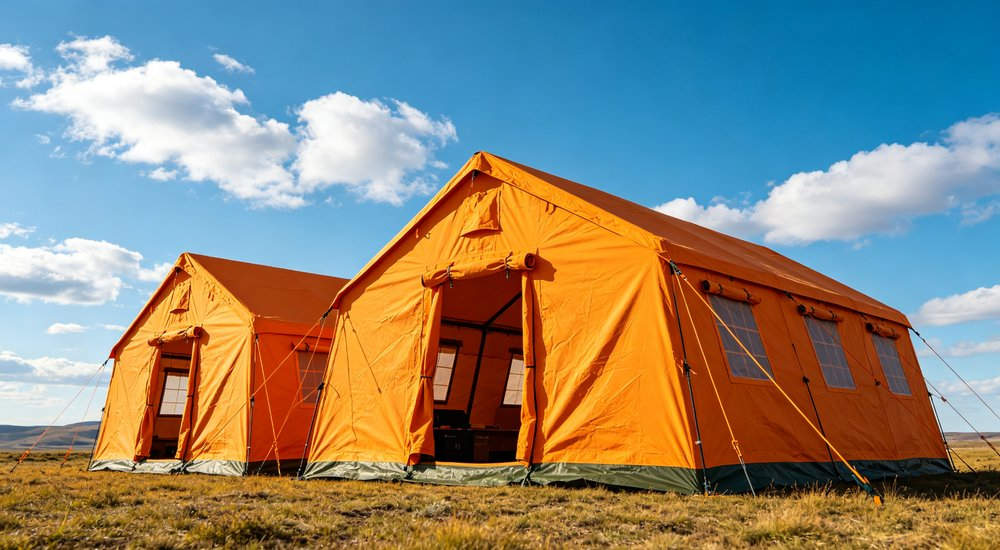
Winterized tents are the fastest-growing segment (9.2% CAGR), driven by protracted displacement in cold climate regions (Ukraine, Afghanistan, Syria, Horn of Africa highlands). Donor recognition that "emergency" displacement often lasts years is driving demand for shelters that can survive multiple winters.
Local manufacturing is increasingly prioritized by donors for capacity building and cost reduction, but faces challenges in quality consistency and certification. The trend is toward hybrid models: import industrial components (frames, specialized fabrics) while doing assembly and finishing locally, creating jobs and reducing transport costs.
The Ukraine conflict created unprecedented demand for winterized and medical tents, absorbing global production capacity in 2022-2023 and driving price increases. It also accelerated innovation in cold-climate shelter solutions and demonstrated the value of pre-positioning stockpiles near potential crisis zones.
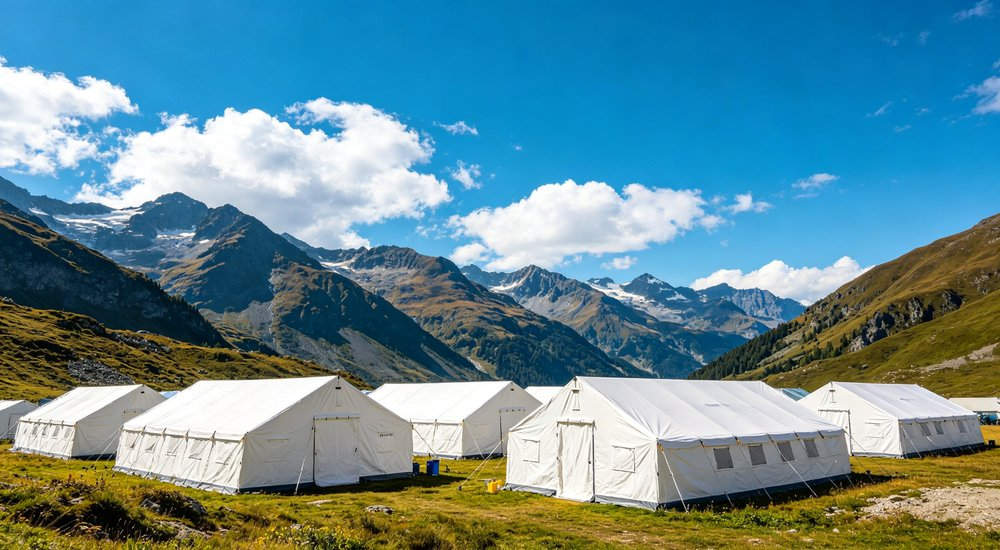
Several startups are introducing innovative approaches including modular shelter systems, solar-integrated tents, and rapidly deployable structures. While these have gained attention and pilot funding, they have not yet achieved scale comparable to established manufacturers. The next 3-5 years will determine which innovations achieve mainstream adoption.
The SPHERE Handbook provides minimum standards for humanitarian response, including shelter. While it does not specify tent technical details, it establishes principles of dignity, safety, and adequacy that inform organizational procurement policies. The 2024 SPHERE revision placed greater emphasis on durability and climate adaptation.
Digitalization is improving production planning (ERP systems), quality control (AI visual inspection), inventory management (RFID), and customer communication (digital portals). While adoption varies, manufacturers with digital capabilities can deliver orders 30% faster and with fewer defects, creating a significant competitive advantage.
The recommended approach is total cost of ownership (TCO) analysis rather than unit price comparison. TCO includes purchase price, expected lifespan, maintenance costs, end-of-life handling, and carbon footprint. This approach often reveals that slightly more expensive, higher-quality, sustainable tents deliver better value over their lifecycle.
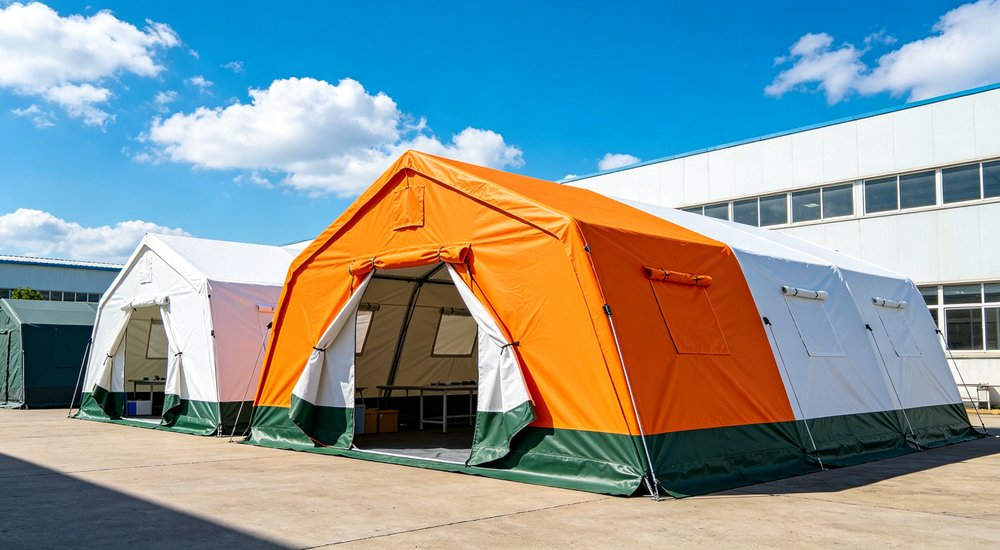
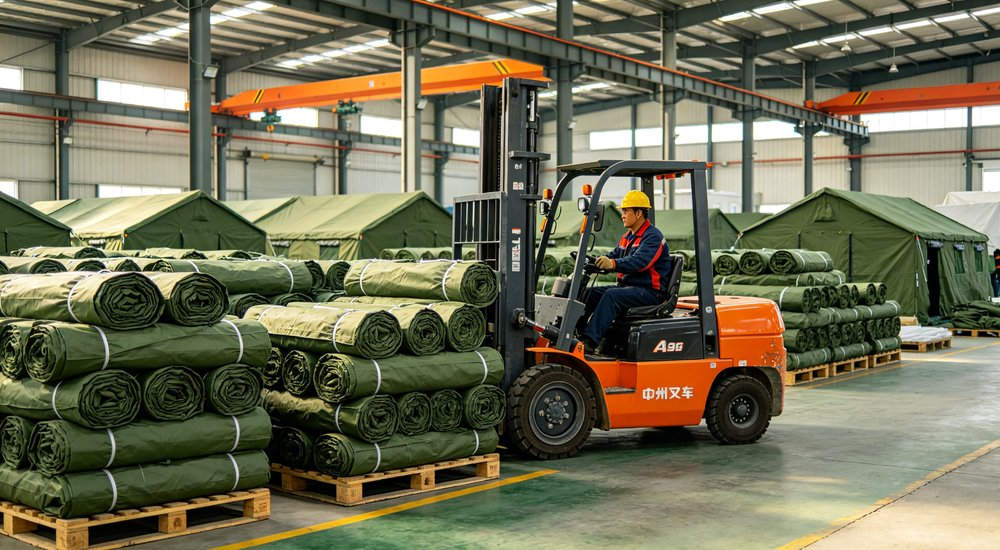
As an emergency shelter manufacturer with 20+ years of experience, we stay ahead of industry trends to deliver tents that meet tomorrow's standards today. Our production facility combines traditional craftsmanship with modern quality control, and we work with buyers across the humanitarian, military, and government sectors.
Whether you need standard family tents for humanitarian distribution, specialized medical tents for field operations, or custom modular shelter systems, we can tailor solutions to your specifications. We provide full certification documentation, competitive pricing, and reliable delivery timelines.
Contact us today to discuss your emergency tent requirements and receive a customized quotation within 24 hours. As a direct tent manufacturer with 20+ years of experience, we deliver the quality, capacity, and reliability that today's emergency shelter market demands.
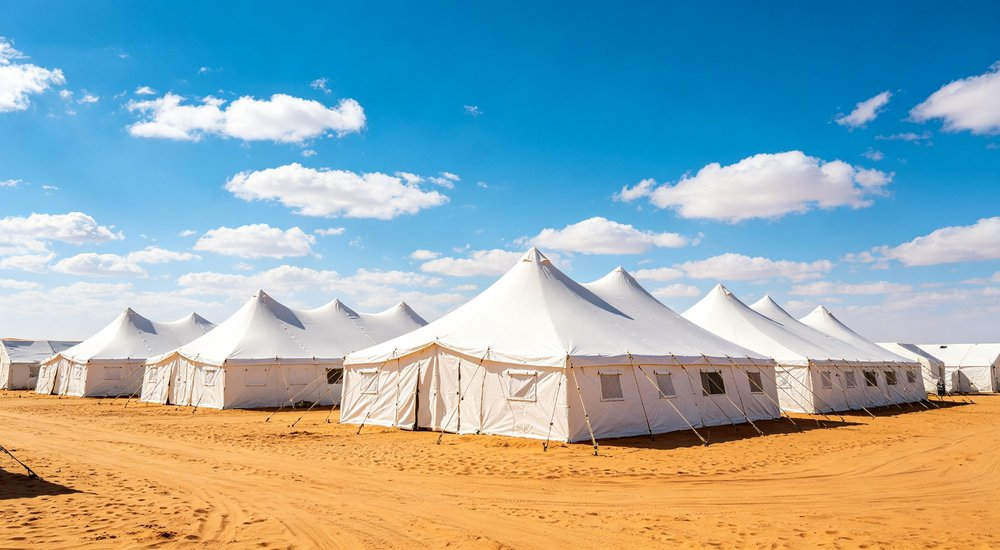
The emergency tent industry stands at an inflection point. The convergence of climate change, technological innovation, sustainability mandates, and supply chain for emergency shelter restructuring creates both unprecedented challenges and significant opportunities. Organizations that adapt their procurement strategies to these trends will be better positioned to deliver effective, cost-efficient shelter solutions to those who need them most.
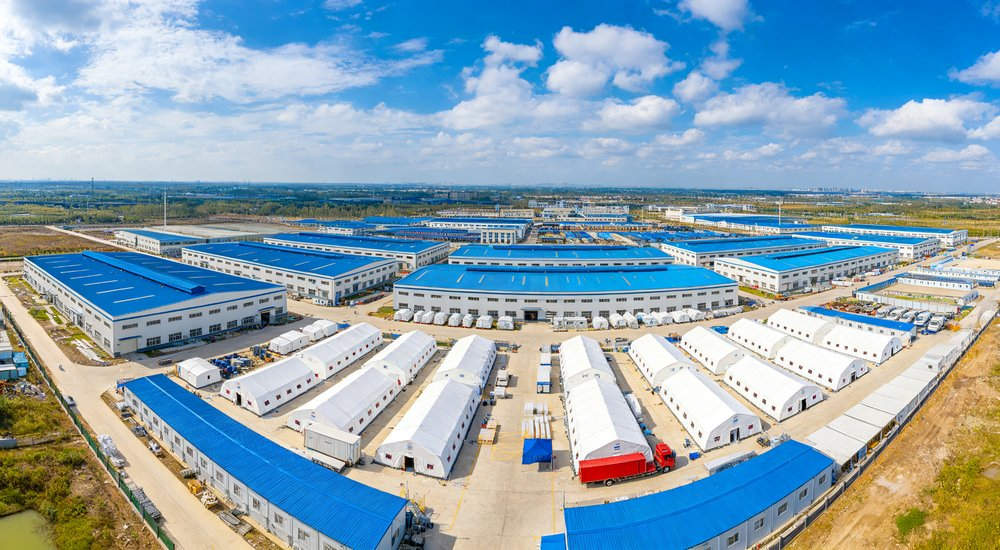
The most successful players in this market will be those that balance cost efficiency with quality investment, embrace sustainability as a competitive advantage rather than a compliance burden, and build supply chain resilience without sacrificing responsiveness. The manufacturers that invest in modular design, material innovation, and digital capability today will define the industry's standards for the next decade.
For procurement organizations, the message is clear: the era of selecting tents based solely on lowest unit price is ending. Total cost of ownership, supplier resilience, sustainability performance, and product adaptability are the criteria that will define successful emergency shelter procurement in 2026 and beyond. Those who make this transition early will gain both operational advantage and donor confidence.
Emerging trends include desert relief camp innovation, hot weather relief tent cooling systems, and rainy season emergency waterproofing advances. NGO procurement and UNICEF supply demand is driving quick setup emergency tent technology forward.
Дружественные ссылки :
авторское право © Custom Disaster - Relief Bedding: Tents, Sleeping Bags, Blankets Все права защищены
профессиональная команда для обслуживания !