Категории
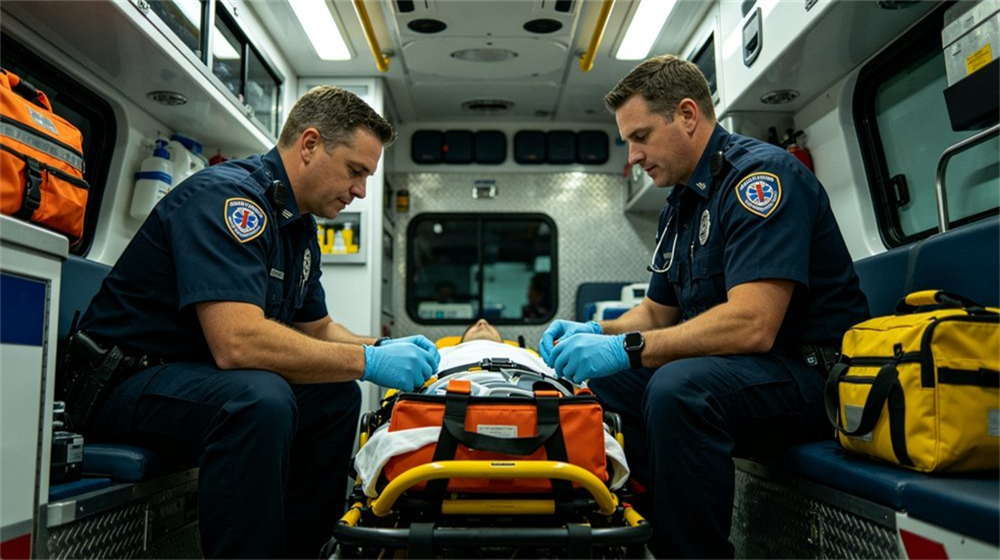
An EMT medical kit is the first clinical decision on the scene. Ambulance crews, ER departments and tactical medics work under time pressure, so every pack must open flat, stay organized and hold the right wound-care tools. Our range pairs a routine health first aid bag with a professional rescue medical pack, built for frontline care.
As a verified EMT rescue kit supplier and medical emergency bag wholesale, we supply wholesale emergency kits for EMT medical rescue to distributors, integrators and institutional buyers worldwide, with full traceability on every EMT emergency kit we ship.
 |

|
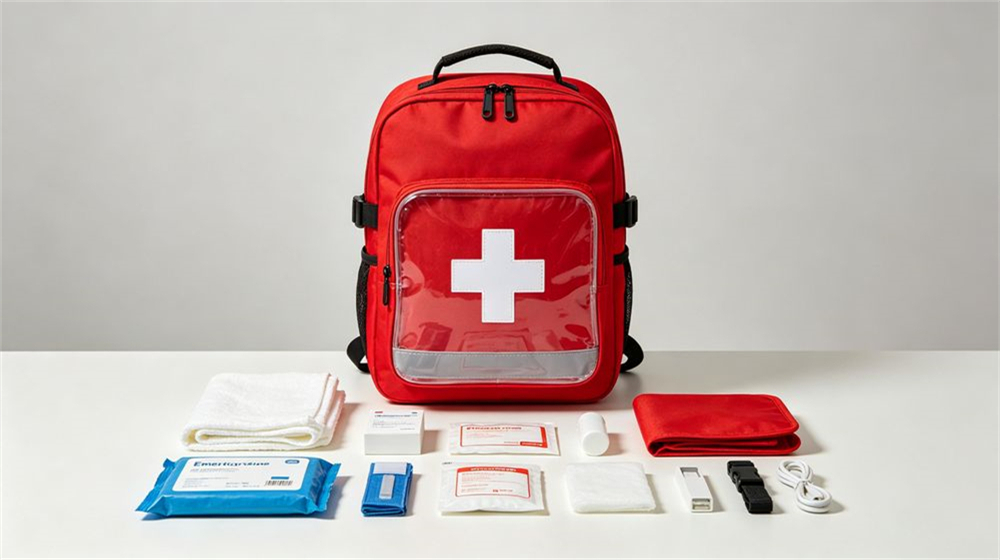
One pack cannot cover every clinical moment. The smart approach is a layered pre-hospital first aid plan matched to the setting your team actually works in.
A routine health first aid bag handles everyday injuries in clinics, stations and vehicles. A professional rescue medical pack carries the expanded wound-care set a trauma scene demands. Together they cover both routine calls and serious incidents without overlap.
That gap between a station and a trauma scene is where most clinical risk sits. A medical bag that only treats small cuts leaves a serious case unmanaged. A pack that only handles trauma makes routine visits heavy. Our two-unit set closes both gaps in one clean loadout.
Clinical settings change fast. A station, an ambulance and a tactical scene each demand a different pack.
Our routine health first aid bag opens flat, so a responder sees every compartment at once. The professional rescue medical pack carries an expanded set of dressings, bandages and tools for the field.
Neither unit holds liquids, aerosols or glass. Lithium-powered lights, where included, ship with UN38.3 and MSDS. That keeps the whole loadout shipment-safe by sea.
Teams often ask which unit to source first. Our comparison shows the practical answer.
Start with one routine health first aid bag per vehicle or station. Add one professional rescue medical pack per response team. The table below maps both to size, weight and best use.
A staged plan keeps coverage full and the budget defensible to a review board. Buyers also appreciate that both packs share the same marking language, so a new medic reads the layout instantly.
Why EMT Teams Source Medical Kits as a Set
Ambulance crews and ER staff operate where minutes matter. An EMT medical kit matters because the first clinical steps happen on the scene, not in a hospital. A routine health first aid bag and a professional rescue medical pack must therefore work in a vehicle, not just on a shelf.
In this wholesale emergency kits for EMT medical rescue guide, we cover medical emergency bag wholesale specifications, medical rescue kit sizing, MOQ tiers and export documentation, so procurement teams can shortlist in one afternoon.
Staff on a call cannot wait for supplies from a distant clinic. A ready pack, clipped to a stretcher or stowed in a vehicle, gives them the tools within reach.
The stakes rise during a serious incident. A pre-hospital first aid program, sourced as one EMT medical kit supply, supports a calm ordered response instead of a rushed one. When supplies sit in one standard pack, medics spend seconds on action and none on searching. That speed protects both responders and the patients they treat.
Regulations and hospital expectations now make standardized packs the norm. For bulk buyers, ambulance medical bag programs that follow one layout satisfy both auditors and evaluation panels. A visible professional rescue pack shows that clinical preparedness is planned.
It also supports alignment with common clinical standards. For a large order, standardizing one pack across stations makes inspection and restock simple.
The true value appears on a normal call, not only in a trauma scene. A medic cleans a small cut, covers a burn, or wraps a sprained ankle with the right tool nearby.
These small wins build trust across a whole service. They also reduce hand-offs that cost time at the hospital. It also serves as a paramedic emergency kit for extended shift work.
Consistency is what an EMT medical kit really delivers. When every vehicle holds the same supplies, every medic can act the same way. New staff and part-time crews all read the same layout. That shared standard turns a bag into a real clinical preparedness system.
For a coordinator, the benefit is control. A pre-hospital first aid kit built to one spec means one purchase, one restock routine and one training script. There is no guesswork about what each vehicle holds. That predictability is why ambulance programs scale so cleanly.
Think of a pack as clinical insurance that works daily. It costs little, yet it protects the people a service exists to treat. When an incident occurs, the tools are already there. That readiness turns a frightening moment into a managed one.
As an experienced EMT rescue kit supplier, we build every medical emergency bag wholesale order to CE and ISO 13485 medical device standards. Our ambulance medical kit bulk line covers ambulance packs, trauma bags and wall-mounted industrial stations, so EMS response teams source all medical-rated gear from one partner. Procurement officers evaluating a EMT rescue kit supplier shortlist should check sterile packaging, batch lot labeling and expiry stamping on every unit.
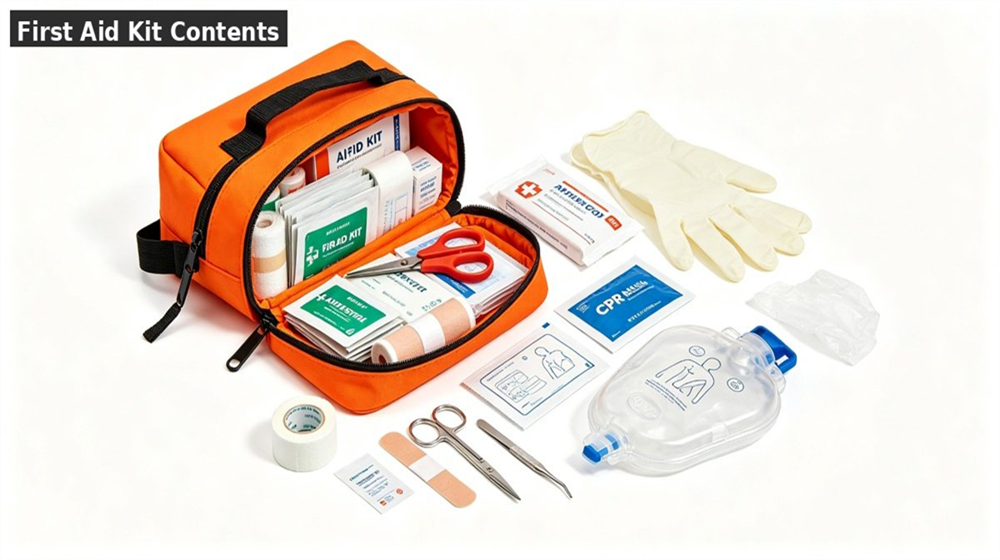
Two Core Packs for Frontline Medical Care
Two packs cover most frontline medical roles: a routine first-aid bag for everyday station care and a professional rescue medical pack for trauma response. The table below compares scope, weight and deployment.
BLS ambulances start with the routine bag. ALS and tactical teams upgrade to the professional pack. For each rig, add a pulse oximeter and a nasopharyngeal airway kit to the base configuration.
The routine health first-aid bag groups supplies by clinical category: airway, breathing, circulation, immobilization and wound care. Each pocket is labeled so an EMT can find a line by touch in a moving rig.
|
Item |
Routine Health First Aid Bag |
Professional Rescue Medical Pack |
|
Format |
Red soft medical bag |
Black/red rescue pack |
|
Size |
50×34×28 cm / 3.9 kg |
62×38×30 cm |
|
Material |
Red soft medical bag |
Black / red / orange rescue pack |
|
Best for |
Stations, clinics, everyday calls |
Trauma scenes, expanded wound care |
|
Colors |
Red with white cross |
Black / red / orange with white cross |
|
Carry |
Vehicle side pocket |
Grab and go |
|
Content focus |
Dressings, gloves, bandages |
Expanded dressings, splints, triangular bandages |
ALS crews add a pulse oximeter and a nasopharyngeal airway set. Tactical medics upgrade gauze to chitosan hemostatic dressing. Check the CPR mask seal and BVM reservoir at every shift handover.
Our range for EMT buyers rests on two proven packs. The routine health first aid bag serves everyday clinical care in stations, clinics and vehicles. The professional rescue medical pack serves expanded wound care on trauma scenes.
Each emergency medical kit solves a different problem, so services often buy both. A station uses the routine bag. A response team uses the rescue pack. This layered approach covers both daily calls and serious incidents without overlap or gaps.
Placement matters as much as contents. Stow the routine bag in a vehicle side pocket so it opens fast. Hang the rescue pack at the crew grab point. Mark each pack with a white cross so everyone reads the location instantly.
The contents differ for a reason. A routine bag focuses on common injuries: dressings, gloves and bandages. A rescue pack adds capacity for trauma: an expanded dressing set, splints and a wider bandage range. Neither replaces the other.
Think of the split as layers in one plan. The routine bag answers the first ten minutes on a station call. The rescue pack answers the next thirty on a trauma scene. Together they cover the full range without waste.
A coordinator can start lean and grow. Begin with one routine bag per vehicle. Add one rescue pack per response team. As the program expands, add packs in a fixed ratio. This modular habit keeps the plan clear and the budget steady.
Choosing the right unit starts with a short walk. Count the vehicles that leave the depot. Then count the teams that run trauma calls. The first list drives the routine bag count. The second drives the rescue pack count.
Keep one rule in mind: a pack works when it is close to the people who need it. A unit that lives in a distant office is a unit that stays unused. Place each pack where the routine already moves. That is how the plan stays practical, not just tidy.
Budget follows the same logic. One routine bag is the smallest honest start. Add rescue packs only where call volume and severity demand them. This staged approach keeps costs low while coverage grows. It also gives a clear answer when a board asks for the clinical budget.
Every EMT rescue kit ships with 35 clinical items, packed and QC-checked. The manifest below lists each SKU, quantity, spec and shelf life so you can audit at the station and plan your biomedical rotation.
|
Category |
Items |
|
Wound care |
Adhesive bandage set; gauze pad set; triangular bandage ×2; elastic bandage ×2 |
|
Protection |
Medical gloves ×4; disposable masks ×5 |
|
Tools |
Bandage scissors ×1; tweezers ×1; safety pins ×4 |
|
Thermal |
Emergency blanket ×1 |
|
Respiratory |
CPR face shield ×1 |
|
Light |
Hand-crank or battery torch ×1 (alkaline cells, UN38.3 + MSDS) |
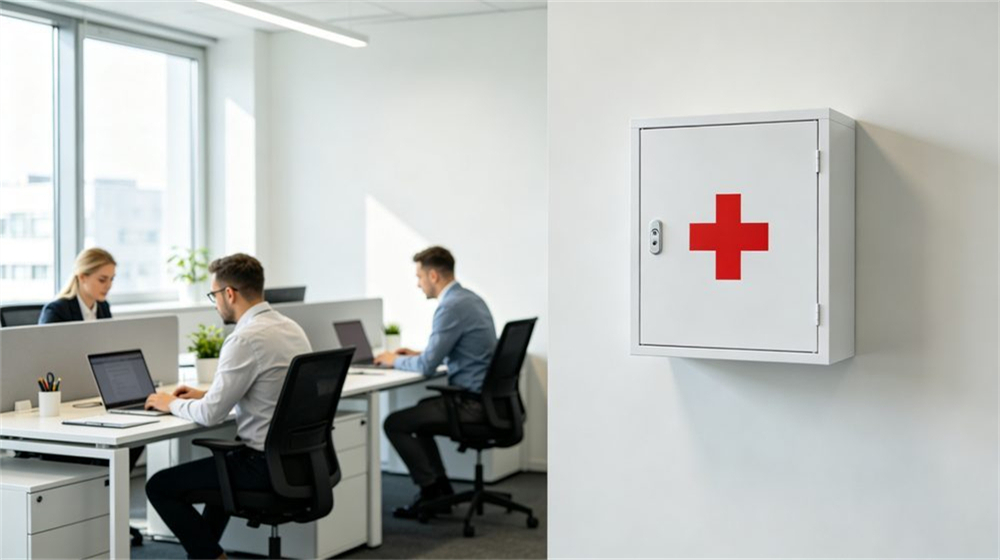
Your team receives exactly what the spec sheet lists — no hidden short-counts. Every line below is packed, counted and QC-checked before the kit leaves our line. Expiry dates are stamped on each consumable pocket and mirrored in the digital rotation sheet we ship with your order.
Rotate chitosan gauze and airway adjuncts first — they expire fastest. Add a pulse oximeter and nasopharyngeal airway set per ALS rig. Check BVM and CPR mask seals at every monthly inspection.
Buyers ask three spec questions: does the bag fit the ambulance shelf, can it hold a 12-lead monitor, and is the fabric cleanable? The table below answers all three at a glance.
|
# |
Item |
Qty |
Specification |
Shelf life |
|
1 |
Bag-Valve-Mask, adult + child |
1 set |
adult 1.6 L + child 1 L, with reservoir |
5 years |
|
2 |
CPR Pocket Mask, adult/child |
2 pcs |
one-way valve, O2 inlet |
5 years |
|
3 |
Nasopharyngeal Airway, assorted |
5 pcs |
24Fr / 26Fr / 28Fr / 30Fr / 34Fr |
5 years |
|
4 |
Oropharyngeal Airway, assorted |
6 pcs |
sizes 00 / 0 / 1 / 2 / 3 / 4 |
5 years |
|
5 |
CAT Tourniquet, Gen 7 |
4 pcs |
black, windlass |
5 years |
|
6 |
Hemostatic Gauze |
4 rolls |
7.5 cm × 3.7 m |
3 years |
|
7 |
Pressure Dressing |
2 pcs |
10 × 18 cm |
5 years |
|
8 |
Trauma Pad |
4 pcs |
20 × 20 cm sterile |
5 years |
|
9 |
Sterile Gauze Pad |
20 pcs |
7.5 × 7.5 cm, 12-ply |
5 years |
|
10 |
Conforming Bandage |
4 rolls |
7.5 cm × 4.5 m |
5 years |
|
11 |
Triangle Bandage |
4 pcs |
96 × 96 × 136 cm |
5 years |
|
12 |
Chest Seal, vented |
2 pcs |
2-pack, HyFin-style |
3 years |
|
13 |
Cervical Collar, adjustable adult |
1 pc |
one-size, foam, radiolucent |
5 years |
|
14 |
Splint, padded 91 cm |
1 pc |
aluminum core, foam-padded |
5 years |
|
15 |
Trauma Bag, 50 × 35 × 25 cm |
1 pc |
black/orange, MOLLE |
5 years |
|
16 |
Nitrile Exam Gloves |
12 pairs |
powder-free, M + L |
3 years |
|
17 |
Trauma Shears, 19 cm |
2 pcs |
titanium-coated |
permanent |
|
18 |
EMT Shears, 14 cm |
2 pcs |
stainless |
permanent |
|
19 |
Tweezers, stainless |
1 pc |
fine-tip |
permanent |
|
20 |
Antiseptic Wipe, 70% IPA |
30 pcs |
individually wrapped |
3 years |
|
21 |
Alcohol Prep Pad |
30 pcs |
70% isopropyl |
3 years |
|
22 |
Povidone-Iodine Swab |
20 pcs |
10% povidone-iodine |
3 years |
|
23 |
Eye Wash Solution |
2 bottles |
100 ml sterile |
2 years |
|
24 |
Burn Gel Sachet |
15 pcs |
3.5 ml |
3 years |
|
25 |
Burn Dressing, non-adherent |
4 pcs |
10 × 10 cm |
3 years |
|
26 |
Instant Cold Pack |
4 pcs |
15 × 18 cm, squeeze-activate |
3 years |
|
27 |
Thermal Blanket |
4 pcs |
Mylar, 210 × 160 cm |
5 years |
|
28 |
LED Pen Light, medical |
2 pcs |
pupil gauge on barrel |
3 years |
|
29 |
Pulse Oximeter, fingertip |
1 pc |
SpO2 + pulse, OLED |
3 years |
|
30 |
Blood Pressure Cuff, aneroid |
1 set |
adult cuff, gauge |
5 years |
|
31 |
Stethoscope, dual-head |
1 pc |
adult + pediatric chest piece |
5 years |
|
32 |
Thermometer, digital waterproof |
1 pc |
±0.1 °C, 60 s |
3 years |
|
33 |
Biohazard Bag, red |
6 pcs |
30 × 60 cm |
permanent |
|
34 |
Patient Report Form (PCR) |
20 pcs |
waterproof carbon-less |
permanent |
|
35 |
First Aid Guide, EMT-level |
1 pc |
waterproof, full-color |
permanent |
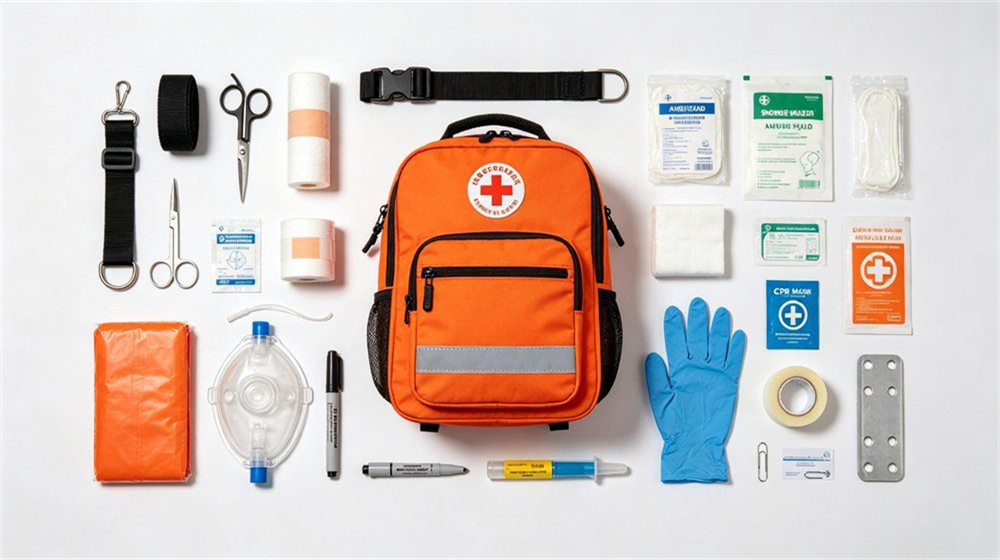
Buyers often ask: does this kit fit our truck rack? Our shelf? Our temperature range? The numbers below answer that before you ask us.
Check the expanded dimension and wipe-down fabric first. The bag opens flat for station-side treatment. For BLS rigs, confirm the pocket layout fits your blood-pressure cuff and stethoscope.
|
Parameter |
Value |
|
Dimensions (expanded / compressed) |
50 × 35 × 25 cm (expanded) / 50 × 35 × 15 cm (compressed) |
|
Net weight |
6.0 kg net, packed |
|
Fabric & hardware |
600D polyester + PVC backing, YKK zippers, easy-clean inner liner |
|
Color |
Black / Red (EMS-style) / OD Green |
|
Operating temperature |
+5 °C to +40 °C storage; -10 °C to +50 °C operating |
|
Water resistance |
IPX4 water-resistant; wipe-clean disinfection surface |
|
Battery / power |
2× AAA per pen light (non-replaceable battery in pulse oximeter, 5-year life) |
|
Shelf-life policy |
3 years medical consumables; 5 years durable instruments; permanent tools |
|
Load rating & carry |
20 kg rated load; MOLLE + shoulder carry + side handle |
|
Reflective trim |
3M Scotchlite on all four corners |
|
Certifications on file |
The Routine Health First Aid Bag
An EMT medical kit program often starts with the routine health first aid bag, which is built for everyday clinical care. This red soft medical bag measures 50 by 34 by 28 cm and weighs about 3.9 kg.
It belongs in a station, a clinic or a vehicle where trained staff treat common injuries. Its clean compartments keep dressings, gloves and bandages organized and easy to reach.
Within an ambulance medical bag range, a routine health first aid bag is not a survival pouch. It is a clinical first-response unit, so its contents follow first-aid practice.
We align the list with common first-aid expectations and avoid items that do not ship safely. Consumables carry clear expiry dates for easy rotation. Rotate items the same way a coordinator rotates any medical emergency supply bin.
The bag opens flat, so a medic sees every compartment at once. That layout matters when someone is bleeding and time is short. A quick glance locates a dressing, a pair of gloves and a bandage. The organized interior reduces fumbling in a real event. It is why this EMT medical kit stays the dependable unit for stations and vehicles.
For bulk orders, the routine health first aid bag repeats with the same layout at every vehicle. That means one training script covers the whole service. A new medic reads the same compartments and acts the same way. Consistency is the quiet strength of a standard pack.
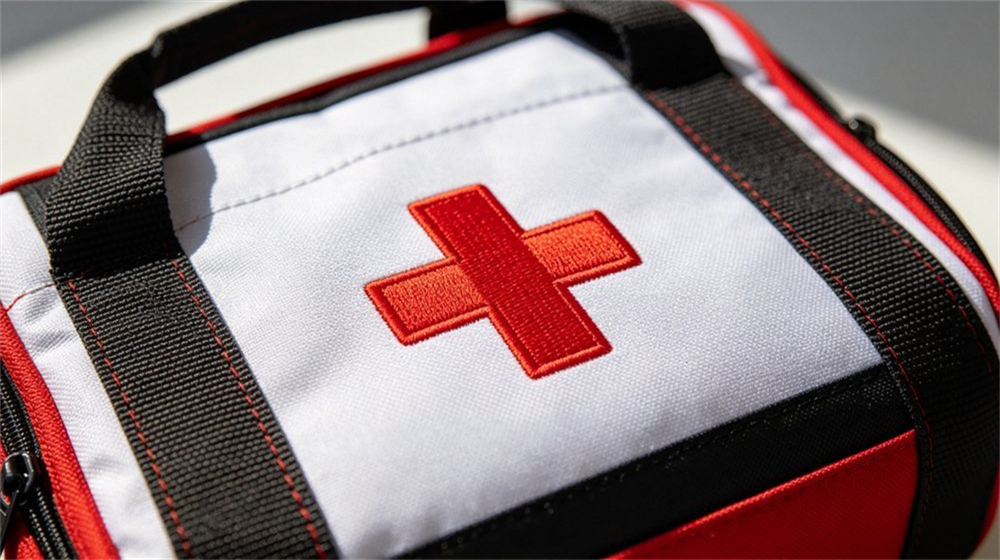
Pack color and marking stay simple. The red body carries a white cross so it reads as a medical unit from a distance. We can print a service name on the outer pouch for branded programs. The cross remains the primary signal, with the name as a secondary touch.
Restock after each use keeps the bag honest. When a dressing is used, replace it the same day. A running list inside the pouch shows what is missing. That small habit keeps every routine bag full and current between rotations.
A routine health first aid bag also reassures staff. When a medic returns with a clean dressing and a calm story, trust grows. That trust is built one small moment at a time. A ready bag makes those moments go well far more often.
Store the bag where trained staff reach it first. A vehicle rack or a station shelf keeps tools close while keeping untrained hands away. A clear cross and a known spot let the right medic find it fast. Simple placement rules protect both users and supplies.
For services that need a clinical first-response unit, this is the starting bag. It pairs naturally with a professional rescue medical pack for trauma scenes. Ask us for the full contents list matched to your EMT specification.
Pick your kit by the care level your unit provides. The decision tree below maps three common medical roles — BLS ambulance, ALS response and tactical team — to the pack that fits.
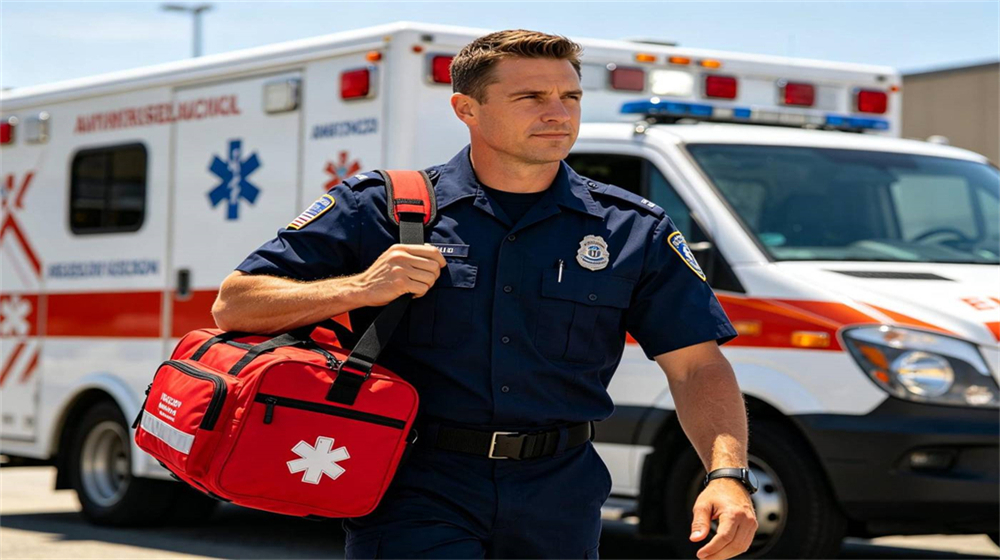
BLS ambulances order the routine bag. ALS rigs add the professional pack. Tactical teams upgrade to chitosan gauze and a chest-seal kit. Stock one backup pack per station.
|
Your Unit Type |
Coverage |
Kit to Choose |
Where It Goes |
|
Response vehicle |
Everyday clinical care |
1 × Routine Health First Aid Bag |
Vehicle side pocket |
|
Trauma response team |
Expanded wound care |
Add 1 × Professional Rescue Medical Pack |
Crew grab point |
|
ER department |
Clinical station |
1 routine bag per bay + 1 rescue pack |
Clinic shelf |
The decision tree skips the clinical detail buyers audit: airway inventory, immobilization gear, wound-care depth and pocket layout. The table below lines up both packs on the clinical numbers.
Choose by provider level, not by price. BLS stations fit the routine bag. ALS and tactical teams upgrade to the professional pack. Add a pulse oximeter and nasopharyngeal airway set per rig.
Every medical emergency bag wholesale carton ships with CAT tourniquets, vented chest seals and sterile gauze pads. As a focused EMT rescue kit supplier, we tune the ambulance medical kit bulk manifest to each client's ambulance, clinic or mass-casualty program. Teams running a ambulance medical kit bulk order also request custom EMS branding on bag panels and unit numbers on trauma kit pouches.
|
Feature |
Routine Health First Aid Bag |
Professional Rescue Medical Pack |
|
Format |
Red soft medical bag |
Black/red rescue pack |
|
Format |
Red soft medical bag |
Black / red / orange rescue pack |
|
Coverage |
Everyday clinical care |
Trauma wound care |
|
Size |
50×34×28 cm / 3.9 kg |
62×38×30 cm |
|
Best for |
Vehicles & stations |
Trauma response teams |
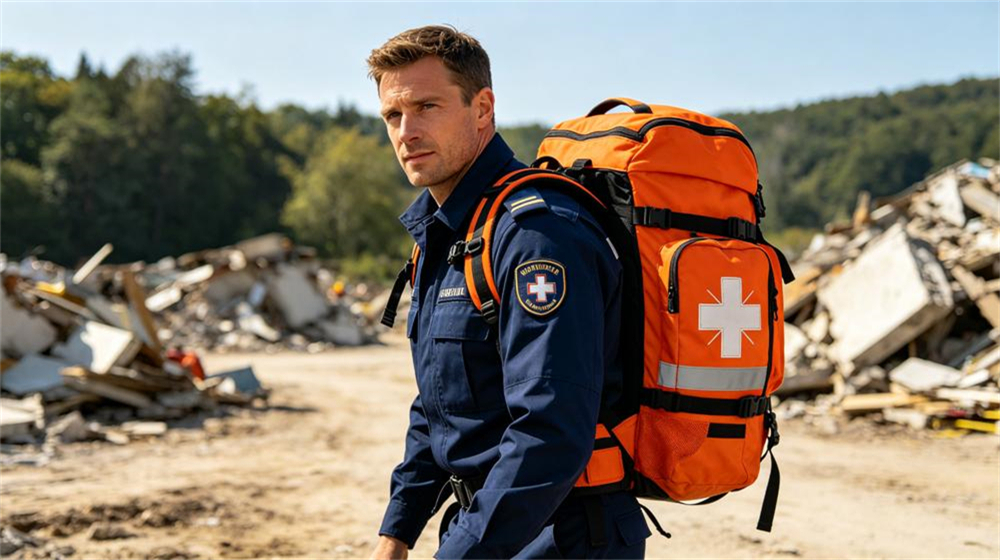
The professional rescue medical pack is built for expanded wound care. Model is a professional rescue pack available in black, red and orange, sized 62 by 38 by 30 cm. It carries an expanded dressing set, bandages, splints and a wider wound-care range. It is the pack a trauma team grabs when leaving a station.
A rescue pack solves a different problem than a routine bag. The routine bag treats everyday injuries in a station. The rescue pack handles serious wounds on a trauma scene. That is why it includes expanded dressings and splints rather than only common bandages. It is built to move, not to stay fixed on a shelf.
The pack opens wide, so every compartment is visible at once. Dressings sit in one pocket. Bandages sit in another. Splints and a triangular bandage fill the rest. This organized interior lets a medic grab the right item without unpacking the whole pack. Medics treat it as the go-to first response medical kit when seconds count.
We keep the contents shipment-safe. The pack holds no liquids, no aerosols and no glass. Lithium-powered lights, where included, ship with UN38.3 and MSDS. That care protects both the cargo and the service that receives it.
For bulk pre-hospital first aid programs, the professional rescue medical pack repeats with the same layout at every response team. A trained medic knows exactly where the dressings and the bandages live. That familiarity matters most in real events, when voices are loud and time is short.
The pack's black, red or orange body carries a white cross and a clear name mark. We can add a service name for branded programs. The cross stays the primary safety signal. A restrained mark looks professional and stays legible in low light.
Stage the pack at a response point, not buried on a shelf. A hook by the door or a marked cabinet keeps it ready to grab and go. Placement is half the value: a rescue pack that takes five minutes to find is a pack that fails its purpose.
Restock after every drill. When a dressing or a bandage is used, replace it the same day. A checklist inside the pack shows what was deployed and what is due. That habit keeps every rescue pack full and ready between rotations.
For services that run trauma response teams, this is the essential unit. It pairs with a routine health first aid bag for station calls. Ask us for the full wound-care list matched to your tactical and emergency requirements. This pack doubles as a medical trauma kit for serious wound care.
Clinical buyers ask honest questions about compliance. We answer them directly. Our packs meet medical device requirements for the items that fall under that category. We do not claim registrations we do not hold.
Where a bid asks for a specific certificate, we respond honestly about what is available and what can be arranged. This direct approach protects the bid and avoids surprises later. Clear facts beat vague promises when a panel reviews a submission.
We do not print CE or CFDA numbers on our products or in our catalog. If a bid requires a registered device, we flag the line item as certification-required and let the buyer source the registered version separately. This keeps the offer accurate rather than optimistic.
Compliance documents follow the destination market. For Europe, we align with common CE, REACH and RoHS expectations and provide what is on hand. Lithium-powered accessories carry UN38.3 and MSDS. Medical-device items are flagged as meeting medical device requirements.
A written spec also protects the buyer. When a pack arrives, the receiver checks it against a clear list. If a product changes later, the written record holds. That clarity is the quiet backbone of a compliant clinical purchase.
We work to your evaluation timeline. Send the tender specification and we return a matched quote and document pack within the stated window. One contact owns the file end to end. Clear communication keeps a large bid from becoming a paperwork headache. Send us the tender spec for a trauma response kit and we return a matched quote within days.
For framework agreements and long-term arrangements, we can hold a standing spec for your EMT medical kit supply. That means repeat orders ship to the same layout, the same packing and the same document set. A standing framework removes the start-up work of a fresh bid each cycle.
Ask us for a sample pack first. Seeing the actual unit, the compartments and the marking lets an evaluation team decide with confidence. A trial unit de-risks the bid before a full order. That small step saves time in every later review.
Field medics pairing our medical emergency bag wholesale with ambulance cots tell us the divided pocket layout keeps airway adjuncts and hemorrhage control supplies instantly accessible. As a dedicated EMT rescue kit supplier, we ship each ambulance medical kit bulk unit with a manifest aligned to your department SOP. The medical emergency bag wholesale pouch includes a waterproof zip closure and a translucent ID window for rapid team identification.
Large orders for an EMT medical kit move on pallets, not in parcel bags. We pack pre-hospital first aid packs by set, label each carton and stack on standard pallets.
A clear packing list names each pack and its destination, so unloading takes minutes. That order saves hours when a whole depot is being stocked at once. For tender buyers, this pallet plan is the practical way to receive a complete order.
Pallet packing protects the goods in transit. Cartons are stacked and strapped so nothing shifts on the road. Soft packs are packed to withstand normal handling. The goal is a delivery that arrives complete, dry and ready to shelve.
We pack by vehicle or by station for large programs. An order for multiple stations can arrive grouped by destination. A coordinator hands each pallet straight to the right garage. That grouping turns a single delivery into a tidy hand-off.
Container shipments follow the same care. Goods are loaded to fill the container safely, with weight balanced and goods braced. We coordinate the booking and the export documents. The buyer receives a clear arrival plan rather than a vague promise.
Delivery timing is planned around the program. A phased arrival spreads storage and unpacking across stations that cannot receive everything at once. We adjust the schedule to the receiver's calendar. A calm delivery day keeps the whole rollout on track.
One contact owns the shipment. That person handles the booking, the documents and the arrival. When a question arises at the port, the buyer calls one number. Clear ownership keeps a large logistics chain from becoming a tangle of messages.
After delivery, a short check confirms every pack is full and current. We support the same contact for the restock cycle. That after-sales loop turns a one-time shipment into a lasting supply plan.
For the exact freight cost, share your volume and destination. We return a clear figure based on the current route. Buyers appreciate honest, route-based numbers over rounded guesses. That transparency builds a repeat relationship.
Once you know which bag to carry, the next question is how many. The table below sizes the bag mix for four common medical configurations, from a single BLS rig to a multi-unit station.
Station commanders count the rigs first, then the standing crews. One routine bag per ambulance, one professional pack per ALS unit. Keep a backup bag at the station for spike calls and mutual aid.
Vehicle and station count decides the pack mix for any ambulance medical bag program. Count the vehicles that leave the depot first, then size the pack to match. A response vehicle uses one routine health first aid bag.
A trauma team adds one professional rescue medical pack. This modular rule keeps coverage full and cost predictable. For larger fleets, buyers often ask for a prehospital medical kit spec that matches every vehicle.
For a small station under two vehicles, one routine health first aid bag per vehicle covers everyday clinical care comfortably. For a larger service with trauma teams, add a professional rescue medical pack per team. The table below turns these rules into a simple procurement sheet.
Beyond the table, keep spares on hand. Order a few extra packs for damaged or expired units. A small buffer stock keeps the program running without a rush order mid-cycle. Most services keep one spare per ten vehicles.
Record the location of every pack. A simple list by vehicle helps a coordinator audit in minutes. It also shows evaluators that the plan is real. A named vehicle beats a vague promise of coverage on paper.
Revisit the count each year. Vehicle fleets change and stations shift use. A quick update to the list keeps the pack mix accurate. This ten-minute habit is the cheapest part of a strong clinical preparedness plan.
Order timing also matters. Buy for the full year in one batch when possible. This cuts repeated handling and keeps one spec across all vehicles. A single order is easier to track, audit and restock when the cycle ends.
A final point on stock: keep the count honest. A monthly glance confirms every vehicle is full. Spares for common items live in one cabinet. That single shelf solves most mid-cycle needs without a new order.
The vehicle table is a starting rule, not a cage. A station with special needs can adapt it. The principle stays the same: match supply to the medics who share the vehicle.
Buyers most often ask: which provider level needs which kit? The table below maps BLS, ALS and tactical provider levels to the base bag, required add-ons and typical deployment.
|
Vehicle / Station Type |
Count |
Recommended Pack Mix |
Placement |
|
Response vehicle |
1-2 |
1 × routine health first aid bag |
Vehicle side pocket |
|
Trauma response team |
1 team |
1 × professional rescue medical pack |
Crew grab point |
|
ER department |
mixed |
1 routine bag per bay + 1 rescue pack |
Clinic shelf |
|
Small station |
under 5 staff |
1 × routine health first aid bag |
Station shelf |
Tell us which row you fall into and we will send a line-item quote the same day.
Match the bag to your certification level, not to price. BLS crews carry the routine bag. ALS adds the pulse oximeter and nasopharyngeal airway. Tactical teams upgrade to chitosan gauze and chest seals.
Container loading teams tell us a ambulance medical kit bulk order stacks 50 units per pallet with trauma pouches nested inside ambulance bags. When you work with our EMT rescue kit supplier team, every medical emergency bag wholesale carton ships with batch lot, production date and expiry date printed on two sides. This makes goods-in inspection fast for any EMS program.
|
Provider level |
Base kit |
Required add-ons |
Typical deployment |
|
Basic EMT |
1 × routine first-aid bag |
BVM adult + cervical collar + pulse oximeter |
Ambulance BLS, station duty |
|
Advanced EMT |
1 × professional medical pack |
Add: NPA assorted 5 sizes + OPA 6 sizes + aneroid BP cuff |
Intermediate life support, transport |
|
Paramedic |
1 × paramedic bag + 1 drug box (not included) |
Add: ECG leads (dry) + splint 91 cm + 2nd BVM pediatric |
ALS ambulance, fixed-wing medical |

Quality control on every EMT medical kit starts at the production line. Our manufacturing partner runs each pre-hospital first aid order through a set check before packing: contents count, compartment layout, marking and outer-bag condition. A simple inspection sheet records the result. That written trail is what an evaluator values most.
Pricing for wholesale emergency kits for EMT medical rescue is tiered by container volume; as a medical emergency bag wholesale, we quote landed costs that include ambulance emergency kit consumables, custom packaging and pre-shipment QC. Each unit is built to the same EMT field kit checklist so repeat orders stay consistent.
Every pack is built to a fixed bill of materials. When a repeat order arrives, it follows the same list as the first. There is no drift between batches. This consistency means a training script written for order one still works for order fifty.
Materials are chosen for real clinical use. Soft bags must be durable and easy to open. Rescue packs must carry weight without tearing. Dressings and gloves meet common first-aid expectations. We avoid exotic items that are hard to restock or unsafe to ship.
Consumables carry clear expiry dates. Dressings, wipes and bandages are dated for rotation. A coordinator scans dates during the annual check. That habit keeps every pack current and prevents an expired item reaching a real event.
We support sample approval before a full run. A service that sees the actual pack, the compartments and the marking can approve with confidence. A trial unit locks the spec before mass production. That prevents a batch that misses the mark.
For repeat programs, we keep the bill of materials on file. A reorder takes a short message rather than a fresh spec. The same partner, the same layout and the same documents ship every time. That continuity is the value of a trusted supply line.
Factory information stays protected in our work. We present the product and the paperwork, never the factory's identity. This protects both the partner and the buyer's direct channel. One trusted face carries the whole program.
Not every item ages the same. Consumables such as dressings, wipes and bandages carry expiry dates. Durable tools and metal parts last for years. A well-stocked emergency medical kit stays current with a rotation plan. Battery-powered accessories use alkaline cells, never loose lithium loose in a pack.
A rotation schedule keeps the program honest. Mark a fixed check date each year and put it on the calendar. A coordinator walks the list, replaces used and dated items, and signs the log. A scheduled check beats a forgotten one and keeps audits calm.
Keep a small stock of common spares. Dressings, gloves and bandages live on one shelf. When a pack is opened during the year, the restock comes from that shelf. That single buffer solves most mid-cycle needs without a fresh order.
The pack itself should last. Soft bags are built for years of vehicle service. Rescue packs hold up to regular opening and closing. A well-built outer unit protects the consumables inside. Spending on a durable case saves money over the long run.
Respect expiry on arrival too. When a shipment lands, note the dates on the list. Rotate older stock into earlier service. First-in, first-out keeps the freshest items for last. That simple discipline prevents a drawer of expired supplies.
Train one person to own the rotation. A named coordinator checks packs, replaces spares and reports needs. A single owner keeps the plan alive. Without an owner, even the best pack slowly falls out of date.
A clean log also supports evaluation. When an auditor asks how the program is maintained, the log shows a year of dated checks. That record turns a pile of packs into a managed system. Documentation is what proves clinical preparedness is real.
Consumable rotation is where a competent EMT rescue kit supplier earns reorders. We stamp expiry on every dressing and medication pocket inside each medical emergency bag wholesale, and ship an Excel rotation sheet with every ambulance medical kit bulk order. This lets your logistics team schedule refills at 24, 30 and 33 months without manually auditing each pack.
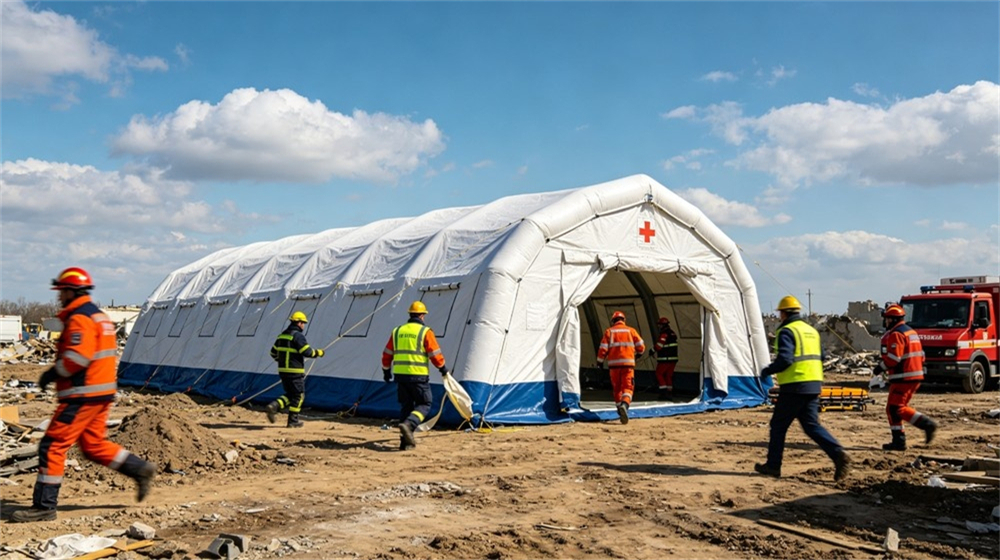
Bulk buyers of EMT medical kit programs can brand packs with a service name and mark. Branded ambulance medical bags keep the same safety layout while carrying your identity.
For repeat orders, our EMT rescue kit supplier account team reorders the same ambulance emergency kit configuration, keeping wholesale emergency kits for EMT medical rescue pricing stable across quarters. For programs that need volume, ambulance medical kit bulk orders ship as one palletised lot.
A custom routine health first aid bag looks owned and cared for, which builds trust with staff and the public. We print your text and emblem on the bag and on the rescue pack.
Custom work keeps the same quality and the same safety layout. Only the surface changes. The white cross stays the primary symbol, with the service mark as a secondary touch. Ask about minimum order and lead time for your program.
Branding makes the pack a visible part of the service. A bag with your name sits clearly in a vehicle side pocket. Staff see a planned clinical system, not a random pouch. That small detail builds real trust over time.
It also aids recognition. Medics find the pack faster when it carries a familiar mark. The cross stays the main signal. A restrained design reads well from across a room. Too many logos dilute the safety signal.
For a whole program, uniform branding unifies the rollout. Every station shares the same look and the same layout. Restock and audits stay simple because one spec covers all. That consistency is the quiet value of a branded run.
Choose a mark that reads from a distance. The white cross leads, the service name follows. A clean design looks professional and stays legible in low light. A cluttered bag helps no one in a real call.
Custom printing also supports replacement. When a vehicle needs a fresh unit, it matches the rest exactly. No visual mismatch breaks the standard. Uniform branding makes the program easy to extend year after year. A spare unit on the shelf functions as a rescue ambulance bag when a vehicle unit needs service.
A bulk EMT medical kit program starts with a simple plan that treats every unit as part of one pre-hospital first aid standard. List every vehicle, count the stations and the trauma teams, and pick a uniform pack.
Then order in one batch so every station matches and restock stays easy. Sourcing each pack from one supplier keeps the layout and the paperwork identical across the whole program.
Wholesale emergency medical kits, sold as an EMT medical kit program, begin with one routine health first aid bag per response vehicle. Add one professional rescue medical pack per trauma team. That staged plan covers both station calls and trauma scenes without gaps.
Planning the order is straightforward. List every vehicle, then every team. Apply the vehicle table to set quantities. Add spares for damaged or expired units. The result is one clean order that covers the full year.
Bulk also means consistent stock. When one batch arrives, every vehicle opens the same bag. Training, inspection and replacement all follow one routine. That uniformity is the quiet strength of a service-wide program.
For large orders we can brand the full run and pack by vehicle. Delivery can be phased across stations if storage is tight. We adjust the program to the receiver, not the other way around.
A single contact makes the rollout simple. One person owns the order, the specs and the restock cadence. We work with that owner end to end. Clear communication keeps a large order from becoming a headache.
A clear packing list arrives with every order. It names each pack and its destination, so unloading is quick. A coordinator places every unit in minutes. That order saves hours when many stations are being stocked at once.
Make delivery day a small plan, not a scramble. Arrange staff to receive, shelve and log the batch. A short checklist turns unloading into a tidy routine. That calm start keeps the whole year's clinical preparedness on track.
Government procurement offices evaluating a medical emergency bag wholesale tender often ask us to quote against three reference SKUs. As a long-haul EMT rescue kit supplier, we provide line-item manifests, batch-lot engraving and container-stacking counts so your team can plan the entire ambulance medical kit bulk rollout in one PO.
Many buyers mix pack types in one container. We support mixed-pallet orders, so a single shipment can carry routine bags for stations, rescue packs for teams and wall boxes for clinics. This flexibility saves freight and simplifies customs.
OEM work follows the same rules. We print your service name, add your color preference and adjust the contents list to your checklist. The safety layout stays intact. Only the surface and the contents change.
For distributor buyers, we hold neutral packing as the default. Your end customer sees your brand, not ours. We can also add your label, your insert card and your box art. Ask about minimum order and lead time for OEM runs.
Mixed pallets also help tender buyers. A single container with multiple pack types matches a bid that covers vehicles, stations and clinics at once. One booking, one document set, one arrival plan. That simplicity is the quiet value of a mixed run.
We support sample orders before a full commitment. A sample pack lets your team test the compartments, the marking and the weight before scaling. That small step de-risks the relationship and locks the spec early.
For long-term partners, we keep a standing spec on file. A reorder takes a short message rather than a fresh quotation. The same partner, the same layout and the same documents ship every time. That continuity is what makes a supply relationship durable.
Quality control stays consistent across OEM runs. Our manufacturing partner applies the same inspection sheet to neutral packing as to branded runs. There is no drift between a trial order and a yearly contract.
Ask us for a mixed-pallet quote. Share your pack mix, your volumes and your destination port. We return a clear figure that combines freight, packing and branding in one line.
For services that want one trusted source, our EMT and Pre-Hospital Medical Kit range is the clear starting point. It pairs a routine health first aid bag with a professional rescue medical pack.
Bulk buyers of EMT medical kit programs get uniform vehicles, simple restock and a full clinical preparedness program. Sourcing ambulance medical bags from one supplier keeps every station consistent. A single bulk order covers ambulances, ER departments and tactical medics in one compliant batch.
Need a full pre-hospital program or custom branding? We supply every vehicle in one batch, with your name on the bag and the pack. Send us your vehicle count, your station list and your destination port. We will quote a complete package for your service.
FAQ — EMT and Pre-Hospital Medical Kits
Are the medical components FDA-listed / CE Class I?
Yes. Sterile gauze, gloves, BVM, NPA/OPA, BP cuff and stethoscope are FDA-listed and CE Class I. We ship the Declaration of Conformity and lot certificate with every pallet. Prescription drugs, epinephrine auto-injectors and controlled substances are NOT included — those go through your pharmacy.
How does this kit complement our ambulance equipment?
It is designed as a grab-and-go carry-in bag, not a replacement for your fixed-mounted ambulance gear. It covers the first 5 minutes on scene: airway, hemorrhage control, vitals. Most EMS agencies buy 1 bag per ambulance + 1 spare at the station.
Do you provide EMT / Paramedic training support?
We ship a 1-page drill card (English / Spanish / French) covering: BVM ventilation rate, tourniquet application, chest seal placement, vitals documentation. Your medical director can review and sign off. We do not provide CE-accredited training hours — that stays with your training center.
Do you offer a monthly consumable refill subscription?
Yes. After your initial order, we can set up a standing monthly refill box: gauze 20 pcs, gloves 12 pairs, antiseptic wipes 30, alcohol prep pads 30, burn gel 15. Shipped on the 1st of every month to your station. Cancel any time.
What disinfection protocol do you recommend?
Outer bag: wipe with 70% IPA or 0.5% bleach solution after each call. Inner liner: removable, machine-washable at 60 °C. Non-sterile instruments (shears, tweezers, pen light): wipe with alcohol pad between patients. Sterile items (gauze, gloves, BVM bag): do NOT reuse — single-use only.
MOQ for a hospital / EMS agency tender?
MOQ 50 kits per SKU for branded EMS orders. Sample 5 kits in 7 days. Price breaks at 200 / 500 / 1,000. For a 5,000-kit national EMS program, lead time 40 days ex-works.
Is the pulse oximeter clinically accurate?
Fingertip pulse oximeter: SpO2 accuracy ±2% at 70–100%, pulse rate ±2 bpm. It is a screening device, not a diagnostic. We include a calibration check card. For diagnostic-grade SpO2, we recommend your hospital-grade monitor in the ambulance.
Do you include cervical collar and splint?
Yes. One adjustable adult cervical collar (radiolucent, one-size) and one 91 cm padded aluminum splint per kit. For pediatric patients we recommend a separate pediatric collar SKU — we can quote it as add-on.
How do you handle cold-chain or temperature-sensitive items?
All items in this kit are room-temperature stable. We do NOT include insulin, vaccines, epinephrine auto-injectors, or any cold-chain product. If your protocol requires cold-chain items, those must be supplied by your pharmacy and stored separately.
Why choose a dedicated EMT rescue kit supplier over a general medical distributor?
A general medical distributor sells bandages and splints but does not understand ambulance cot mounting, MOLLE trauma layout or pre-hospital medical protocols. As a specialist EMT rescue kit supplier, every medical emergency bag wholesale we build is line-checked against the EMS medical annex, and each ambulance medical kit bulk ships with a manifest your accreditation team can tick off directly.
Can you deliver an ambulance medical kit bulk trial order before full procurement?
Yes. We can send samples for your evaluation so your paramedic crew can field-test the medical emergency bag wholesale layout. As an experienced EMT rescue kit supplier, we also accept modification requests on the sample — pouch positions, color-coded zip pulls, or a reorganized medic insert — before you commit to the full ambulance medical kit bulk order.
Do you support repeat consumable refills for multi-year programs?
Yes. Every medical emergency bag wholesale we ship has stamped expiry dates on each consumable pocket. As a long-term EMT rescue kit supplier, we auto-ship refill boxes at 24, 30 and 33 months so your ambulance medical kit bulk stock never falls out of date.

✅ If you need to understand the supply list of winter storm emergency kits for warming centers, vehicles and response teams, this article includes thermal blankets, hand warmers, waterproof outerwear, emergency lighting, high-calorie rations and first-aid items for cold-weather disaster response. It helps procurement teams prepare proper emergency relief supplies to prevent hypothermia during snowstorms and ice events. If you are sourcing bulk emergency supplies and wholesale emergency supplies for cold-region relief programmes, this guide supports you to design suitable kit packages and bulk procurement plans.
YRF Textile Co., LtdYRF Textile Co., Ltd
Bulk emergency kits, first-aid boxes and rescue gear for governments, NGOs and distributors worldwide.
Contact
Email: info@yrftextile.com
Export-ready, OEM and mixed-pallet orders welcome.
Company
About Us · All Emergency Kits
We work with families and communities worldwide. Whether you order a single kit or a container load, our team quotes within 24 hours and ships with FOB, CIF and DDP terms.
Дружественные ссылки :
авторское право © Custom Disaster - Relief Bedding: Tents, Sleeping Bags, Blankets Все права защищены
профессиональная команда для обслуживания !