Категории
For government emergency stockpile teams, NGO logistics officers, and overseas B2B distributors · Updated 2026
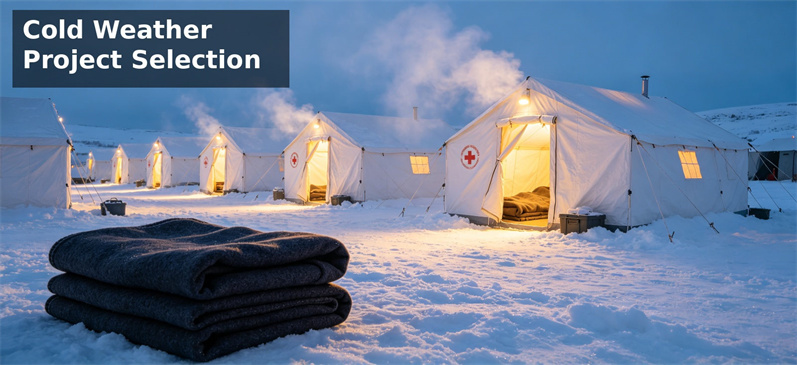
After two decades on both sides of the table — factory floor and receiving warehouse — the line I repeat most to new buyers is this: the container that leaves port on time is the one where someone asked the boring questions before it shipped. This guide is those questions, for the coldest end of the relief blanket range.
Many relief blanket procurement managers who've done winter disaster relief share the same experience: on a spreadsheet, a blanket is just a spec and a price. But at a -20°C settlement site, picking the wrong material or temperature rating — even by one grade — can be the difference between someone sleeping warm and someone freezing. Extreme cold emergency wholesale blankets are built for sub-zero emergency use, and they're a different animal from the thick blankets you buy at home.
The key isn't just "warm enough." It's that the blanket stays warm — even after being vacuum-compressed for shipping, stacked under heavy cartons in a warehouse for two years, then unfolded in a freezing tent. It also has to pass fire safety and moisture tests done by an independent lab, not just numbers the factory printed on a label.
This guide is for government emergency departments, NGOs and aid agencies, logistics and project managers, and overseas B2B distributors. It walks through what actually matters when buying sub-zero blankets from China: materials and safety, how to match the spec to the climate, how to read a price quote, storage and rotation, picking a blanket supplier, and what to check when goods arrive.
If you want the bigger picture first, read the companion articles on this site — Complete Guide to Disaster Relief Blankets and Cross-Border Relief Blanket Procurement — then come back here for the cold-weather detail.
How to use this article: each section ends with a "procurement checkpoint" — one question or action you can drop straight into an RFQ or inspection clause. Those checkpoints are where the real problems get caught before the container leaves.
You can't swap one for the other, and you need to be clear on that before you start sourcing. A professional extreme cold relief blanket is built around four things: it has to hold its warmth after years in storage; its temperature rating has to be proven by an independent lab, not just claimed by the factory; it has to survive rough handling and repeated use without falling apart; and it has to come with the paperwork that government or NGO auditors will ask for.
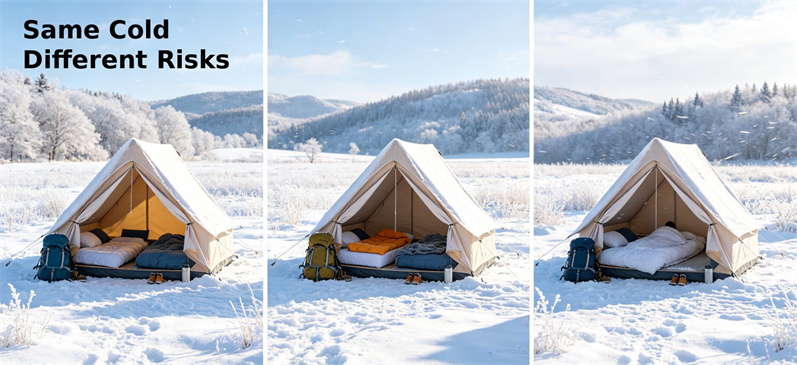
A Central Asian government tender I consulted on specified "-25°C rated" blankets. Three of four bidders quoted products with "rated to -30°C" on the spec sheet. None of the three could produce a third-party warmth test report — they'd taken a standard 400 gsm winter blanket, printed a lower number on the label, and called it extreme cold. The one bidder who could produce an ISO 11092 report was 18% higher on unit price. They won. The next winter, a field audit found the three cheaper options had flattened to about half their shipped loft after six months in an unheated warehouse; the tested batch was still within 10% of its rated warmth. The number on a label is marketing until a lab puts a real number on it.
Different buyers care about different things:
Government emergency departments care most about compliance paperwork and test reports, then about how the stock will rotate in cold storage, and whether they can verify goods before winter hits.
NGOs and aid agencies care more about whether the blanket suits the actual climate, whether all the customs paperwork is in order, whether it can arrive before the cold sets in, and whether it meets the aid agency's own acceptance standards.
Overseas distributors care about bulk pricing, how many other products they can bundle in one container, and whether the blanket supplier can deliver consistently.
Sub-zero blankets follow a specific material logic. You can't just take a standard relief blanket and make it heavier. The real structure is a three-layer sandwich: a dense outer shell that blocks wind and moisture, a thick inner insulation layer that traps heat, and a soft inner liner. The total warmth (measured in CLO or tog — higher number = warmer, like SPF for sunscreen) has to hold up through long-term storage and rough field use.
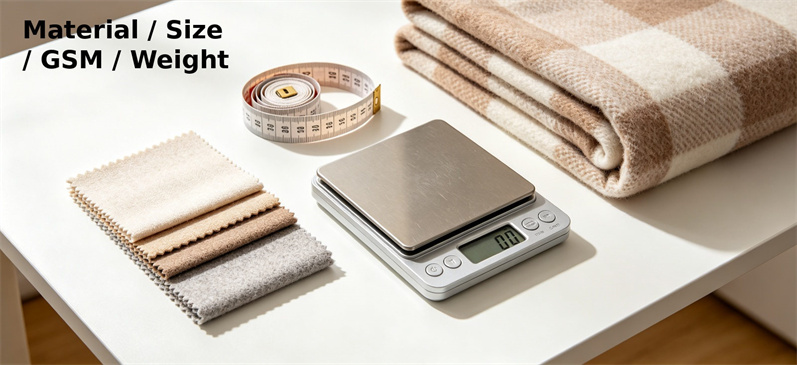
Let me put real numbers on this, because "heavyweight" gets thrown around loosely. A genuine -15°C blanket is usually: a 100–120 gsm polyester outer shell with a waterproof coating (rated to hold back 1000–3000 mm of water — that means wind-driven snow won't soak through and condensation won't drip in), a 600–800 gsm inner insulation layer (this is a thick felt-like sheet of polyester called "wadding" — not loose stuffing like a pillow; think winter jacket lining, just much heavier), and a soft polyester inner liner. A -25°C blanket pushes the insulation to 800–1200 gsm and often uses a ripstop shell (the woven grid pattern that stops tears from spreading). If a quote says "extreme cold" and the insulation is under 500 gsm, you're looking at a regular winter blanket with an ambitious label.
One thing to watch: some spec sheets cite "350 gsm heavyweight" for a -15°C blanket. In products that actually pass field audits, that 350 gsm refers to the outer shell plus inner liner combined — not the whole blanket. The thick insulation layer is on top of that. Always ask the blanket supplier to break out shell gsm, insulation gsm, and liner gsm separately. A single "total gsm" number hides a lot.
Flame retardant fabric matters a lot in winter settlements. You've got heaters, stoves, and people packed into tents. If a blanket catches fire easily or keeps burning, that's a disaster waiting to happen. The blanket supplier must show a fire test report that names the exact standard used.
The right fire standards for blankets (not tents — this is a common and dangerous mix-up) are ASTM D4151 (US blanket flammability), EN ISO 12952-1/-2 (European bedding ignitability), BS 5866 (UK blanket standard), and 16 CFR Part 1633 (US federal bedding standard). CPAI-8 and EN 13823 are tent standards — don't accept them on a blanket tender. Also ask whether the fire treatment is "topical" (sprayed on after production — it wears off after washing and long storage) or "inherent" (built into the fiber itself — it lasts the life of the blanket). For multi-year stockpiles, inherent is worth the extra cost.
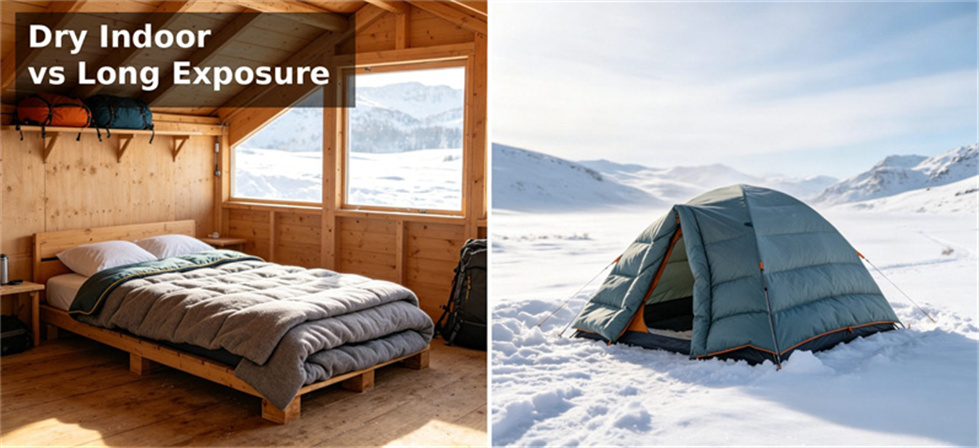
Mold and moisture resistance can't be ignored. At high altitude, days are warm and nights freeze, so tents and shelters get condensation. A thick blanket stored damp will grow mold on the inside — you might not see it from outside, but the insulation loses warmth measurably. The outer coating helps, but so does proper storage (more on that in Section VI).
This is the single most overlooked point in extreme cold blanket buying. Loads of products say "rated to -15°C" or "suitable for -25°C" right on the packaging. But that number might just be the factory's own claim — nobody independently tested it.
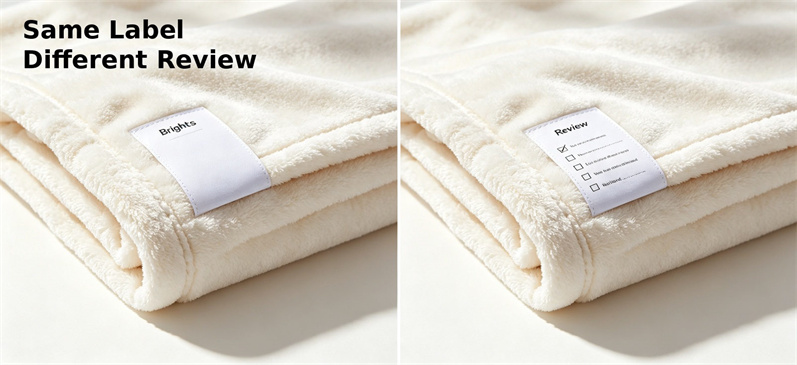
A real temperature rating comes from a named independent lab (SGS, Bureau Veritas, Intertek, TÜV, QIMA), on an official report, showing the test method used and the actual measured warmth number. A salesperson saying "yeah, it's good to -25" is not a test report.
The test standards that actually mean something are ASTM F1868 and ISO 11092 / EN 31092. They measure warmth on a heated metal plate that simulates a human body. The results come out in CLO or tog — both are just warmth scores, like SPF for sunscreen. For reference: a 600 gsm insulation blanket scores about 5–7 tog (3.2–4.5 CLO), which handles roughly -10°C to -15°C in still air; an 800–1000 gsm blanket scores 8–11 tog (5.2–7.1 CLO), handling about -20°C to -30°C. These are rough guides — wind, damp, and the person's body change everything — which is exactly why a lab report on the actual product matters more than any table.
One more thing people miss: test reports expire. In practice, textile test reports are considered valid for 12–24 months. If the factory changes the material, the production process, or even the dye lot, a buyer or auditor can ask for a fresh report. Sort this out at the start — don't find out at acceptance that the report is from three years ago.
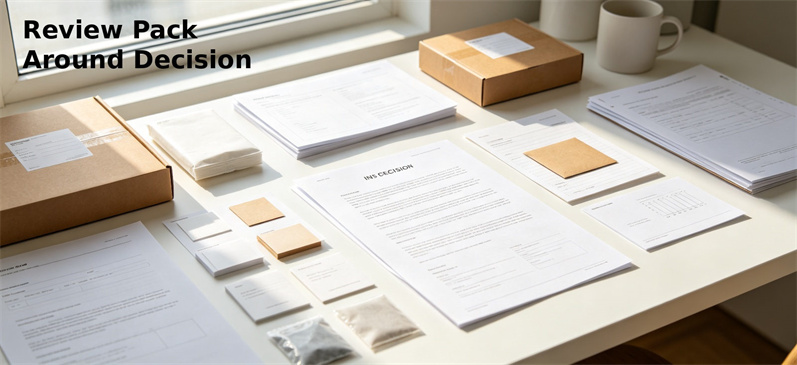
Relief blanket procurement checkpoint: "We can pass" and "our products meet" are not answers. For extreme cold blankets the answer is six things: report number, lab name, test standard, measured warmth number, report date, and the appendix showing the exact product. All six, every time. If a blanket supplier can't produce the warmth report for your exact spec, walk away — no exceptions on a sub-zero tender.
▶ Establishing long-term stable supply relationships is key to institutional material procurement. We provide large-volume wholesale supply of emergency relief blankets for government material stockpiles, prison accommodation, military camps and other institutions, strictly complying with project technical standards and ensuring long-term stable supply through sustained production capacity. For partnership models and supply assurance details in long-term institutional purchasing, check our article *Emergency Disaster Relief Blankets | For Government Stockpiles, Correctional Facility Blankets & Military Camps – Bulk Wholesale Supply*.
III. What Actually Matters at -20°C for Wholesale Blankets
At a cold settlement site, nobody cares how the blanket looks. They care whether it keeps them warm night after night. Two things that get overlooked constantly: whether the insulation stays fluffy after being compressed, and whether the blanket actually blocks wind.
Standard bulk blankets work fine in mild weather. But in sustained cold, if the insulation doesn't spring back after being squashed, the blanket gets thinner and thinner with each use, and the warmth drops. A sub-zero blanket needs to come back to nearly its original thickness every time you unfold it — not just pass a test the day it leaves the factory.
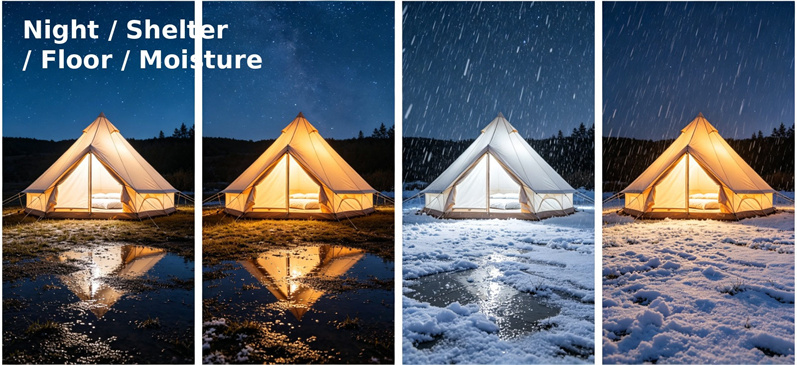
Wind is the killer that no CLO table captures. A blanket that tests to -20°C in still air on a lab plate can feel like -5°C when wind blows through a tent seam. That's why the outer shell matters as much as the insulation: a coated 210T polyester shell blocks wind; an uncoated shell lets wind blow right through and strip the warm air away in minutes. For any setting where the blanket might be used outside a fully sealed tent — distribution points, tent entrances, open shelters — specify that the shell must block wind (under 5 mm of air per second — at that rate you can barely feel it) and shed melting snow (1000 mm waterproof rating minimum).
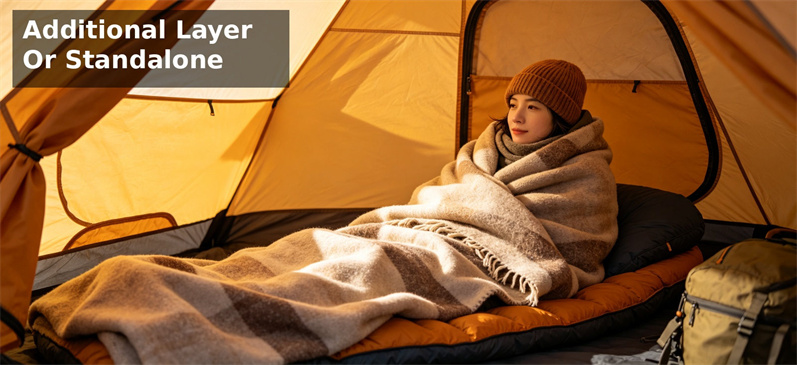
Compression damage is another thing that gets missed. Thick blankets get squashed flat during shipping or when stacked on warehouse shelves. When they arrive, you can't just eyeball them — you need to measure thickness and test spring-back on samples to make sure they're still the blanket you paid for.
Write two numbers into every spec: "springs back to at least 90% of original thickness within 24 hours of unpacking, at room temperature" and "loses no more than 15% thickness after being pressed under 50 kg for 72 hours." The first catches bad fiber or over-compression; the second catches a blanket that'll be flat as a sheet after two years on a shelf. For vacuum-packed blankets, also specify a thicker vacuum bag (70–80 micron, about 30% thicker than a standard vacuum bag — because the dense insulation pushes back harder and can split thin bags).
Seams and edges deserve a line that almost nobody writes. In a cold tent, a poorly sealed seam is a chimney for warm air. Specify either ultrasonic bonding (heat-fused, no needle holes — but on thick insulation the layers can separate, so ask for a pull test) or stitched quilting in a box pattern that holds the insulation in place without sewing all the way through and creating cold spots at every stitch line. Add 20–25 mm woven binding tape double-stitched on all four edges, with reinforced corners.
Cleaning and reuse matter in settlements where blankets get passed between people. The blanket needs to survive standard camp disinfectant — diluted bleach solution (the same kind used in camp sanitation), not harsh chemicals — without fading or going brittle. At sub-zero temperatures, wet blankets freeze solid, so the label should say "wipe clean, don't soak" and "no dry-cleaning" (dry-cleaning solvent dissolves the insulation's loft) and "don't use bleach stronger than the standard dilution."
Color and labeling serve a real purpose. Uniform color makes it easy to collect and sort batches. Clear batch labels with production date and batch number let you trace any issue back. Most UN and government cold-climate stockpiles use dark blue, olive green, or grey — they hide dirt from repeated use and avoid cultural or political associations. For mountain rescue or avalanche response, a hi-vis orange panel can be added, but that's a special order, not the default. White looks right for snow but looks terrible after one use.
institutional blanket procurement checkpoint: When samples arrive, do three things the factory won't volunteer:
(1) Stack a 50 kg weight on one sample for 72 hours, then measure how well it springs back after a day.
(2) Hold a hair dryer or fan on one side and feel for air coming through the other — if you feel it, the shell doesn't block wind.
(3) Hold a seam up to a light — if you see pinpricks of light through the stitching, warm air escapes at -20°C. Any of these fails, the whole batch fails.
Choosing a blanket isn't about picking the heaviest one. It's about matching the spec to the climate, the transport method, and the budget.
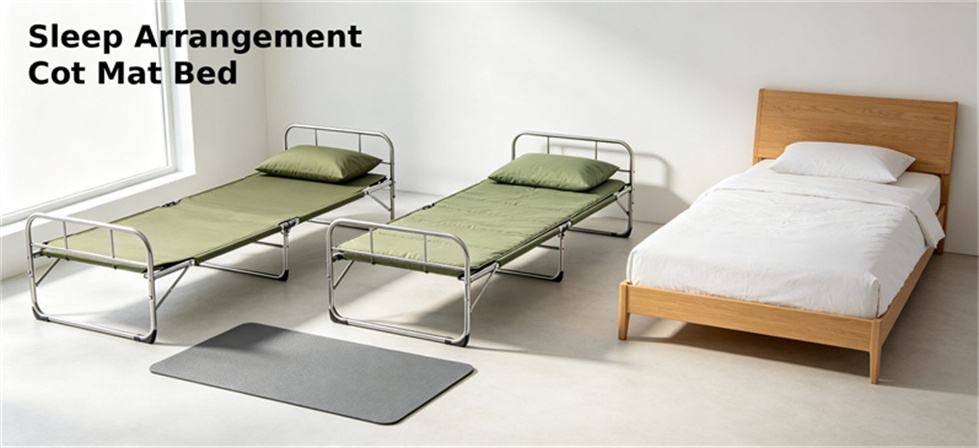
Size: Standard single size fits most adults. But in cold-weather tents, floor space is tight, so check the actual tent dimensions before ordering — you don't want blankets that don't fit the beds or that take up too much floor space when folded. For elderly people or children, consider a mix of larger and smaller sizes.
A practical tip: in extreme cold, a slightly bigger blanket (180×220 cm instead of 150×200 cm) is often better even for one adult, because you can wrap and tuck it around yourself instead of just lying under it. For children, don't just shrink an adult blanket — a 100×150 cm kids' version with 400–500 gsm insulation and OEKO-TEX Class I certification is safer and warmer than an oversized adult blanket a kid can't seal around themselves.
Warmth grade: The -15°C grade works for indoor shelters or places with basic heating. The -25°C grade is for open-air settings, unheated spaces, or sustained deep cold.
Here are the actual specs that go into a tender — numbers that survive an auditor's review:
The comparison table below helps extreme-cold bulk blanket sourcing teams evaluate relief blanket options across thermal performance, material and total cost factors. Use it to align requirements with your blanket manufacturer before requesting formal quotations.
|
Grade |
Size (cm) |
Outer Shell |
Insulation |
Weight |
Warmth (ref.) |
Compressed (each) |
|
-15°C |
150 × 200 |
100–110 gsm polyester, PU coated (1000 mm waterproof min) |
600–800 gsm polyester wadding |
2.0–2.6 kg |
5–7 tog / 3.2–4.5 CLO |
55 × 45 × 25 cm |
|
-25°C |
150×200 / 180×220 |
110 gsm ripstop polyester, PU/PA coated (2000 mm waterproof min) |
800–1200 gsm polyester wadding |
2.8–3.8 kg |
8–11 tog / 5.2–7.1 CLO |
60 × 50 × 28 cm |
|
-35°C / high altitude |
180×220 / 200×230 |
110 gsm ripstop, PU coated (3000 mm waterproof) |
1000–1500 gsm polyester wadding or wadding + microfiber blend |
3.5–4.8 kg |
11–15 tog / 7.1–9.7 CLO |
65 × 55 × 32 cm |
|
Children's (-15°C) |
100 × 150 |
100 gsm soft polyester, PU coated |
400–500 gsm polyester wadding |
0.9–1.2 kg |
4–5 tog / 2.6–3.2 CLO |
40 × 30 × 18 cm |
Size tolerance ±2 cm, weight tolerance ±5%, insulation weight tolerance ±10%. The CLO/tog numbers are rough guides for writing specs — the binding number in a contract is the lab test result on the actual production batch. Children's blankets must be OEKO-TEX Class I with no small detachable parts.
If the climate is uncertain, a common mix is about 70% standard grade, 20% heavy grade, and 10% lightweight emergency grade. But adjust for the actual population — elderly people, babies, and injured people need a higher share of the heavy grade. Don't just apply a fixed ratio across the board.
Container loading: Because extreme cold blankets are denser and heavier than standard ones, a 40HQ container holds fewer of them. Vacuum-compressed on pallets: roughly 5,000–7,000 pieces of -15°C grade or 3,000–5,000 pieces of -25°C grade per 40HQ. Without vacuum compression (just folded in cartons), expect about half — 3,000–4,000 of -15°C or 2,000–3,000 of -25°C. Always ask which packing method the loading plan assumes. For air freight, the 24 kg per-carton weight limit still applies: a 2.5 kg -15°C blanket at 9 per carton is about 22.5 kg plus carton; a 3.5 kg -25°C blanket at 6 per carton is about 21 kg plus carton. Don't let a factory design sea-freight carton counts for an air-freight order — repacking at the airport costs you the winter window.
Looking only at unit price is the most common mistake in cold-weather relief blanket procurement. At least four things deserve a separate look:

(1) Shipping cost.
Heavier blankets take up more space and weight per container. A 15% difference in how tightly they pack can make a bigger difference to total cost than the unit price. Folded size and weight per piece must go into the total cost calculation, not just the sticker price.
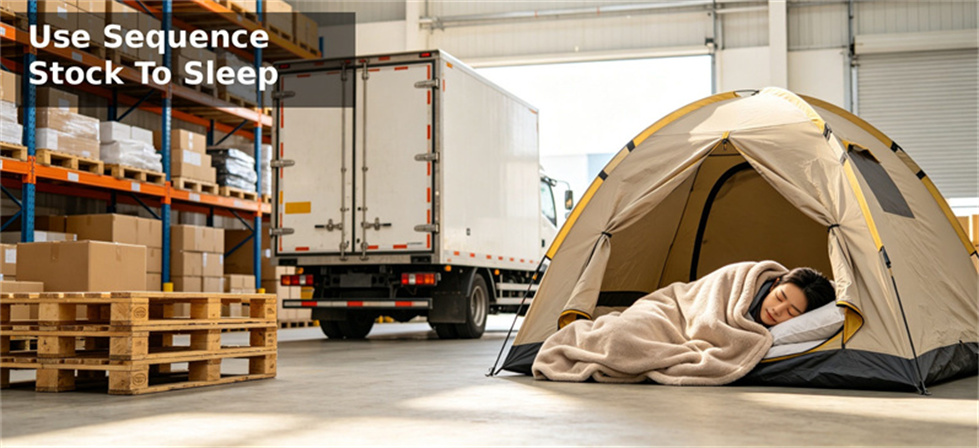
(2) Storage waste.
Thick blankets stored in damp conditions or stacked too high go bad faster than standard ones. Once the insulation grows mold or gets permanently squashed, you're looking at mass failure within one or two winters. Spending a bit upfront on proper storage (pallets, climate control, stack limits) is way cheaper than emergency re-buying later.
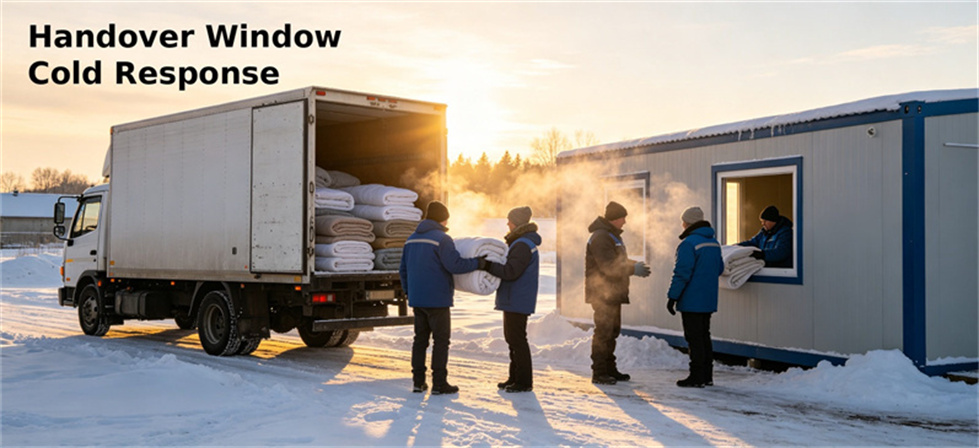
(3) A failed inspection costs way more than the price difference.
For government or NGO orders, one failed acceptance means the whole project milestone slips. That's not just the cost of returning goods — it's delays, coordination time across multiple parties, and the real risk that you can't find replacement stock in the narrow winter window. No unit price saving is worth that.
(4) Customs delays at the destination.
Several high-latitude countries have extra textile import rules — content forms, label language requirements, safety certificates. If paperwork is incomplete and goods get held at port, you miss the winter window. That costs far more than any per-piece saving. A blanket supplier who's shipped to high-latitude countries before will have the paperwork ready.
Quick note on "phytosanitary certificates": for synthetic blankets, the relevant documents are the content declaration, fiber label, and (for wood pallets) the ISPM 15 heat-treatment stamp. A true phytosanitary certificate is for plant-based materials. If a destination country asks for one on a synthetic blanket shipment, clarify whether they mean the wood pallets or a textile import license — they're different documents and mixing them up wastes time.
Rather than quote a fixed price ladder (polyester costs move with the commodity market), here's a useful reference: for a 150×200 cm, 600–800 gsm insulation, PU-coated shell, vacuum-compressed -15°C blanket with a full document pack (warmth report + fire report + OEKO-TEX), FOB China in 2026 typically lands in the low-to-mid teens USD per piece. The -25°C equivalent with 800–1200 gsm insulation is high teens to low twenties. If a -25°C quote comes back under USD 12/piece, one of three things is wrong — the insulation is lighter than the spec sheet says, the shell is uncoated and won't block wind, or the warmth report belongs to a different product. The second one is hardest to catch because the blanket looks thick and warm in a meeting room; it fails in a tent.
Payment terms for this product are typically T/T (30% deposit, 70% against copy of the bill of lading). L/C at sight is usually not accepted for stockpile-size orders of this SKU. For extreme cold tenders, the more important contract question isn't FOB vs CIF — it's whether the first batch can ship by air if the sea schedule slips. Write an air-freight option and who pays for it into the contract before you need it.
Bottom line: When comparing quotes, first set the baseline — "insulation weight as specified, temperature rating backed by a real lab report, full customs paperwork included" — then compare total cost among the blanket suppliers who meet that baseline. Don't filter by lowest price first
institutional blanket procurement checkpoint: Build a 3-year total cost table for the two finalists: unit price × quantity + shipping + customs and inland transport + storage (pallets, racking, climate control if needed) + a 15–20% contingency on the cheaper option (re-testing, replacement stock, air-freight upgrade). For cold-climate tenders the contingency should be higher than for standard blankets because the re-buy window is weeks, not months.
▶ Wool blanket, multi‑purpose, lightweight, Outdoor Emergency. Click this title link to view lightweight fabric parameters, compact packing solutions and bulk quotation for outdoor emergency deployment.
The real management cost of extreme cold supplies hits in the years after you buy them.
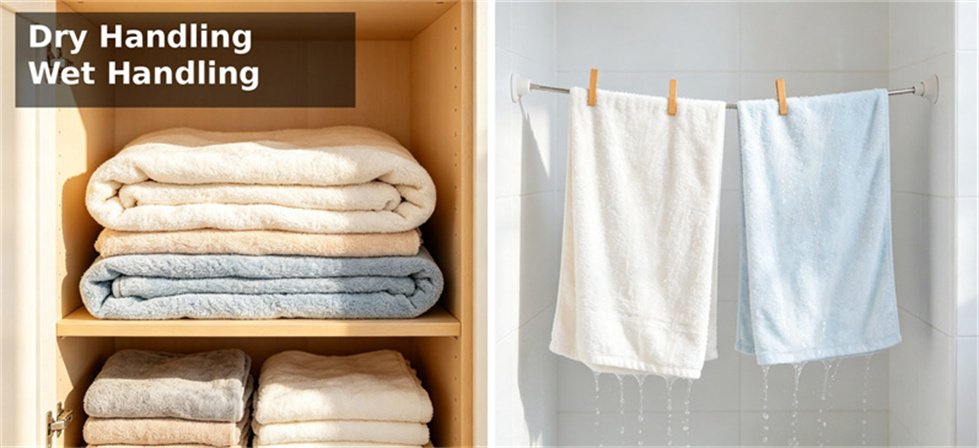
Basic storage: Keep it dry and control warehouse humidity — thick insulation soaks up ambient moisture and grows mold far more easily than standard blankets. Limit stack height so cartons at the bottom don't get permanently crushed. Keep blankets away from direct heat sources and strong sunlight, which break down the coating and insulation faster.
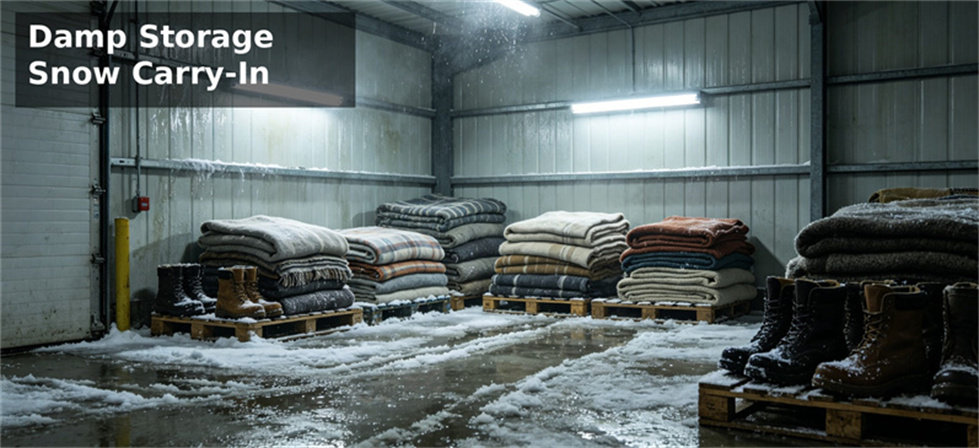
The numbers to write into the contract annex: temperature 15–25°C (alarm if it stays above 30°C), humidity below 60% (alarm at 65% — that's lower than the 65–70% for standard blankets, because denser insulation holds more moisture), pallets at least 15 cm off the floor, and stack height no more than 4–5 carton layers for -25°C grade (one layer less than standard, because each carton is heavier). For vacuum bales, do a quarterly visual check — any bale that has puffed up (lost its vacuum) gets pulled out, logged, and either re-compressed or rotated into use.
Batch records and periodic testing: Every 1–2 years, pull samples from stock and re-test warmth to make sure storage hasn't degraded performance. Don't just rely on the original factory report. Keep records of batch number, production date, date received, and test results — auditors will ask for these.
Rotation: Design the stockpile as a cycle: blankets nearing their rotation limit go to training exercises or smaller projects, and fresh stock comes in behind them. This reduces waste and regularly proves the blankets still work. For sub-zero stock, each rotation test should focus on spring-back and warmth, not just visual condition.
Starting-point rotation cycles for thick insulation blankets: 4 years in climate-controlled storage, 2.5 years in a basic unheated warehouse, 1.5 years in temporary or field storage — roughly 70–80% of the cycle for standard blankets, because denser insulation recovers more slowly and the fire/coating treatments age faster with temperature swings. Lock the inspection standard into the contract before production: use the standard industry sampling tables (General Inspection Level II — that means 2.5% allowed for serious defects, 4% for minor ones, the same tables most government tenders reference), with pre-shipment inspection at the factory by SGS, BV, Intertek, or QIMA at the seller's cost for the first order.
relief blanket procurement checkpoint: For any multi-year stockpile, write a "re-test at 24 months" clause into the contract: you (or the blanket supplier) can pull a random sample from the delivered batch and send it to a third-party lab to re-check warmth and fire
Start by asking whether the blanket supplier can prove their claims with paperwork — not by trusting a sales pitch.
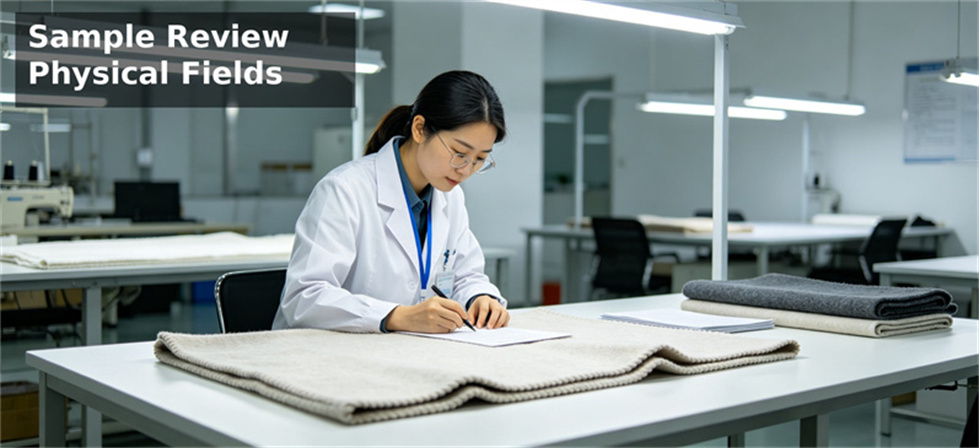
Three quick filters that save a whole round of factory visits on extreme cold tenders:
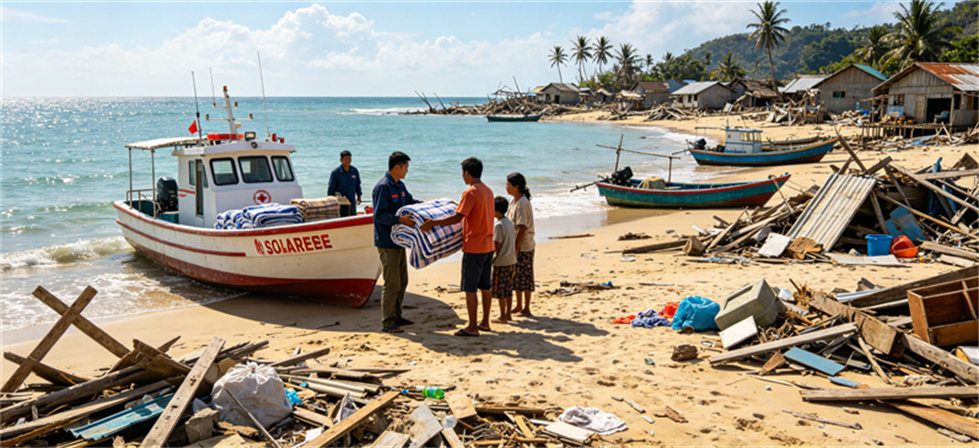
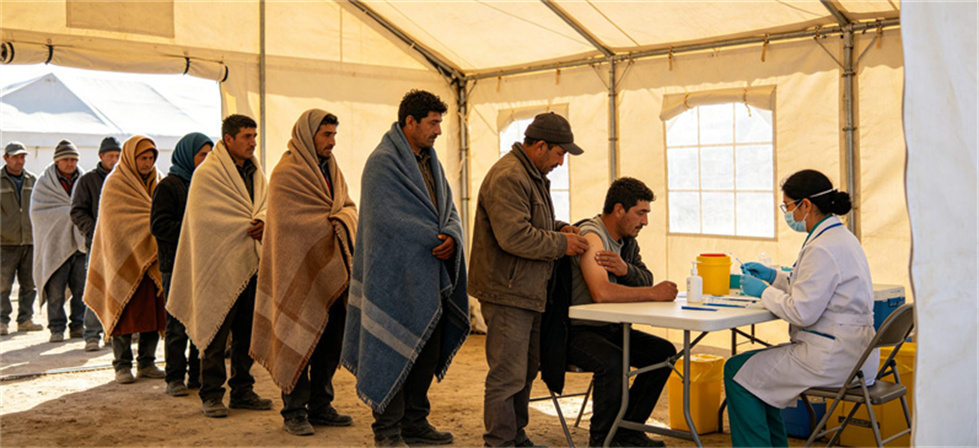
What to look for:
▶ From sending the first inquiry to final cargo arrival, bulk ordering emergency relief blankets involves multiple critical milestones. Our article *How to Order Emergency Relief Blankets in Bulk: From RFQ to Shipment* presents the complete operational workflow, ideal for procurement newcomers to get up to speed quickly.
1.Write a one-page project brief.Number of beneficiaries, historical lowest temperatures at the destination, how long the blankets will be used, who the recipients are (share of elderly, children, injured), budget cap, and the latest acceptable first-batch arrival date before winter.
2.Draft the technical spec.Using Section II of this guide, list: insulation weight (shell, insulation, and liner broken out separately), how temperature rating will be verified (must be an independent lab report to ASTM F1868 / ISO 11092 / EN 31092), fire standard number, sizes and tolerances, shell windproofing and waterproofing, color and labeling, packing format, and the full customs document list for the destination country.
3.Shortlist blanket suppliers.Cut anyone who can only offer self-declared specs without independent test reports. Verify that reports are current and that the report appendix covers the exact product being quoted.
4.Test samples.When samples arrive, prioritize: weighing each layer separately; testing spring-back after 72 hours under a 50 kg weight; checking wind penetration through shell and seams; spot-checking fire resistance against the submitted report; and if needed, commissioning your own independent warmth test.
Don't evaluate extreme cold samples in a heated office. Take them outside on a cold day or into a cold room if you can — the difference between a blanket that feels "thick" and one that actually traps heat is something your hand detects at -5°C in a way it never will at 22°C. For vacuum-packed samples, do the full 24-hour spring-back test before measuring anything else.
5.Finalize the contract.Include: insulation spec by layer, minimum warmth score with a specific number, fire standard, phased delivery milestones with winter deadlines, inspection sampling rate, procedure for defective goods, who provides which customs document and by when, the 24-month re-test clause, and who pays for air freight if sea shipping slips.
6.Acceptance on arrival.Inspect per the contract. Keep test reports and acceptance records matched to the contract number — you'll need them for audits, reorders, and project reviews.
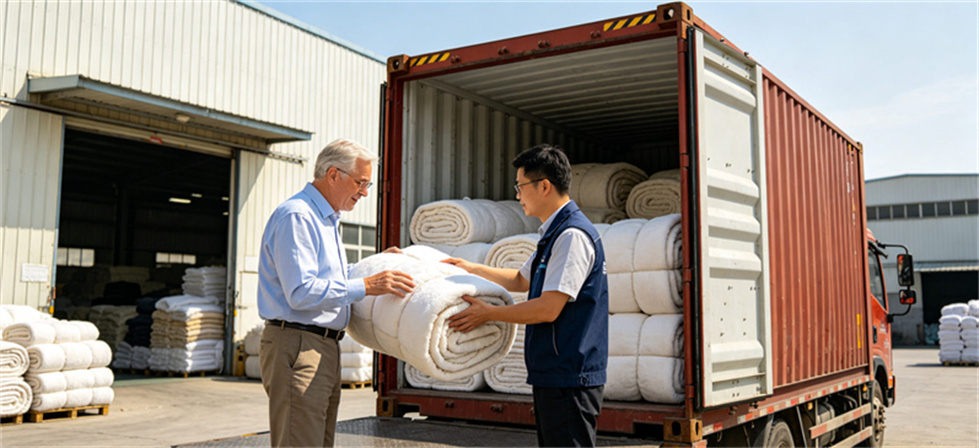
Problems found at acceptance can still be fixed. Once goods are warehoused and distributed, the cost of claims and emergency re-buying shoots up. Deal with acceptance issues immediately per the contract — don't let them slide.
Need a starting point for your extreme cold blanket spec or winter tender?
If you're drafting the technical appendix for an extreme cold blanket tender or writing an internal bulk blanket sourcing spec, you can contact us through the site inquiry form with a brief description of your project and target climate. We can provide a sample spec clause template and acceptance checklist for internal discussion and benchmarking — no client-specific information included. Final terms are subject to the signed contract.
Q: What does ISO certification actually prove — and not prove?
A: ISO 9001 proves the factory runs a decent quality management system. It does NOT prove the blanket is warm or fire-resistant — those need separate product-specific test reports. For government stockpile blanket procurement, you need both: the system certificate AND the warmth/fire reports. They do different jobs and can't substitute for each other.
Q: How do I know if a "-25°C" claim is real?
A: Ask for an independent lab report to ASTM F1868, ISO 11092, or EN 31092. Check the test conditions, the standard used, and the actual measured warmth number (in CLO or tog). Don't go by what's printed on the label or what a salesperson says. The report must show the lab name and date, be within its validity period (usually 12–24 months), and the appendix must cover the exact product you're buying.
Q: What hidden costs are most often missed in extreme cold quotes?
A: Three big ones: (1) Does the destination country need extra certificates or content forms for customs (EAC for Russia/Kazakhstan/Belarus, REACH for the EU, bilingual labels for Canada, ISPM 15 for wood pallets)? (2) How many pieces actually fit in a 40HQ — extreme cold blankets pack 30–50% fewer per container than standard ones. (3) Is the first-batch arrival date locked in relative to the winter deadline? These three get left out of quote comparisons all the time but cost real money during execution.
Q: What happens if pre-shipment inspection fails on a winter-window order?
A: Build a tiered remedy into the contract before it happens: minor defects below the allowed limit — ship with a note; minor defects above the limit or serious defects below it — factory fixes and re-inspects at their cost, deadline stays; serious defects above the limit or critical failures (warmth below spec, fire test fail, wrong shell coating, wrong label language) — reject, factory re-makes at their cost with a new inspection, and if air freight is needed to hit the winter window, they pay for it. Write this ladder into the contract before production starts — don't negotiate it in October when the first snow is already falling.
Q: What MOQ and sample terms are normal?
A: MOQ is usually one full 40HQ — about 5,000–7,000 pieces of -15°C vacuum-compressed (3,000–4,000 uncompressed) or 3,000–5,000 of -25°C vacuum-compressed (2,000–3,000 uncompressed). Custom shell colors, custom labels, or non-standard sizes may need higher MOQ or a surcharge. Standard spec samples are usually free with the buyer paying courier; custom samples with specific weights or coatings may carry a sample fee that's generally deductible from the first order. Standard samples ship in 5–10 days; custom samples with independent warmth testing can take 3–4 weeks including lab time.

What goes wrong
Buying based on "rated to -25°C" printed on the packaging without checking for independent test paperwork.
Consequence
Goods fail acceptance, or they actually don't keep people warm in the field, triggering emergency re-buying and accountability. In a narrow winter deployment window, replacement might be impossible — leaving people without warmth.
How to prevent it
Write into the spec and contract that a current independent warmth report (ASTM F1868 / ISO 11092 / EN 31092) must be provided. Verify at the sample stage, not when bulk goods arrive.
What goes wrong
Preparing sandard trade documents without checking whether the destination country requires extra content forms, label languages, or safety certificates for textile imports.
Consequence
Goods get held at port or sent back for missing paperwork, the winter window is missed, and the settlement site runs short.How to prevent itAt project start, confirm the full document list with a blanket supplier who's shipped to that country before. For Russia/Kazakhstan/Belarus it's EAC per TR CU 017/2011; for the EU it's REACH SVHC and OEKO-TEX; for Canada it's bilingual labels and fiber content; for wood packaging it's ISPM 15. Put in the contract who provides what and by when.
How to prevent it
At project start, confirm the full document list with a supplier who's shipped to that country before. For Russia/Kazakhstan/Belarus it's EAC per TR CU 017/2011; for the EU it's REACH SVHC and OEKO-TEX; for Canada it's bilingual labels and fiber content; for wood packaging it's ISPM 15. Put in the contract who provides what and by when.
Pitfall 4: Quoting a tent fire standard on a blanket tender
What goes wrong
Copying CPAI-8 or EN 13823 (tent fire standards) into a blanket spec because they sound authoritative.
Consequence
The factory tests to the wrong standard, the report is technically irrelevant to blankets, and the batch fails audit — or worse, passes on paper but underperforms in a real tent fire where blankets are stacked near heaters.
How to prevent it
For blankets use ASTM D4151, EN ISO 12952-1/-2, BS 5866, or 16 CFR Part 1633 as applicable. If the project also specifies tent fire standards, explicitly ask the spec writer whether blanket fire requirements need to coordinate.
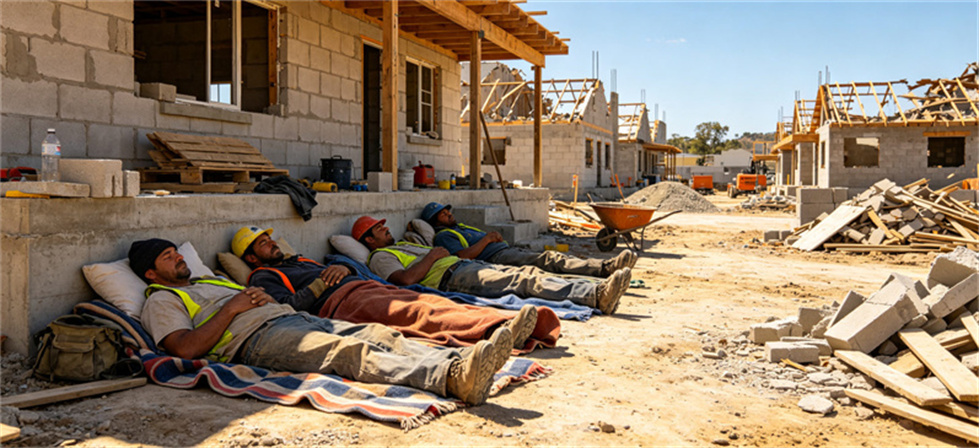
What goes wrong
Specifying insultion weight and warmth score but saying nothing about whether the outer shell blocks wind or how seams are sealed.
Consequence
A blanket that tests to -20°C on a lab plate performs like -5°C in a windy tent because wind strips the warm air away. Spec is met on paper; people freeze.
How to prevent it
Specify a coated shell (PU or PA/PE, 1000 mm waterproof minimum), wind blocking under 5 mm/second, heat-fused or box-quilted seams (not straight through-stitching), and 20–25 mm double-stitched edge binding. Hold the sample up to a fan during evaluation — if you feel air through it, it fails.
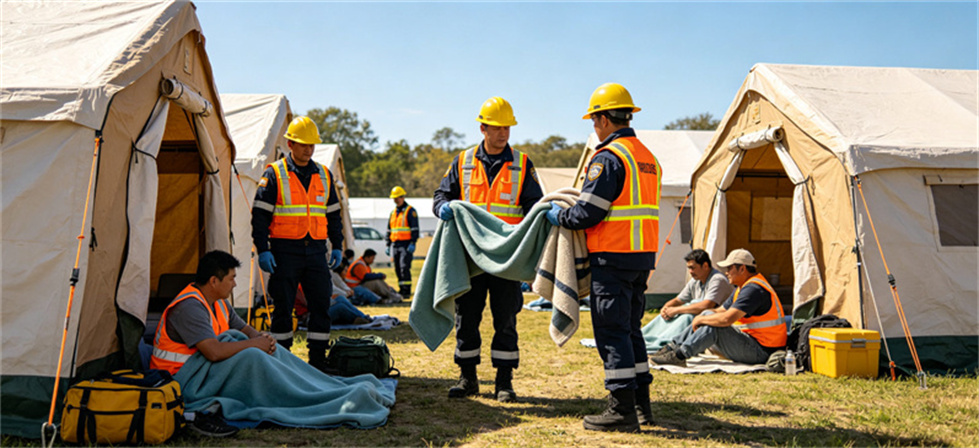
What goes wrong
Packing 15 blankets × 3.5 kg = 52.5 kg per carton for sea freight, without checking whether the shipment might need to go by air.
Consequence
At the airport the freight forwarder refuses the cartons (24 kg per-carton limit), forcing costly, time-consuming repacking that eats the winter window.
How to prevent it
For any extreme cold tender with a winter deadline, write the 24 kg per-carton limit into the contract regardless of shipping terms, and have the blanket supplier confirm pieces-per-carton in writing before production. The extra carton material costs less than one day of repacking at the airport.
IX. Why Buy from a China Blanket Manufacturer Who Can Bundle
For many cross-border cold-weather projects, coordinating with separate blanket supplier for blankets, tents, and other relief items doesn't just multiply paperwork and shipping — it risks the whole deployment when different items arrive at different times. Working with a China-based extreme cold blanket supplier who can bundle offers real advantages:
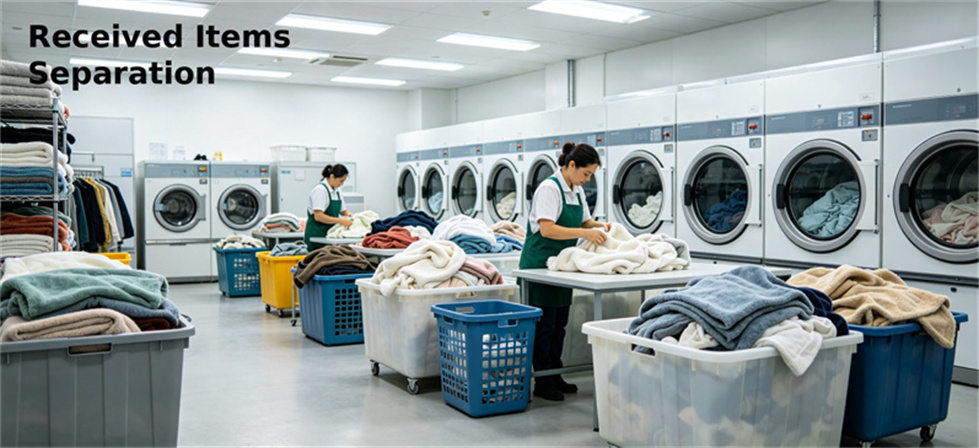
More and more governments, NGOs, and aid organizations are shifting to comprehensive source suppliers who can cover multiple emergency categories in one shipment. For extreme cold projects, the time and cost savings are especially significant.
YRF Emergency Relief Supplies is a one-stop source factory specializing in emergency relief supplies, with full capability in extreme cold blanket production, certification coordination, and project support.
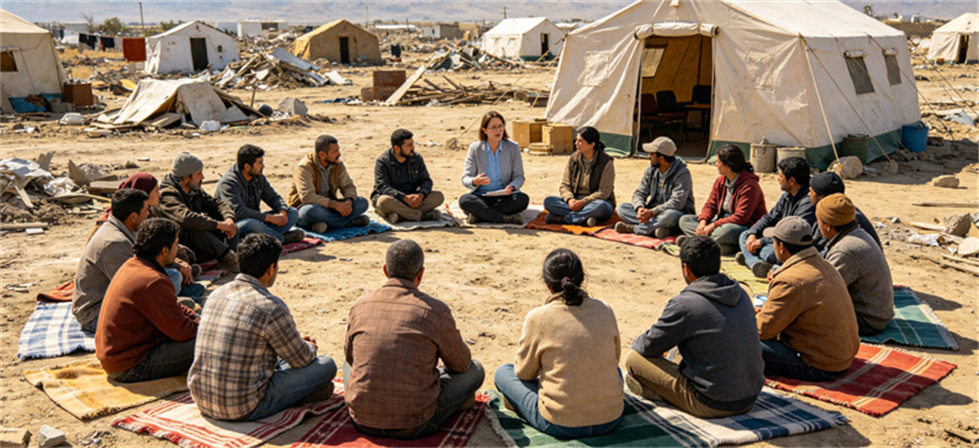
What we offer in this category: YRF supplies multi-grade extreme cold blankets from -15°C to -25°C and below, with shell/insulation/liner weights listed separately on every spec sheet and independent warmth reports available to ISO 11092 / ASTM F1868 for the exact construction shipped. YRF holds OEKO-TEX certification for harmful-substance safety and ISO 9001 quality management. When a project requires it, YRF can coordinate with accredited third-party labs to complete warmth and fire testing and issue properly formatted reports suitable for project acceptance and audit files.
Support through the process:
At the design stage, YRF can help draft insulation weight and spec mix recommendations based on the destination's climate history, recipient demographics, and budget. Samples are available for comparison testing — including the 72-hour compression and wind-penetration checks described in this guide — and we can provide input on key technical spec clauses.
At the contract stage, YRF can cooperate in writing key technical parameters, phased delivery milestones with winter deadlines, the 24-month re-test clause, and acceptance standards into the contract annex. We can also confirm the full customs document list for the destination country in advance — including EAC, REACH, or bilingual label requirements where applicable — and clarify who provides what and by when.
At the execution stage, we support phased delivery management and can prioritize production for rush or incremental orders. We provide complete shipping documents and customs support materials: certificates of origin, content forms, OEKO-TEX certificate copies, and ISPM 15-compliant wood packaging or presswood/plastic pallet alternatives.
For one-stop bundling, YRF can ship windproof tents, insulated sleeping mats, emergency lighting, first aid kits, and folding beds in the same container to reduce cross-blanket supplier coordination.
For organizations without a dedicated technical institutional blanket procurement team, YRF provides real support during spec evaluation, technical clause drafting, and acceptance standard confirmation — especially useful during the preparation phase of mid-to-large government stockpile projects and international aid operations.
Plain English: YRF's standard extreme cold spec sheets already carry the separately listed shell/insulation/liner weights, vacuum bag thickness, 24-hour spring-back commitment, heat-fused or box-quilted seams, batch numbering, and multilingual label proofs discussed in this article — so the questions you'd otherwise have to push a blanket supplier to answer are already on the table. Sealed samples, the three inspection points (during production / before shipping / at loading), the 24-month re-test clause, and AQL-based acceptance are standard workflow, not extras to negotiate.
For comparable blanket supplier in this category, see: Top 10 China Emergency Relief Sleeping Bag Manufacturers | 2026 Authoritative Procurement Recommendations.
The three most-overlooked but highest-impact areas in extreme cold blanket procurement are: making sure temperature ratings are backed by independent lab reports, not self-claims; checking destination-country customs rules for high-latitude markets before you order; and locking first-batch delivery dates for winter into the contract. Nail these three and you've eliminated most of the risk.
Five actions you can take today:
For teams planning mid-to-large high-altitude aid blanket procurements that need one-stop bundling and technical clause support, project details — climate, volume, winter deadline — can be sent to YRF Emergency Relief Supplies via the site inquiry form or email. YRF can provide a reference supply framework and key considerations document before any commitment, to help reduce the time spent on preliminary research during internal discussion and tender preparation. Final terms are subject to the signed contract.
One last line from the procurement side: a -25°C rating printed on a label is marketing. A warmth number on an independent lab report, matched to the exact insulation and shell in your contract, re-checked at 24 months, and traceable to a batch number on every carton — that's the document that keeps someone warm on the night the temperature actually hits -25°C. Write the spec so that document exists before you need it.
Primary Keyword: Extreme Cold Emergency institutional blankets
Long-Tail Keywords: extreme cold bulk blankets procurement, sub-zero emergency warming blankets, -25°C wholesale blankets, high-altitude aid blanket procurement, CLO value institutional blankets, thermal resistance ISO 11092, ASTM F1868 blanket testing, extreme cold blanket GSM specification, extreme cold blanket flame retardant rating, disaster relief blanket anti-compression deformation, high-latitude country textile customs, EAC certification bulk blankets, winter window phased delivery, extreme cold blanket third-party temperature testing, government extreme cold reserve blankets, extreme cold shelter warming supplies, vacuum compressed extreme cold blankets, extreme cold blanket loft recovery, extreme cold blanket windproof shell, ISPM 15 wood packaging cold relief, extreme cold blanket air freight 24kg carton, extreme cold blanket phased delivery contract
Frequently Asked Questions
How to calculate blanket quantities for extreme cold relief projects?
To calculate wholesale blankets quantities for extreme cold relief projects, estimate the number of affected households or individuals, multiply by units per person or family for wholesale blankets, and add a 15-20% reserve margin for cold-weather wear of institutional blankets. Consider thermal rating needs and storage capacity when finalizing bulk blankets order sizes for institutional blankets distribution and wholesale blankets planning. and institutional blankets reserves for extreme cold operations.
How to verify blanket packing and labeling before shipment?
How to verify blanket packing and labeling before shipment? Request pre-production packing photos, confirming carton markings match the purchase order for wholesale blankets, checking label placement on samples, and arranging third-party inspection if required for institutional blankets. Your blanket supplier should provide packing confirmation before production begins for institutional blankets shipments and wholesale blankets orders. for bulk blankets and wholesale blankets shipments.
How government stockpiles should plan blanket specifications for extreme cold?
How government stockpiles should plan blanket specifications? Define core thermal specifications for institutional blankets, establish approved blanket supplier lists through tender, maintain batch traceability records, and schedule annual stock rotation for wholesale blankets. A written blanket specification checklist ensures consistency across annual blanket procurement cycles for bulk blankets and institutional blankets. for wholesale blankets and institutional blankets.
How to store and rotate extreme cold emergency blanket stockpiles?
How to store and rotate emergency blanket stockpiles? Store bulk blankets in dry, ventilated conditions with pallet separation, record receipt dates by batch, and follow first-in-first-out rotation for institutional blankets. Inspect stock annually for moisture damage and replenish wholesale blankets based on usage rates rather than fixed calendar dates for bulk blankets reserves. for institutional blankets and bulk blankets stockpiles.
How buyers can verify recycled content before ordering extreme cold blankets?
How buyers can verify recycled content before ordering blankets? Request material composition statements, test reports showing fibre percentages, and batch traceability records from the blanket manufacturer. A blanket supplier that can provide clear composition details for institutional blankets reduces the risk of mislabeled recycled content in bulk blankets orders. for bulk blankets and wholesale blankets orders.
How to control blanket specification changes on repeat extreme cold orders?
How to control blanket specification changes on repeat orders? Maintain a signed appendix with revision identifiers, requiring written confirmation for any GSM, size, label or packing alteration for bulk blankets, and requesting updated samples when changes affect product identity for wholesale blankets. This prevents silent substitutions in repeat relief blanket procurement orders for
✅ Factory video link (YouTube): https://x.c1ns.cn/zVNIU
✅ Facebook homepage: https://a.c1ns.cn/SjJla
|
Access our full product document |
Quick real‑time chat for urgent project questions |
 |
 |
|
Get full‑range product specs & package solutions in PDF |
Connect with us for instant project support |
Дружественные ссылки :
авторское право © Custom Disaster - Relief Bedding: Tents, Sleeping Bags, Blankets Все права защищены
профессиональная команда для обслуживания !