Категории
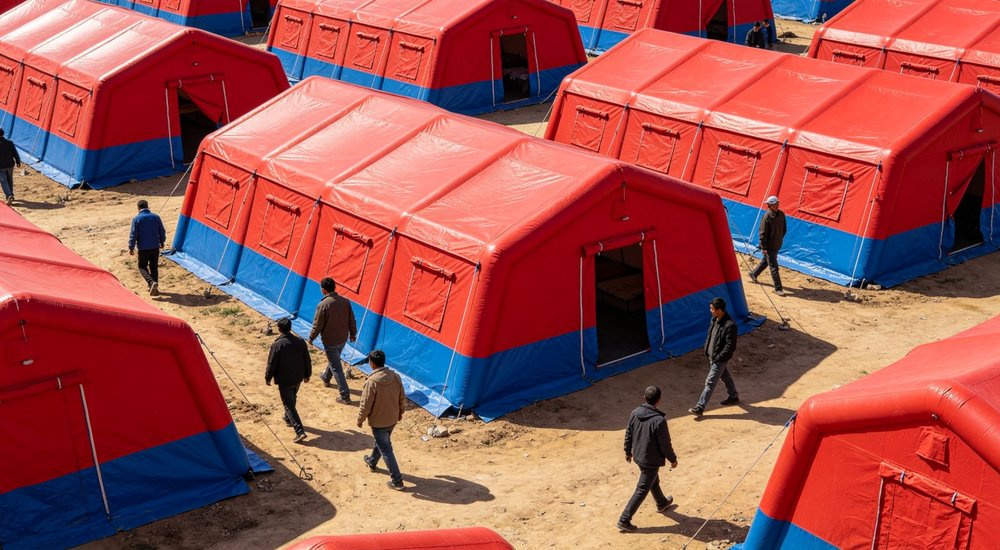
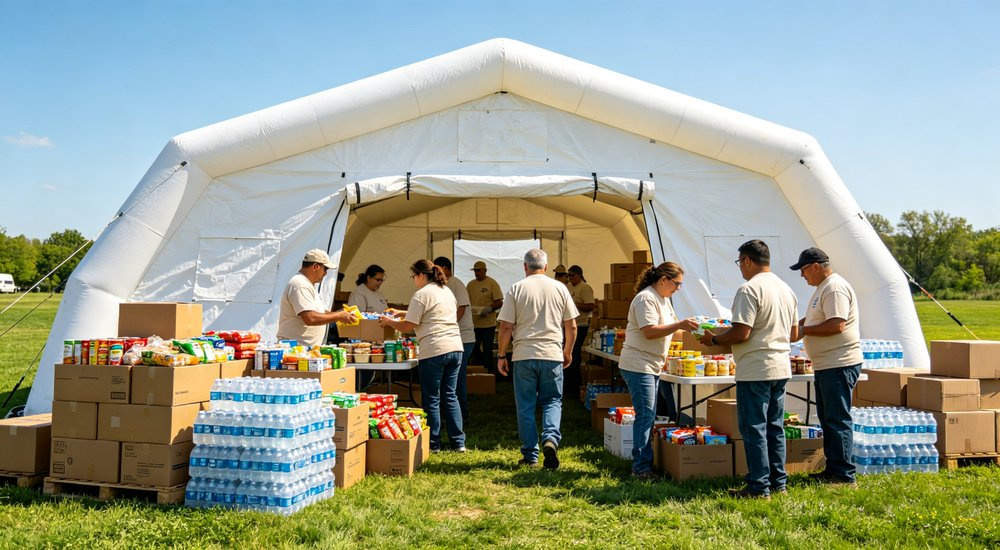
An inflatable emergency tent (also called an emergency inflatable shelter) uses air beams instead of metal poles to create temporary space. As a direct inflatable tent manufacturer, with 20 years of experience manufacturing disaster relief tents and emergency shelter tents for wholesale, government procurement, and humanitarian aid programs worldwide, It is not a large camping tent, and inflation alone does not make it ready for every job. including earthquake shelter, flood relief tent, refugee shelter, military tent, and emergency response tent deployments.
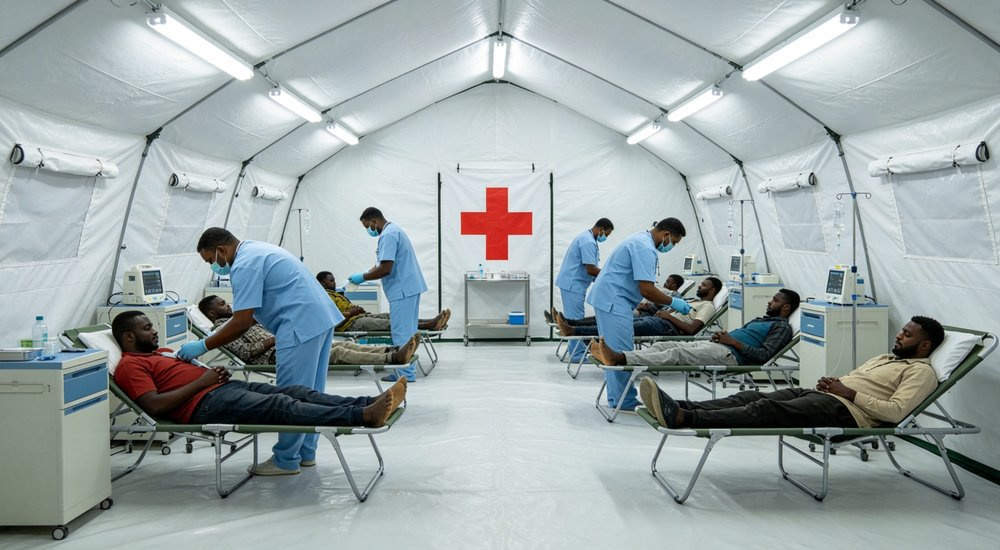
Common inflatable tent dimensions run from 12m² (4×3m) for first-aid posts to 30m² (6×5m) for field hospitals, with custom sizes up to 60m². With proper anchoring, these tents handle wind up to 80–100 km/h. including earthquake shelter, flood relief tent, refugee shelter, military tent, and emergency response tent deployments.
| 1. What is an inflatable emergency tent? | 7. Ground, weather and securing |
| 2. Why air-beam structure helps | 8. What a complete set includes |
| 3. Where it fits (use cases) | 9. Why two projects differ |
| 4. Not the same as camping tents | 10. What to tell suppliers |
| 5. Inflatable vs frame tents (with table) | 11. What a good reply looks like |
| 6. How to pick the right size | Frequently Asked Questions |
A 12m² unit takes 10-15 minutes with two people. A 30m² medical or decon unit takes 20-30 minutes. Larger modular configurations scale accordingly. Electric pumps cut setup time roughly in half compared to manual pumps.
Standard inflatable tents handle wind speeds up to 60-80 km/h (Beaufort 7-8) with proper anchoring and guy lines. Snow load capacity depends on air beam diameter and pressure — heavy-duty models support 10-15 kg/m². Always confirm these specs with the manufacturer for your specific model.
With proper care, inflatable emergency tents last 5-8 years or 50+ deployments. Lifespan depends on fabric quality (280-420g/m² PVC), UV exposure, storage conditions, and maintenance frequency. Repair kits extend usable life significantly.
Look for CE certification, CPAI-84 or NFPA 701 fire retardant standards, and ISO 9001 factory quality systems. Warranty typically covers manufacturing defects for 1-2 years. Confirm replacement parts availability, repair cost, and shipping cost for spare components before ordering.
Additional buyer considerations: custom logo printing is available on tent walls and carry bags (MOQ 50+ units). Storage requirements include a cool, dry area away from direct UV exposure — folded tents should be inspected every 6 months for mold or pest damage.
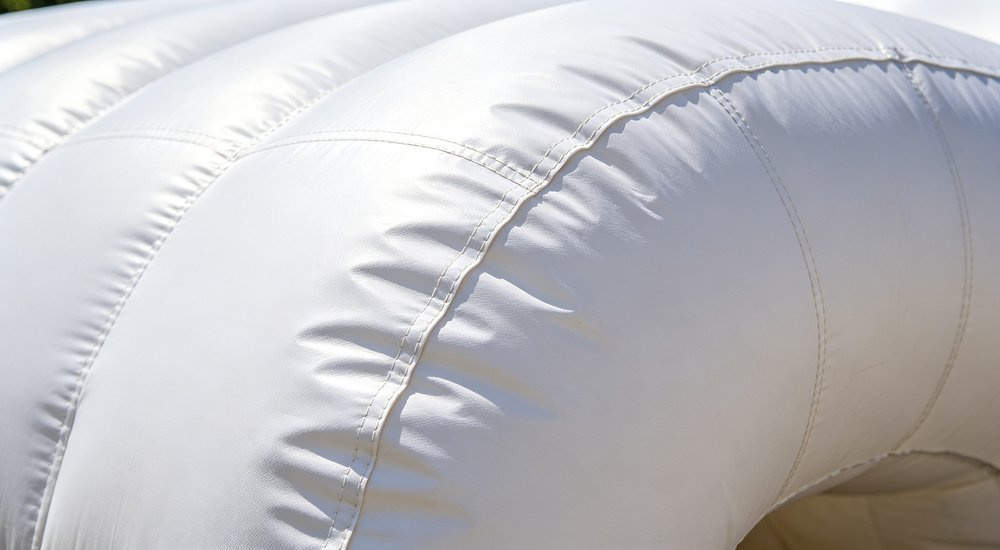
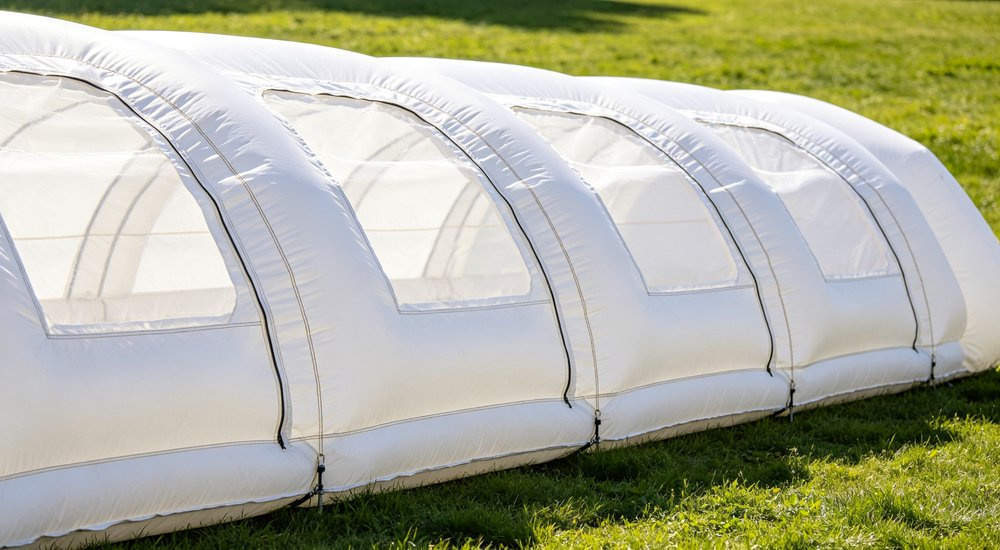
The frame is inflated air beams. When the beams reach the right pressure, they hold up the cover and the tent takes shape. Add the floor, doors, securing ropes, and inflatable tent accessories, and you have a working space. Normal pressure is 0.3–0.8 bar (4–12 psi), depending on beam thickness and expected wind. including earthquake shelter, flood relief tent, refugee shelter, military tent, and emergency response tent deployments.
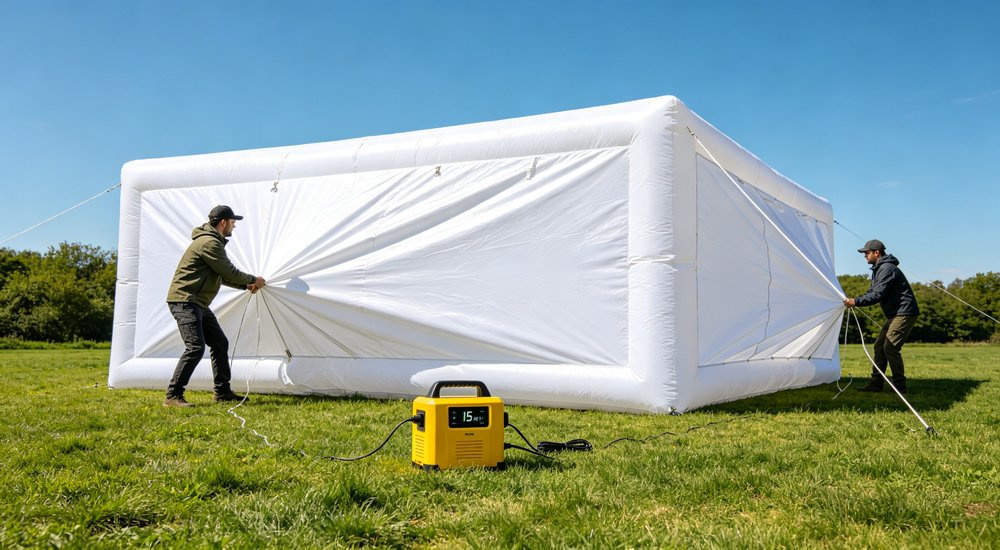
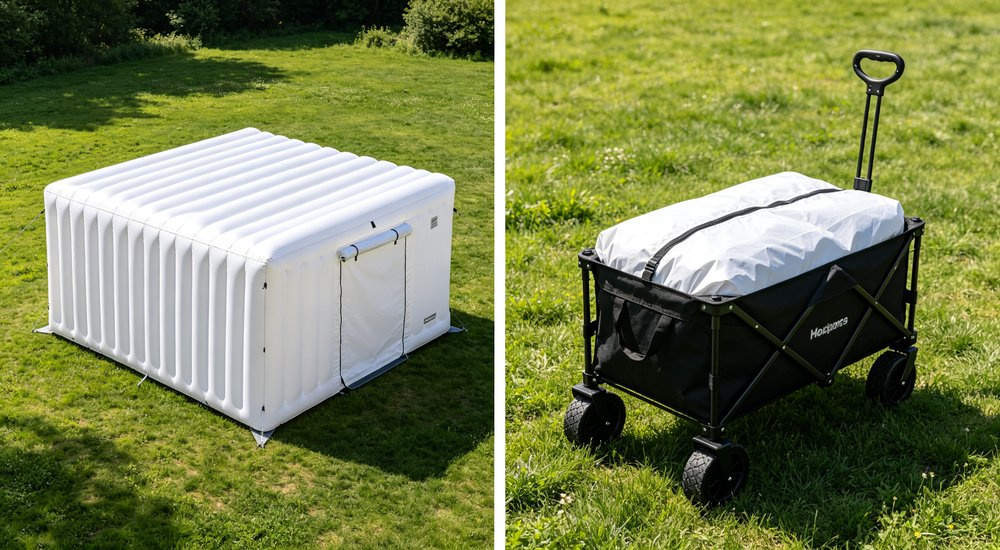
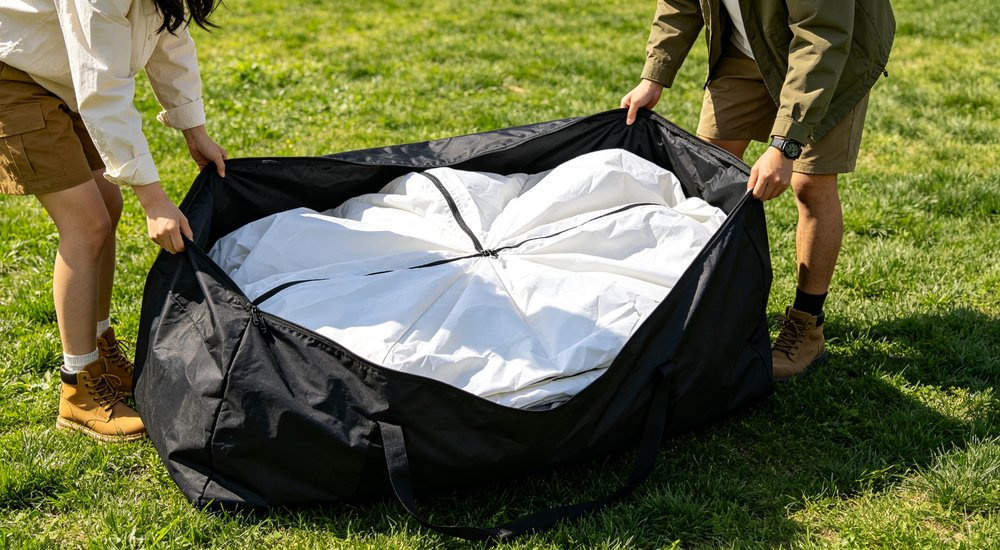
After use, deflate, fold, and pack. This means fewer long rigid poles, but it does not mean fewer people or no setup method. A 12m² unit packs to 0.8–1.2m³ and weighs 45–70kg. A 30m² unit packs to 1.5–2.5m³ and weighs 120–180kg. Most units need 2–3 people to carry and set up. including earthquake shelter, flood relief tent, refugee shelter, military tent, and emergency response tent deployments.
Always check: inflatable tent pump, valves, air chambers, pressure retention, anchoring, inflatable tent repair kit, and packing. The word "emergency" describes the use case. It does not guarantee a specific performance level. including earthquake shelter, flood relief tent, refugee shelter, military tent, and emergency response tent deployments.
Air beams combine support and packing in one flexible system. This is why rapid deployment tents and quick setup tents often use air beams — fewer loose poles to manage. Actual inflatable tent setup time still depends on tent size, pump quality, team experience, ground conditions, and anchoring work. including earthquake shelter, flood relief tent, refugee shelter, military tent, and emergency response tent deployments.
Fabric specs (ask for these): 280–420g/m² PVC-coated polyester, waterproof to PU3000–5000mm, fire retardant to CPAI-84 or equivalent, UV resistant, rated for -20°C to +50°C. Certifications to confirm: CE, ISO 9001, NFPA 701, CPAI-84. including earthquake shelter, flood relief tent, refugee shelter, military tent, and emergency response tent deployments.
A system usually includes: working pressure, separate chambers, inflation ports, safety valves, and pressure retention. Learn why air-beam design is the most critical buying decision. Chamber layout matters — if one section leaks, how much of the tent is affected? Ask this. including earthquake shelter, flood relief tent, refugee shelter, military tent, and emergency response tent deployments.
Designs vary. Do not copy pressure values or chamber counts from another model. Also know: how to find a leak, what can be repaired on site, and how to check the repair before reuse. including earthquake shelter, flood relief tent, refugee shelter, military tent, and emergency response tent deployments.
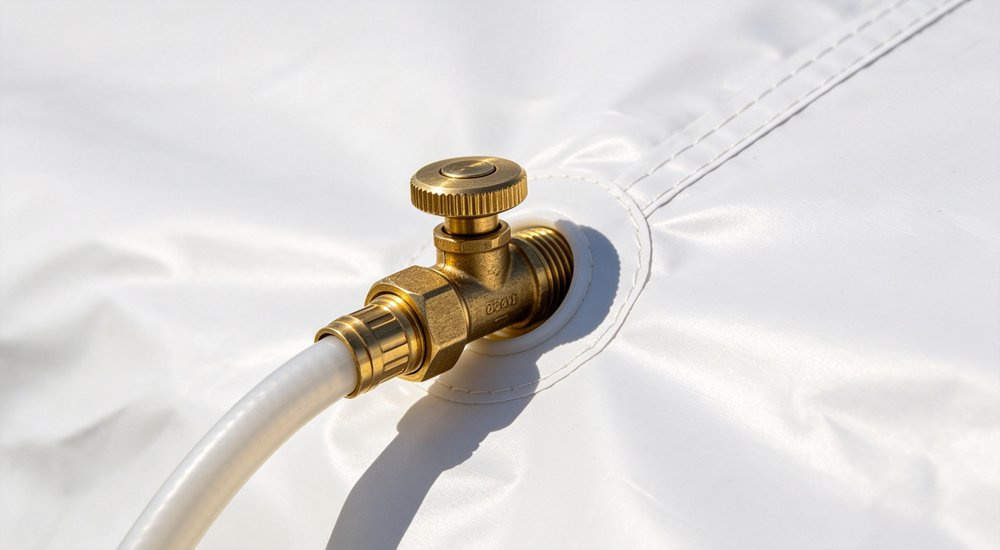
When comparing, ask each supplier: how many independent air sections? How many inflation points? What valve types? What are the normal inspection steps? The answer should tell field teams what to check before use and what to do if pressure drops. including earthquake shelter, flood relief tent, refugee shelter, military tent, and emergency response tent deployments.
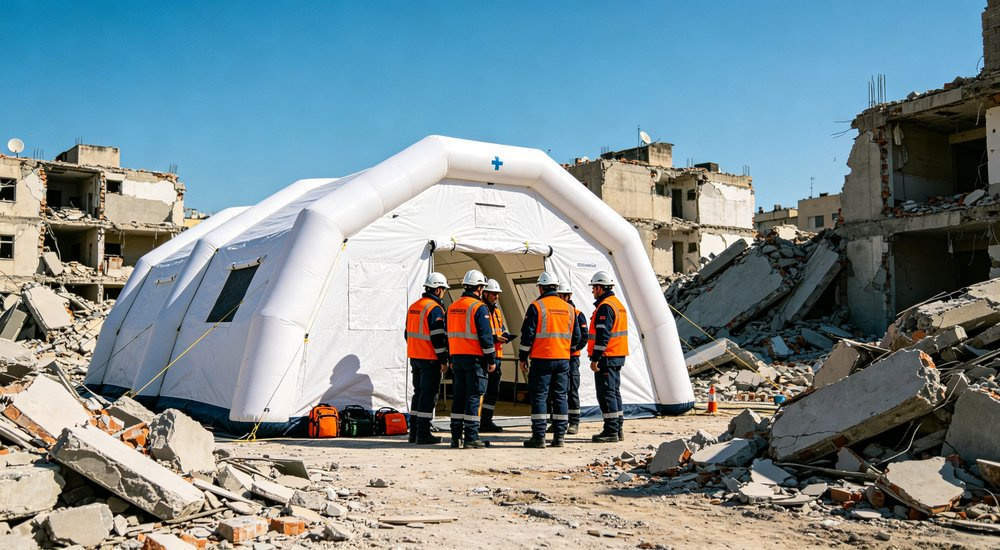
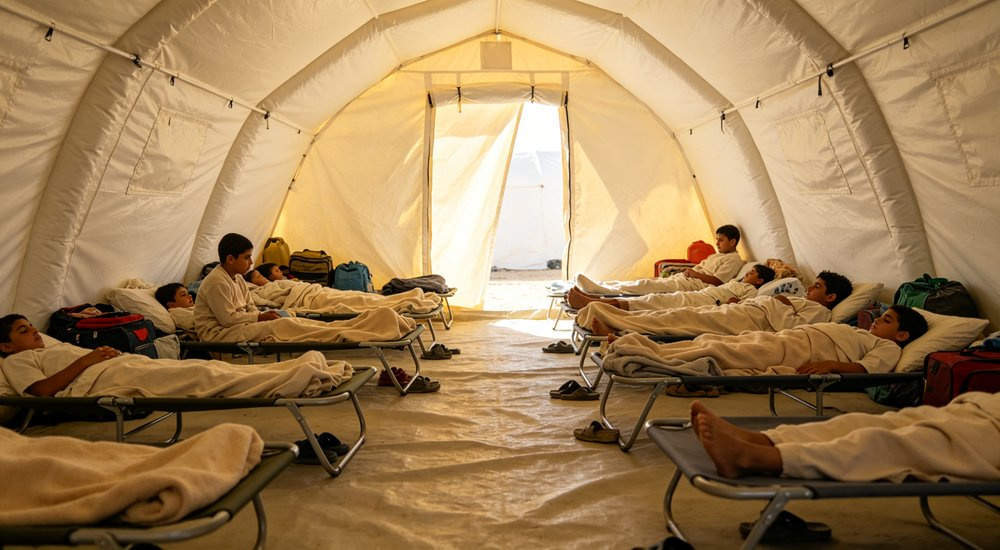
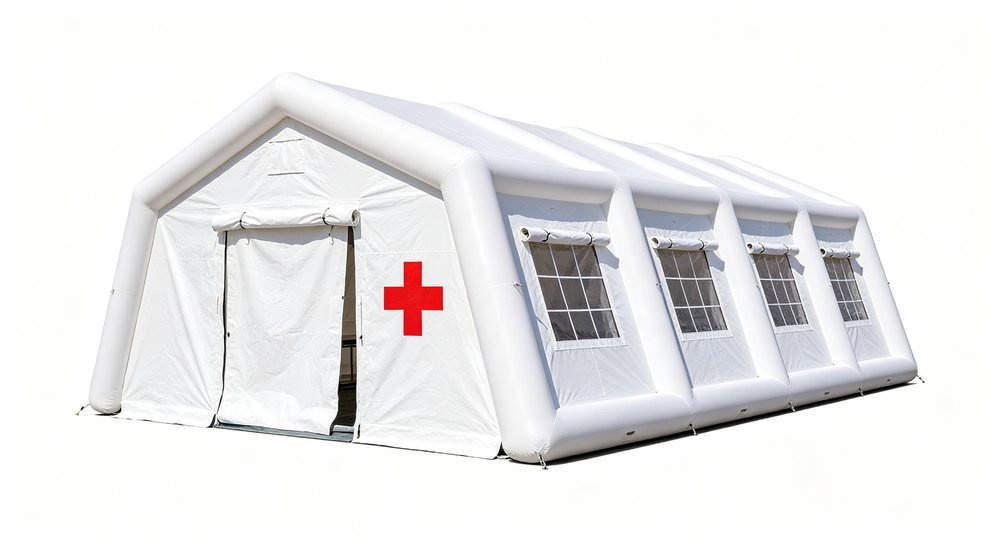
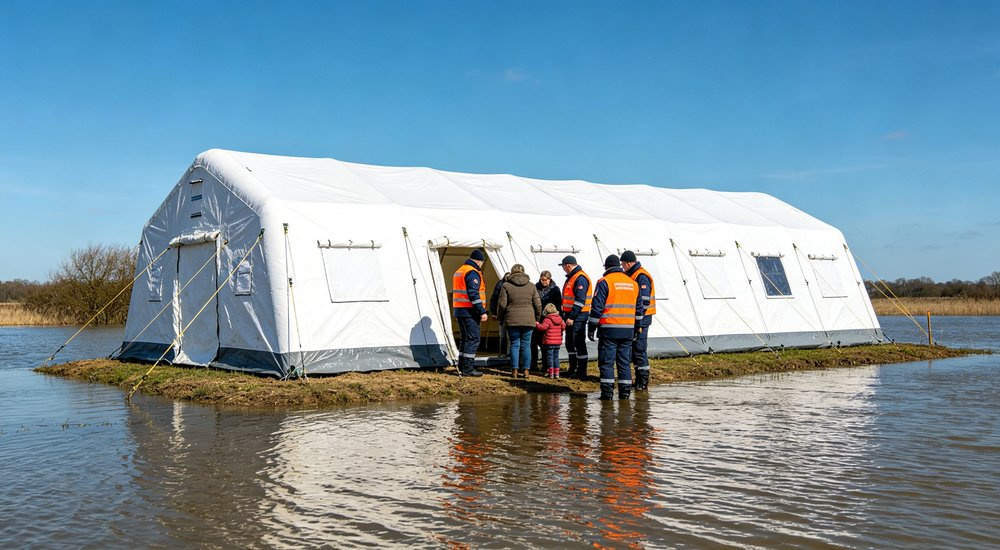
Consider a portable inflatable tent or inflatable shelter tent for disaster relief, emergency response, inflatable medical tent support, military inflatable tent applications, refugee tent camps, and humanitarian aid tent programs. You need temporary space, want fewer rigid frame parts, and can handle inflation, anchoring, and basic maintenance. Common uses: temporary medical tent, isolation support, public decontamination, command coordination, and general emergency shelter. Two to three people can set up a 12–20m² unit in 15–30 minutes, versus 45–90 minutes for a comparable frame tent. including earthquake shelter, flood relief tent, refugee shelter, military tent, and emergency response tent deployments.
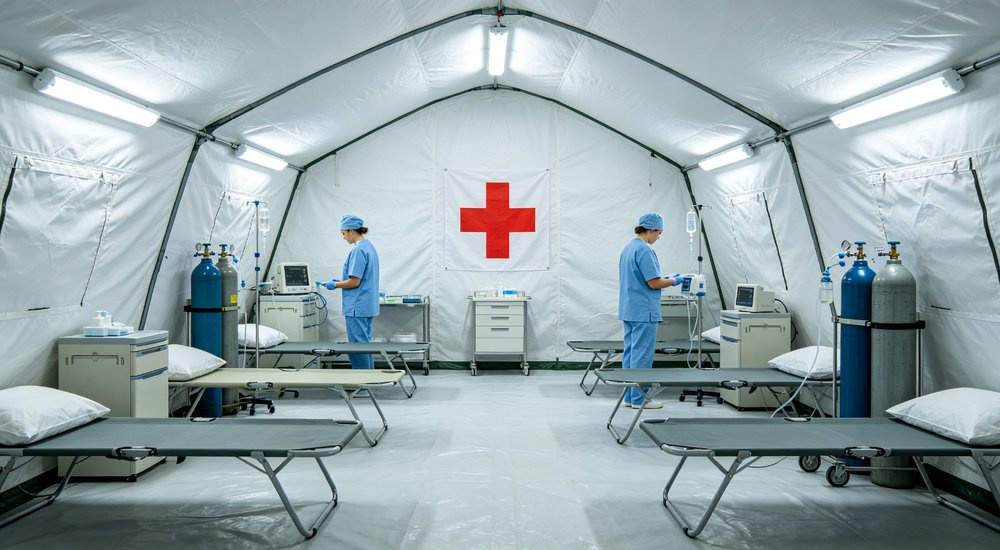
A temporary medical tent can hold triage, waiting, staff, or equipment — see how medical tents solve these problems. Isolation support also needs airflow, pressure differential, filtration, monitoring, and backup power — see how isolation tents differ. Decontamination needs clean-dirty flow, water supply, showers, drainage, effluent handling, and privacy — see what makes up a decontamination system and Site selection for medical use — A 20m² unit typically fits 8–12 people or 4–6 hospital beds, depending on equipment layout.
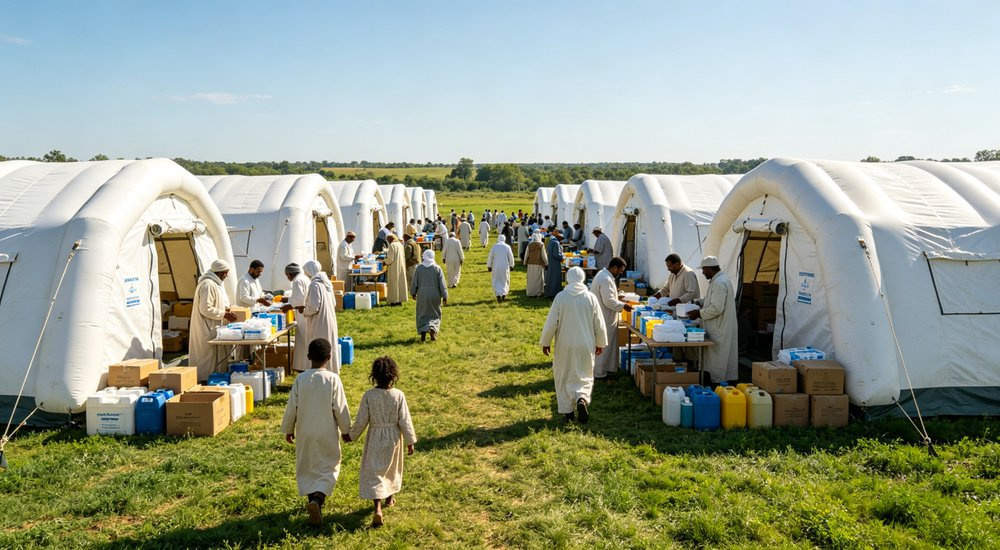
These systems do not come automatically with the tent shell. Compare the tent and the mission system separately, then confirm what the final delivery includes.
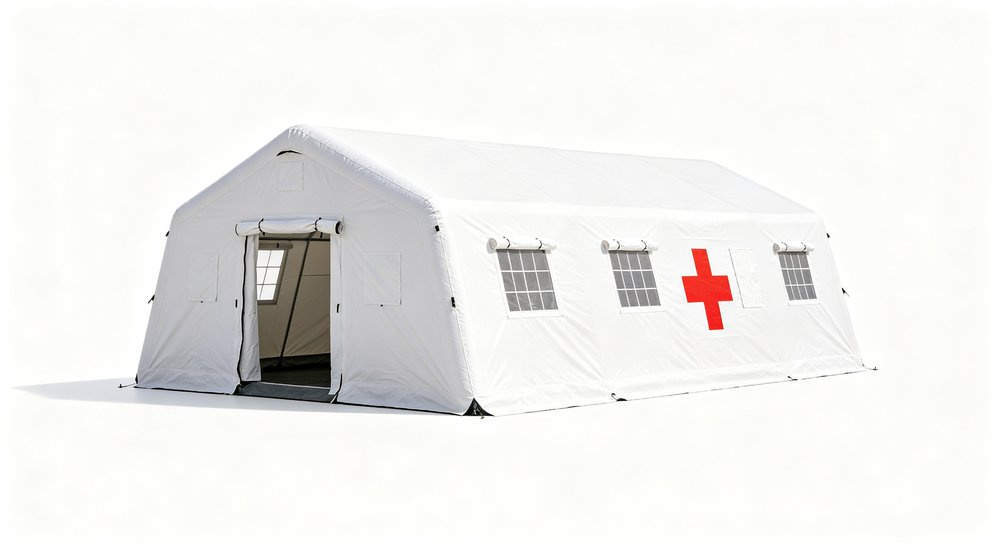
Rule: start with the simplest configuration that gets the job done. Add specialist systems only when you have the people, utilities, procedures, and documentation to use them. This prevents over-specifying a general shelter while a critical medical or decontamination function stays incomplete.
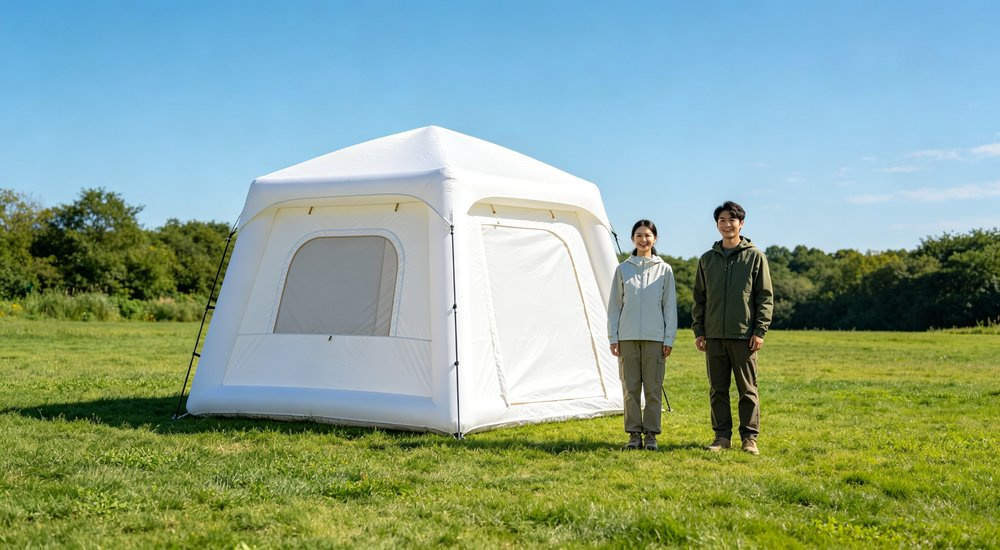
Camping tents are for one or a few people to sleep in, light transport, and short outdoor trips. Institutional emergency projects need: complete sets, repeated deployment, larger working space, identifiable components, clear zoning, documentation, and spare parts.
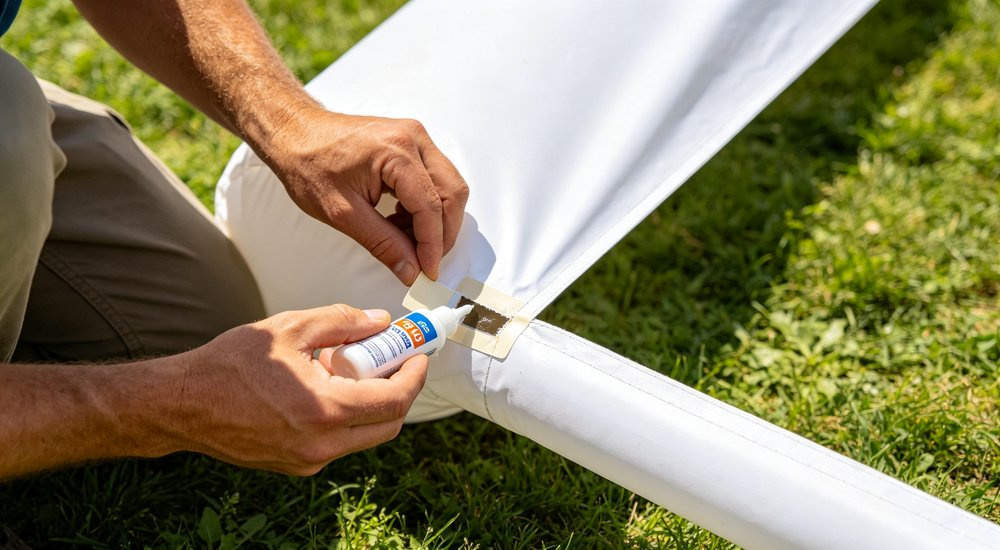
A similar shape does not mean the same structure or use. Check: clear internal space, air-beam positions, door dimensions, floor connection, anchoring points, repair method, and complete packing.
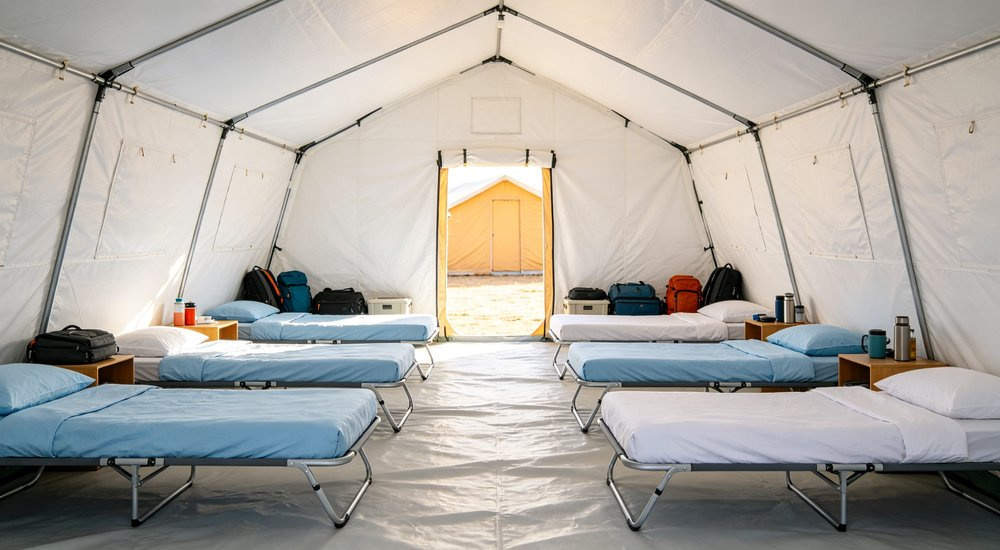
An institutional inflatable shelter may be overkill for a few people camping briefly. A normal camping tent is inadequate when you need stretchers, medical equipment, controlled airflow, or decontamination lanes.
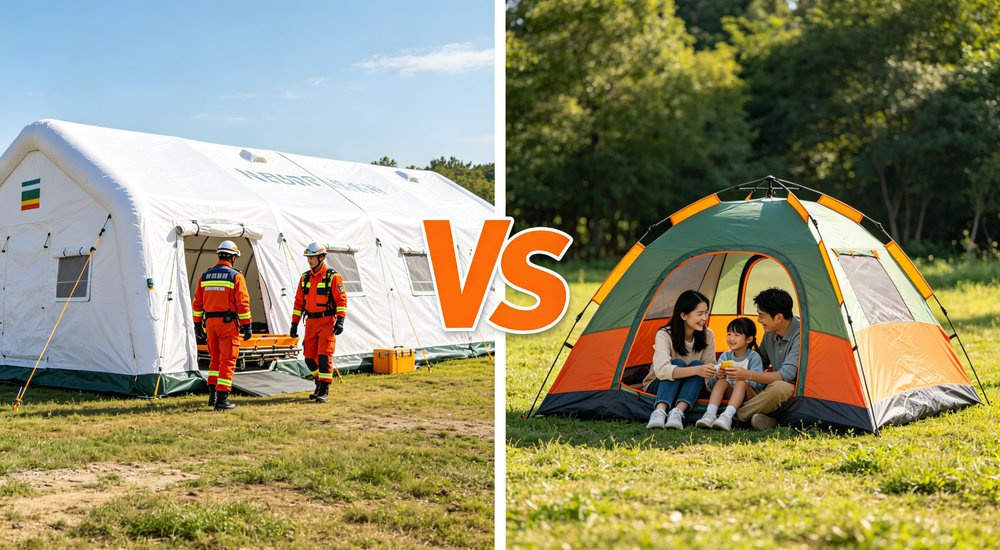
Institutional buyers should also compare how each set is labeled and replenished. You may need repeat orders, replacement valves, repair material, or matching connection parts. A product designed for occasional personal use will not give you the same component control or documentation continuity.
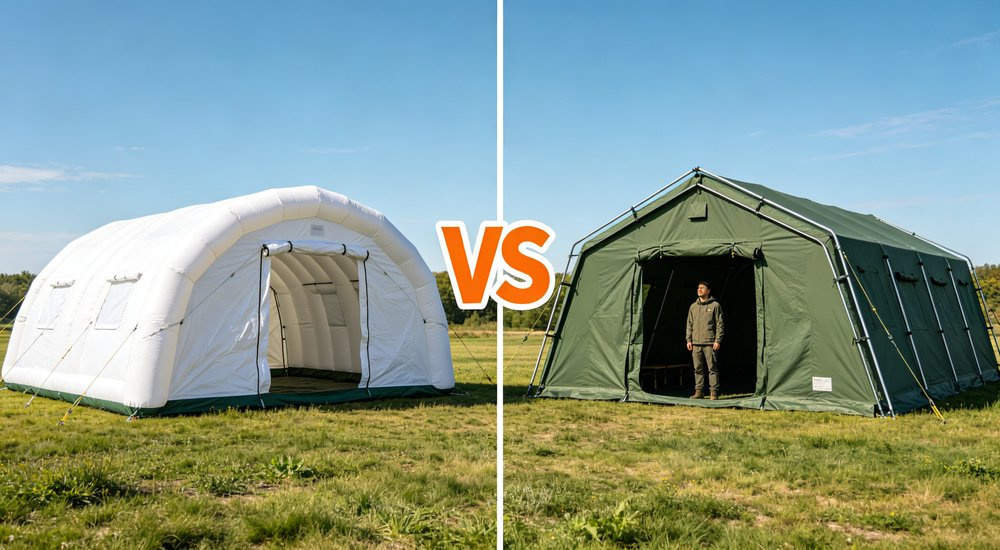
Both create temporary space, but they demand different things from your site. An inflatable tent needs air beams, pumps, valves, and pressure retention. A frame tent needs rigid members, joints, and cover connections.
|
Factor |
Inflatable Tent |
Frame Tent |
|
Setup time (12-20m²) |
15–30 min, 2–3 people |
45–90 min, 3–4 people |
|
Packed volume |
0.8–2.5m³ (folds small) |
1.5–4m³ (long poles) |
|
Weight |
45–180kg |
120–250kg |
|
Key maintenance |
Pressure checks, leak repair |
Part identification, joint checks |
|
Power needed |
Pump (electric or manual) |
None for setup |
|
Price range (12-30m²) |
$800–$5,000+ |
$600–$3,500 |
|
Best for |
Frequent moves, rapid response |
Long-term fixed sites, no power |
|
Lifespan |
5–8 years with care |
8–12 years with care |
Do not ask which is universally better. Ask which fits your people, equipment, transport, and maintenance. Frequent moves do not create an advantage if your site lacks suitable power or repair resources. See our detailed comparison guide. For multi-room field hospitals, interconnected modular systems may be the better choice.
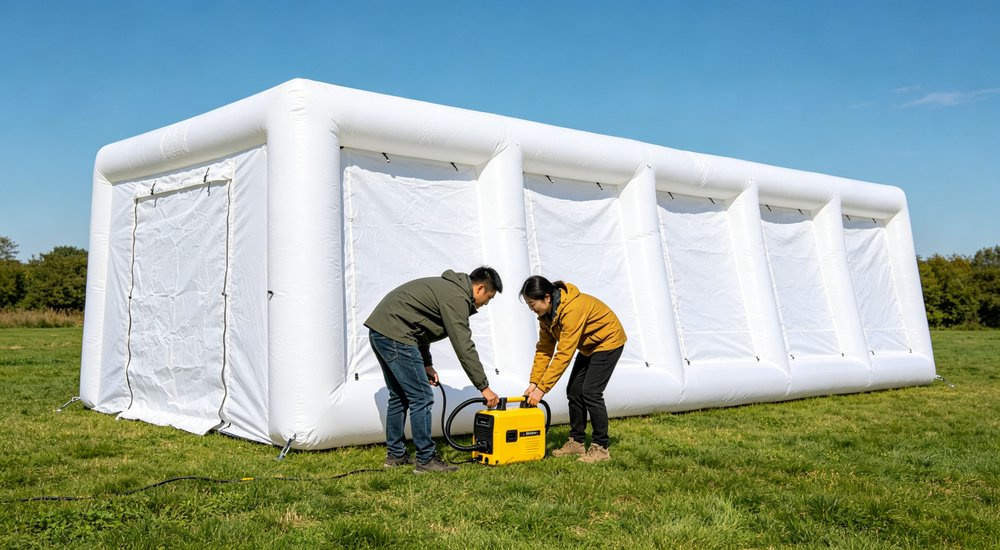
External length and width do not equal usable area. Air beams, doors, partitions, equipment, beds, desks, and aisles all take space. The same number of people needs different layouts for accommodation, triage, and decontamination.
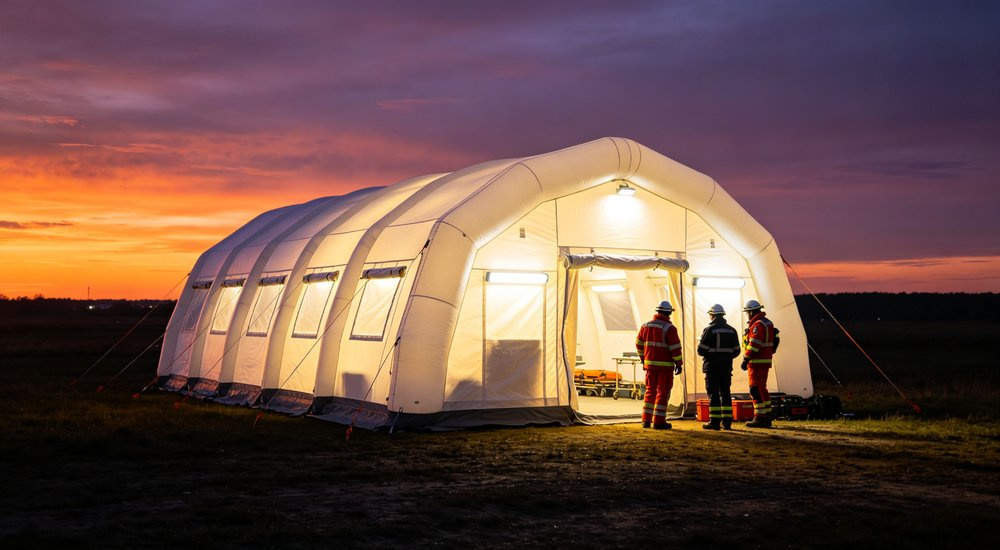
Draw a simple plan: where do people or equipment go? Where is the main route? Where are the doors? What areas must stay clear? For stretchers, carts, or equipment, also check clear door width, turning space, and floor transitions.
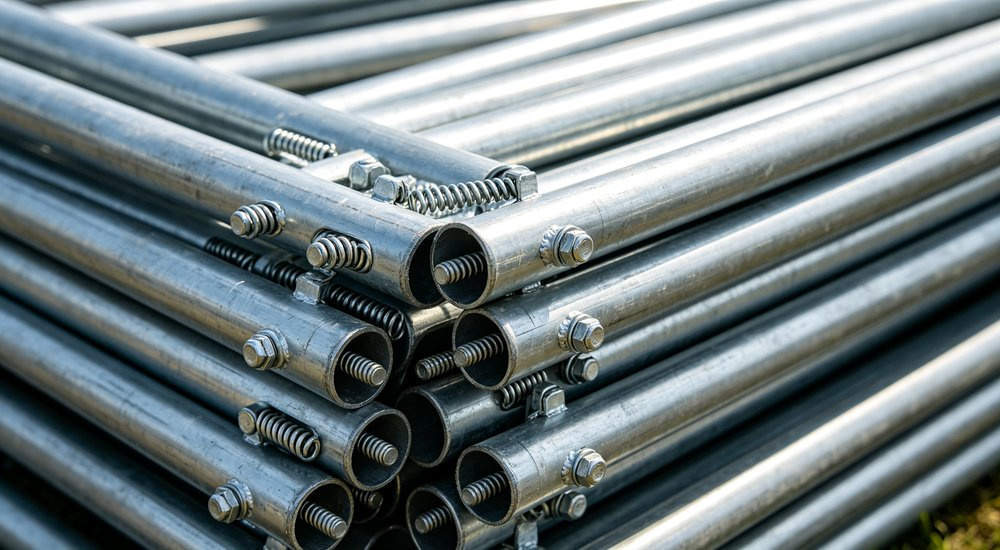
Ask the supplier for internal dimensions, air-beam positions, openings, and available zoning. A capacity number without layout assumptions does not show whether your project will fit.
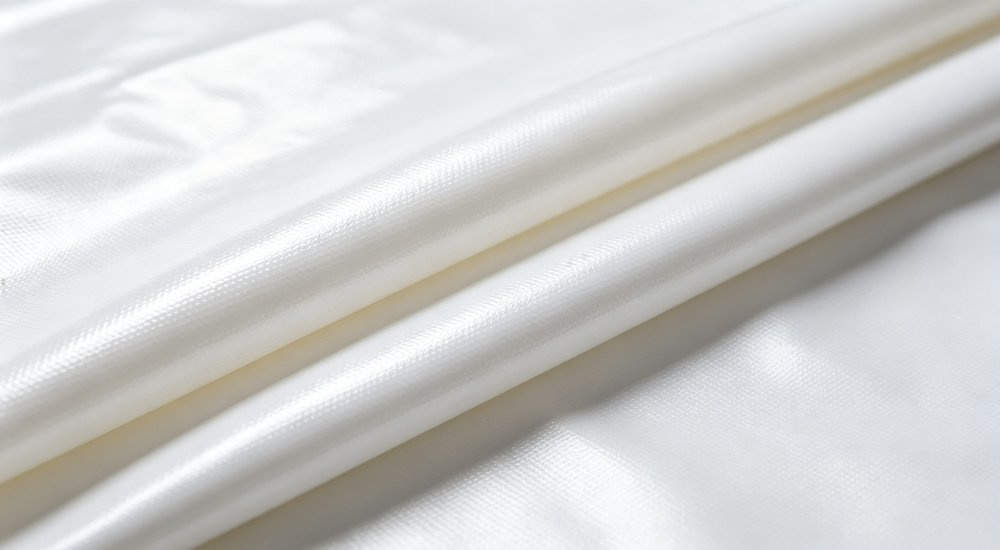
Request a marked layout using the proposed tent size. It should show clear routes, usable zones, restricted areas, and major equipment positions. This tells you whether a larger tent solves a real space problem or just adds packing and site demands.
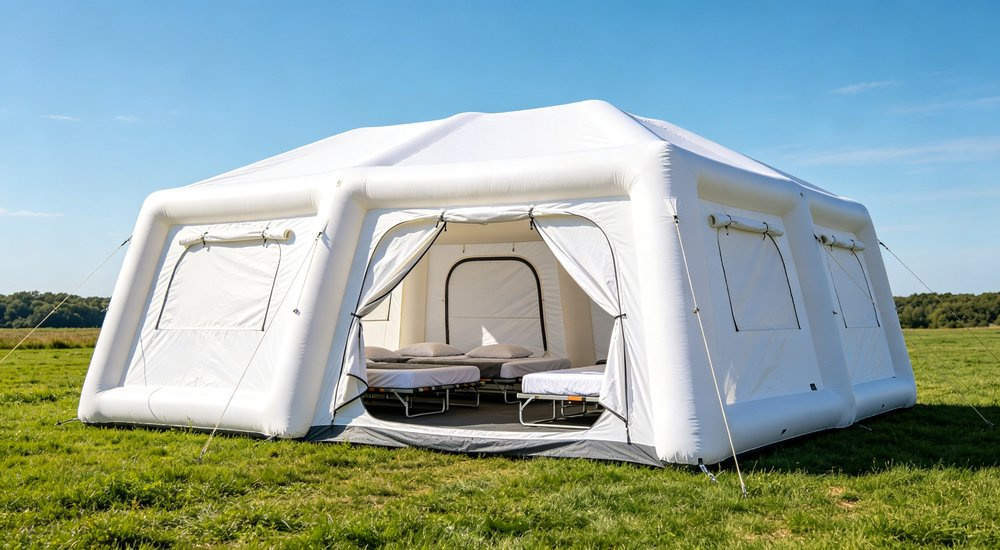
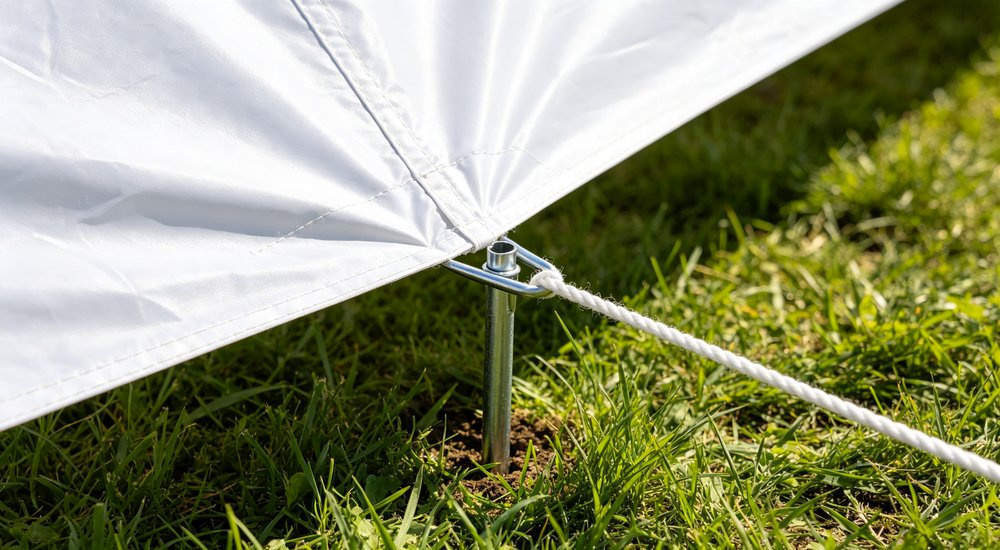
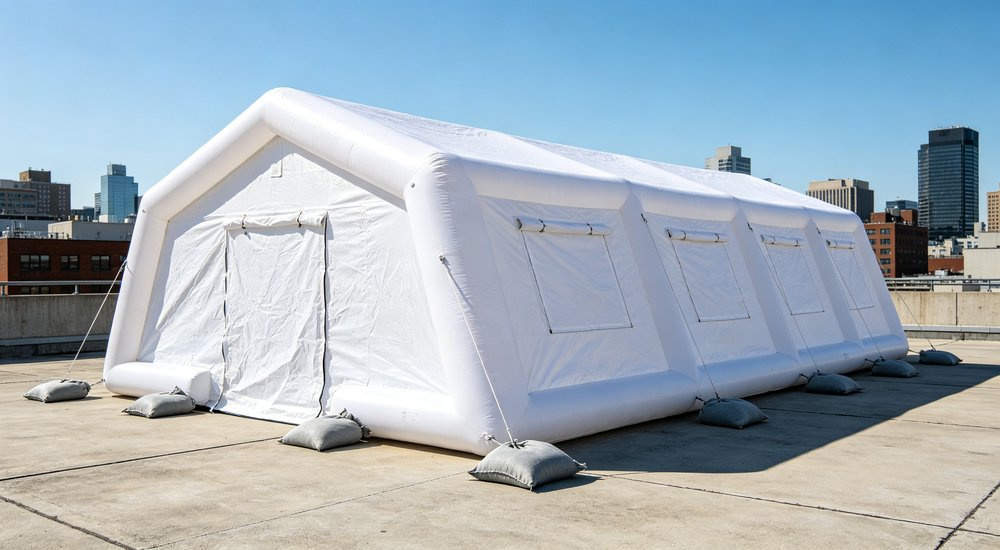
An inflatable structure is not ready for every surface. Grass and soil are easiest (stakes work). Sand needs longer stakes or sandbags. Pavement and indoor floors need weight bags or ballast — you cannot drill stakes. A site that prohibits stakes may require another securing method.
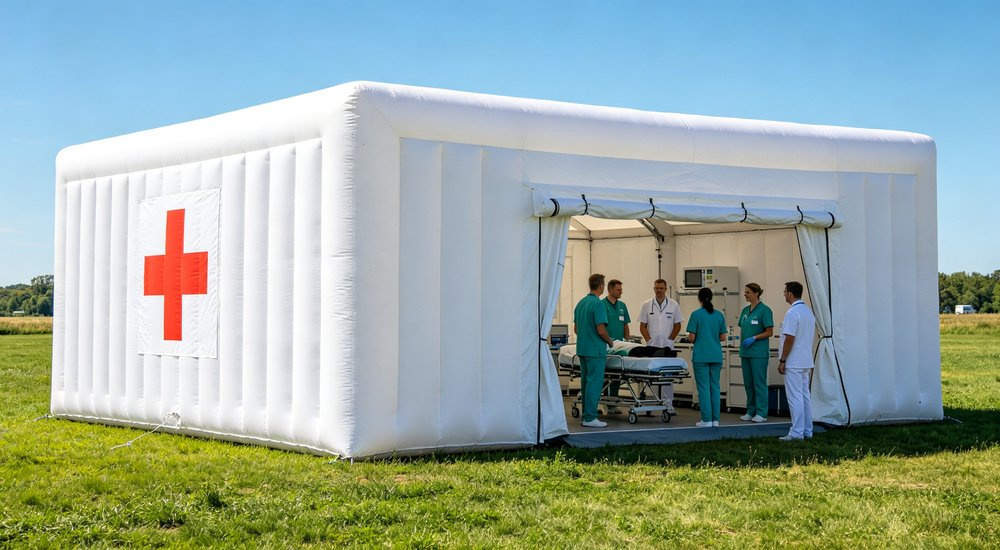
State expected wind, rain, temperature, standing water, and operating duration. Any waterproof, flame-retardant, wind-resistant, or environmental claim must belong to the quoted configuration and its available documents.
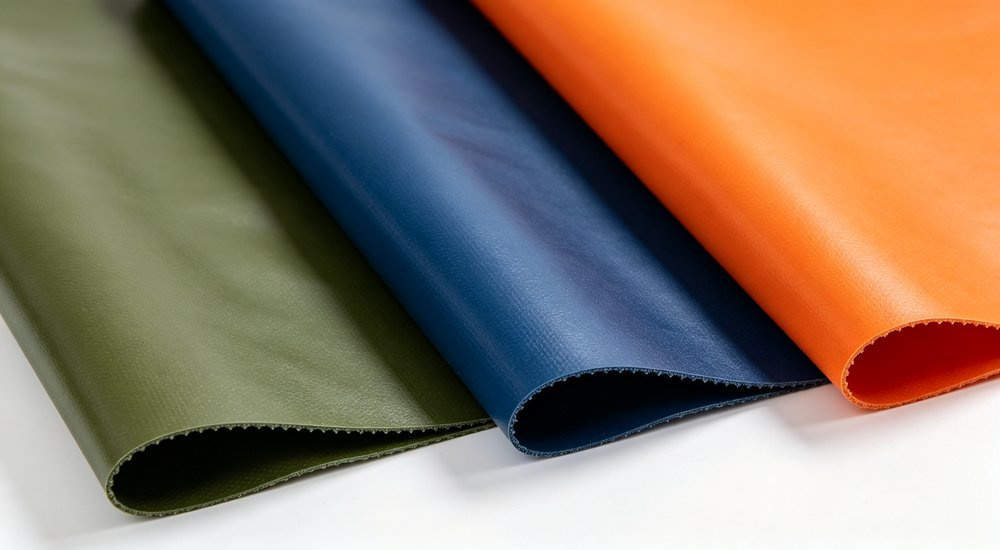
If conditions exceed the supported evidence, change the tent direction or get a project engineering assessment. The word "emergency" does not make one tent suitable for every extreme condition.
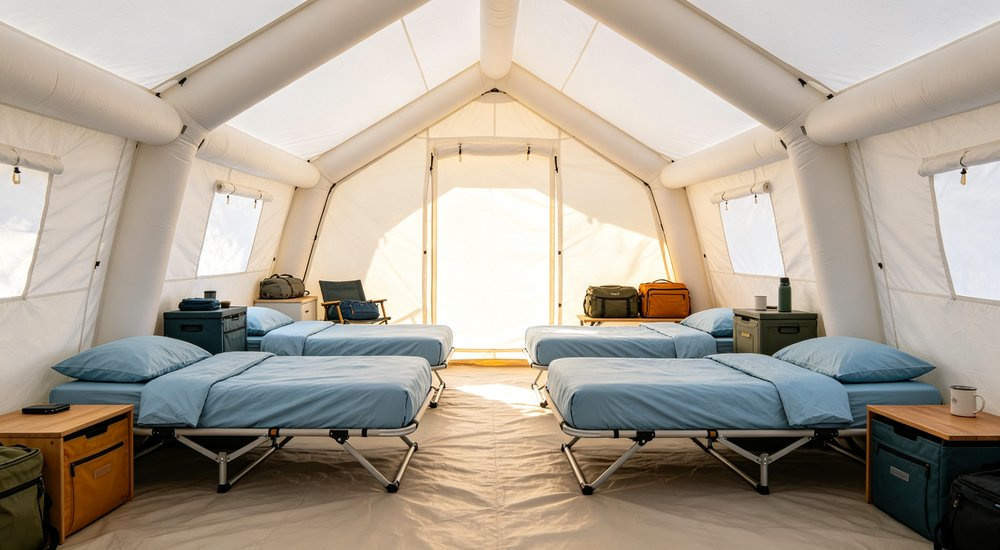
Ask for the securing arrangement that fits your proposed size and surface. The response should separate included stakes or ropes from ballast or site work. It should also explain which environmental limits need another configuration — do not leave field teams to figure this out after delivery.
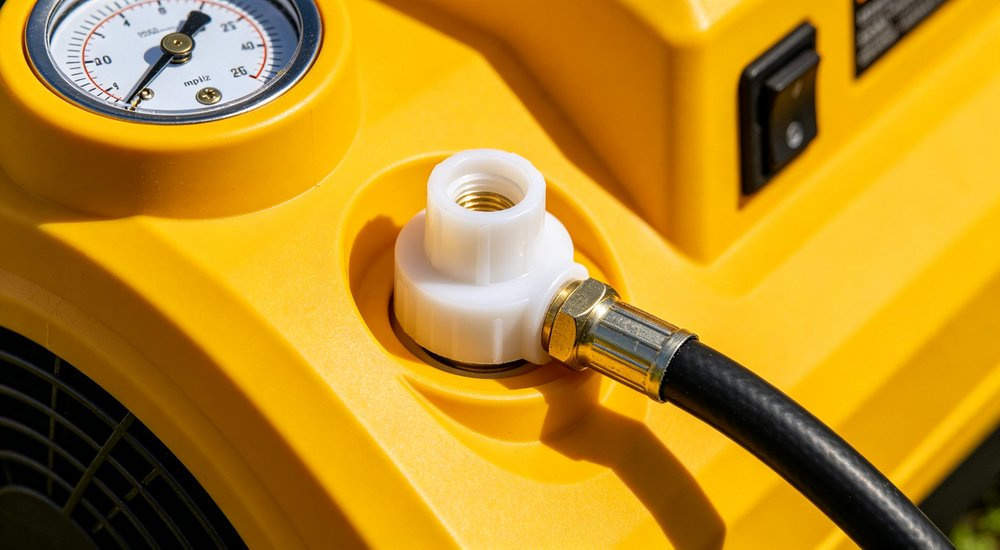
As an inflatable tent supplier and factory, we ship wholesale and bulk orders worldwide. Common items: tent body, air beams, inflatable tent pump (manual 600W or 1900W electric), inflation and deflation valves, safety valves, anchoring parts, inflatable tent repair kit, storage bags, and package labels. Floors, partitions, liners, lighting, HVAC interfaces, and mission systems depend on the configuration. See the full accessory checklist here.
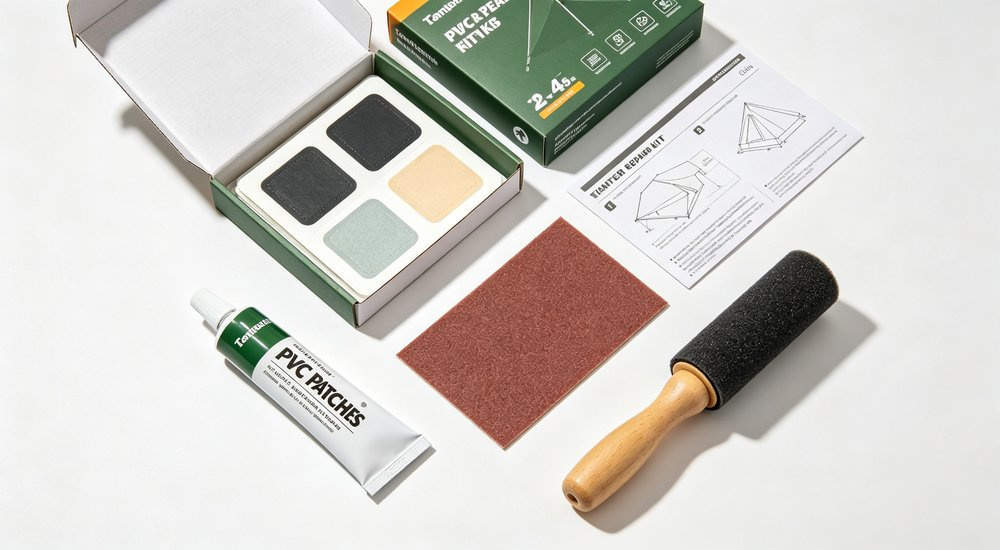
Check which package holds each component and what happens if something is missing. Confirm the pump matches the valves and repair materials match the tent fabric.
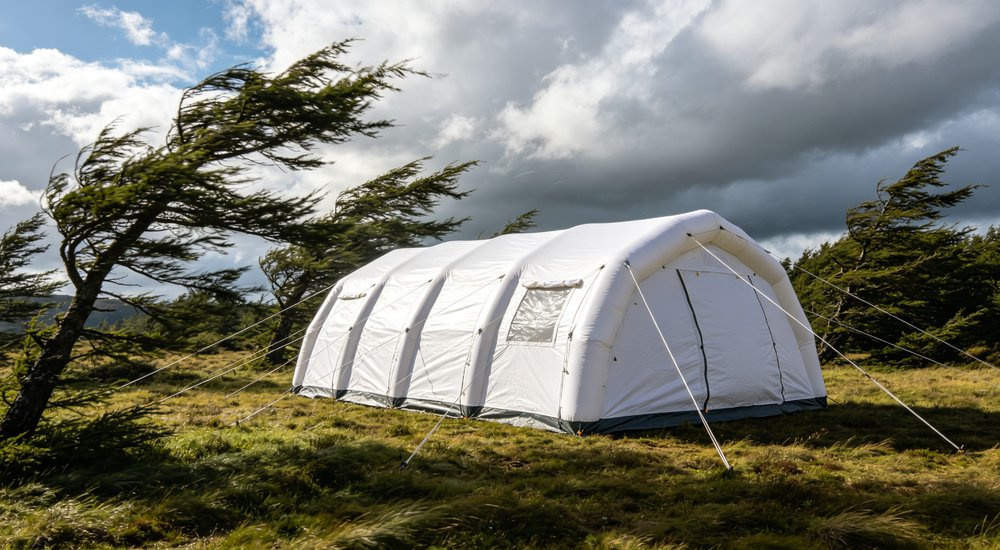
For repeated use, understand cleaning, drying, folding, storage, air-beam inspection, repair, and post-repair checking. Setup is only the first test. A long-running project also needs the set to stay complete and serviceable.
A good packing list connects every bag or carton to the tent configuration. It identifies major parts, quantities, and replacement references in language field staff can understand. This makes missing items visible before deployment and helps later orders stay compatible with the original set.
MOQ & lead time: Most manufacturers have MOQ of 1–10 units for standard models, 50+ for custom colors/logos. Standard lead time is 15–30 days; custom configurations take 30–45 days. Confirm these before ordering.
Project A — Medical triage: temporary triage space with stable power. It has workstations, limited equipment, and waiting occupants. Key decisions: access, internal zones, lighting, ventilation, and equipment interfaces.
Project B — Public decontamination: one-way flow from dirty to clean. It must define lane count, water supply, showers, drainage, effluent collection, privacy, and throughput.
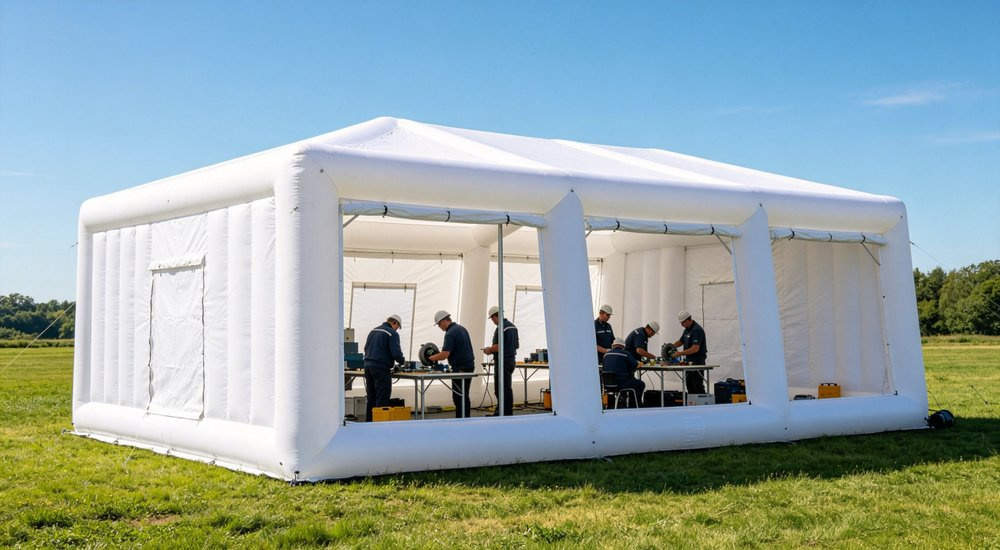
Both may use air-beam tents, but their buying questions are different. A general medical-support shelter is not automatically a decontamination system, even if its floor area looks sufficient.
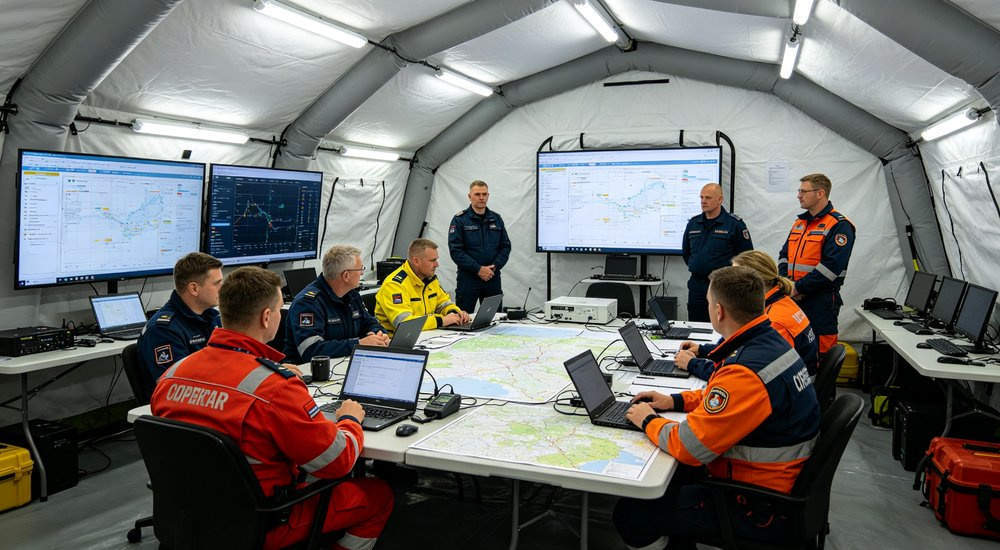
Project C — Command center: a temporary command room with desks, lighting, communications racks, controlled cable entry, and map-display space. Key decisions: cable ports, equipment hanging points, glare-free lighting, and a separate entrance for staff vs visitors. Adding medical or wash-down equipment would not help. The right configuration follows the work inside, not the most complex product description available.
State: primary task, location, occupants or equipment, internal layout, duration, and quantity. Add: ground, weather, securing restrictions, power, transport, and required mission systems.
Request: suggested structure, internal dimensions, air-beam and chamber description, complete component list, standard and optional scope, packing direction, available documents, and unresolved conditions. MOQ, lead time, certification, and performance depend on the confirmed configuration and formal inquiry.
When comparing replies, check whether every supplier answered the same task and conditions. One offer may include inflation equipment, floor, securing, and repair kit, while another lists them as options. A clear comparison should expose these differences before price becomes the deciding factor.
A good reply starts with the exact tent direction for your stated task: clear internal space, air-beam arrangement, openings, floor, anchoring, and operating conditions. Every recommendation should connect to your project brief.
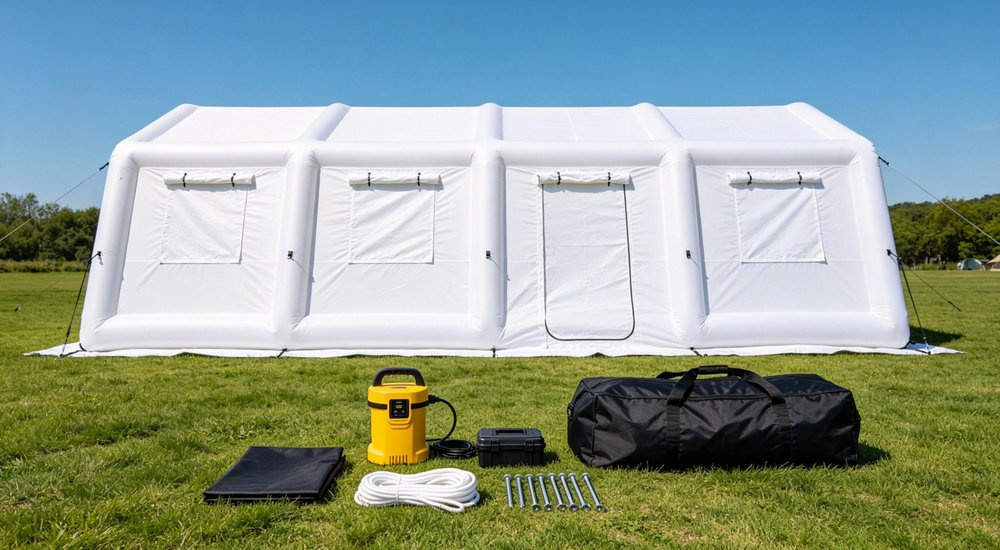
It separates included items, optional items, and site-supplied work — pumps, hoses, valves, repair materials, storage bags, partitions, lighting, ventilation, mission equipment each get their own line. Never accept "complete set" without an itemized list. Documents (fabric report, air-retention, flame test) must state which configuration they cover. Packing info shows package count, grouping, dimensions, and weights — one erected tent rarely arrives in one bag.
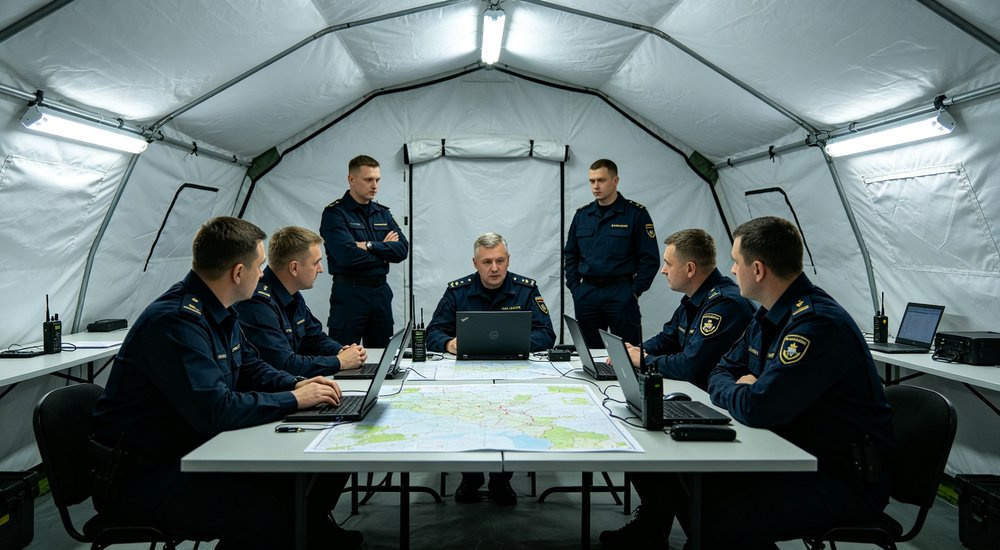
Simple test: If you cannot yet explain what work happens inside the shelter, do not select a model from photographs. Define the task, users, equipment, and site first.
Not usually. A 12m² unit weighs 45–70kg and needs 2–3 people to carry and set up in 15–30 minutes. Larger medical or decontamination units need 4–6 people. Ask for the setup sequence, recommended team, tools, and anchoring work for your specific configuration.
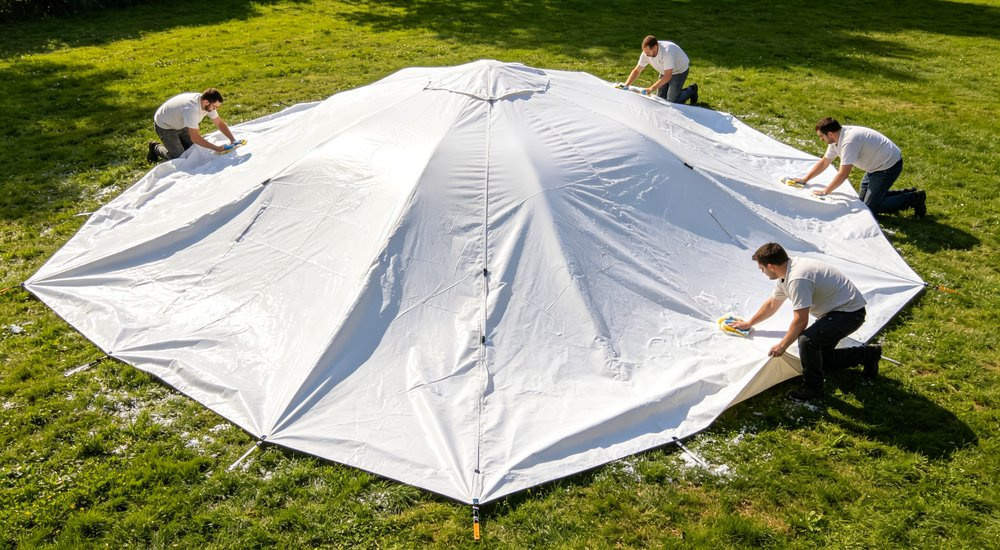
Inflatable tent cost for sale ranges from $800 for a basic 12m² unit to $5,000+ for a 30m² medical or decontamination system. Custom colors, logos, and mission systems add cost. Always compare complete sets, not just the tent shell.
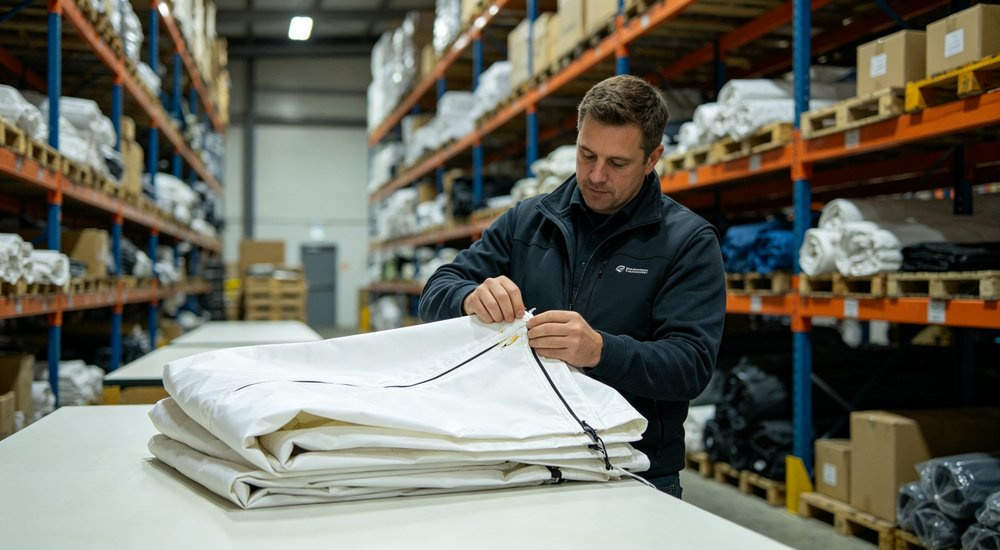
A 12–20m² unit takes 15–30 minutes with 2–3 people using an electric pump. A comparable frame tent takes 45–90 minutes. Times exclude anchoring and equipment setup — confirm what is included in any quoted setup time.
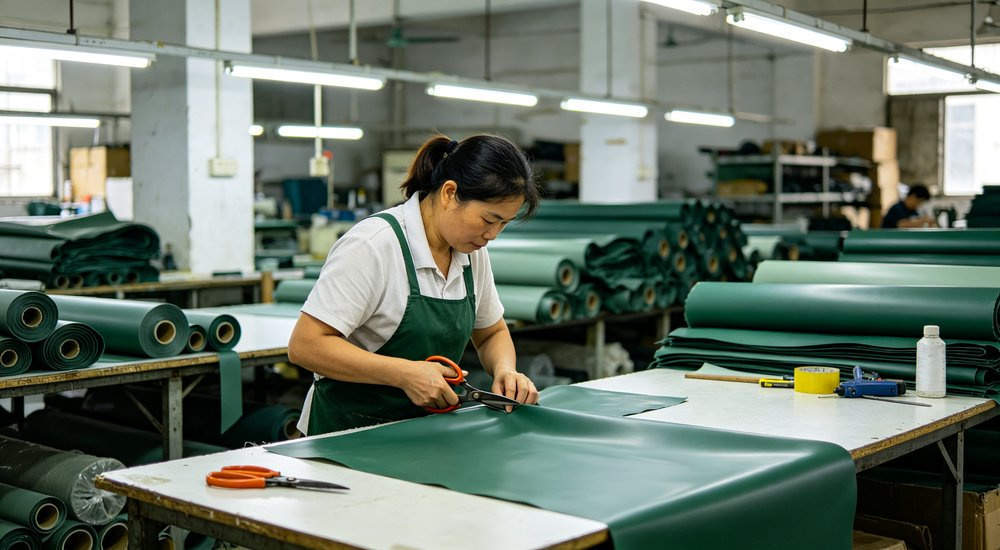
Not every design reacts the same way. The affected area depends on air-beam construction, chamber separation, valves, damage location, and pressure-retention method. Ask the supplier to show the chamber layout and explain how pressure loss is identified. Confirm which damage can be repaired on site with the included repair kit.
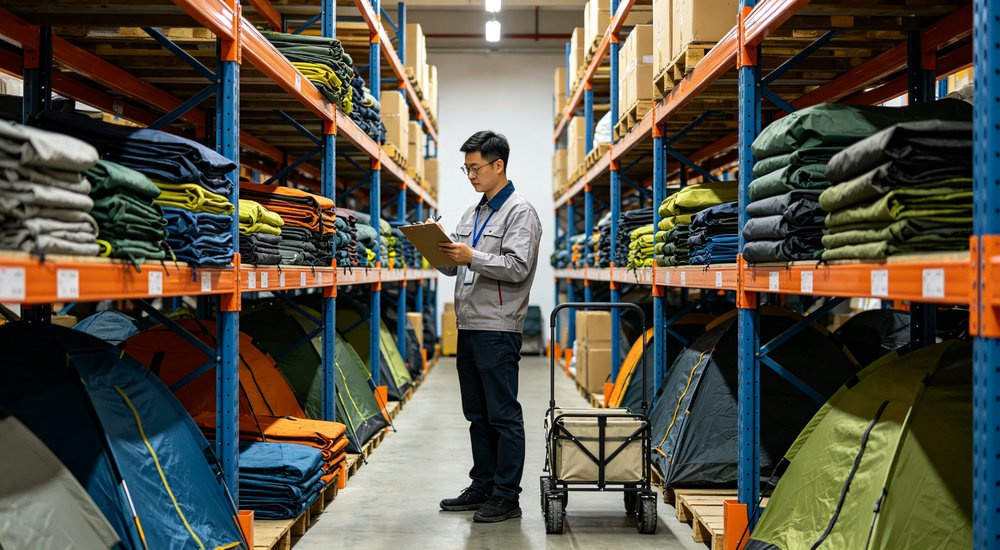
No. Negative pressure requires a complete airflow system with a defined pressure differential, air-change target, filtration, monitoring, alarms, and power arrangement. The shelter shell may provide usable medical-support space, but its name does not prove isolation performance.
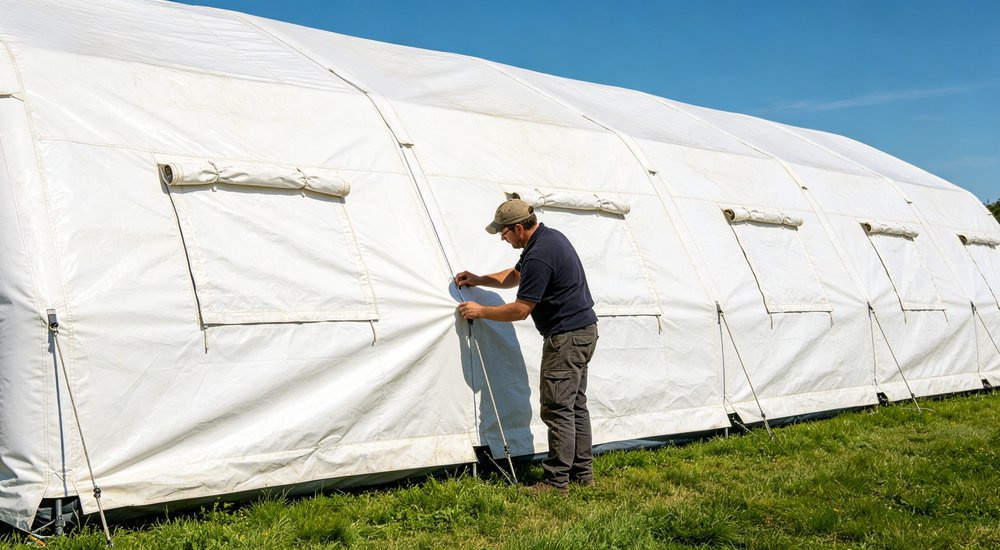
No. A decontamination setup needs controlled movement, clean and dirty zones, water supply, showers, drainage, and privacy. It also needs effluent collection and a defined user flow. It is not enough to add one shower to a general shelter.
Only when the confirmed configuration, maintenance plan, and supporting systems fit the task. Longer medical use increases demands on power, ventilation, cleaning, zoning, equipment interfaces, spare parts, and repair. A general shelter may support waiting or staff space, but should not be treated as a clinical or isolation system.
Essential accessories include: pump (electric + manual backup), repair kit, anchoring set (stakes or sandbags), storage bags, and spare valves. Optional: floor liner, partitions, lighting, ventilation fan, HVAC unit. See the full accessory guide.
Many inflatable shelter directions allow project-specific options, but the feasible range depends on the exact structure. Start with the layout, access, privacy, equipment, zoning, and identification needs. Then ask the supplier to return available door positions, partition arrangements, colour directions, minimum production conditions, and any effect on packing or documents.
Standard models usually have MOQ of 1–10 units. Custom colors, logos, or special configurations typically require MOQ of 50+ units. Lead time is 15–30 days for standard, 30–45 days for custom. Confirm these with the supplier before finalizing your order.
 |

|
Дружественные ссылки :
авторское право © Custom Disaster - Relief Bedding: Tents, Sleeping Bags, Blankets Все права защищены
профессиональная команда для обслуживания !