В общей сложности 0 страницы
The key question is not only how many flood-control sandbags to buy, but whether the destination can obtain suitable fill, organize filling and closure, move filled bags to the deployment point, stack them under an approved plan and handle the bags and fill after use. Buyers should choose by bag construction, opening and closure, colour identification and on-site filling conditions; flood barriers use a different deployment system and require separate evaluation.
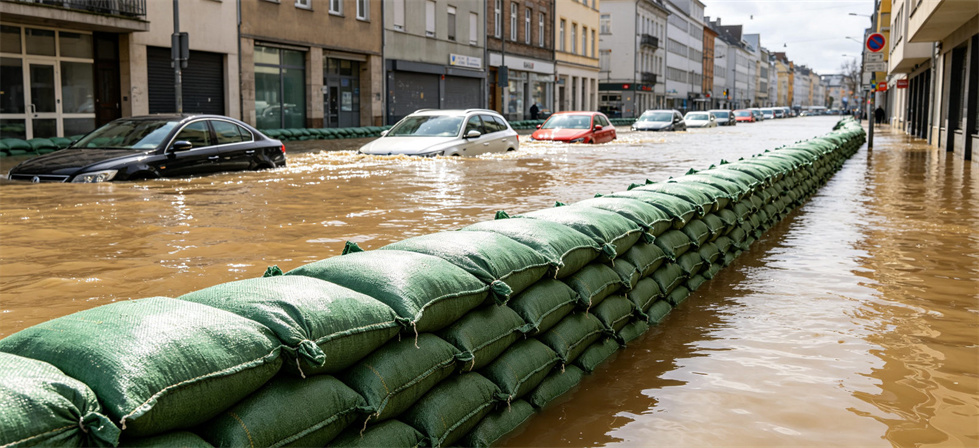
Sandbags do not replace flood-engineering design. Quantity, stacking, route and loading conditions are determined by the project professionals from site risk. The supplier delivers the bag, closure, marking, packing and acceptance fields agreed by both parties.
With two decades of emergency textile supply experience, YRF supports government procurement, flood-control projects and humanitarian response. Every production run carries a batch number for traceability; we welcome buyer-nominated third-party inspection and can provide sealed pre-production samples against tender requirements.
For destinations that can source fill and organize filling, closure, handling and stacking. State the bag, opening, closure and packing needs.
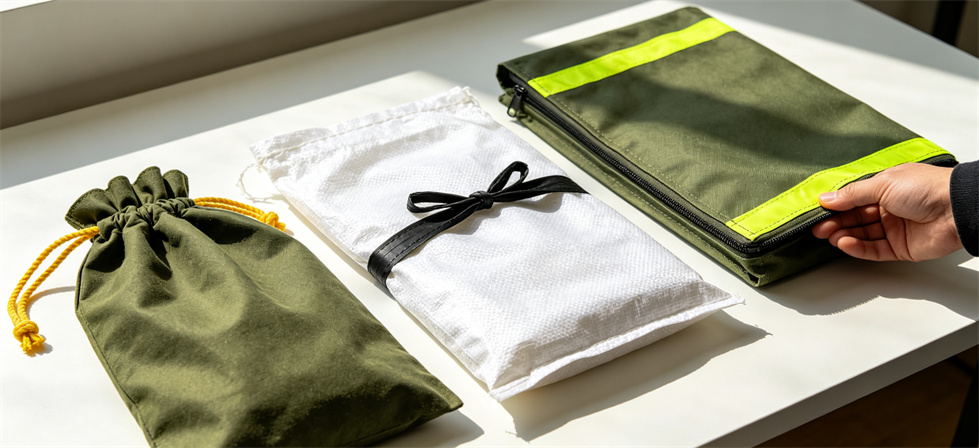
For projects comparing visible layers, closure, colour, construction and handling on the selected sample. Performance is not inferred from a title.
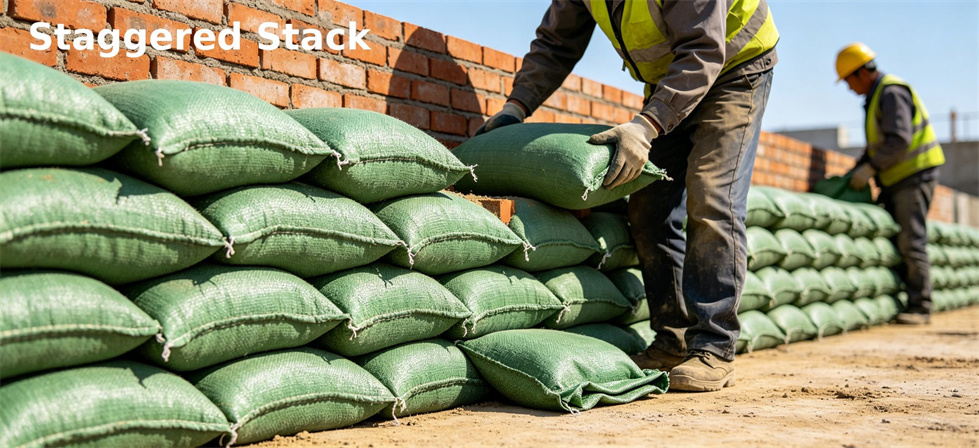
View reinforced sandbag details
For projects that need a specific opening method, colour identification or zone control. Use colour for identification and allocation; confirm material and performance grade separately against the selected specification and applicable product documents or an agreed test.
Different jobs call for different bag specs. Stating the scenario in your inquiry helps us quote the right fabric weight and closure rather than a one-size-fits-all bag.
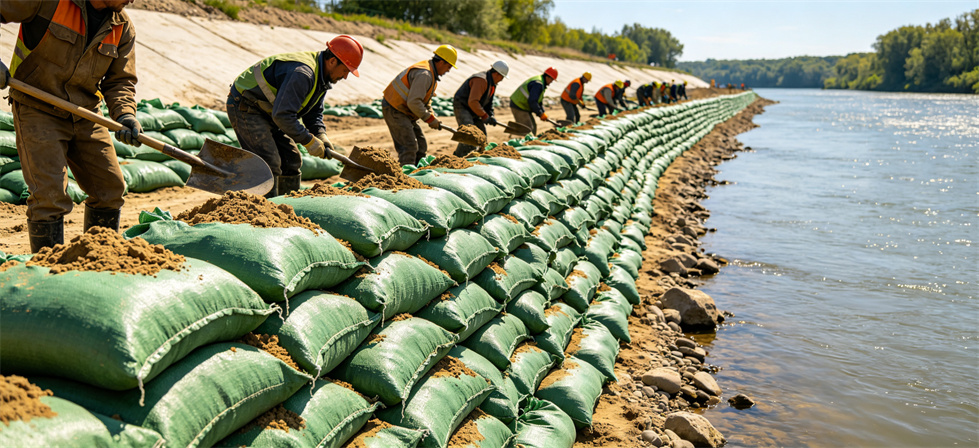
Long continuous runs, heavy fill (sand or gravel), days of UV exposure and possible submersion. Heavier-woven PP (90–120 g/m²), UV-stabilized yarn and drawstring or tie-tape closure are the usual spec. Bags may sit filled for weeks, so UV resistance matters more here than in a single-event urban deployment.
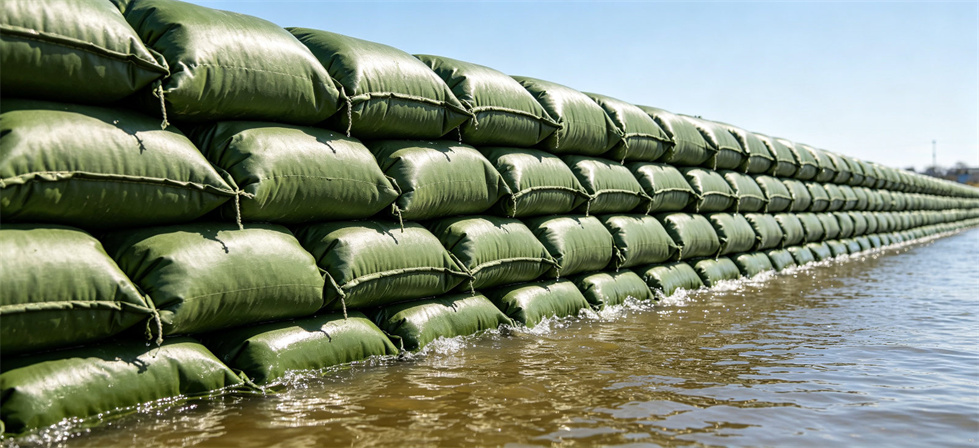
Short-notice deployment, often by facility staff rather than trained crews. Pre-positioned bales near the entrance, quick-fill drawstring bags and a clear stacking plan reduce response time. High-visibility colour helps identify the barrier line in low light or rain.
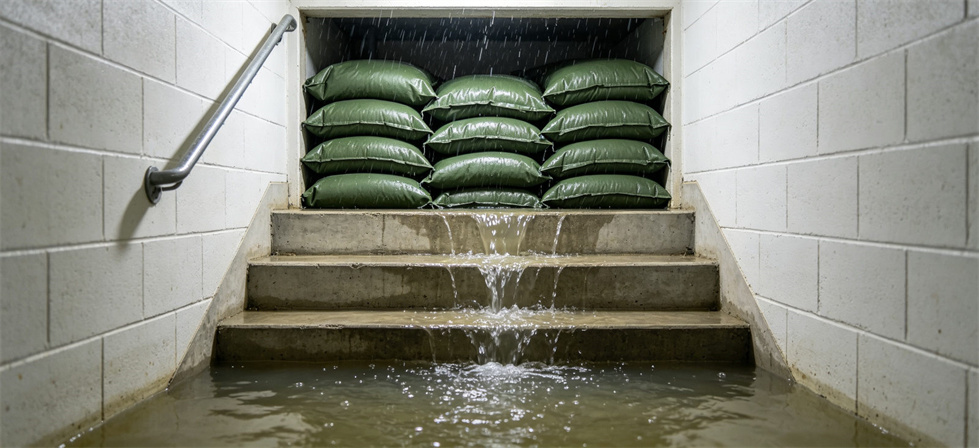
Pre-filled or pre-positioned around a fixed asset. Consider whether bags will sit filled for a single season or be emptied and reused. PE-coated or double-layer bags reduce seepage through the weave when water presses against the barrier.
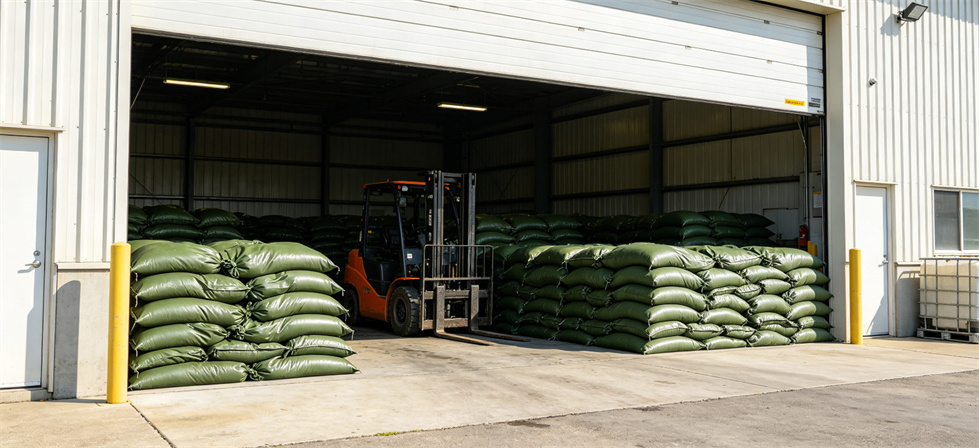
Temporary diversion, rapid setup and teardown. Lighter bags (70–90 g/m²) may suffice for short-duration use; zip closure speeds filling by untrained volunteers. Colour-coding by zone or street helps multi-team coordination.
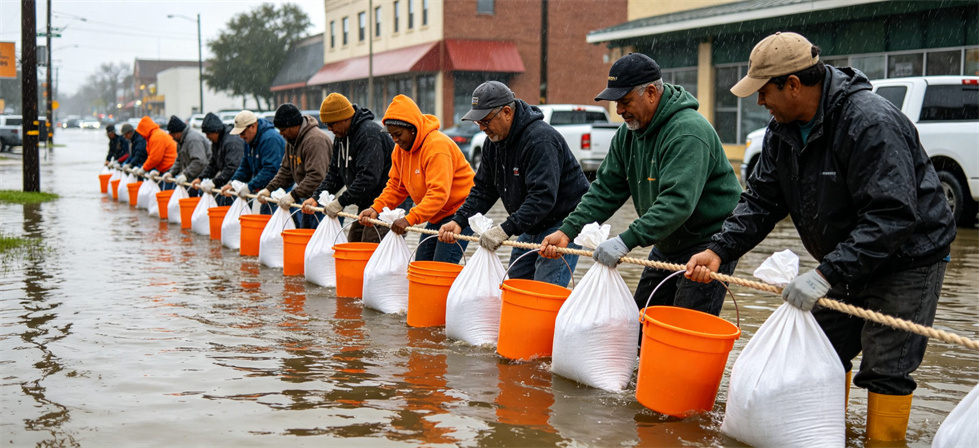
Beyond traditional fill-your-own sandbags, there is a separate product category: self-inflating (or "sandless") flood bags. These contain superabsorbent polymer (SAP, usually sodium polyacrylate) inside a non-woven PP or cotton outer bag. When the dry bag contacts water — submerged, sprayed or reached by rising floodwater — the SAP absorbs and gels in roughly 3–5 minutes, swelling from around 300–500 g dry to 15–20 kg wet. No sand, no shovels, no filling crew.
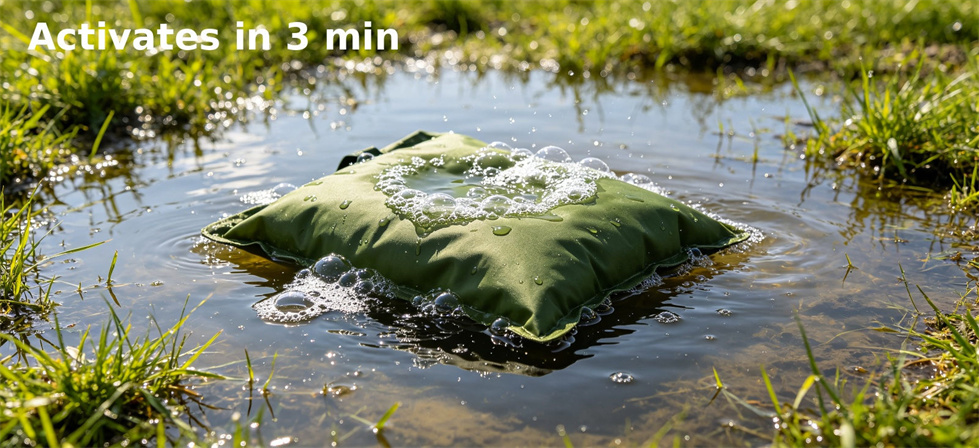
Typical specs: 40×60 cm standard (also long-strip formats ~60×15 cm for door barriers), SAP content ~150–200 g per bag, swollen barrier height ~10–15 cm per layer, dry shelf life 3–5 years in cool dry storage. They store flat and light, deploy in minutes, and form a tighter seal with fewer gaps than hand-filled bags. They suit quick-response scenarios: flash-flood building protection, underground entrances, shop fronts, emergency services pre-positioning, and sites where fill or labour is not available.
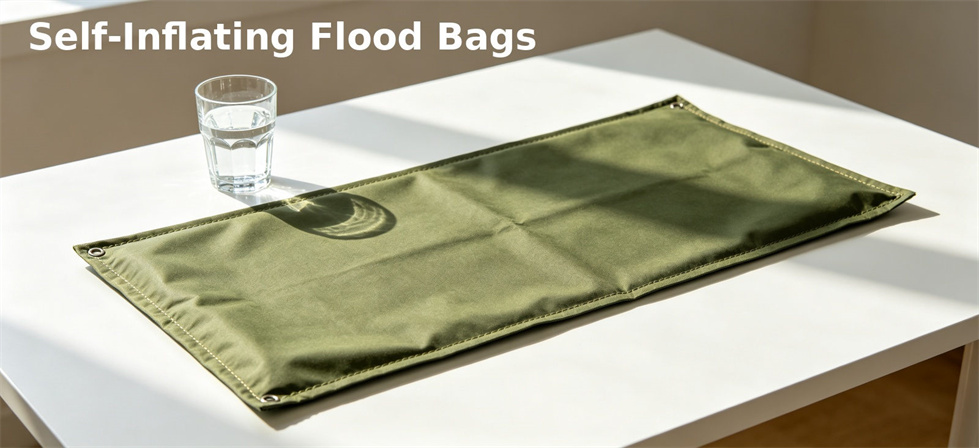
They are not a drop-in replacement for every job. Each layer gives roughly 10–15 cm of barrier height, so high-water or levee work still calls for traditional filled bags or engineered barriers. They are generally single-event (the gel dries but absorption performance drops on reuse), unit cost is higher than empty woven bags, and in flowing water a dry bag can drift before it fully activates — position or pre-soak if conditions allow. Disposal follows local waste rules; the SAP gel is typically non-toxic but not universally biodegradable.
If your project fits the quick-deployment profile, state self-inflating bags in your inquiry and we will quote the SAP weight, outer fabric, size and packing for that route. For long-duration, high-water or large-civil works, the traditional fill-your-own routes above remain the standard.
|
Field |
Confirm |
Site effect |
Acceptance |
|
Bag |
visible size, construction, opening and closure |
filling speed and fill retention |
compare approved sample |
|
Fill |
source, particle condition, moisture and access |
filled handling and stacking |
defined by project team |
|
People/tools |
filling, closing, carrying and deployment crew |
output per operating period |
record real resources in trial |
|
Transport |
empty-bag packing and site split |
distance from store to filling point |
match packing to allocation |
|
After use |
responsibility for bag and fill |
cleaning, contamination and recovery |
define in project plan |
|
Material / GSM |
PP woven 70–120 g/m²; PE coated optional; double-layer available |
burst strength, seepage, outdoor service life |
compare to selected spec; COA or agreed test |
|
UV treatment |
UV-stabilized yarn or standard; outdoor exposure window |
weeks of direct sun before embrittlement |
state exposure duration in spec; test report if required |
|
Storage & shelf life |
cool dry storage away from direct sun; palletized |
readiness when flood event occurs |
visual and hand-feel check before deployment |
|
Activation |
manual fill with sand/soil/gravel (traditional) vs self-inflating SAP on water contact |
deployment speed, labour and fill logistics |
state which type in spec; compare against sealed sample |
Confirm whether fill is available at destination, how it reaches the filling point, whether filling is manual or mechanized, who closes each bag, how a filled bag is handled, the distance to deployment and whether work continues at night or in rain. Buying empty bags without these resources moves the problem to the flood event.
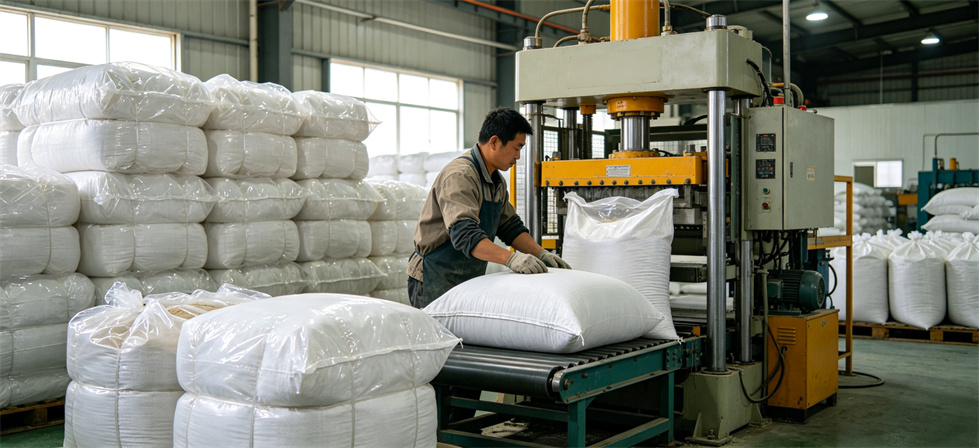
A sample exercise can record filling, closure, carrying and stacking actions to estimate real resources. It does not replace professional flood planning or prove whole-system protection from a small trial.
A standard 35×65 cm bag filled two-thirds to three-quarters full holds roughly 15–20 kg of sand (sand bulk density ~1,600 kg/m³), 12–17 kg of soil, or 18–22 kg of gravel. Exact weight shifts with moisture and particle size. Fill to two-thirds or three-quarters only — an overfilled bag rounds out, will not lie flat in the stack, and creates gaps water can find. A properly filled bag folds at the top and stacks like a brick.
For labour planning, a two-person crew with hand shovels (one fills, one ties and stacks) typically puts out around 100–150 bags per person per hour under reasonable site conditions. A filling frame or hopper can lift that to 200–300. These figures assume reasonably dry fill and a source within a few metres; output drops with wet clay, long carry distances or night work.
The published range shows different openings, closures, colours and visible constructions. Use the selected sample to confirm bag dimensions, stitching, opening, drawstring, zip or other closure, handling, marking and packing. Military green may remain a requested colour direction. Where the project also requires military identity, a particular material grade or additional performance, state each requirement in the selected-product specification and confirm it through applicable product documents or an agreed test.
Where reinforced construction, seepage or load requirements are necessary, write them as selected-product fields and support them with applicable information or an agreed test. Do not extend a title or another model's values to the category.
Standard flood sandbags use woven polypropylene (PP) fabric, typically 70–120 g/m². Lighter weights (70–85 g/m²) suit short-duration single-event use; heavier weights (90–120 g/m²) suit rough handling, longer outdoor exposure or gravel fill. A PE coating or laminate on one side reduces water seepage through the weave and extends service life when the bag sits filled in contact with water. Common empty sizes are 35×65 cm (standard hand-stacking), 40×70 cm and 50×80 cm; custom dimensions are available on request with typical finished-size tolerance of ±2 cm.
On UV life: standard PP woven bags that sit filled in direct sun may begin to embrittle after roughly 4–6 weeks of continuous exposure, depending on solar intensity and climate. UV-stabilized yarn extends this window. State the expected exposure duration in your spec so the right material is quoted. Bags stored indoors on pallets in cool, dry conditions away from direct sun remain serviceable for an extended period; a visual and hand-feel check before deployment is good practice.
Overfilling. Bags stuffed to bursting do not stack flat. Water finds the gaps. Fill to two-thirds, fold the tail under.
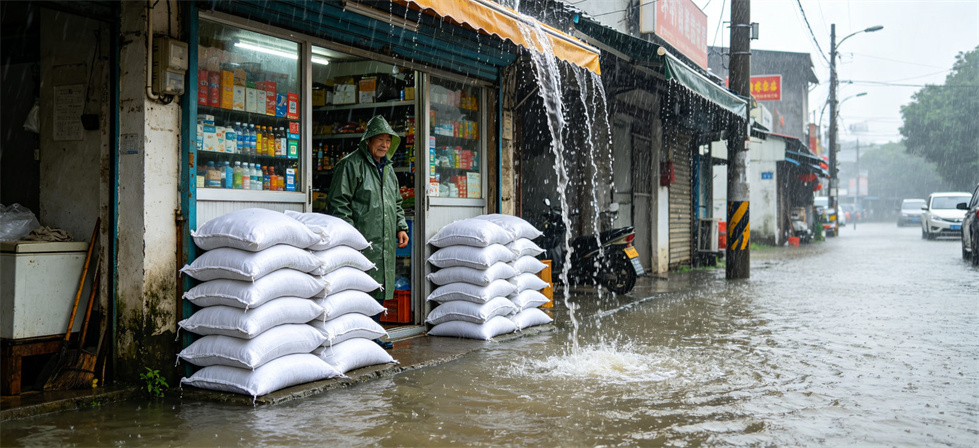
Wrong fill. Fine silt or clay holds water, gets heavier than expected, and may pump through the weave. Clean coarse sand or fine gravel is the standard fill.
Colour is not a grade. A green bag is not automatically military grade; a yellow bag is not automatically hi-vis rescue spec. Verify fabric weight, construction and any test report against your written spec.
Do not infer performance from a name. "Heavy duty" on a listing is not a substitute for a stated g/m², closure type and agreed acceptance criteria.
Empty bags are efficient to transport, but deployment speed depends on the distance between store, fill source, filling area and protection line. Split multi-site projects by destination, bag route, quantity and spare stock. Keep outer-carton shipping identification aligned with the allocation schedule.
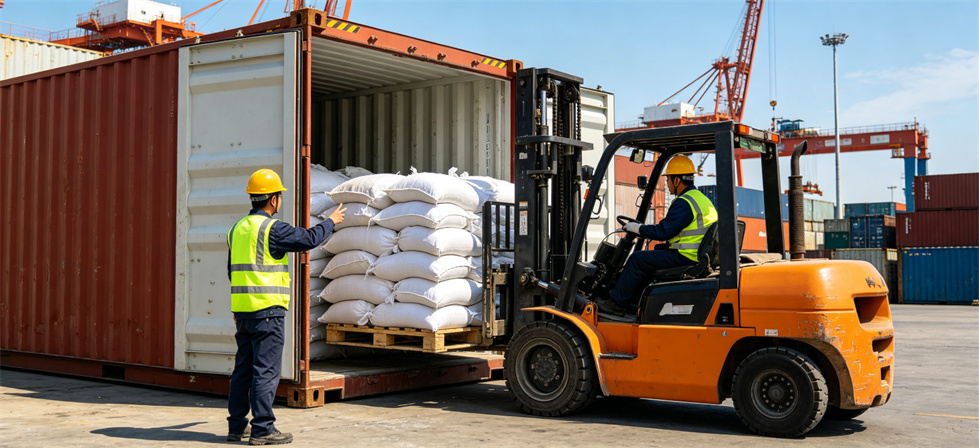
Receiving checks quantity, bag construction, opening, closure, stitching, colour, marking and packing before a planned filling sample. Resolve any change affecting filling or closure before full deployment.
Standard packing is compressed bales of 500 or 1,000 pieces wrapped in woven poly; carton packing is available for smaller quantities. Empty PP sandbags are light — roughly 40–80 g each depending on size and GSM — so a 40HQ can typically hold several hundred thousand standard 35×65 cm empty bags. The exact count is confirmed against your spec and bale packing at quotation. For multi-site projects, bales can be labelled and packed per destination at the factory when you provide the site-by-site breakdown with your RFQ.
Used bags may contact silt, wastewater, oil or other contamination, while fill disposal may be controlled locally. The project plan should assign removal, cleaning, reuse decisions, isolation, fill destination and return of unused bags to stock.
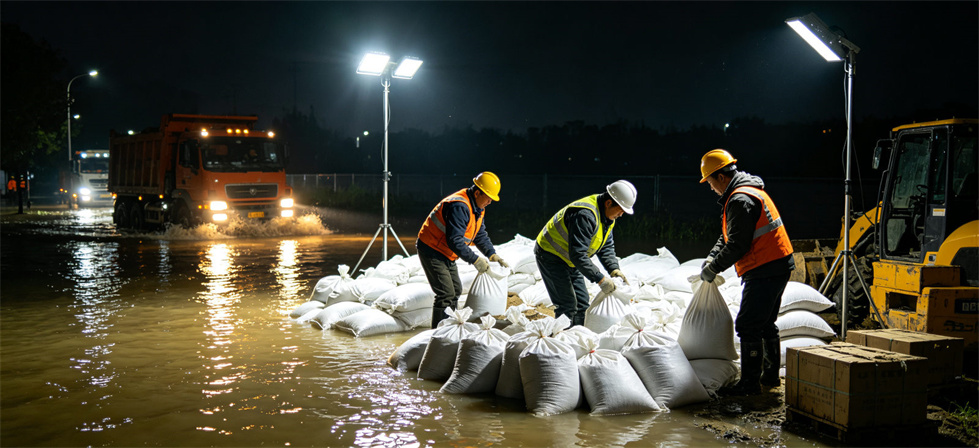
For replenishment, separate consumed, damaged, contaminated and serviceable quantities and identify the original bag and closure route. Reordering from the original total can duplicate usable stock or mix incompatible variants.
After the event, triage is straightforward: clean, dry, structurally sound bags (no torn seams, no UV embrittlement) can be emptied, inspected and returned to stock. Bags contaminated with oil, sewage or unknown chemicals should be isolated and disposed of per local environmental rules. Brittle, faded or seam-tearing bags have reached end of life from UV exposure and should be replaced. Clean sand or gravel fill can often be reused on site or returned to source; fill from contact with contaminated water should be handled per local waste rules.
The quotation records not only bag quantity, but closure, packing unit, site allocation, spare quantity and the fill, labour and tools provided by the project. After the sample exercise, carry real filling and handling needs into the buyer's site deployment plan. The supply contract defines the agreed product and packing responsibilities, while qualified project personnel approve the flood-engineering plan separately.
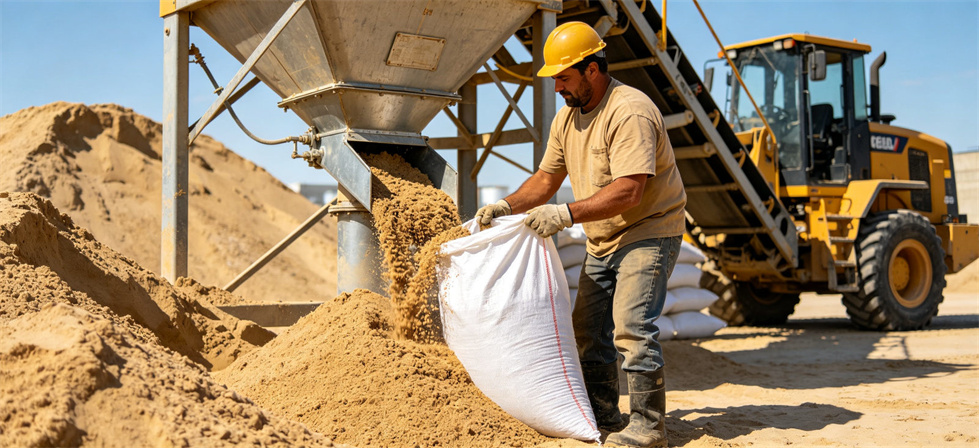
Before production, confirm colour, bag construction, closure, marking and packing, then receive against those fields. If the fill source or deployment route changes, the project team reassesses quantity and operating resources.
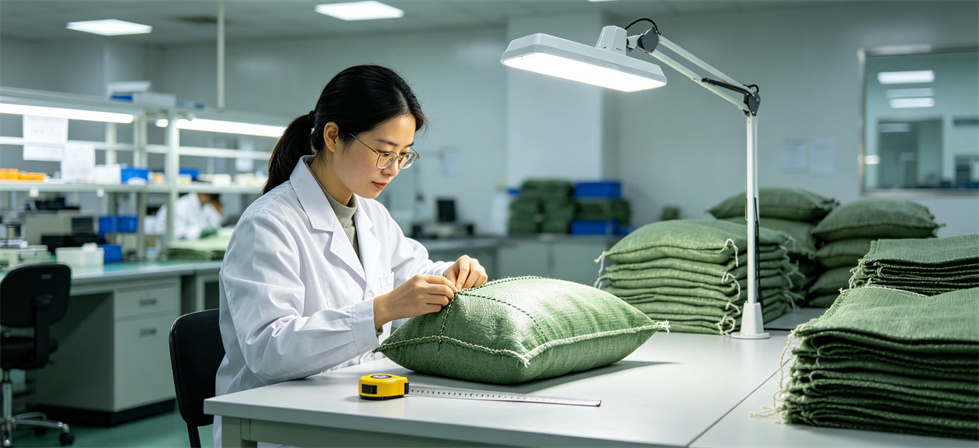
The current routes focus on bag procurement. Other formats require separate evaluation against transport, fill availability and site resources.
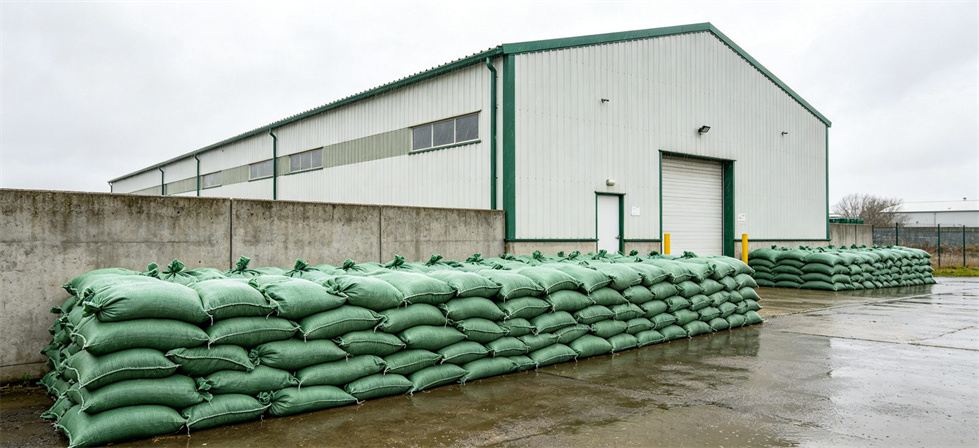
No. Project professionals determine quantity and stacking from site risk.
Military green can be specified as the project colour. If military identity, a particular material or a performance grade is also required, add it to the selected-product specification and verify it through applicable documents or an agreed test.
Filling, closure, lifting, carrying, stacking actions, marking and packing.
This must be stated in the inquiry. Do not assume an empty-bag order includes destination fill.
This can be evaluated when each site's style, quantity, colour, labels and spares are provided.
Sample bags are provided free of charge. The buyer covers international courier or air freight cost, prepaid before dispatch. Sample lead time is typically 5–15 days depending on product and customization. For custom-printed or special-spec samples, confirm details at quotation.
Yes. Agree the scope and buyer-borne cost in writing before inspection.
They depend on bag, closure, quantity, customization, packing and current schedule.
Send the site plan, bag route, quantity, fill, labour, packing, destination and acceptance needs.
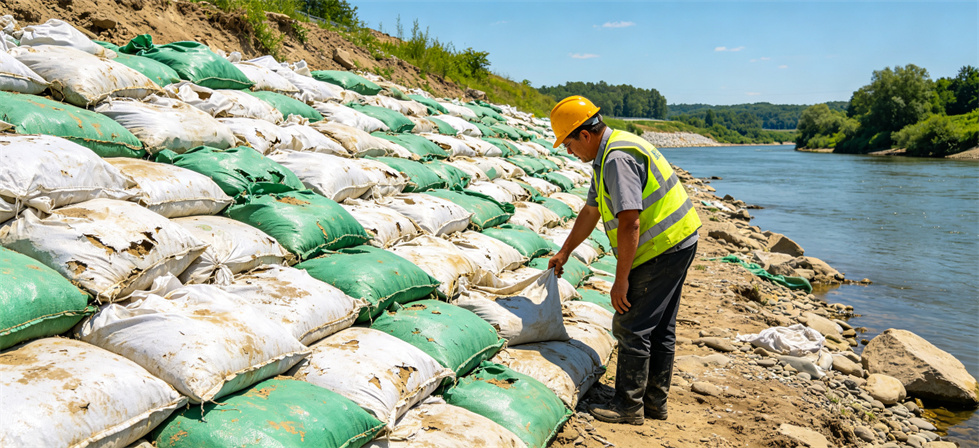
Woven polypropylene (PP) is standard, typically 70–120 g/m². PE-coated or double-layer options reduce seepage; UV-stabilized yarn is available for extended outdoor exposure.
Standard empty sizes include 35×65 cm, 40×70 cm and 50×80 cm. Custom dimensions can be quoted on request. Finished-size tolerance is typically ±2 cm under standard production.
A standard 35×65 cm bag filled two-thirds full weighs roughly 15–20 kg with sand, 12–17 kg with soil, or 18–22 kg with gravel under typical moisture conditions. Exact weight depends on fill type, particle size and water content.
Two-thirds to three-quarters full under standard practice. Overfilled bags do not lie flat, create gaps in the stack, and are harder to carry and place. Fold the empty tail under the bag when stacking.
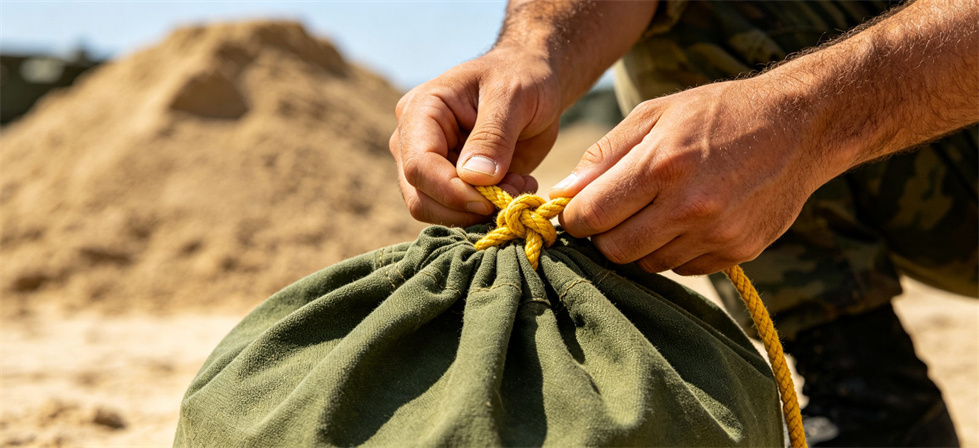
When stored on pallets in a cool, dry place away from direct sunlight, PP woven sandbags remain serviceable for an extended period. Bags stored outdoors or in direct sun may begin to degrade within months. A visual and hand-feel check (flexibility, no brittleness, intact seams) before deployment is recommended.
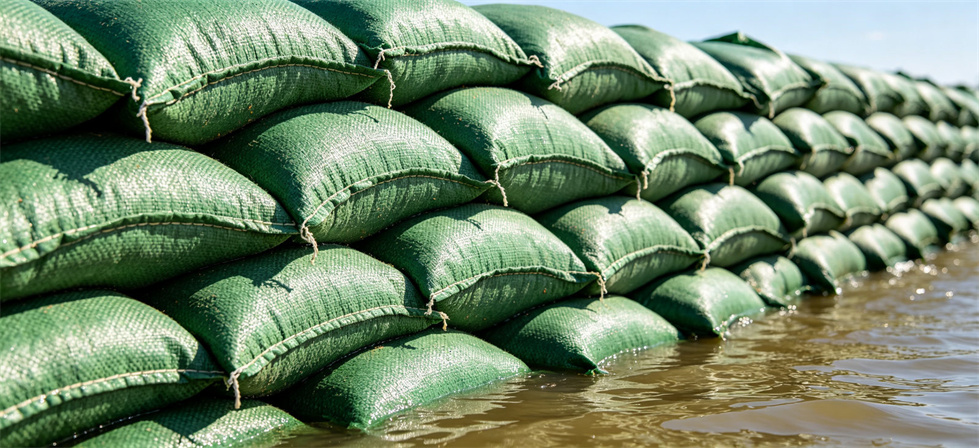
Clean, dry, undamaged bags can be emptied, inspected and reused. Bags exposed to weeks of UV, contaminated by oil or chemicals, or showing torn seams and brittleness should be replaced. Reuse decisions should be made by the project team after inspection.
Yes. Custom printing, colour-coding by zone, batch marking and project-specific labels can be quoted. State the required text, colour and placement in your specification.
For standard specifications and typical quantities, production is usually arranged within 72 hours of order confirmation, with shipping following within the agreed window. Exact lead time depends on quantity, customization and current production schedule — confirmed in the quotation.
Goods ship from major Chinese ports as named by the buyer. Supported Incoterms include FOB, CIF and EXW, subject to the order. Specific port and term are confirmed at quotation.
Relevant test reports and certificates can be provided per project requirement. State which reports your project needs (fabric weight, tensile strength, UV, etc.) and related costs will be confirmed at quotation.
Self-inflating bags contain superabsorbent polymer (SAP) inside a non-woven outer bag. On contact with water they swell to 15–20 kg in 3–5 minutes without sand or labour. They are best for quick-response, low-to-medium water protection (doorways, underground entries, flash-flood diversion). For levee work, high water or long-duration deployment, traditional fill-your-own bags remain the standard. State which type you need in your inquiry.
Typically 3–5 minutes in water at 18°C or above; colder water slows absorption slightly. A dry bag weighs 300–500 g and swells to roughly 15–20 kg. In flowing water, pre-soak or weight the bags so they do not drift before they fully activate.
They are generally treated as single-event. Once dried they shrink back, but absorption capacity and gel strength drop. For a second event they may still offer some barrier but should not be relied on for primary protection. Dispose of used bags per local waste rules; the SAP gel is typically non-toxic.
Get complete specifications and a formal quotation within 24 hours — free of charge. Sample bags are provided at no cost; the buyer covers courier freight.
Primary keyword: flood sandbags bulk procurement
Long-tail keywords: flood control sandbags wholesale, empty sandbags for flood, drawstring sandbags bulk, reinforced flood sandbags, zip closure sandbags, high visibility sandbags, PP woven sandbags, sandbag GSM specification, UV resistant sandbags, sandbag filling labour, sandbag stacking guide, sandbag weight when filled, sandbag sizes standard, reusable sandbags, custom printed sandbags, flood barrier sandbags, levee reinforcement sandbags, sandbag packing bale, sandbag FOB CIF EXW, sandbag third party inspection, sandbag batch traceability, sandbag tender supply, sandbag MOQ lead time, sandbag material PE coated, sandbag storage shelf life, sandbag after use disposal, sandbag fill material sand gravel, sandbag deployment scenario, flood sandbag manufacturer China, bulk sandbags 40HQ loading, self inflating sandbags, sandless flood bags, water activated sandbags, superabsorbent polymer sandbags, SAP flood bags, instant sandbags, self-expanding flood bags, no sand sandbags, quick deploy flood bags
Дружественные ссылки :
авторское право © Custom Disaster - Relief Bedding: Tents, Sleeping Bags, Blankets Все права защищены
профессиональная команда для обслуживания !