Категории
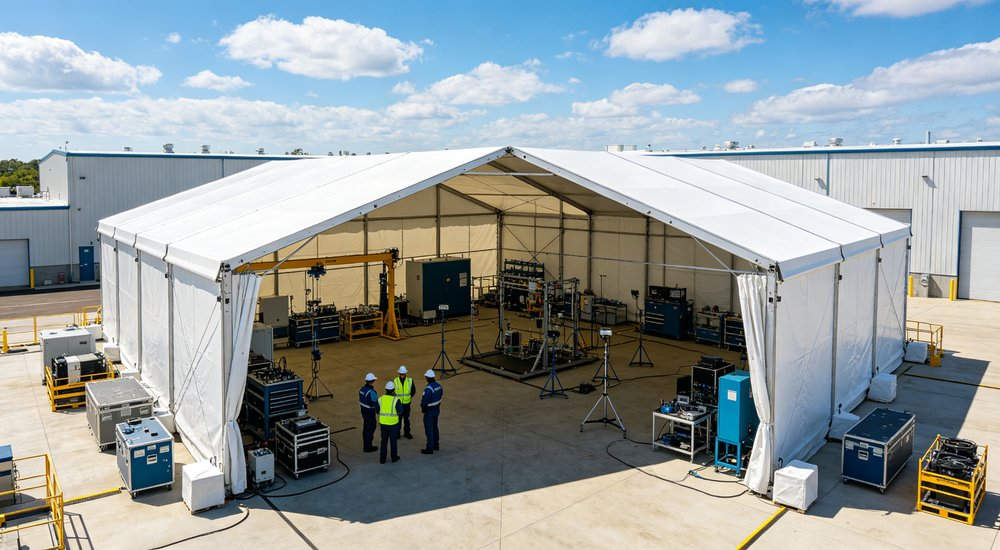
Understanding frame tent specifications is essential for making informed purchasing decisions. Every buyer who masters frame tent specification details avoids overpaying for under-spec tents. This complete guide explains every technical parameter — from steel frame diameter and fabric denier to waterproof tent ratings, wind resistance, and flame retardant standards — so you can evaluate tents with confidence.
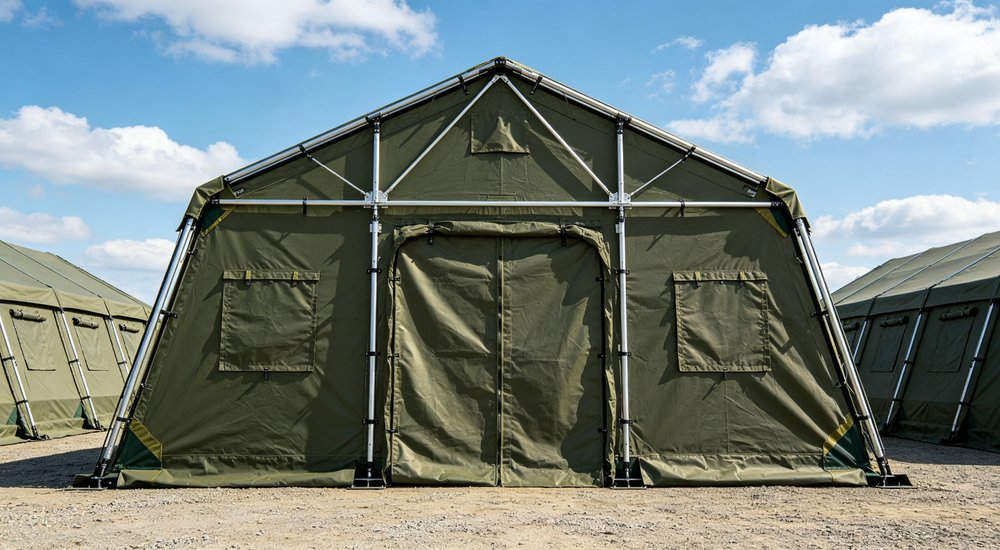
Quick answer: A quality emergency frame tent should have 19-25mm galvanized steel poles (1.0-1.5mm wall thickness), 280-500g/m² PVC-coated polyester or cotton canvas fabric, 2000-5000mm waterproof rating, 60-120 km/h wind resistance, and CPAI-84 or EN 13501 flame retardant certification.
Get expert guidance on frame tent technical parameters.
|
1. Why Specifications Matter 2. Steel Frame Specifications 3. Fabric Specifications 4. Waterproof Ratings Explained 5. Wind Resistance & Structural Loads 6. Flame Retardant Standards 7. UV Resistance & Durability 8. Insulation & Thermal Performance 9. Ventilation & Climate Control |
10. Doors, Windows & Accessories 11. Tent Dimensions & Sizing 12. Weight & Packaging 13. Certifications & Compliance 14. Specification Comparison Table 15. Quick Reference Card 16. How to Evaluate Specifications 16. FAQ 17. Key Takeaways 18. Get a Proposal |
Frame tent specifications are not just technical jargon — they directly determine whether a tent will survive a storm, keep occupants dry in heavy rain, or last through multiple deployments. A tent with 1.0mm steel poles may look identical to one with 1.5mm poles, but the difference in wind resistance and lifespan is dramatic.
What happens when you ignore specifications?
You end up with tents that collapse in 80 km/h winds, leak after the first heavy rain, or degrade completely after one season of UV exposure. In disaster relief tent deployments, these failures are not just inconvenient — they put lives at risk.
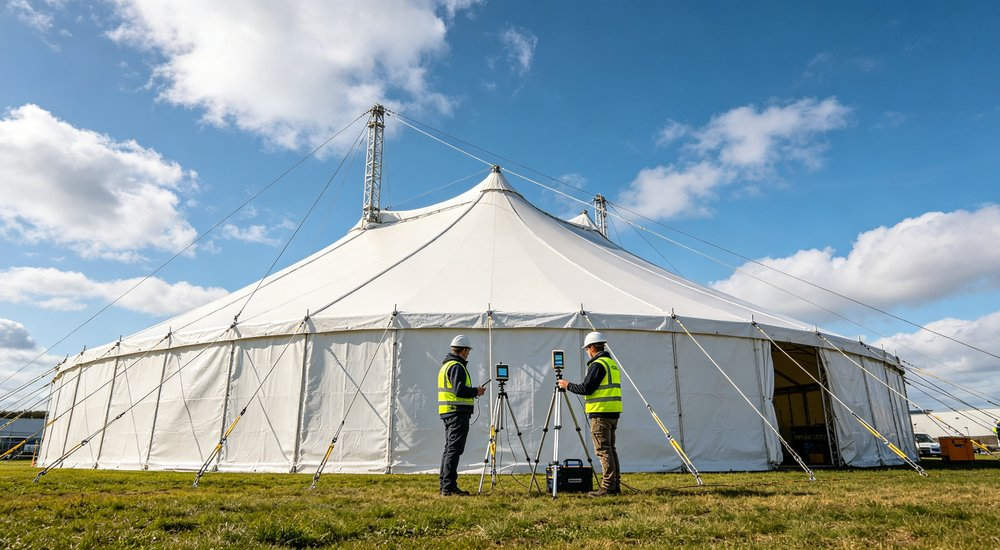
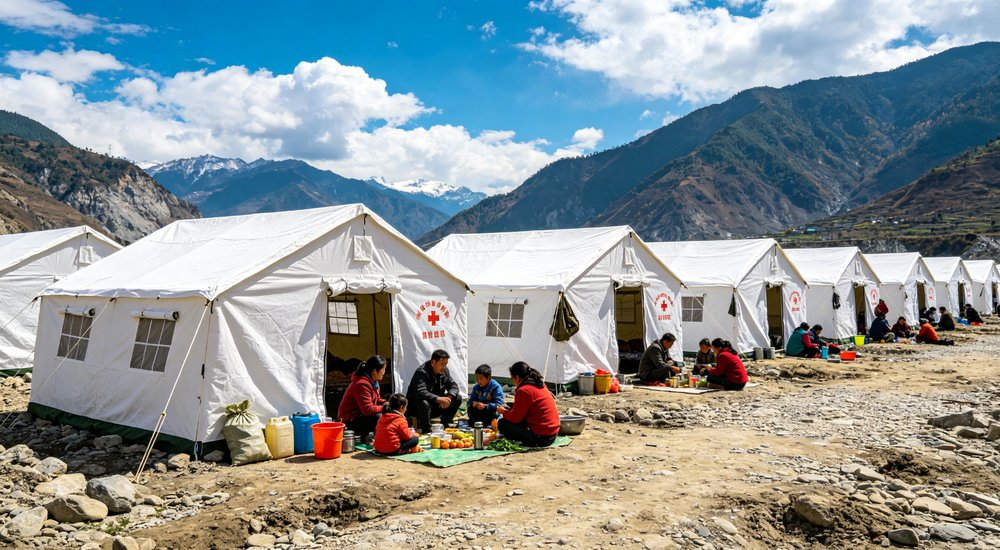
This guide aligns with SPHERE humanitarian standards, UNHCR emergency shelter guidelines, and IFRC emergency response standards. As a professional frame tent manufacturer and wholesale tent supplier for global buyers with 20+ years of experience, we have tested every specification parameter in real-world deployments across 40+ countries.
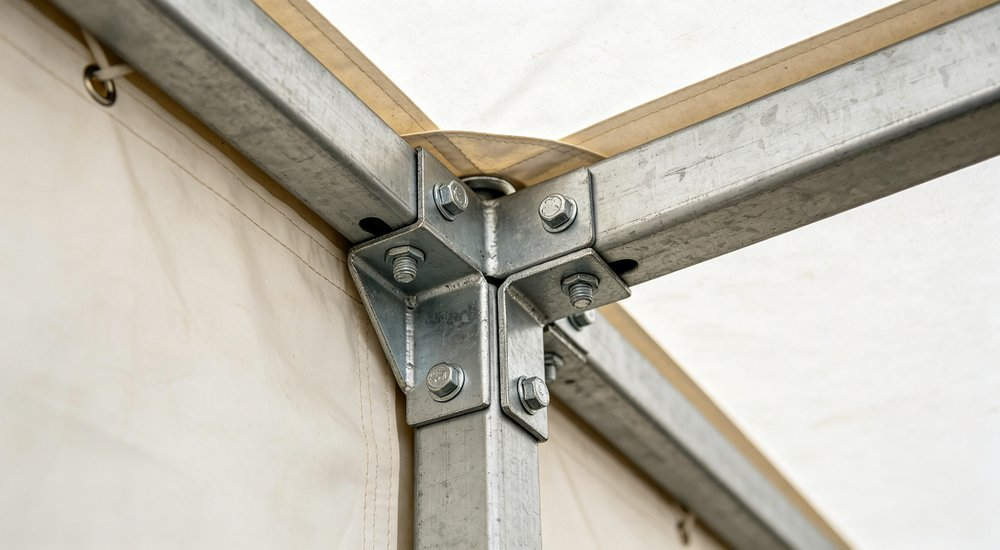
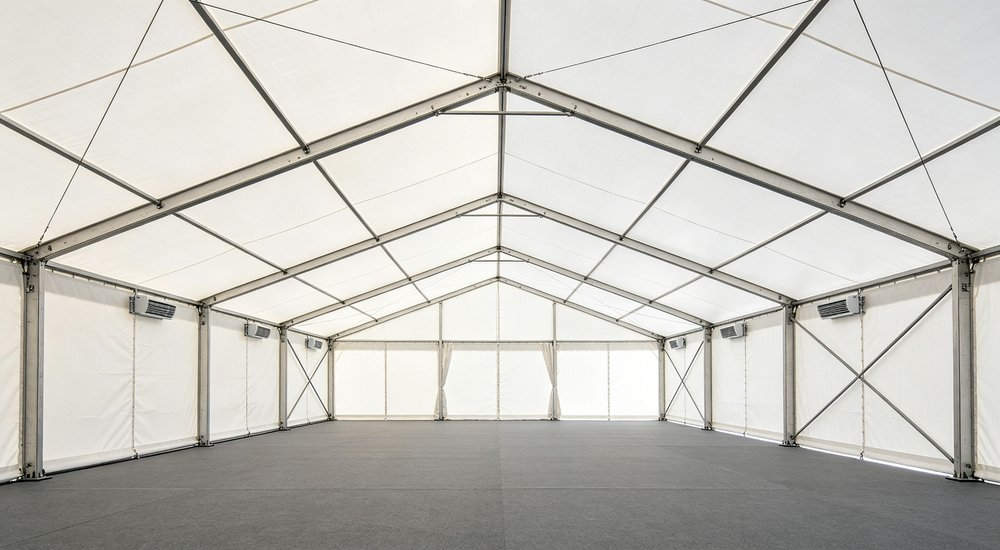
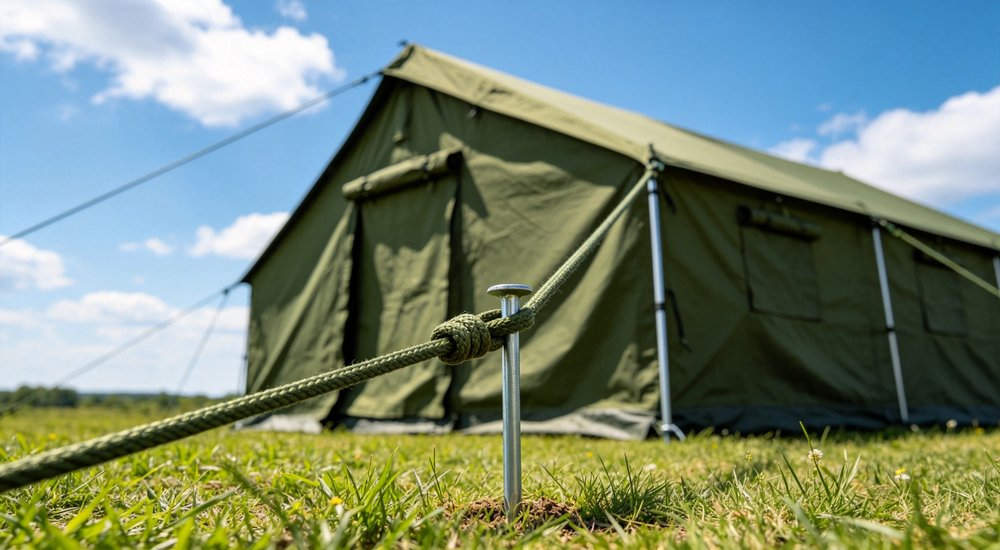
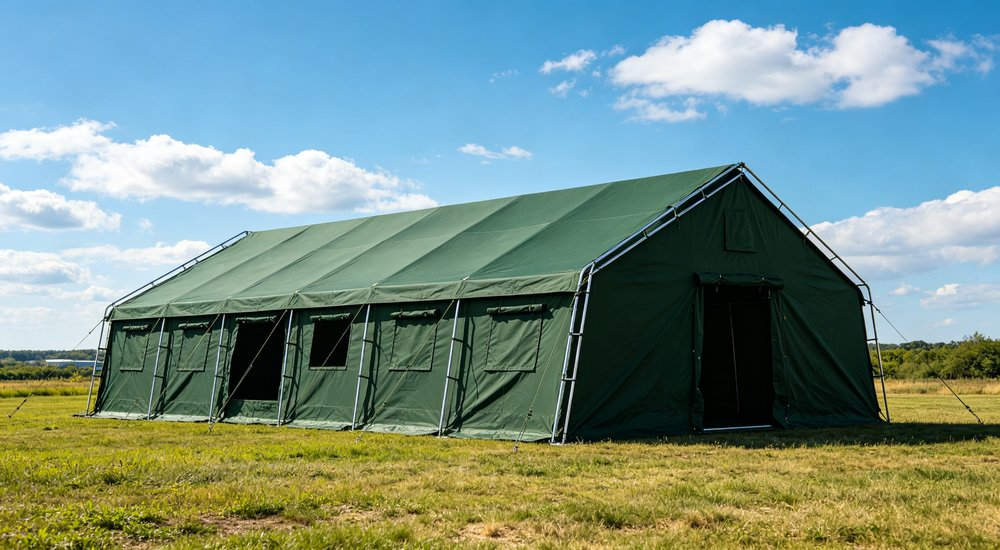
The steel frame is the most critical component of any frame tent. It determines structural integrity, wind resistance, and overall lifespan. Here is what you need to know about every frame specification parameter.
|
Pole Diameter |
Recommended For |
Wind Resistance |
Weight per Pole |
Typical Lifespan |
|
19mm |
12m² standard tents, mild climates |
60-80 km/h |
1.8-2.2 kg |
3-5 years |
|
22mm |
20m² large tents, general use |
80-100 km/h |
2.5-3.0 kg |
5-7 years |
|
25mm |
Heavy-duty canvas, extreme climates |
100-120 km/h |
3.5-4.2 kg |
7-10 years |
Pole diameter is the outside diameter of the steel tube. Larger diameter = greater structural rigidity, but also increased weight and cost.
Wall Thickness
Galvanized Weight
Bending Strength
Rust Resistance
Cost Multiplier
1.0mm
60g/m²
Basic
3-5 years
1.0x (baseline)
1.2mm
80g/m²
Good
5-7 years
1.15x
1.5mm
100g/m²
Excellent
7-10 years
1.3x
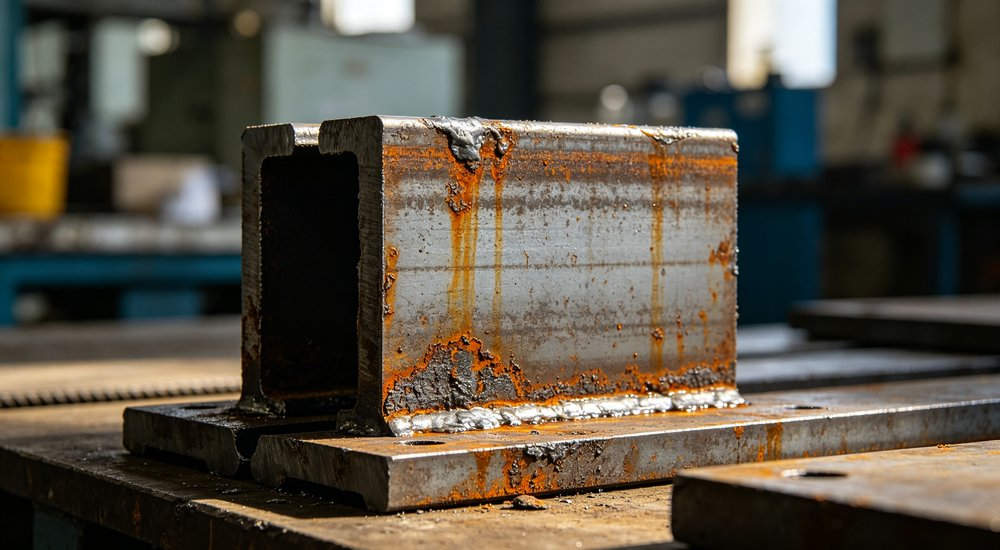
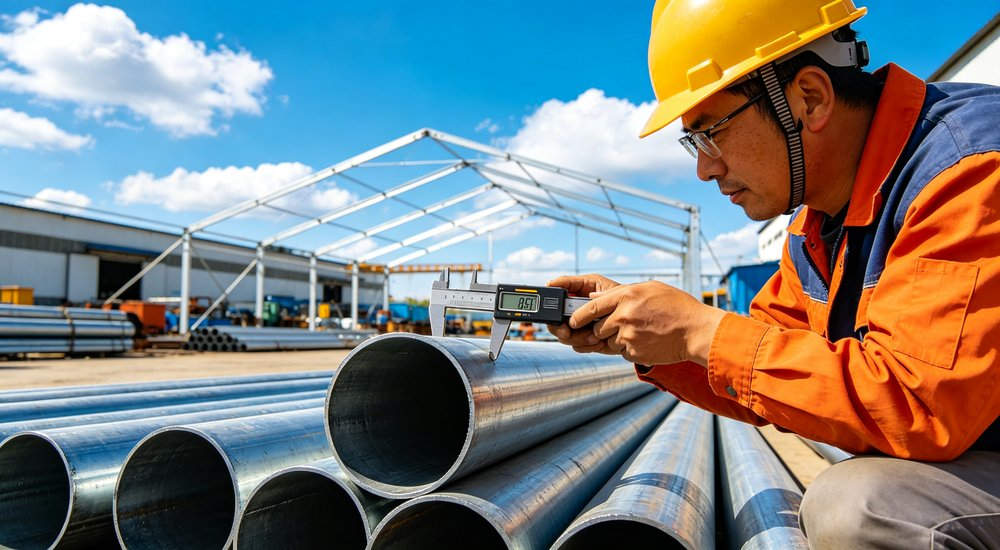
Critical warning: Many suppliers advertise 22mm poles but use 0.8mm wall thickness to cut costs. Always verify wall thickness with a caliper during sample inspection. A 22mm pole with 0.8mm wall is weaker than a 19mm pole with 1.2mm wall.
Galvanization protects steel from rust. There are two methods:
Always specify "hot-dip galvanized steel" in your purchase order. Electroplated poles will rust within two seasons of outdoor deployment.
|
Connector Type |
Material |
Assembly Time |
Strength |
Best For |
|
Steel sleeve + bolt |
Galvanized steel |
2-3 min/pole |
Excellent |
All emergency tents |
|
Spring button |
Steel + spring |
30 sec/pole |
Good |
Rapid deployment |
|
Pin & clip |
Steel pin |
1 min/pole |
Basic |
Lightweight tents |
|
Forged steel joint |
Forged carbon steel |
3-4 min/pole |
Superior |
Heavy-duty/military |
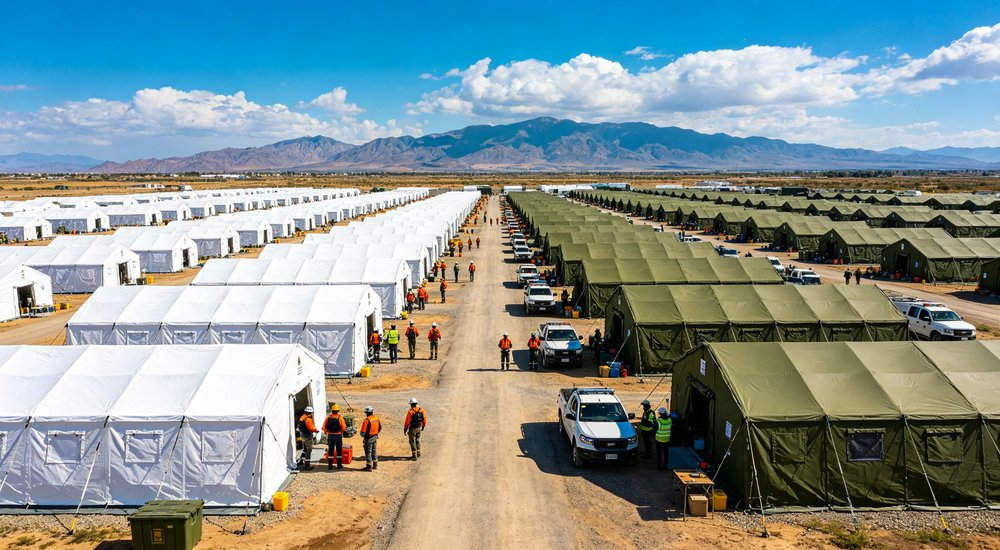
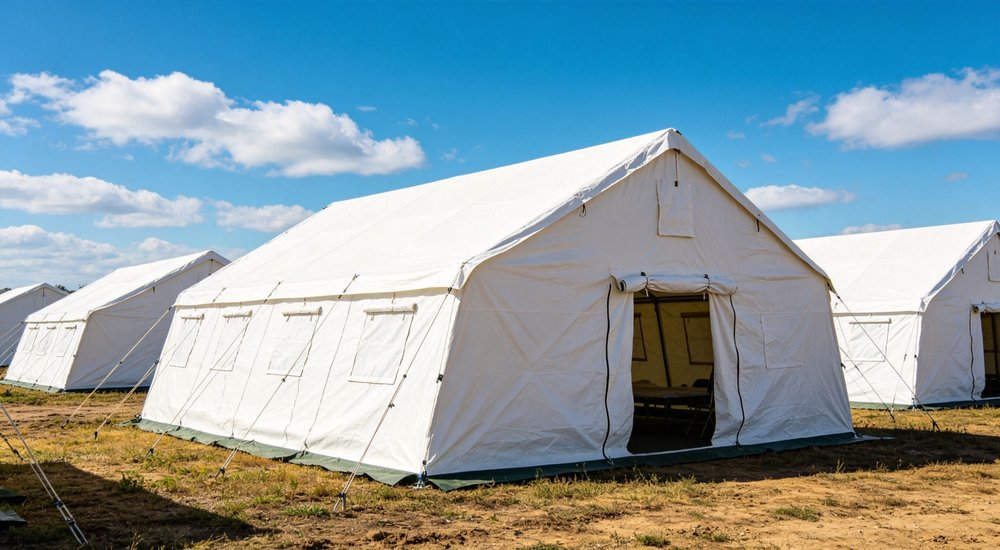
Fabric is the second most critical component. It determines waterproofing, UV resistance, flame retardancy, and overall durability. Understanding fabric specifications will help you avoid being misled by marketing terms like "600D" or "heavy-duty."
|
Material |
Weight Range |
Waterproof |
Breathability |
Lifespan |
Best Climate |
|
Polyester (PVC coated) |
280-350g/m² |
2000-5000mm |
Low |
3-5 years |
Tropical, temperate |
|
Cotton canvas |
400-500g/m² |
Water-repellent |
High |
7-10 years |
Cold, extreme temps |
|
PE (polyethylene) |
150-250g/m² |
1000-2000mm |
None |
1-2 years |
Short-term only |
|
Polyester-cotton blend |
300-400g/m² |
1500-3000mm |
Medium |
5-7 years |
Versatile |
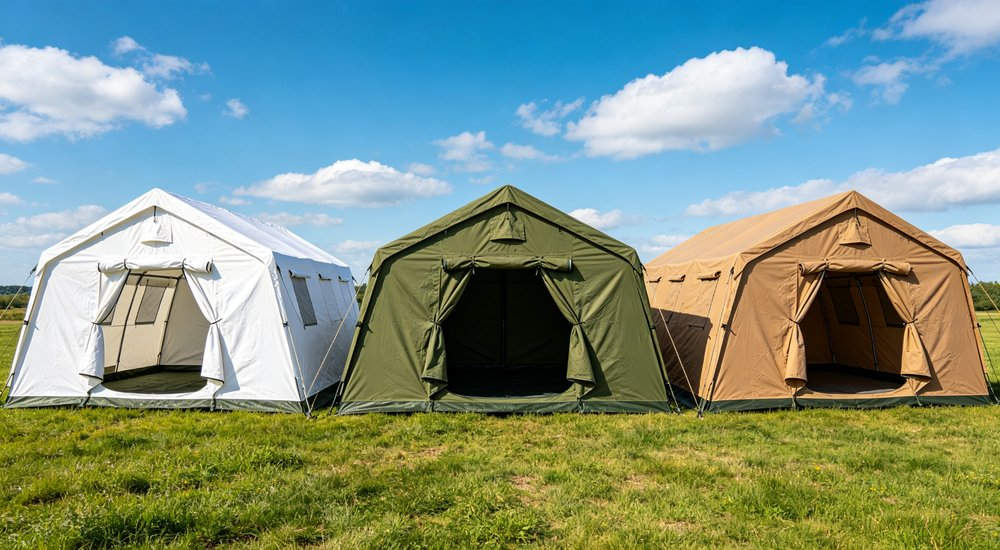
Fabric weight is expressed in two ways, and understanding the difference prevents confusion:
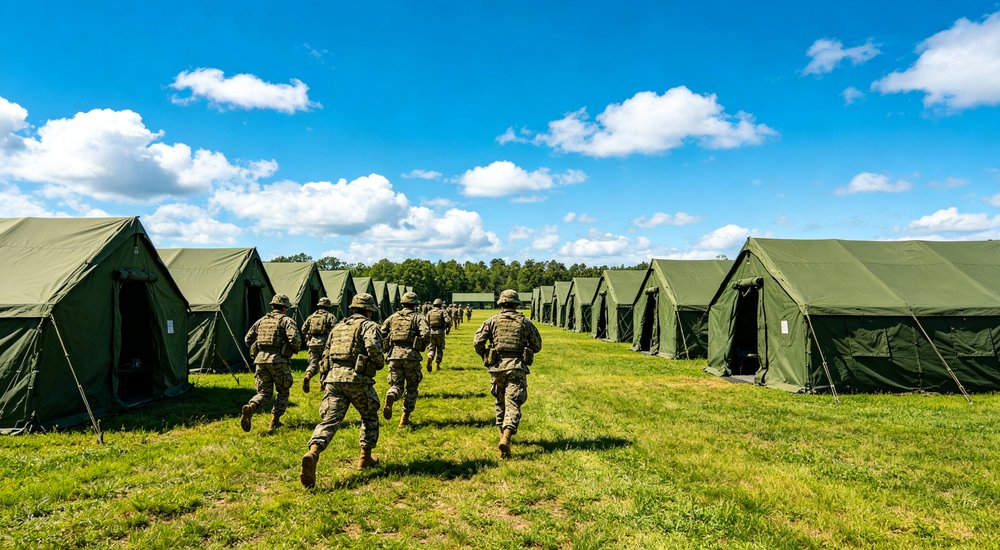
600D fabric meaning: 600D polyester typically weighs 280-320g/m² with PVC coating. It is the standard weight for emergency relief tents. 900D (350-400g/m²) is considered heavy-duty. Always ask for g/m², not just denier — two 600D fabrics can have very different coating weights.
|
Coating |
Waterproof |
UV Resistance |
Flexibility |
Cost |
Common Use |
|
PU (polyurethane) |
2000-3000mm |
300-500 hrs |
Excellent |
Low |
Budget tents |
|
PVC (polyvinyl chloride) |
3000-5000mm |
500-1000 hrs |
Good |
Medium |
Emergency tents |
|
Double-sided PVC |
5000+mm |
1000+ hrs |
Fair |
High |
Heavy-duty |
|
Acrylic |
Water-repellent |
1500+ hrs |
Excellent |
High |
Canvas tents |
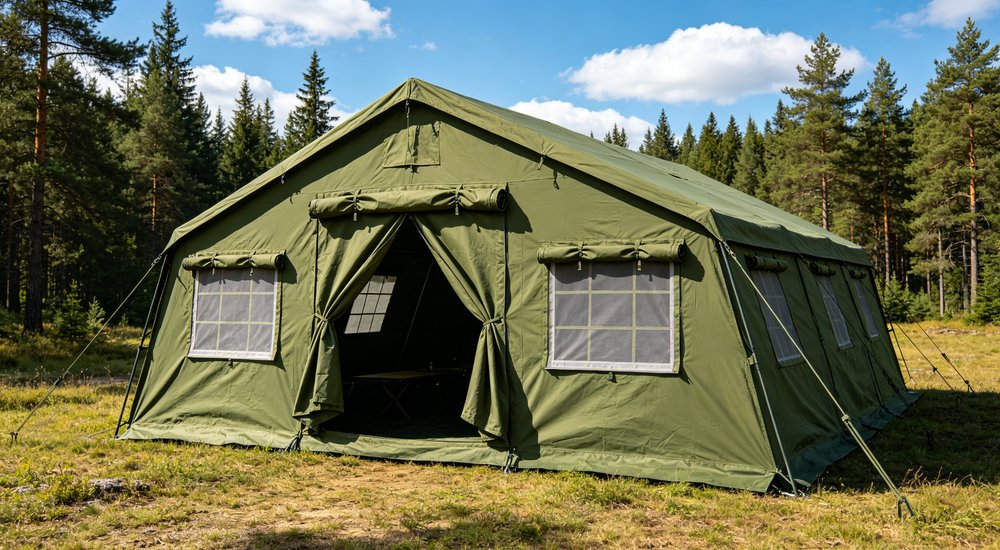
Weave density affects fabric strength and waterproofing. Quality emergency tent fabric should have:
Buyers often ask whether denier or GSM (g/m²) is the better fabric quality indicator. The answer: GSM is more reliable for comparing finished tent fabrics, while denier tells you only about the base fiber thickness.
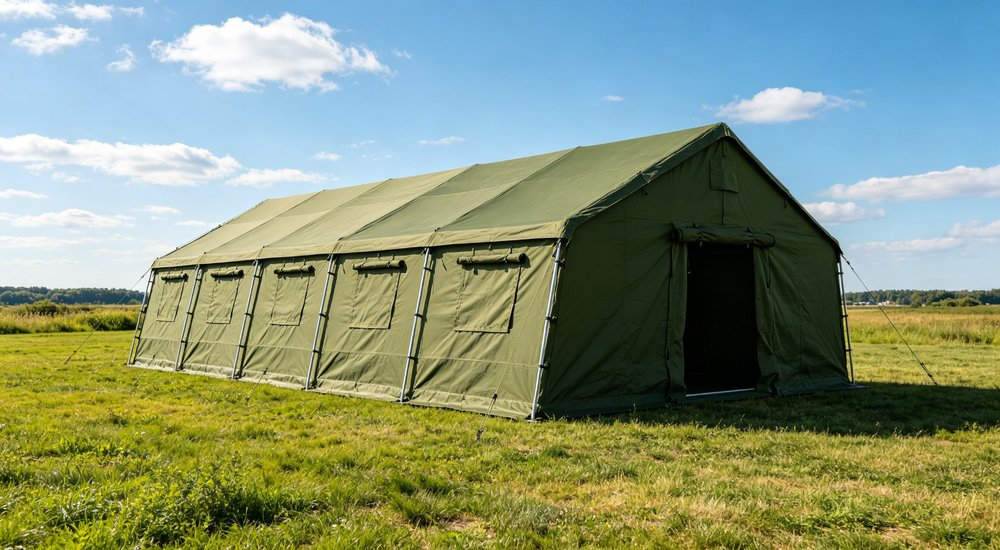
|
Aspect |
Denier (D) |
GSM (g/m²) |
|
What it measures |
Single fiber thickness (g per 9000m) |
Total fabric weight per m² incl. coating |
|
Reflects coating? |
No — coating weight not included |
Yes — includes all coatings and treatments |
|
Comparable across suppliers? |
Not reliably — same 600D can be 280 or 350 g/m² |
Yes — direct apples-to-apples comparison |
|
Predictive of durability? |
Partially — thicker fiber helps but coating matters more |
Strongly — heavier = more durable in most cases |
|
Best use |
Marketing spec, fiber quality reference |
Purchasing decision, quality verification |
Practical rule: If a supplier only quotes "600D" without g/m², ask for the GSM value. A 600D fabric at 280 g/m² (light PVC coating) is significantly less durable than a 600D fabric at 350 g/m² (heavy double-sided PVC coating). Always verify with a fabric scale during sample inspection.
Waterproof rating is measured in millimeters (mm) of water column — the height of a water column the fabric can withstand before leaking. This is one of the most misunderstood specifications.
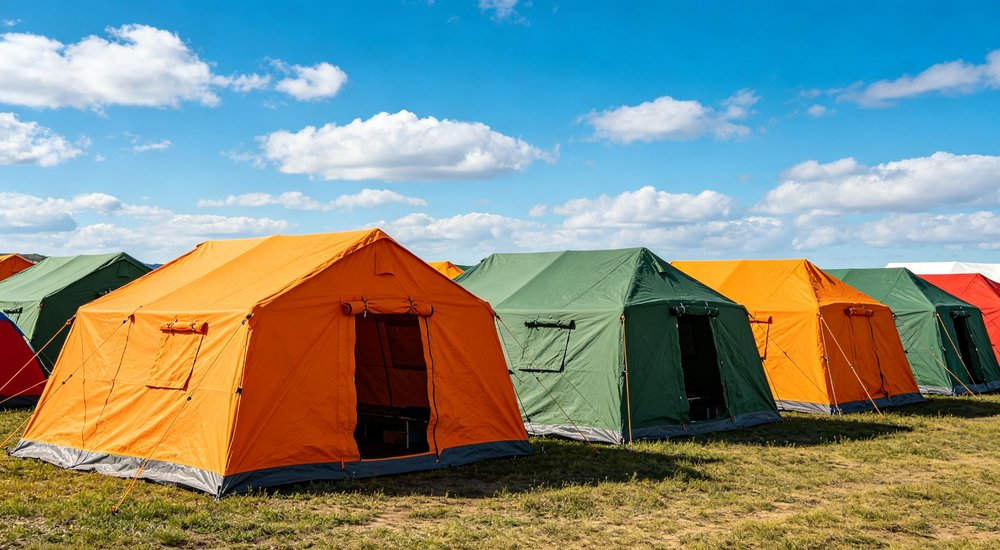
|
|
|---|
|
Waterproof Rating |
What It Means |
Suitable For |
Real-World Performance |
|
1000mm |
Resists light rain |
Dry climates, shade |
Leaks in moderate rain |
|
2000mm |
Resists moderate rain |
General emergency use |
OK for most rainfall |
|
3000mm |
Resists heavy rain |
Tropical, monsoon regions |
Withstands downpours |
|
5000mm |
Resists extreme rain |
Heavy-duty, prolonged rain |
Virtually waterproof |
|
10000mm+ |
Submersible-grade |
Flood zones, extreme |
Overkill for most tents |
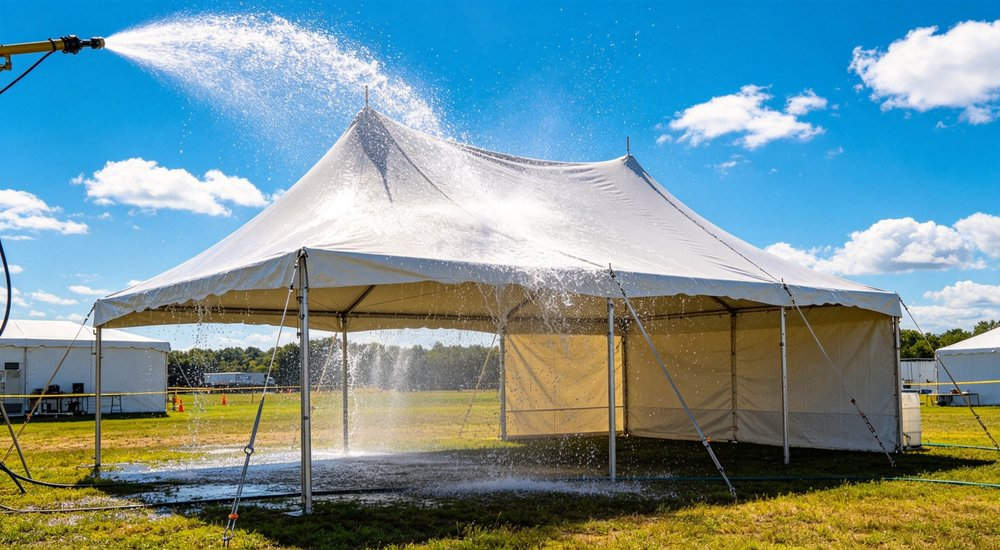
Important: Waterproof rating alone does not guarantee a dry tent. Seams must be heat-sealed or taped. Even 5000mm fabric will leak through needle holes if seams are not sealed. Always verify seam sealing during sample inspection — spray water on the tent for 15 minutes and check inside for leaks.
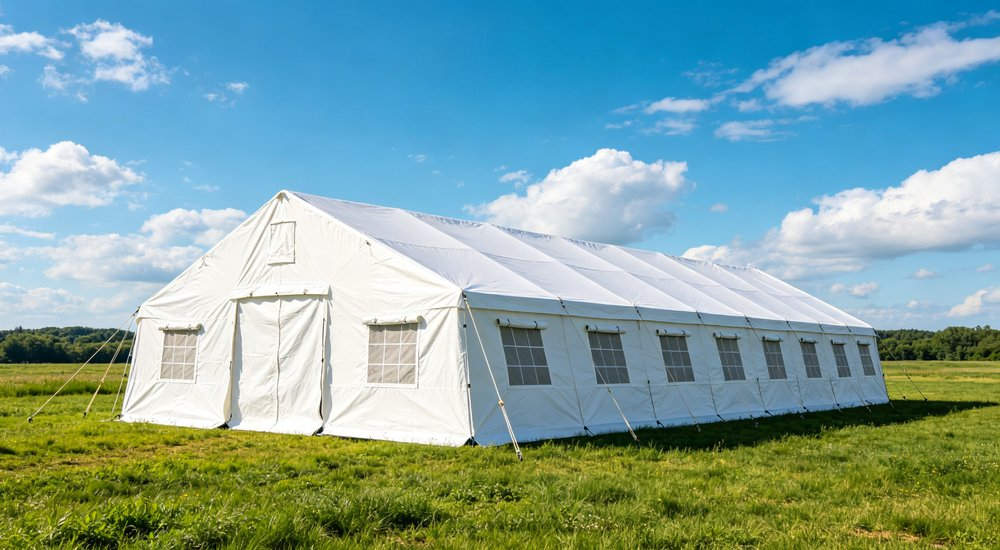
The waterproof rating is determined by the hydrostatic head test (ISO 811 standard). A 100cm² fabric sample is subjected to increasing water pressure until three drops appear on the underside. The pressure at which this occurs is the waterproof rating in mm.
Wind resistance is the most critical safety specification for frame tents. A tent that collapses in high wind can cause injury or death. Understanding wind load ratings helps you choose the right tent for your deployment environment.
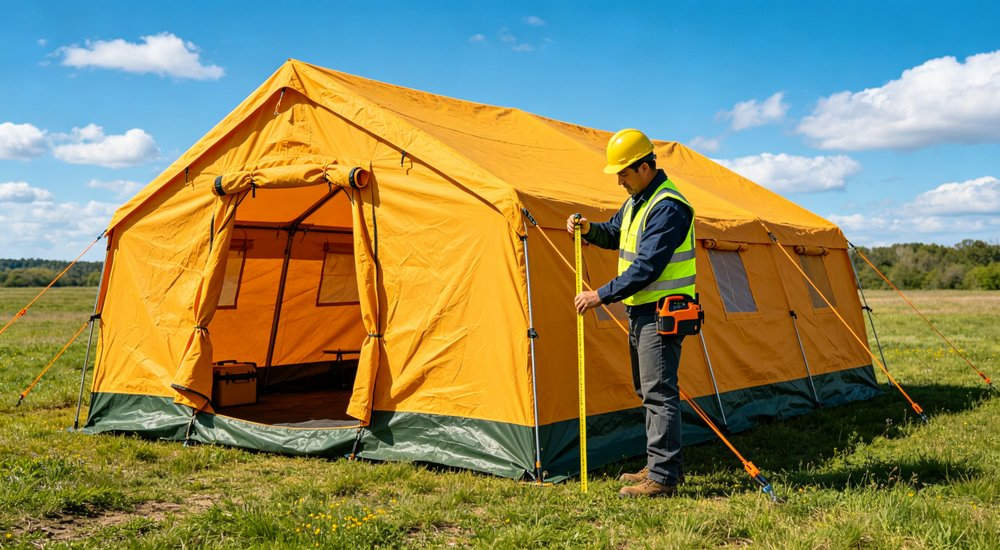
|
Wind Rating |
Beaufort Scale |
Frame Required |
Anchoring Required |
Typical Use |
|
60 km/h |
7 (Near gale) |
19mm/1.0mm |
4 pegs + 4 ropes |
Sheltered areas |
|
80 km/h |
9 (Strong gale) |
22mm/1.2mm |
6 pegs + 6 ropes |
General use |
|
100 km/h |
10 (Storm) |
22mm/1.5mm |
8 pegs + 8 ropes + sandbags |
Exposed areas |
|
120 km/h |
11 (Violent storm) |
25mm/1.5mm |
12 pegs + 12 ropes + heavy anchoring |
Hurricane zones |
For cold climate deployments, snow load capacity is critical:
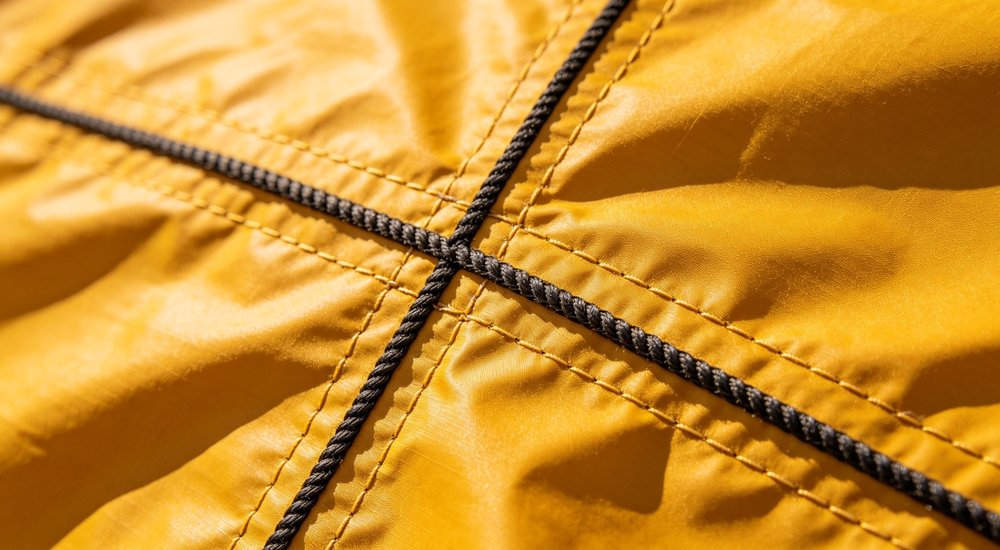
Snow load is tested per EN 1991-1-3 (Eurocode) or ASTM E270 standards. Exceeding the snow load rating causes frame bending or collapse.
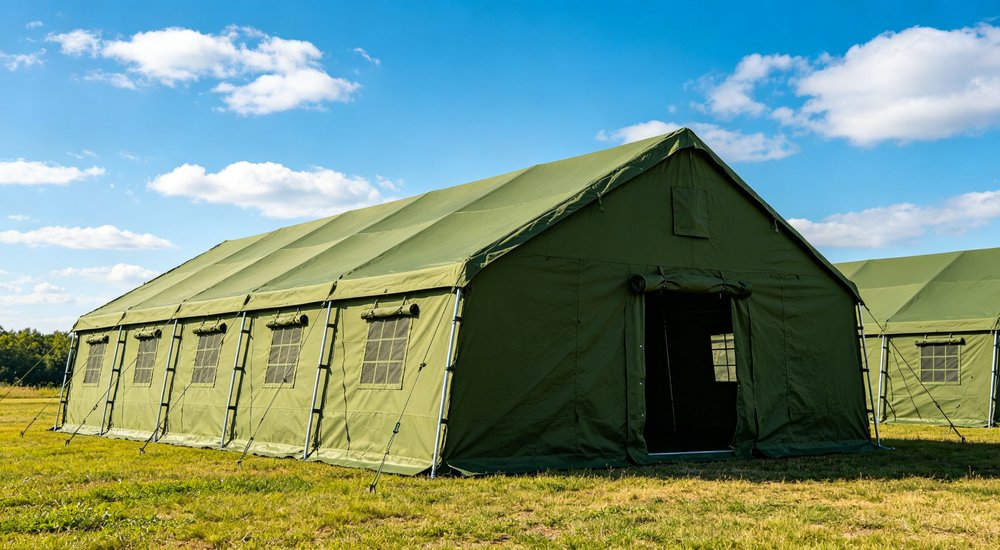
Flame retardancy is a safety-critical specification, especially for tents used as field hospitals, communal dining areas, or crowded shelters. Cooking, heating, and electrical equipment all present fire risks.
|
Standard |
Region |
Test Method |
Pass Criteria |
Common For |
|
CPAI-84 |
USA/Canada |
Vertical flame test |
Self-extinguishes in 5 sec, char length <254mm |
Event tents, emergency |
|
EN 13501-1 |
Europe |
Multiple tests |
Class B-s1,d0 or better |
EU emergency shelters |
|
BS 5867 Part 2 |
UK |
Vertical flame test |
Type B or C |
UK canvas tents |
|
NFPA 701 |
USA |
Vertical burn test |
Char length <178mm, no melt drip |
Fabric structures |
|
AS/NZS 1530.2 |
Australia/NZ |
Ignitability test |
Group 1 or 2 |
Australian shelters |
|
GB 8624 |
China |
Multiple tests |
Grade B1 or better |
Chinese-made tents |
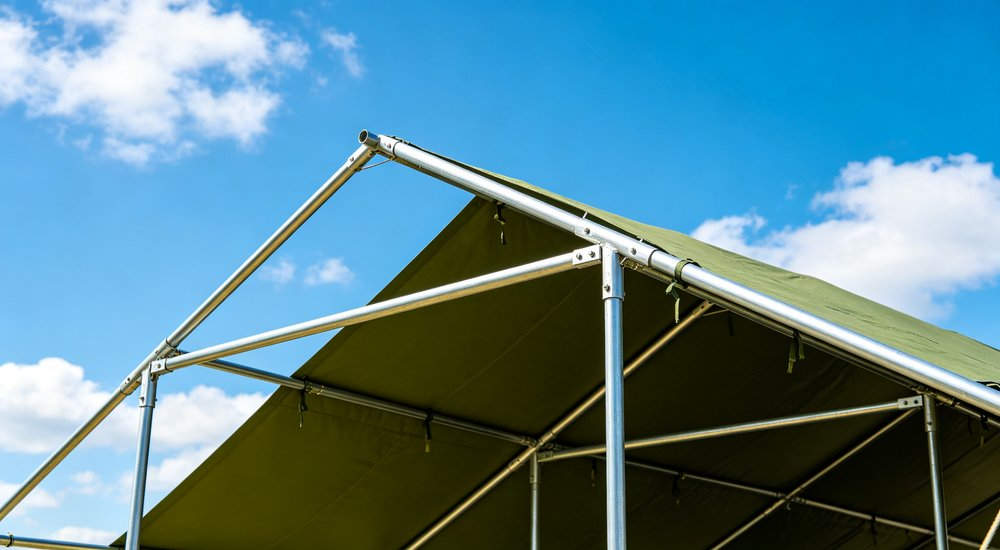
Never assume flame retardancy: Always request a current test report (less than 1 year old) from an accredited laboratory (SGS, TUV, Intertek). Some suppliers treat fabric with flame retardant chemicals that wash off after one rainstorm. Quality flame retardant should survive at least 5 wash cycles (ISO 105-C06).
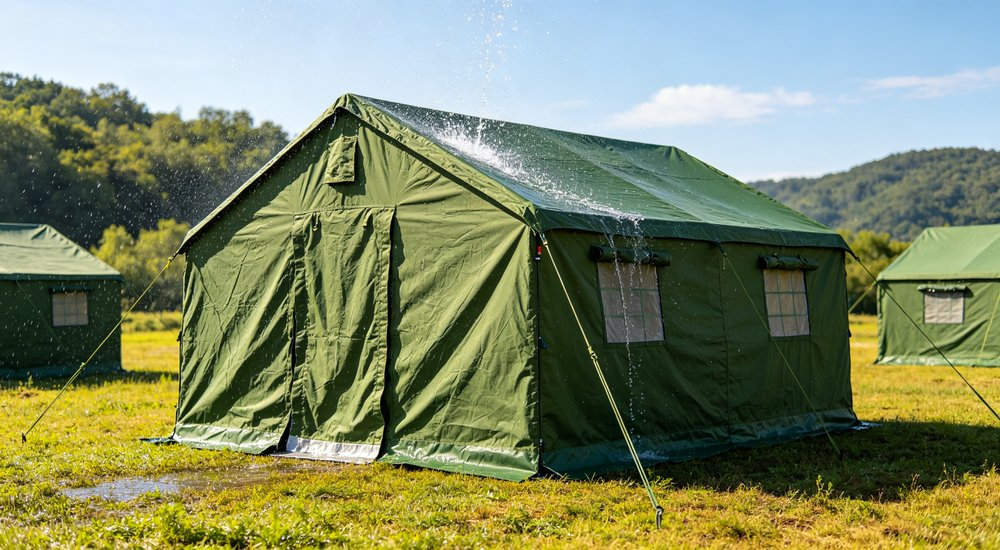
UV radiation from sunlight breaks down fabric fibers and coatings over time. In tropical regions, UV exposure can degrade unprotected fabric in less than a year. Understanding UV resistance specifications helps you predict tent lifespan.
|
UV Rating |
Test Standard |
Expected Lifespan |
Coating Required |
Suitable For |
|
UPF 30+ |
AATCC 183 |
1-2 years |
Basic PU |
Short-term use |
|
UPF 50+ (500 hrs) |
ISO 105-B02 |
3-5 years |
UV-stabilized PVC |
Standard emergency |
|
UPF 50+ (1000 hrs) |
ISO 105-B02 |
5-7 years |
Double-sided PVC |
Long-term camps |
|
Natural (canvas) |
— |
7-10 years |
Acrylic/wax |
Permanent shelters |
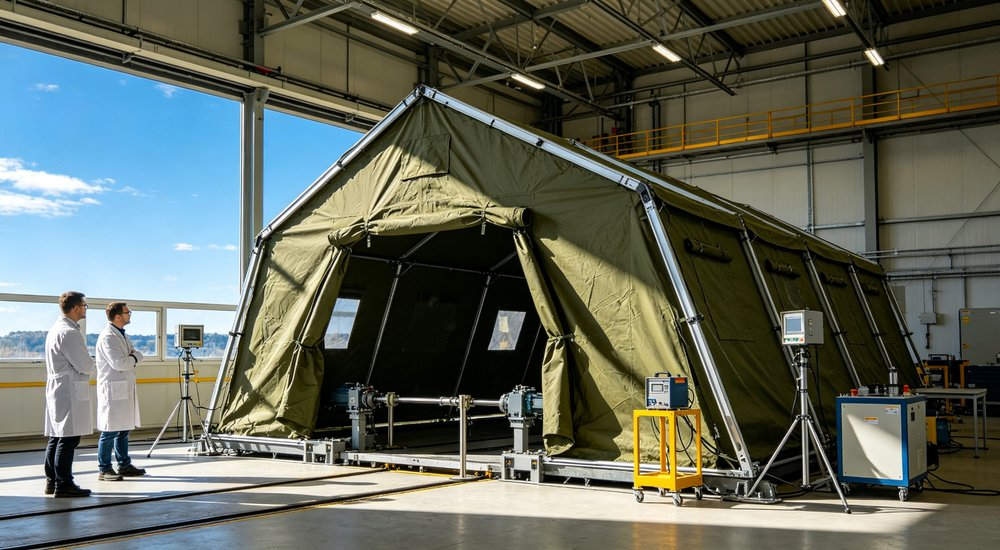
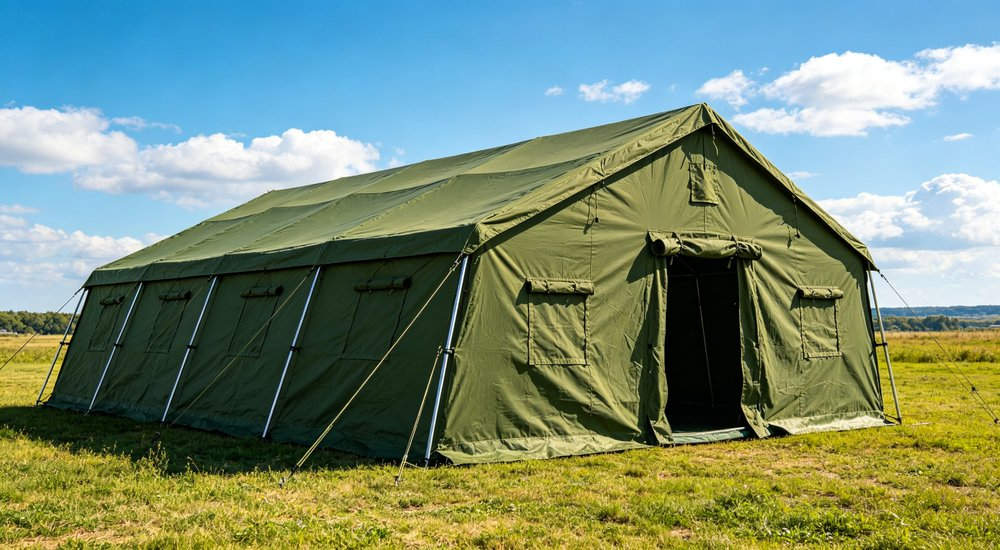
Quality PVC-coated polyester includes UV stabilizers in the coating formulation:
Thermal performance determines whether a tent is habitable in extreme temperatures. For cold climate deployments, insulation is not optional — it is essential for preventing hypothermia.
|
Insulation Type |
R-Value (per inch) |
Weight |
Cost |
Best For |
|
Single-wall (no insulation) |
R-0.5 |
Lightest |
Lowest |
Tropical climates |
|
Removable liner (cotton) |
R-1.5-2.0 |
Medium |
Medium |
Temperate, seasonal |
|
Three-layer (fabric+insulation+liner) |
R-2.5-3.5 |
Heavy |
High |
Cold climates, winter |
|
Reflective insulation |
R-3.0-4.0 |
Light |
High |
Extreme cold, military |
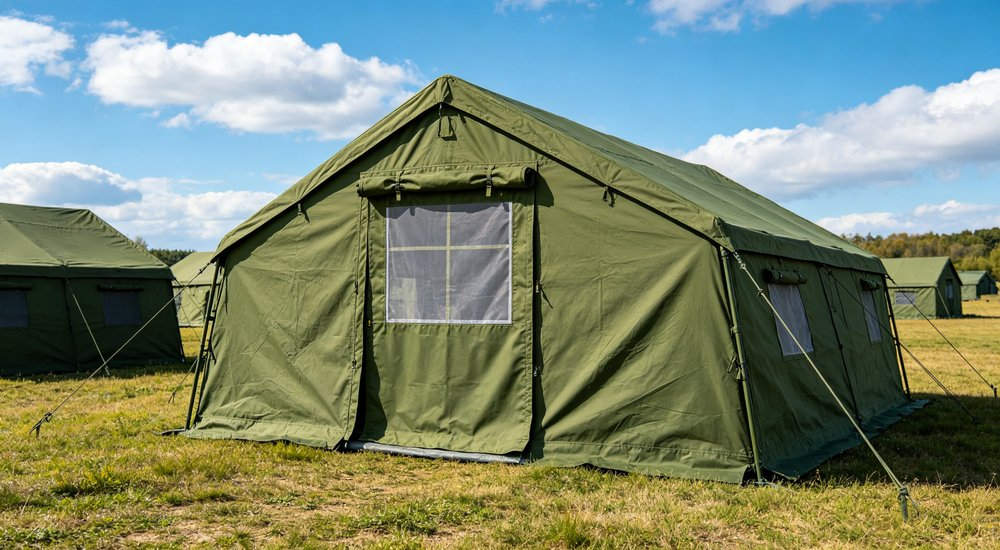
Condensation is a common problem in insulated tents. Proper design includes:
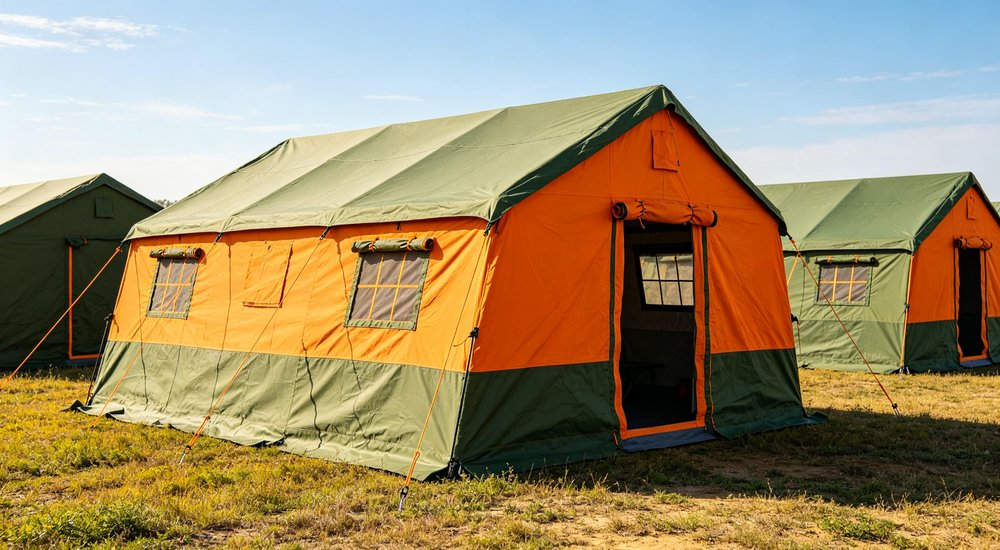
Spec sheets look impressive, but which numbers actually matter? A 5000mm waterproof rating is meaningless if the seams leak. This guide translates technical jargon into real-world performance: what wind speed the frame survives, how long the fabric lasts in UV, and which certifications you should actually verify before ordering.
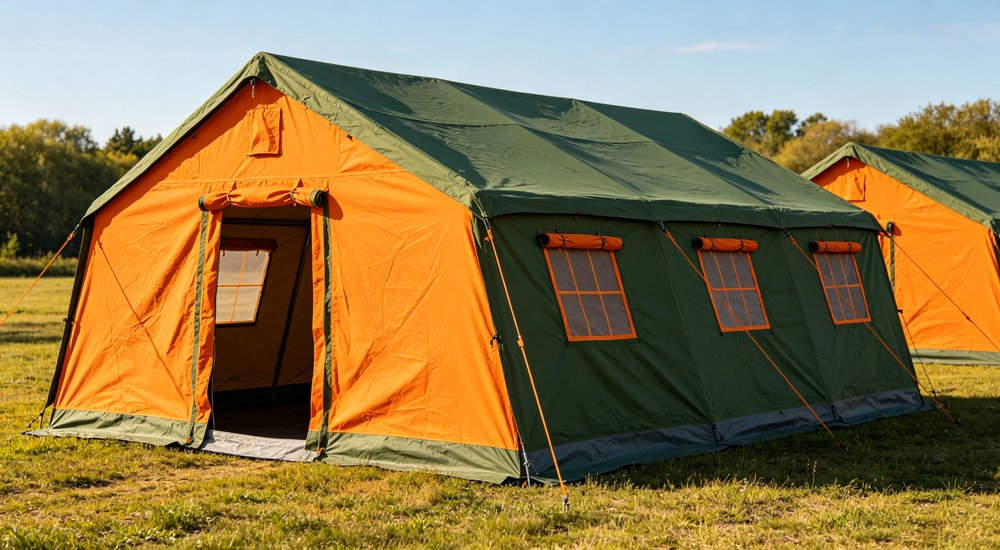
Proper ventilation prevents condensation, reduces heat buildup in tropical climates, and improves indoor air quality. A tent with no ventilation becomes uninhabitable in hot weather.
|
Component |
Location |
Function |
Minimum Size |
|
Ridge vent |
Roof peak |
Hot air exhaust |
10cm wide × full length |
|
Eave vents |
Roof-wall junction |
Cross-flow intake |
15cm wide, both sides |
|
Windows |
Side walls |
Adjustable ventilation + light |
60×80cm, 2+ per tent |
|
Door flaps |
Entrances |
Large area ventilation |
Full door width |
|
Mosquito netting |
All openings |
Insect protection while ventilating |
Fine mesh (1mm holes) |
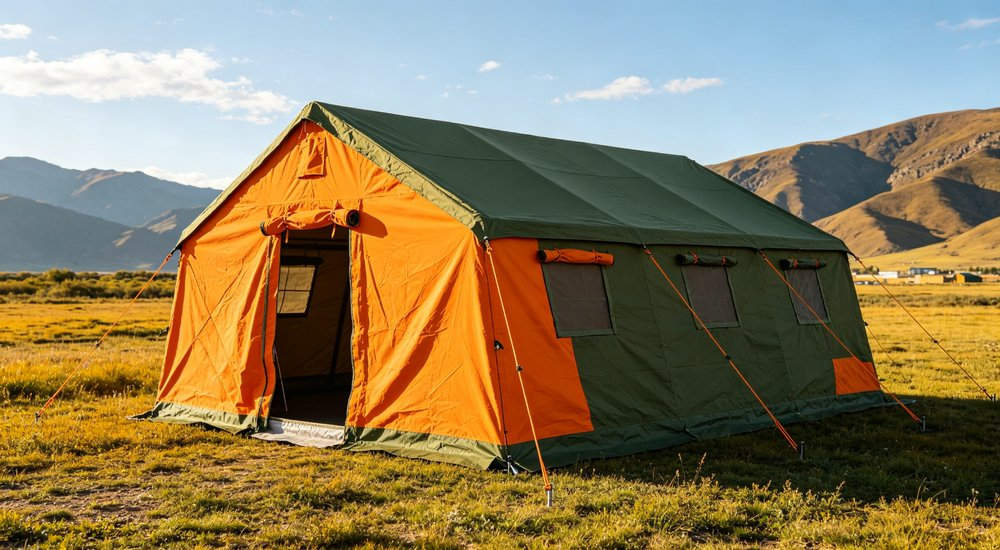
The recommended minimum ventilation area is 10% of floor area. For a 12m² tent, that means at least 1.2m² of openable ventilation. For tropical climates, 15-20% is recommended.
Condensation occurs when warm, moist air inside the tent meets the cooler inner fabric surface. Without ventilation, a family of 4 can produce 2-3 liters of moisture per night through breathing and cooking. This moisture drips back onto occupants, causing discomfort, mold growth, and fabric degradation.
Proper ventilation works through the stack effect: warm moist air rises and exits through the ridge vent, while cooler fresh air enters through eave vents and windows. This creates continuous air circulation that reduces interior humidity by 40-60% compared to sealed tents. In cold climates, close eave vents but keep the ridge vent partially open to prevent carbon monoxide buildup from heating stoves while minimizing cold air intake.
|
Climate |
Min. Ventilation |
Ridge Vent |
Eave Vents |
Windows |
|
Tropical/Monsoon |
15-20% floor area |
Full-length, always open |
Both sides, adjustable |
2+ screened, openable |
|
Temperate |
10-15% floor area |
Full-length, adjustable |
Both sides, adjustable |
2 screened, openable |
|
Desert |
20%+ floor area |
Full-length, always open |
Both sides, always open |
4+ for cross-flow |
|
Cold/Winter |
5-10% floor area |
Partially open (CO safety) |
Closed |
1, closed most time |
|
Parameter |
Standard |
Heavy-Duty |
Medical/Accessibility |
|
Door width |
90cm |
100-120cm |
120cm (wheelchair) |
|
Door height |
180cm |
190-200cm |
200cm |
|
Zipper type |
#10 nylon |
#10 heavy-duty |
#10 two-way |
|
Zipper brand |
YKK or equivalent |
YKK |
YKK two-way |
|
Overlapping flap |
10cm |
15cm |
15cm + velcro |
|
Number of doors |
1-2 |
2 |
2 (opposite ends) |
|
Accessory |
Specification |
Quantity per Tent |
|
Guy ropes |
6mm polypropylene, 3m length |
6-12 (depending on size) |
|
Tent pegs |
Steel, 20-30cm length, 8mm diameter |
8-16 |
|
Rubber mallet |
450g head, wooden handle |
1 |
|
Repair kit |
Fabric patches (5×10cm), glue, spare rope |
1 |
|
Storage bags |
Canvas or PVC, labeled |
2 (frame + fabric) |
|
Assembly instructions |
Illustrated, multi-language |
1 |
|
Model |
Floor Area |
Length×Width |
Eave Height |
Ridge Height |
Capacity (SPHERE) |
|
12m² Standard |
12m² |
4×3m |
1.8m |
2.8m |
3-4 people |
|
16m² Medium |
16m² |
4×4m |
1.9m |
3.0m |
4-5 people |
|
20m² Large |
20m² |
5×4m |
2.0m |
3.2m |
5-6 people |
|
25m² XL |
25m² |
5×5m |
2.1m |
3.4m |
6-7 people |
|
36m² Communal |
36m² |
6×6m |
2.2m |
3.6m |
Communal/medical |
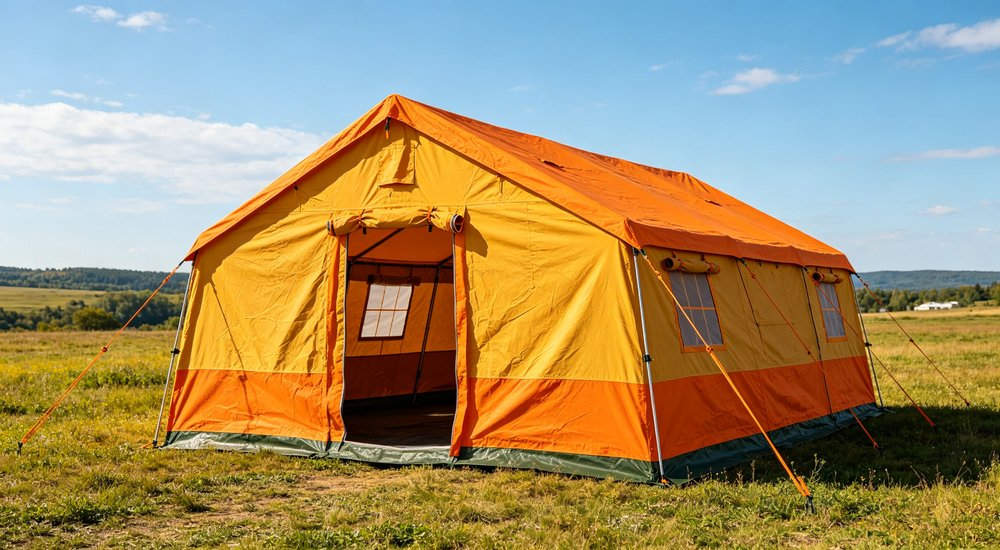
SPHERE standard recommends 3.5-4.5m² per person for emergency family shelter. Communal tents (medical, dining) require 2-3m² per person.

When planning a camp, allow additional space beyond the tent footprint:
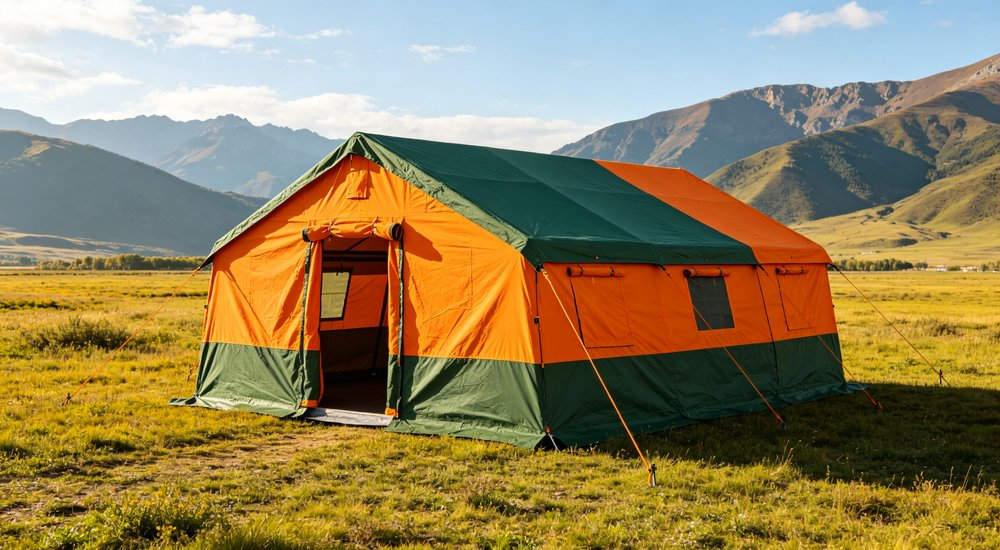
Floor area alone does not determine livability — headroom is equally important. A 12m² tent with 1.8m eave height and 2.8m ridge height allows adults to stand comfortably throughout most of the interior. Tents with lower eave heights (1.5m or less) feel cramped even with the same floor area, because usable standing space is limited to the center ridge line.
For medical and command tents, specify minimum 2.2m eave height to accommodate equipment, gurneys, and personnel movement. For family shelters, 1.8-2.0m eave height is sufficient. Always check both eave height and ridge height in specifications — some suppliers advertise ridge height only, which can be misleading.
Standard sizes (12m², 16m², 20m², 25m², 36m²) are readily available with shorter lead times (30-45 days) and lower unit costs. Custom sizes require new frame cutting jigs and fabric patterns, adding 15-30 days and 10-20% to unit cost.
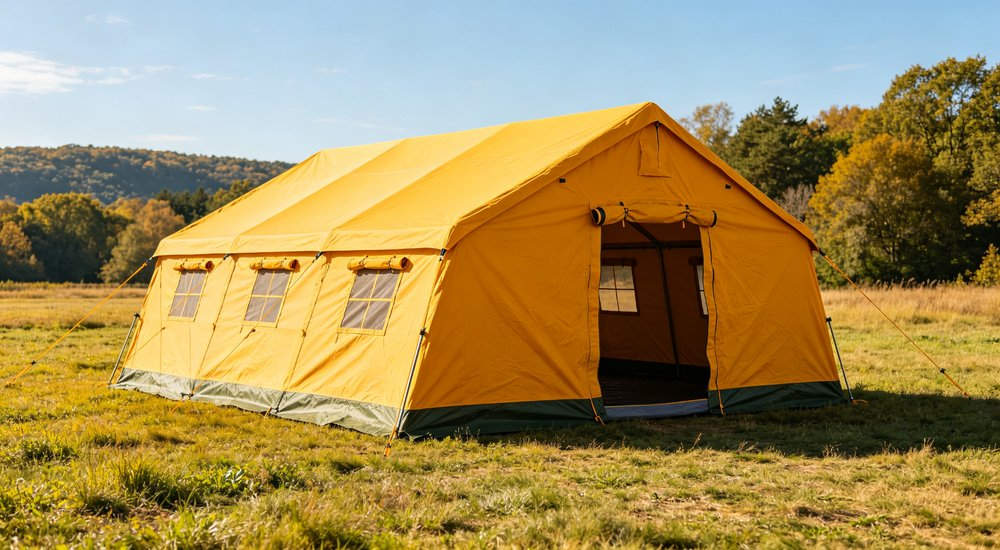
For quantities under 100 units, standard sizes are almost always more cost-effective. For large procurement (500+ units), custom sizing can be justified if it significantly improves site planning efficiency.
|
Tent Model |
Frame Weight |
Fabric Weight |
Total Weight |
Carton Size |
|
12m² Standard |
28-32 kg |
18-22 kg |
46-54 kg |
120×25×25cm |
|
20m² Large |
42-48 kg |
28-34 kg |
70-82 kg |
140×30×30cm |
|
16m² Canvas |
38-42 kg |
40-48 kg |
78-90 kg |
130×35×35cm |
|
25m² Heavy-duty |
55-65 kg |
45-55 kg |
100-120 kg |
150×40×40cm |
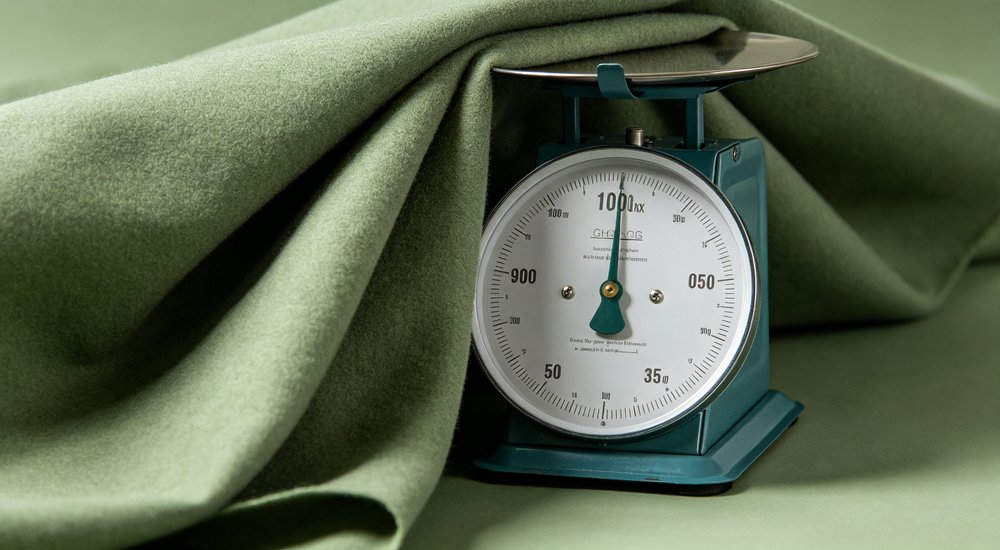
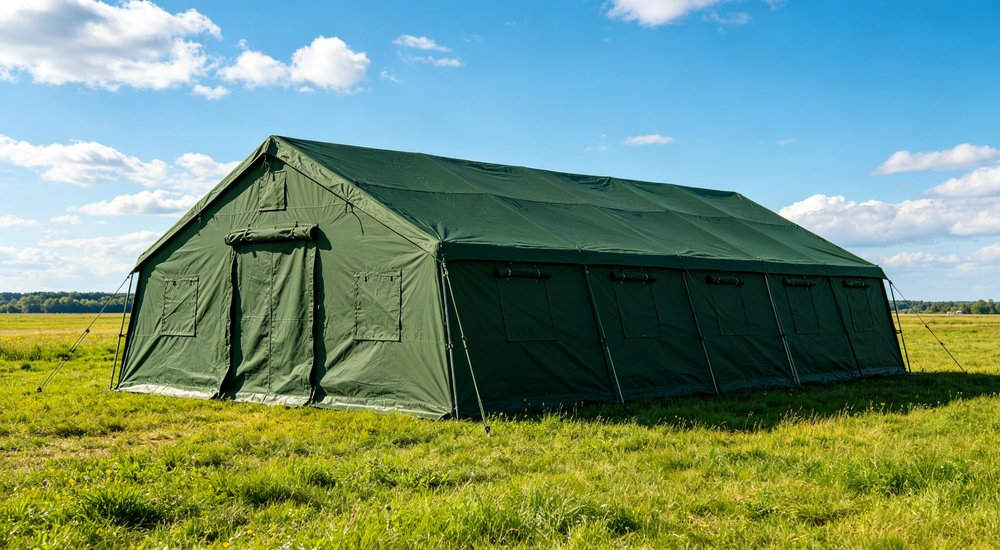
Understanding container loading capacity helps you plan shipping logistics and verify supplier quotations.
|
Tent Model |
Carton Size |
Per Carton Weight |
20ft GP (units) |
40ft HQ (units) |
|
12m² Standard |
120×25×25cm |
50kg |
~210 |
~480 |
|
20m² Large |
140×30×30cm |
76kg |
~120 |
~280 |
|
16m² Canvas |
130×35×35cm |
84kg |
~100 |
~230 |
|
25m² Heavy-Duty |
150×40×40cm |
110kg |
~70 |
~160 |
Loading estimates assume standard carton dimensions and optimal stacking. Actual loading may vary by carton configuration and port handling. Always request a container loading plan from your supplier before shipment.
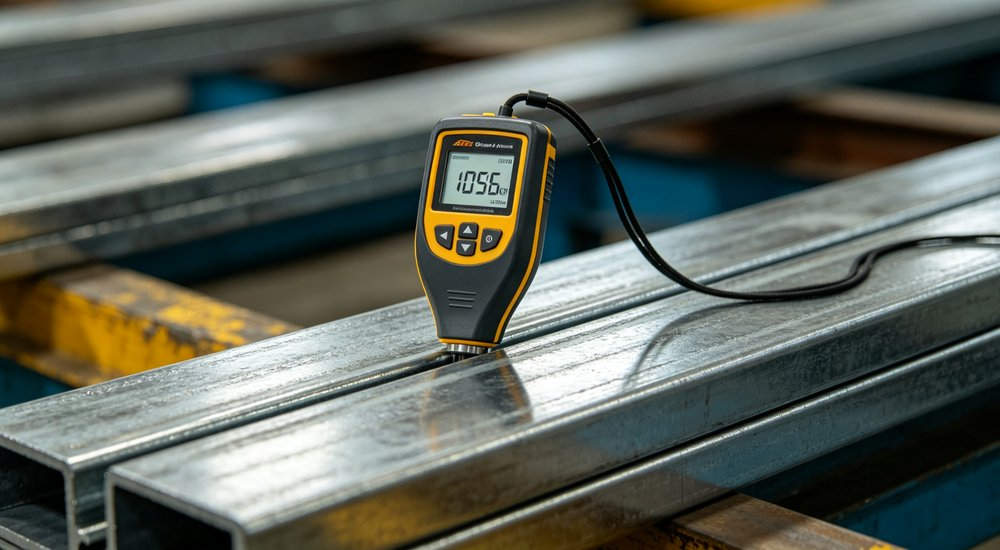
Total tent weight directly impacts deployment feasibility. A 50kg 12m² tent can be carried and assembled by 2 people without equipment. A 110kg 25m² heavy-duty tent requires 4 people or a dolly.
For emergency rapid response, prioritize tents under 60kg total weight for manual deployment. For established camps with equipment on-site, heavier tents are acceptable. Also note that frame and fabric are packaged separately — each carton should not exceed 30kg for safe two-person lifting, per occupational health guidelines.
Certifications verify that a tent meets recognized safety and quality standards. Always request copies of current certificates before placing a bulk order.
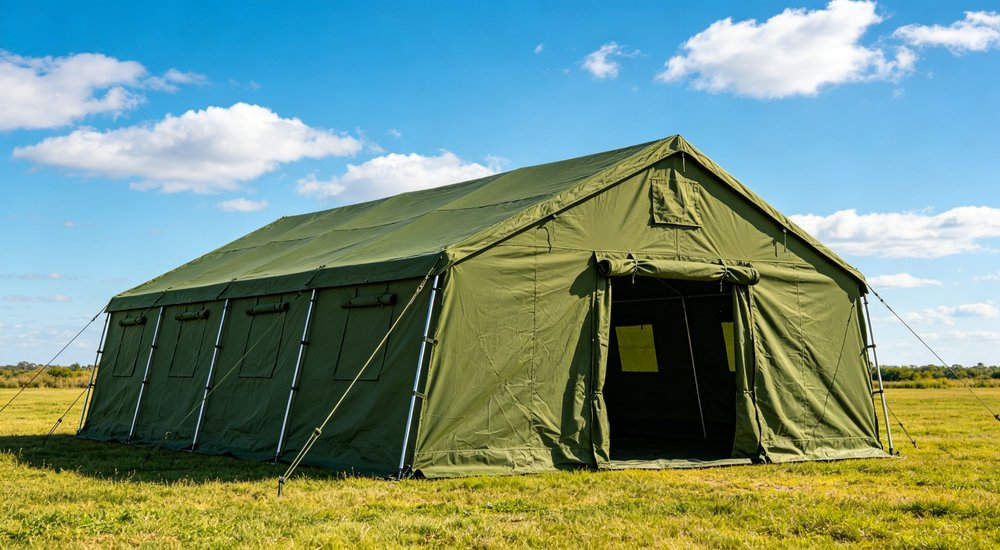
For humanitarian procurement, reference the UNICEF Supply Division shelter standards and IOM Emergency Shelter guidelines. Military purchasers should consult NATO standardization agreements (STANAG) for field shelter requirements.
|
Certification |
Issuing Body |
What It Covers |
Validity |
|
ISO 9001 |
Third-party auditor |
Quality management system |
3 years (annual surveillance) |
|
CE marking |
Self-declaration + Notified Body |
EU safety, health, environmental requirements |
Ongoing |
|
EN 13782 |
Notified Body |
Temporary structures (tents) safety |
Product-specific |
|
CPAI-84 |
Accredited lab |
Flame retardancy (canvas) |
1 year (retest annually) |
|
EN 13501-1 |
Accredited lab |
Fire classification (construction products) |
1 year |
|
ISO 811 |
Accredited lab |
Waterproof rating (hydrostatic head) |
Per batch |
|
ISO 105-B02 |
Accredited lab |
UV resistance (color fastness to light) |
Per material |
|
EN 1991-1-3 |
Structural engineer |
Snow load calculation |
Per model |
|
RoHS |
Self-declaration |
Restriction of hazardous substances |
Ongoing |
|
REACH |
Self-declaration |
EU chemical regulation |
Ongoing |
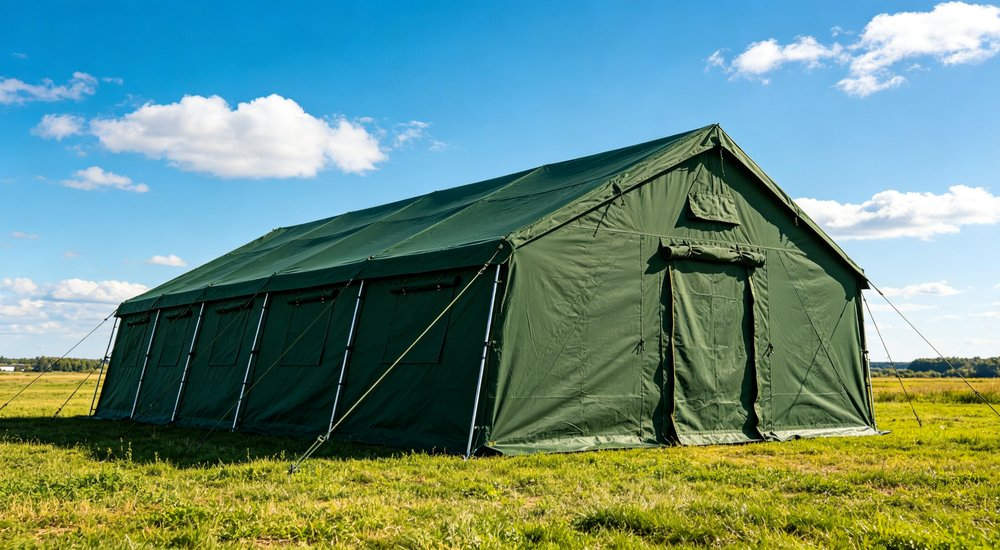
Pro tip: For UN and NGO relief tent procurement, additional supplier qualification may be required through UNGM (UN Global Marketplace) or IAPSO. Register as a verified supplier and maintain current documentation to streamline future bids.
|
Parameter |
Budget |
Standard |
Premium |
Heavy-Duty |
|
Pole diameter |
19mm |
22mm |
22mm |
25mm |
|
Wall thickness |
0.8-1.0mm |
1.0-1.2mm |
1.2mm |
1.5mm |
|
Galvanization |
Electroplated |
Hot-dip 60g/m² |
Hot-dip 80g/m² |
Hot-dip 100g/m² |
|
Fabric material |
PE or 300D poly |
600D polyester |
600D double PVC |
Cotton canvas |
|
Fabric weight |
150-250g/m² |
280-320g/m² |
320-350g/m² |
400-500g/m² |
|
Waterproof |
1000-2000mm |
2000-3000mm |
3000-5000mm |
Water-repellent |
|
Wind resistance |
60 km/h |
80 km/h |
100 km/h |
120 km/h |
|
Snow load |
None |
10-15 kg/m² |
15-20 kg/m² |
20-30 kg/m² |
|
Flame retardant |
Basic (topical) |
CPAI-84 |
CPAI-84 + EN 13501 |
BS 5867 + CPAI-84 |
|
UV resistance |
UPF 30+ |
UPF 50+ 500hrs |
UPF 50+ 1000hrs |
Natural (canvas) |
|
Insulation |
None |
None |
Removable liner |
Three-layer |
|
Floor |
None |
Optional PVC |
Integrated PVC |
Integrated PVC |
|
Expected lifespan |
1-2 years |
3-5 years |
5-7 years |
7-10 years |
|
Price range (FOB) |
$100-180 |
$150-350 |
$350-550 |
$500-750 |
Reference wholesale pricing (FOB Shenzhen, 2026 guide). Actual quotation varies by raw material costs, order quantity, customization, and shipping. Contact us for firm pricing.
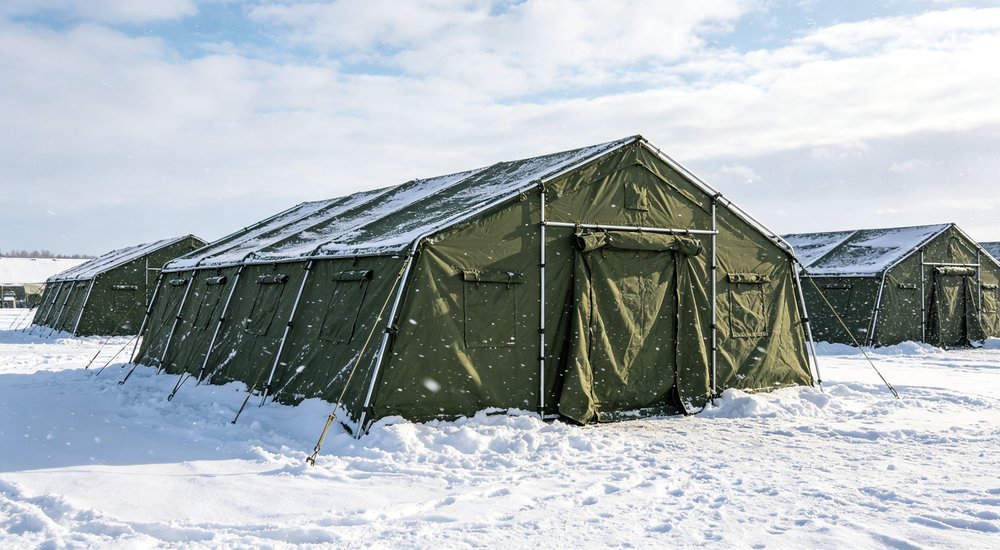
Print this one-page summary for quick reference during supplier evaluations and sample inspections.
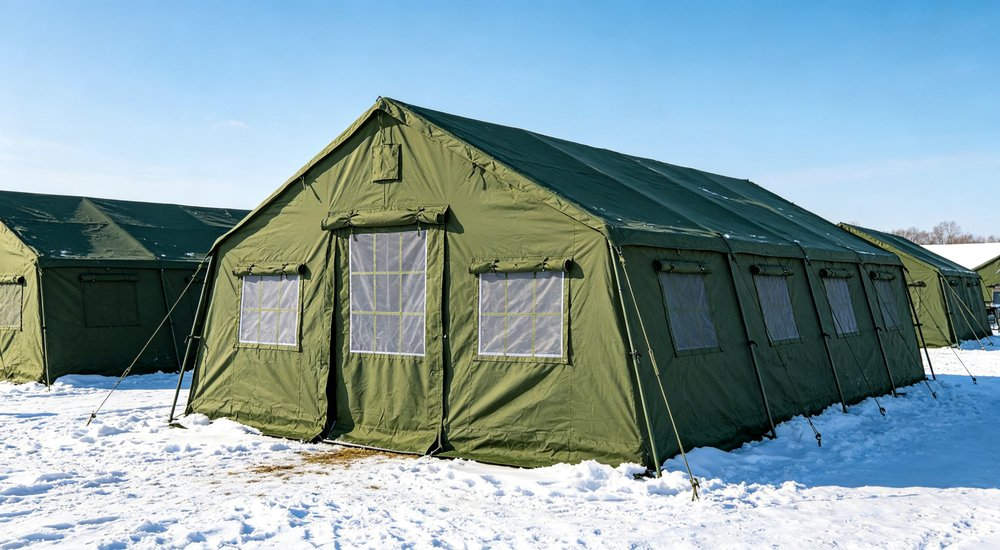
FRAME — Must-Verify:
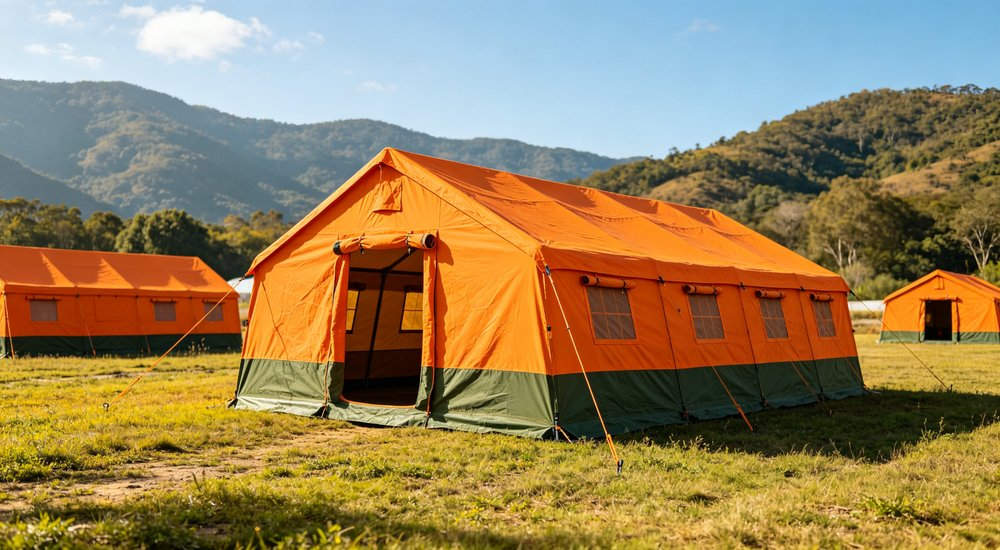
FABRIC — Must-Verify:
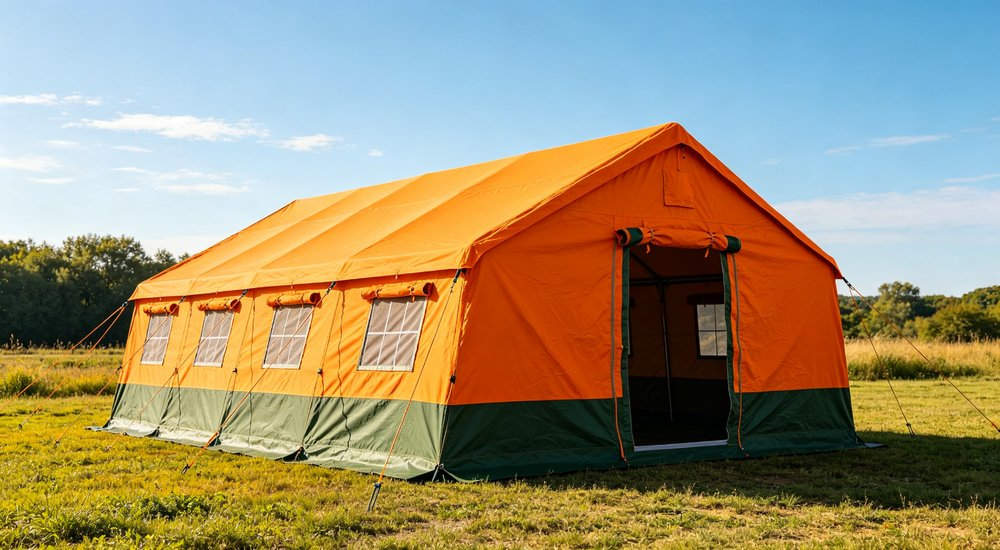
PERFORMANCE — Must-Verify:
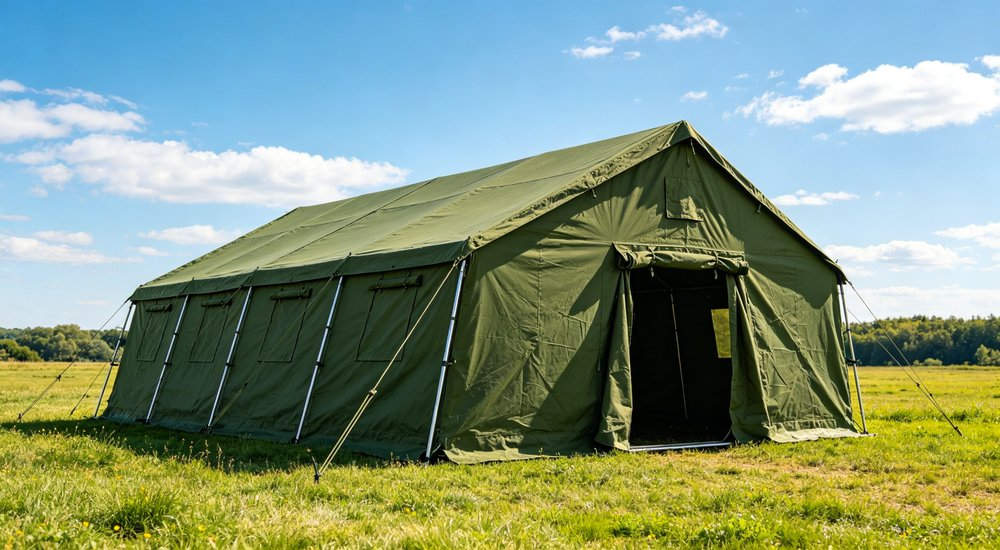
INSPECTION — Before Bulk Order:
Now that you understand every specification parameter, here is how to evaluate a supplier's specification sheet systematically.
For more detailed product specifications, see our 12m² standard relief tent, 20m² large humanitarian tent, heavy-duty canvas frame tent, modular command tent, and medical support frame tent pages. For scenario-specific shelters, see disaster relief tents, refugee camp shelters, military field tents, and field hospital tents. For construction type comparisons, see frame tent construction comparison, frame vs inflatable tents, and size comparison guide.
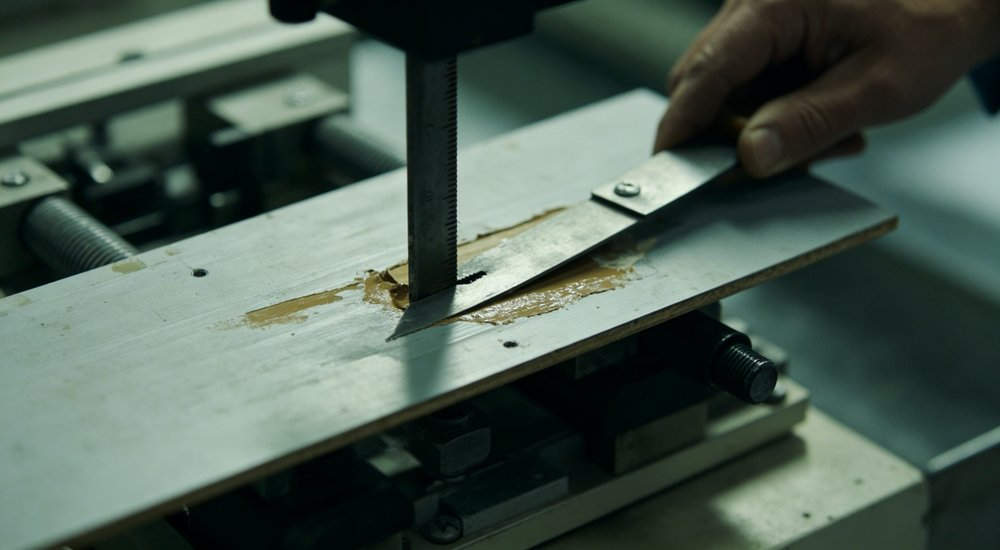
Understanding these terms will help you read any supplier specification sheet with confidence.
Term
Definition
Why It Matters
Denier (D)
Weight in grams of 9,000 meters of a single fiber. Higher = thicker, more durable fiber.
600D is standard for emergency tents. 900D+ is heavy-duty.
GSM (g/m²)
Grams per square meter of finished fabric including coating.
More accurate than denier for comparing total fabric weight and durability.
Hydrostatic Head (mm)
Water pressure in millimeters a fabric withstands before leaking (ISO 811).
2000mm = moderate rain. 5000mm = heavy rain. Seam sealing matters as much as rating.
Hot-Dip Galvanized
Steel dipped in molten zinc at 450°C, forming 60-100g/m² zinc layer.
Lasts 7-10 years outdoors. Electroplated (10-20g/m²) rusts in 1-2 years.
Wall Thickness
Thickness of steel pole wall in millimeters.
1.0mm = basic. 1.2mm = good. 1.5mm = heavy-duty. Verify with calipers — suppliers often under-specify.
CPAI-84
Industrial Fabrics Association International flame retardant standard (USA/Canada).
Most widely recognized tent fire standard. Requires self-extinguishing within 5 seconds.
EN 13501-1
European fire classification for construction products (B-s1,d0 = good).
Required for EU-funded humanitarian shelter procurement.
UPF Rating
Ultraviolet Protection Factor. UPF 50+ blocks 98% of UV radiation.
Determines fabric lifespan in sunny climates. 500-1000 hours rating = 3-7 year life.
R-Value
Thermal resistance measure. Higher = better insulation.
Single layer R-0.5. Three-layer R-2.5-3.5. Critical for cold climate deployment.
Snow Load (kg/m²)
Maximum snow weight the frame can support before bending (EN 1991-1-3).
Standard 10-15 kg/m². Heavy-duty 20-30 kg/m² for winter-long deployment.
Seam Sealing
Heat-taped or polyurethane-coated stitching to prevent needle-hole leakage.
Even 5000mm fabric leaks if seams are not sealed. Always verify with water test.
Pole Diameter
Outer diameter of steel tubing in millimeters.
19mm = 12m² tents. 22mm = 20m² standard. 25mm = heavy-duty. Larger = stiffer frame.
|
|
||
|---|---|---|
| 19mm = 12m² tents. 22mm = 20m² standard. 25mm = heavy-duty. Larger = stiffer frame. |
The right specifications depend entirely on where and how long the tent will be deployed. Use this decision guide to match specifications to your environment.
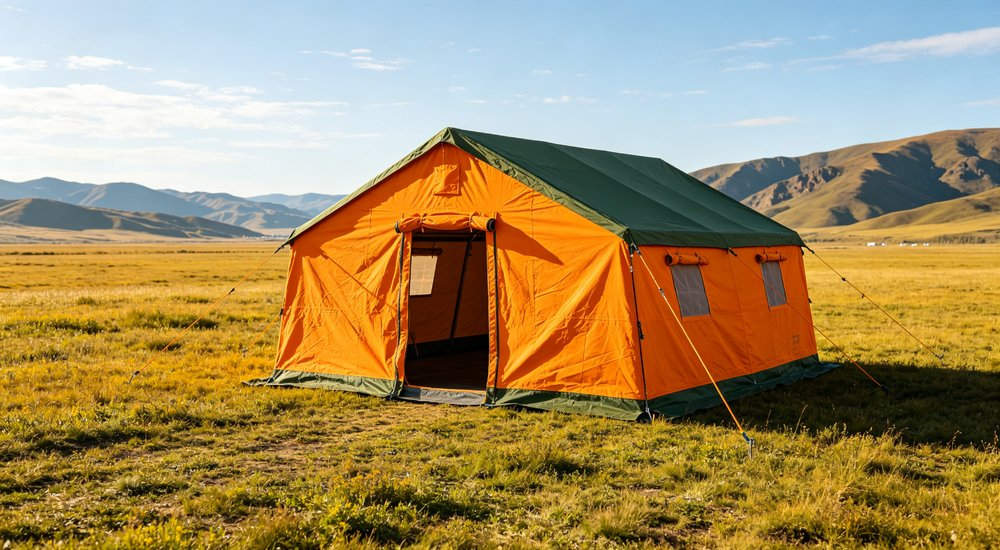
|
Parameter |
Recommendation |
Reason |
|
Fabric |
600D PVC-coated polyester, 300-350g/m² |
PVC resists mold and UV better than PU in humid conditions |
|
Waterproof |
3000-5000mm, seams heat-sealed |
Monsoon rains are intense and prolonged |
|
UV |
UPF 50+, 1000 hours |
Equatorial sun degrades fabric rapidly |
|
Ventilation |
15-20% floor area, ridge + eave vents + screened windows |
Prevents condensation and heat buildup |
|
Frame |
22mm/1.2mm hot-dip galvanized |
Humidity accelerates corrosion — hot-dip is essential |
|
Wind |
80-100 km/h rated |
Monsoon gusts can reach 100 km/h |
|
Insulation |
None (single layer) |
Insulation traps heat in tropical climates |
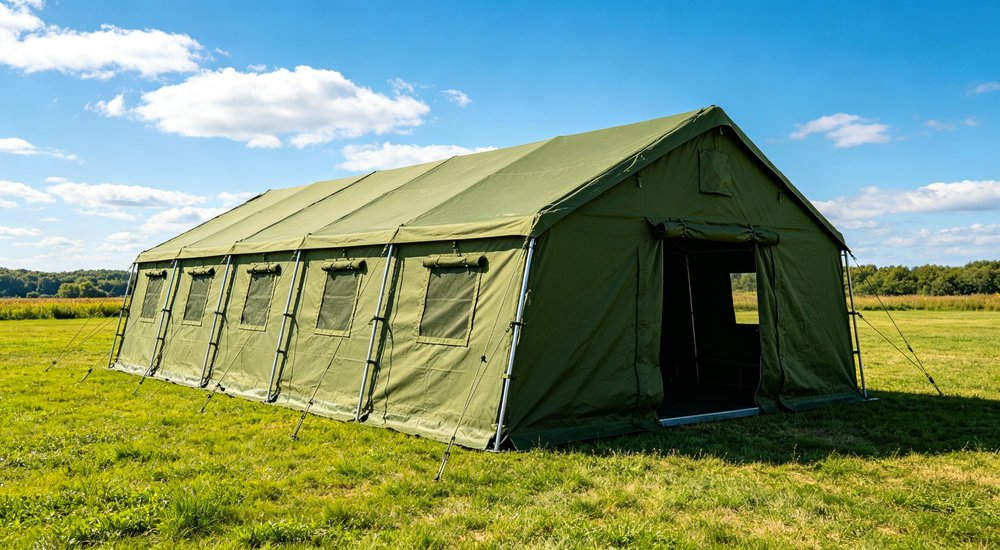
|
Parameter |
Recommendation |
Reason |
|
Fabric |
600D polyester with UV-stabilized PVC, light color (white/cream) |
Light colors reflect sun; UV stabilizers critical |
|
Waterproof |
2000mm minimum |
Rain is rare but sudden flash floods possible |
|
UV |
UPF 50+, 1000+ hours, HALS stabilizers |
Desert UV is the most intense on Earth |
|
Ventilation |
20%+ floor area, full-length ridge vent |
Daytime temperatures can exceed 50°C inside |
|
Frame |
22mm/1.2mm, sand-colored or galvanized |
Sand abrades coatings — inspect frame regularly |
|
Anchoring |
Heavy sand bags or screw anchors (standard pegs pull out) |
Standard ground pegs do not hold in sand |
|
Flooring |
Integrated PVC floor, raised threshold |
Prevents sand and dust infiltration |
|
Parameter |
Recommendation |
Reason |
|
Fabric |
Cotton canvas 400-500g/m² or three-layer insulated |
Canvas breathes, reducing condensation; insulation prevents heat loss |
|
Waterproof |
Water-repellent canvas or 3000mm synthetic |
Snow melt seeps through untreated fabric |
|
Insulation |
Three-layer (outer + insulation + liner), R-2.5+ |
Single-layer tents are uninhabitable below 0°C |
|
Frame |
25mm/1.5mm hot-dip galvanized, reinforced roof poles |
Must support snow load — 20-30 kg/m² rating |
|
Snow Load |
20-30 kg/m² minimum |
Wet snow is heavy — standard frames collapse |
|
Roof Pitch |
30°+ slope |
Steeper roof sheds snow before it accumulates |
|
Stove Jack |
Integrated stove pipe opening with heat shield |
Required for safe wood/coal heating in winter |
|
Ventilation |
Adjustable ridge vent only (close eave vents) |
Minimize cold air intake while preventing carbon monoxide buildup |
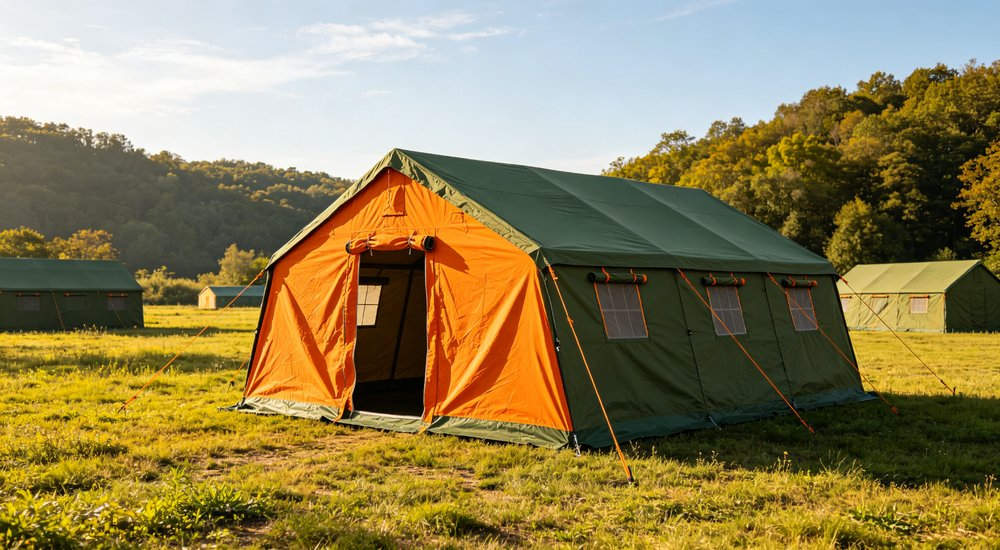
|
Parameter |
Recommendation |
Reason |
|
Fabric |
600D PVC polyester, 280-300g/m² |
Balances durability with cost and weight |
|
Frame |
22mm/1.0mm, spring-clip connectors |
Fast assembly — 2 people in 15-20 minutes |
|
Waterproof |
2000mm minimum |
Sufficient for most emergency periods |
|
Weight |
Under 60kg total (12m²) |
Easy to transport and deploy by hand |
|
Packaging |
2 cartons (frame + fabric), labeled in local language |
Facilitates distribution in chaotic environments |
|
Parameter |
Recommendation |
Reason |
|
Fabric |
Heavy-duty canvas or double-sided PVC, 400g/m²+ |
Must withstand years of UV, rain, and wind |
|
Frame |
25mm/1.5mm hot-dip galvanized, bolted connections |
Bolted joints are more durable than spring clips for long-term use |
|
UV |
UPF 50+, 1000+ hours |
Multi-year exposure requires maximum UV protection |
|
Wind |
100-120 km/h rated |
Long-term camps experience all seasons including storm season |
|
Modularity |
Connectable units, replaceable parts |
Allows expansion and repair without full replacement |
|
Flooring |
Heavy-duty integrated PVC, 600g/m²+ |
High foot traffic wears out standard floors quickly |
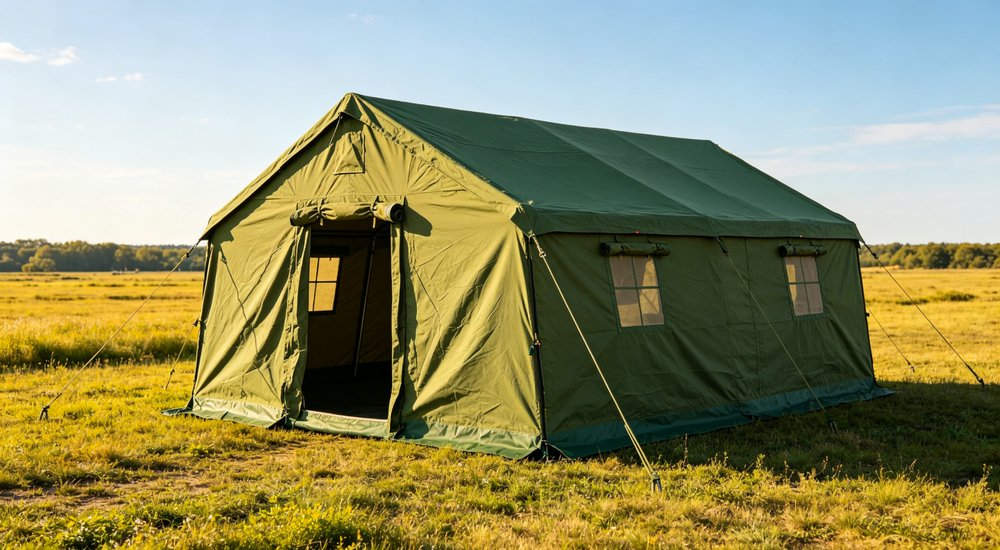
Based on 20+ years of frame tent manufacturing and wholesale supply, these are the most costly specification mistakes buyers make.
A $150 economy tent with 19mm/0.8mm electroplated frame and 200g/m² PE fabric may look identical to a $300 standard tent with 22mm/1.2mm hot-dip galvanized frame and 300g/m² PVC polyester. But the economy tent will rust, leak, and degrade within 1-2 years, while the standard tent provides 3-5 years of reliable service. Calculate cost per year of service life, not per unit.
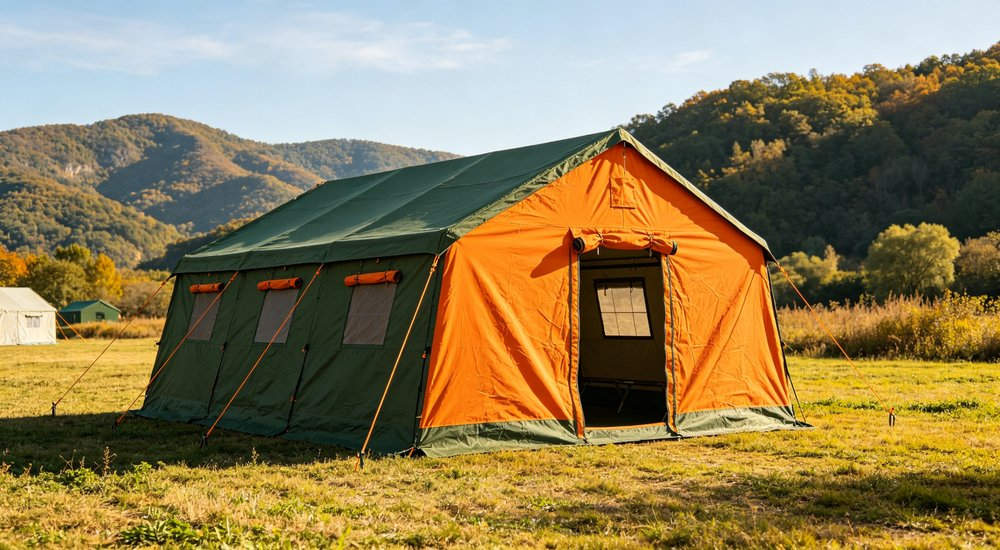
Many suppliers advertise "22mm steel poles" but use 0.8mm wall thickness to cut costs. A 22mm/0.8mm pole is actually weaker than a 19mm/1.2mm pole because wall thickness determines bending strength more than diameter. Always verify wall thickness with calipers during sample inspection.
A 5000mm waterproof fabric is meaningless if the stitching is not heat-sealed. Needle holes are the #1 cause of tent leaks. Test samples by spraying water for 15 minutes and checking inside for drips.
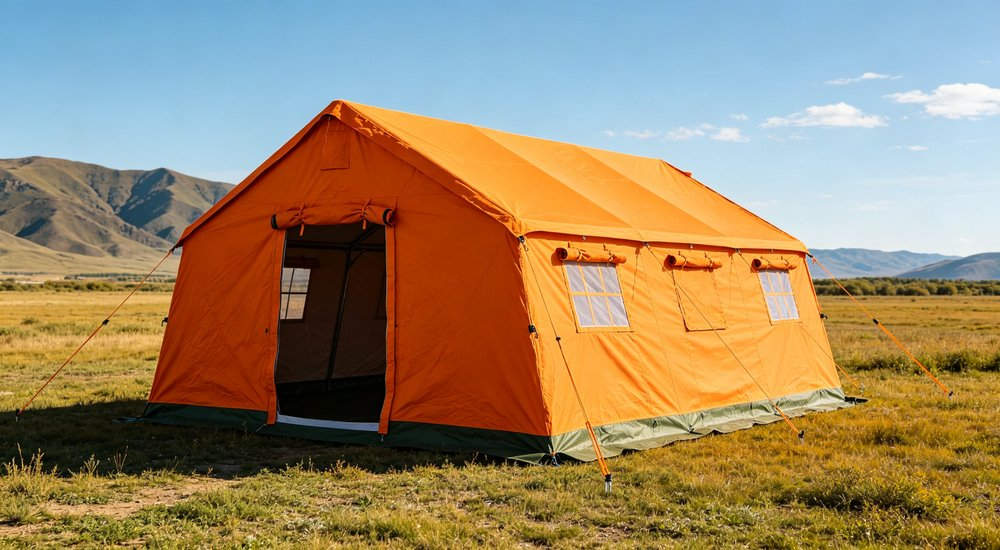
Electroplated galvanizing (10-20g/m² zinc) looks shiny and new but rusts through within 1-2 years of outdoor exposure. Hot-dip galvanizing (60-100g/m²) lasts 7-10 years. Specify "hot-dip galvanized steel" in your purchase order — never just "galvanized."
Buying heavy-duty canvas tents with 25mm frames for a 3-month emergency response is wasteful. The extra cost and weight provide no benefit for short deployment. Match specifications to deployment duration — standard 600D polyester is sufficient for under 6 months.
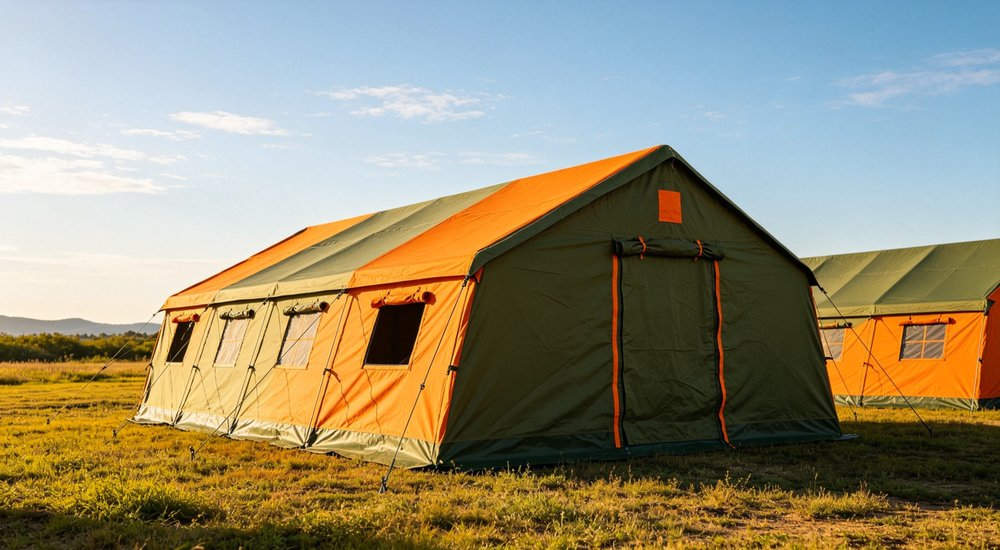
Choosing a 60 km/h wind-rated tent for an exposed coastal or mountain location is dangerous. Tents collapse in strong winds, potentially injuring occupants. Research historical maximum wind speeds for your deployment location and add a 20% safety margin.
A well-sealed, waterproof tent without adequate ventilation will suffer severe condensation — dripping water, mold growth, and respiratory problems. Require minimum 10% floor area ventilation (15-20% for tropical climates), with ridge and eave vents.
Expired certificates, self-issued certificates, or certificates from unknown laboratories are worthless. Always verify certificates are: (1) current (within 1 year), (2) from recognized labs (SGS, TUV, Intertek), and (3) cover the exact product you are buying.
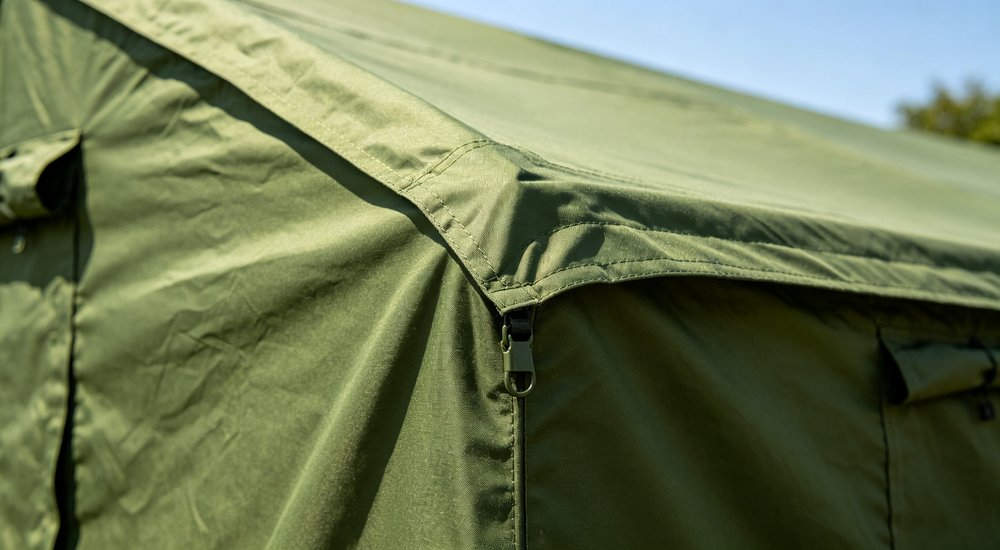
Poor packaging leads to damaged frames and wet fabric during shipping. Missing labels cause distribution chaos in emergency situations. Require 5-ply corrugated cartons, separate frame/fabric packaging, and multilingual labels with product code, quantity, and handling instructions.
The biggest mistake of all is placing a bulk order based on specification sheets alone.
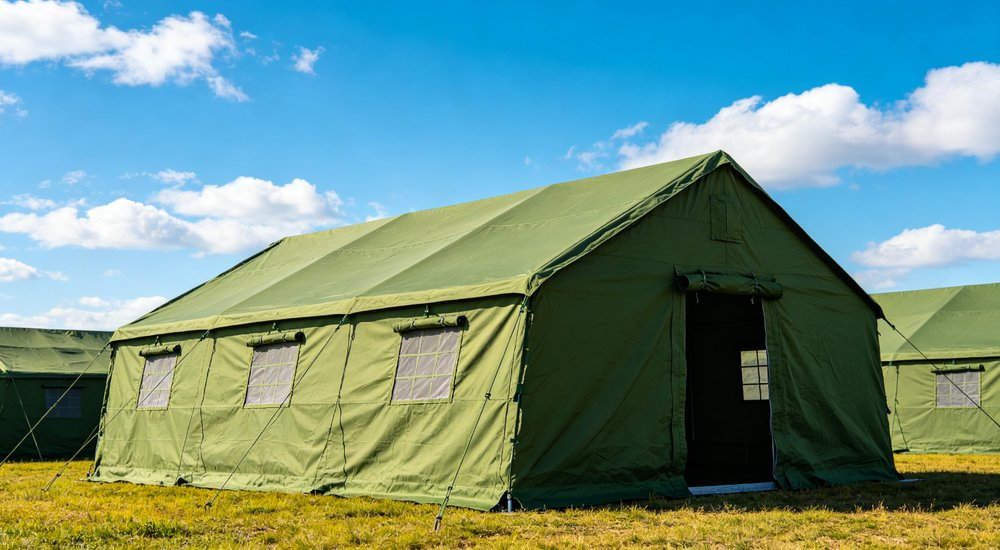
Always order 1-2 physical samples first. Verify every specification with tools — calipers for pole thickness, fabric scale for GSM, water spray test for waterproofing. Test in real conditions if possible. Only then place the bulk order.
A $300 sample can save a $30,000 mistake.
"We initially ordered the cheapest tents available for a refugee camp operation. Within 18 months, 40% had rusted frames and leaking seams.
After switching to 22mm/1.2mm hot-dip galvanized frames with 300g/m² PVC fabric, our replacement rate dropped to under 5% over three years. The upfront cost was 60% higher, but the total cost was less than half."

— Procurement Manager, International NGO (East Africa, 2023)
"The biggest lesson learned: always verify wall thickness with calipers. One supplier quoted 22mm poles at a great price, but sample inspection revealed 0.8mm wall thickness instead of the promised 1.2mm. Those poles would have bent in the first strong wind. We now include wall thickness verification in every purchase order."
— Logistics Officer, Disaster Response Agency (Southeast Asia, 2024)
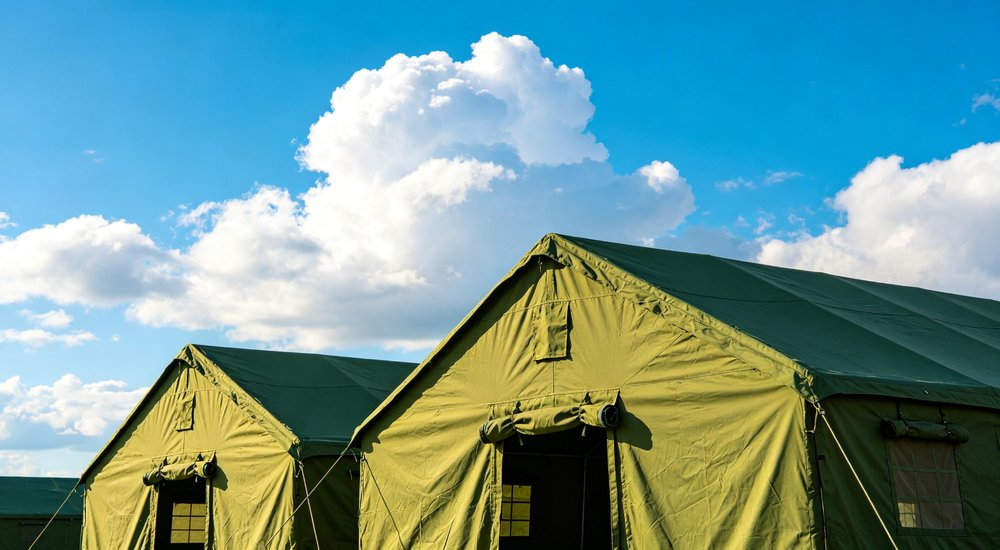
The standard frame diameter is 19mm for 12m² tents, 22mm for 20m² tents, and 25mm for heavy-duty canvas tents. Wall thickness should be 1.0-1.5mm with hot-dip galvanization. Always verify both diameter and wall thickness — a 22mm pole with 0.8mm wall is weaker than a 19mm pole with 1.2mm wall.
600D means the polyester fibers weigh 600 grams per 9,000 meters (denier measurement). 600D polyester with PVC coating typically weighs 280-320g/m² and is the standard for emergency relief tents. Always ask for g/m² weight in addition to denier, as coating thickness varies significantly between manufacturers.
A minimum of 2000mm is recommended for general emergency use. For tropical or monsoon regions, specify 3000-5000mm. More important than the rating is seam sealing — even 5000mm fabric leaks through needle holes if seams are not heat-sealed or taped.
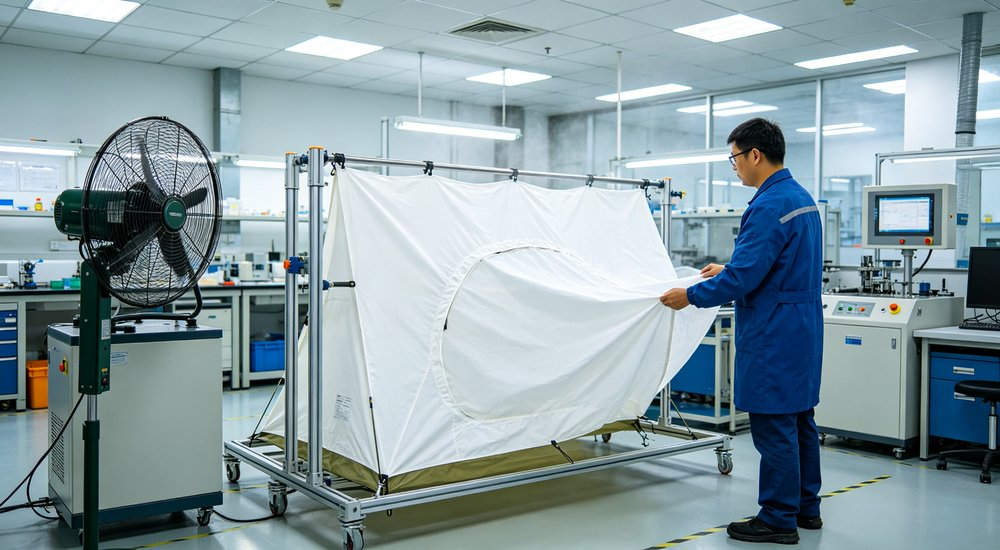
Wind resistance is measured in km/h and determined by structural engineering calculations and physical testing. Standard tents withstand 60-80 km/h, reinforced tents 80-100 km/h, and heavy-duty tents 100-120 km/h. Choose based on your deployment location's maximum expected wind speed, with a safety margin of 20%.
For international use, CPAI-84 (US) and EN 13501-1 (EU) are the most widely recognized. For canvas tents, BS 5867 Part 2 (UK) is also common. Always request current test reports from accredited laboratories. Flame retardant treatment should survive at least 5 wash cycles to be considered durable.
PU (polyurethane) coating is lighter, more flexible, and cheaper but offers lower waterproofing (2000-3000mm) and UV resistance (300-500 hours). PVC (polyvinyl chloride) coating is heavier and stiffer but provides superior waterproofing (3000-5000mm) and UV resistance (500-1000 hours). Double-sided PVC is the premium choice for long-term emergency deployments.
Use a precision fabric scale to measure grams per square meter (g/m²). Cut a 10×10cm sample, weigh it, and multiply by 100. Verify coating uniformity by holding fabric up to light — thin spots indicate uneven coating. Check tensile and tear strength with a fabric testing machine, or request laboratory test reports.
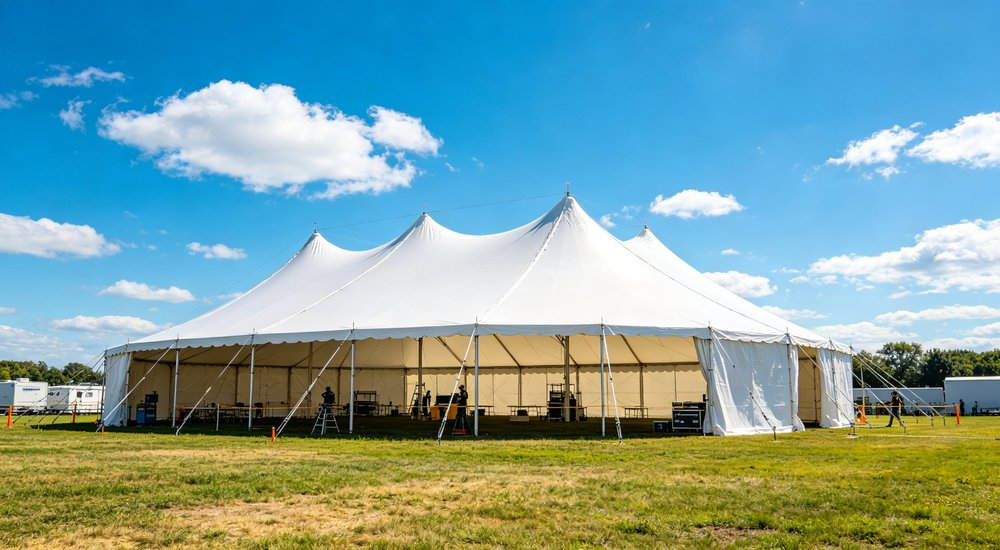
Minimum certifications: ISO 9001 (quality management), CE (EU conformity), EN 13782 (temporary structures), CPAI-84 or EN 13501 (flame retardant), and ISO 811 (waterproofing). For UN/NGO procurement, additional supplier qualification through UNGM or IAPSO may be required. Always verify certificate validity.
A 12m² standard tent weighs 46-54kg total (frame + fabric). A 20m² tent weighs 70-82kg. A 40ft high cube container holds approximately 420-500 standard 12m² tents or 250-310 large 20m² tents. Heavier canvas tents reduce container capacity by 30-40%, significantly increasing per-unit shipping cost.
Budget PE tents: 1-2 years. Standard 600D polyester: 3-5 years. Premium double-sided PVC: 5-7 years. Heavy-duty cotton canvas: 7-10 years. Lifespan varies based on climate (UV exposure), maintenance, and proper storage. Hot-dip galvanized frames last 7-10 years, while electroplated frames rust in 1-2 years.
Integrated PVC flooring (500g/m²) is highly recommended for emergency tents. It prevents ground moisture, insects, and dust from entering, and improves hygiene. For family shelters, integrated flooring is standard. For communal tents where heavy equipment is moved in and out, a separate ground sheet may be more practical for replacement.
Minimum ventilation area should be 10% of floor area (15-20% for tropical climates). Essential components: ridge vent (hot air exhaust), eave vents (cross-flow intake), adjustable windows with mosquito netting, and an air gap between outer fabric and inner liner. Proper ventilation reduces condensation by 70% compared to sealed tents.
Start with frame (diameter, wall thickness, galvanization), then fabric (material, weight, coating, waterproof, UV, flame retardant), then structural (wind, snow), then features (doors, windows, floor, ventilation), then dimensions and weight. Every parameter should have a measurable value — vague terms like "high quality" are meaningless. Compare all parameters across suppliers before deciding.
Standard tents handle 10-15 kg/m² (light snow). Reinforced tents: 15-20 kg/m² (moderate snow). Heavy-duty: 20-30 kg/m² (heavy snow, winter-long deployment). For regions with regular heavy snowfall, specify 25mm/1.5mm frames with reinforced ridge poles and sloped roof design (30+ degree pitch) to facilitate snow shedding.
Yes. Most manufacturers offer customization: pole diameter and thickness, fabric weight and coating, waterproof rating, flame retardant standard, door/window size and placement, insulation type, flooring, color, and logo printing.
Minimum order quantities for customization typically start at 100-500 units depending on the modification. Custom specifications require new sample approval before bulk production.
Hot-dip galvanization dips poles in molten zinc (450°C), creating a thick 60-100g/m² zinc layer that lasts 7-10 years outdoors. Electroplating applies a thin 10-20g/m² zinc layer electrically, lasting only 1-2 years before rust appears. Always specify hot-dip galvanized steel in purchase orders — electroplated poles will rust through within two seasons of emergency deployment.
Denier (D) measures the thickness of individual fibers (grams per 9,000 meters), while GSM (g/m²) measures the total weight of finished fabric including coatings. GSM is more reliable for comparing tent fabrics because it includes coating weight — two 600D fabrics can weigh 280 g/m² or 350 g/m² depending on coating thickness. Always ask for GSM when comparing supplier quotes.
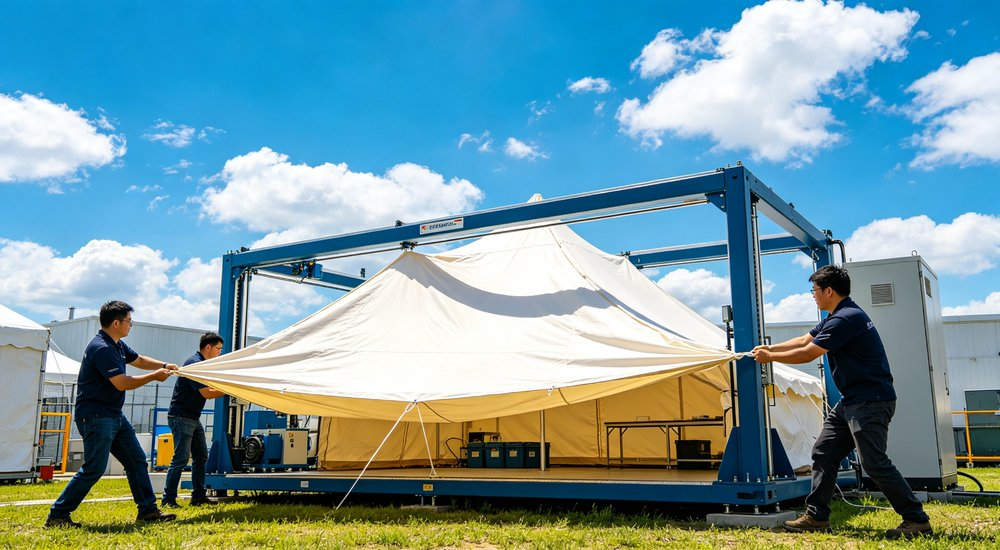
Follow this verification protocol:
(1) Order 1-2 physical samples before bulk purchase.
(2) Use calipers to measure pole diameter and wall thickness.
(3) Use a fabric scale to verify g/m² weight.
(4) Spray water for 15 minutes to test waterproofing and seam sealing.
(5) Request current laboratory test reports (SGS/TUV/Intertek) for flame retardancy and UV resistance.
(6) Check galvanizing method with a magnet and visual inspection — hot-dip has a crystalline spangle pattern, electroplated is smooth and shiny. Never place a bulk order based solely on paper specifications.
1. Frame is everything: Verify both pole diameter AND wall thickness. 22mm/1.2mm hot-dip galvanized is the sweet spot for most emergency use.
2. Fabric weight in g/m², not just denier: 600D = 280-320g/m² with PVC coating. Always ask for g/m² and coating type (PU vs PVC).
3. Waterproof rating + seam sealing: 2000mm minimum, 3000-5000mm for heavy rain. Seams must be heat-sealed — fabric rating alone is meaningless.
4. Wind resistance by location: 80 km/h for general use, 100+ km/h for exposed areas. Proper anchoring is as important as frame strength.
5. Flame retardant with current certificates: CPAI-84 or EN 13501, with test reports less than 1 year old from accredited labs.
6. UV resistance for lifespan: UPF 50+ with 500-1000 hours rating. UV-stabilized PVC coating extends life 2-3x.
7. Calculate total cost of ownership: Cheaper tent = shorter lifespan = higher annual cost. The $400 tent lasting 7 years costs less per year than the $200 tent lasting 2 years.
8. Always verify with samples: Never trust specification sheets alone. Order physical samples and verify every parameter with tools.
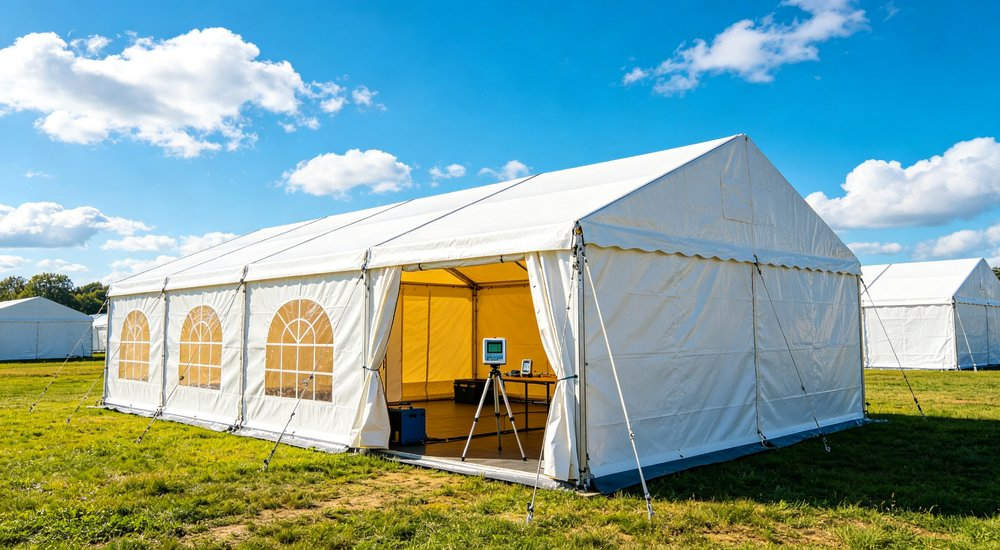
Need help determining the right frame tent specifications for your deployment? Our team reviews every frame tent specification detail with you. We provide free specification consulting based on your climate, population, deployment duration, and budget. As a professional frame tent manufacturer and wholesale tent supplier for global buyers with 20+ years of experience, we can produce tents to your exact specifications.
What you get with a specification proposal:
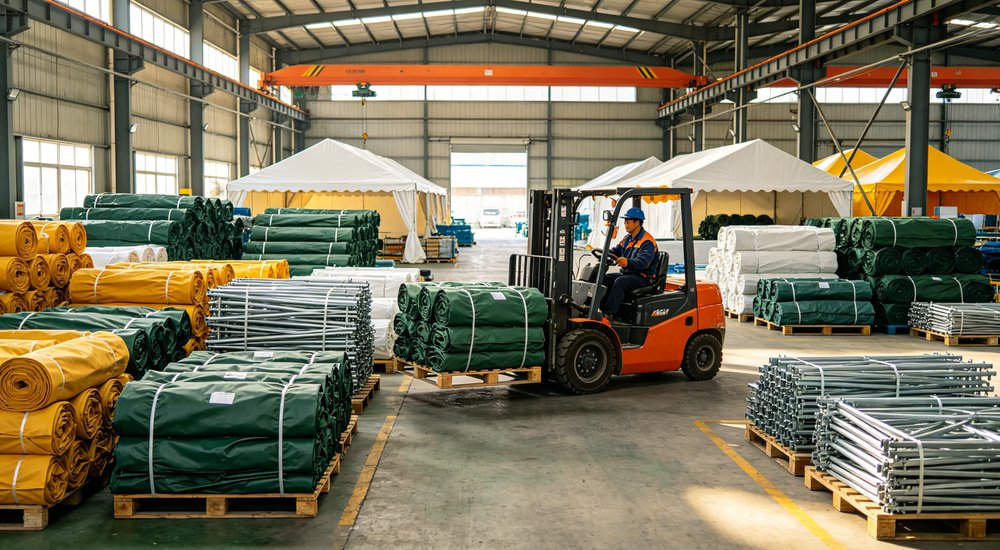
Next steps:
1) Share your deployment location, climate, and population;
2) Receive a recommended specification sheet within 24 hours;
3) Approve specifications and order samples;
4) Verify samples and place bulk order.
We also provide complete procurement guidance, from supplier evaluation through shipping logistics, and frame vs inflatable tent comparison to help you choose the right shelter type.
Get expert specification guidance and custom pricing.
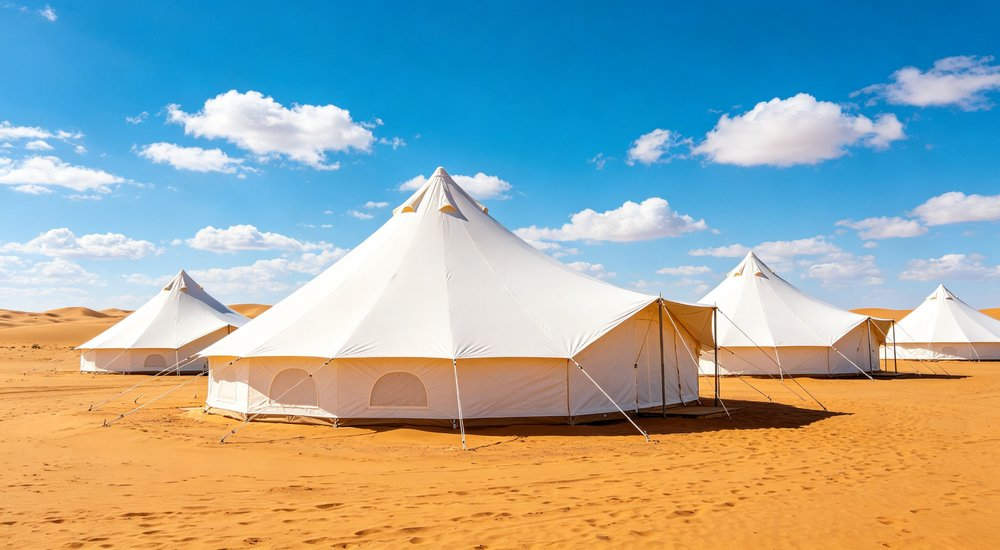
Understanding frame tent specifications transforms you from an uncertain buyer into a confident purchaser. Mastering frame tent technical specifications means never overpaying for under-spec tents or accepting supplier claims without verification. Every frame tent specification parameter — pole diameter, wall thickness, fabric weight, waterproof rating, wind resistance, flame retardant standards — directly impacts safety, durability, and total cost of ownership.
The most common mistake in frame tent specifications is choosing by price alone. A $150 economy tent with 19mm/0.8mm electroplated frame and 200g/m² PE fabric may look identical to a $300 standard tent with 22mm/1.2mm hot-dip galvanized frame and 300g/m² PVC-coated polyester. But the economy tent rusts, leaks, and degrades within 1-2 years, while the standard tent delivers 3-5 years of reliable service.
Use this guide as your frame tent specifications checklist. Evaluate every supplier against these parameters.
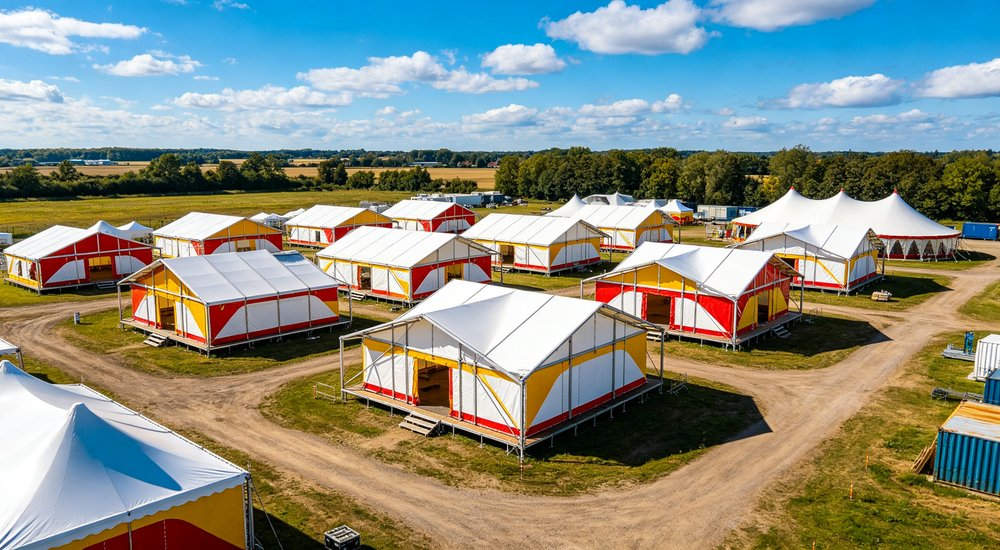
Verify with physical samples and laboratory test reports. Calculate total cost of ownership over your expected deployment period. When you do, you will find that the "more expensive" tent is almost always the better value — and more importantly, the safer choice for the people who will live and work in it.
With 20+ years of frame tent manufacturing experience, deployments in 40+ countries, and full certification compliance, we are ready to help you specify and produce the right tent for your mission. Contact us today for a free specification consultation.


Last updated: September 2026 | Reading time: 20 minutes
Additional specifications cover emergency storage tent capacity and relief logistics center layout requirements for supply chain operations.
Дружественные ссылки :
авторское право © Custom Disaster - Relief Bedding: Tents, Sleeping Bags, Blankets Все права защищены
профессиональная команда для обслуживания !