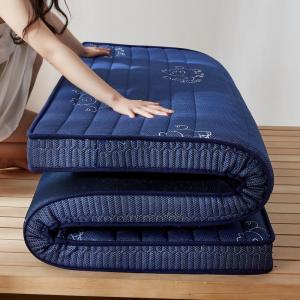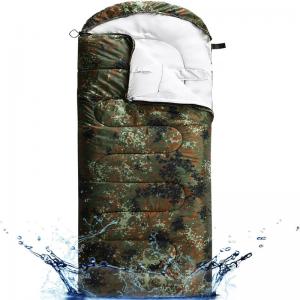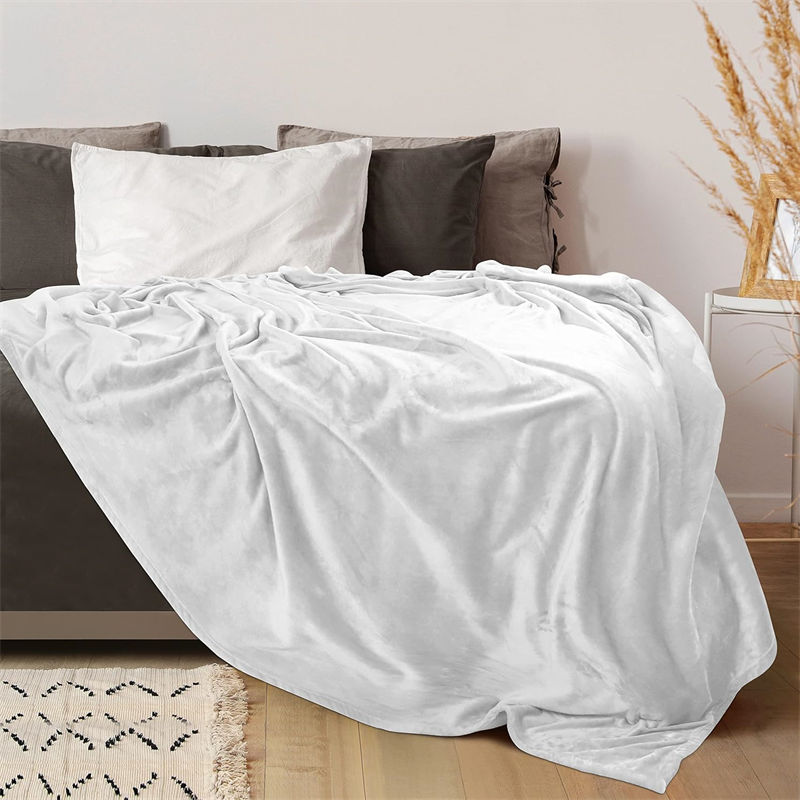
Section 1: Product Positioning and Three-Category Scenario Fit
1.1 Core Definition: The Essential Difference Between Emergency Relief Blankets and Standard Blankets
The blanket specifically designed for disaster relief used at an actual post-disaster resettlement site operates on a fundamentally different design logic from ordinary household blankets. Household blankets prioritise tactile comfort, aesthetics, and everyday experience. The primary mission of an emergency relief blanket is to provide stable thermal protection to large numbers of disaster survivors in bulk, under extreme conditions, through repeated distribution cycles, in damp and congested resettlement environments — while remaining fully compliant with relevant safety standards.
Professional emergency relief blankets are characterised by several key attributes:
Suitable for batch stockpiling of hundreds or thousands of units with standardised distribution;
Materials and construction must comply with emergency safety standards including flame retardancy, moisture resistance, and mould resistance;
Packaging must be compatible with long-term warehousing and high-frequency turnover;
Must be accompanied by traceable quality inspection reports and project acceptance documentation.
1.2 Three Primary Application Scenarios
Post-disaster temporary resettlement: Following earthquakes, floods, mudslides, and similar disasters, tent camps, sports hall shelters, and community evacuation centres represent the most concentrated use environment for post-disaster resettlement blankets. These scenarios require blankets that can be distributed rapidly, stacked efficiently, disinfected and reused, and remain resistant to moisture and mould under densely occupied, humid conditions.
Government emergency stockpiling and rotation: Emergency management departments at all levels typically include government stockpile blankets in routine procurement and rotation management plans as strategic reserve supplies. This category of demand places comparatively high requirements on standardised packaging, batch traceability, and inventory record management. Public tender documents typically carry clearly defined technical specifications and acceptance criteria.
NGO and international aid distribution: International aid organisations and NGO aid blanket projects frequently need to complete large-scale procurement, customs clearance, transportation, and on-site distribution within tight timeframes. For these projects, supplier foreign trade experience, multilingual documentation support, and rapid response capability are equally important as product quality.
1.3 Core Concerns by Procurement Role
Standing in different positions, buyers looking at the same consignment of emergency relief blankets are often thinking about entirely different things:
Government emergency and disaster prevention departments: Primary concerns are tender compliance, completeness of quality inspection reports, conformity with national or industry emergency supply standards, and the operational convenience of bulk stockpiling and rotation management;
NGO and international aid organisations: Core concerns are cost-effectiveness, delivery lead times, customs clearance support, and the actual in-country adaptability of supplies at the destination — including local regulations and climate requirements;
Foreign trade distributors: Subject to compliance requirements, primary concerns are price structure, sustained supply capacity, neutral packaging options, and the breadth of one-stop complementary product offerings.
Section 2: What Is the Fundamental Difference Between Emergency Relief Blankets and Ordinary Blankets?
This is one of the most frequently raised questions in the early stages of a procurement project — and one of the most underestimated steps.
The manufacturing logic behind ordinary household blankets is straightforward: make the consumer feel comfortable and pleasantly soft in a normal indoor environment. In the crowded, humid, and operationally demanding environment of a post-disaster resettlement site, the weaknesses of consumer products surface quickly. They absorb moisture and develop mould easily, carry higher fire risks, come in packaging unsuitable for stacked storage, and cannot provide the complete quality inspection documentation required for project acceptance.
A genuine emergency relief blanket manufacturer begins the design process by asking: can these blankets — after being distributed, used, collected, and disinfected — continue to function at an acceptable level through the next cycle of use? Can they remain stored in a closed warehouse for several years without widespread mould? Can they produce complete flame retardancy, harmful substance, and material conformity test reports when project acceptance requires them?
In a crowded, damp resettlement site, blankets made from materials that resist mould poorly or cannot be effectively disinfected quickly become inventory that is visible but unusable. Consumer products cannot answer these questions. Blankets specifically designed for disaster relief can.
Section 3: Material Classifications and Workmanship Standards
3.1 Common Materials and Their Emergency Suitability
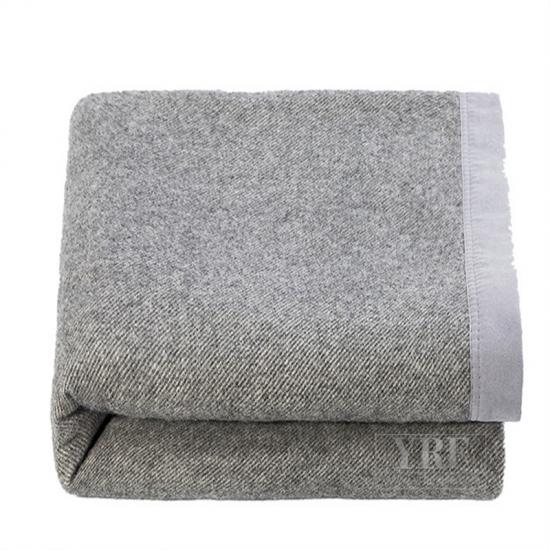
Polyester disaster relief blanketsare among the most common choices in bulk procurement of emergency relief blankets. Polyester fabrics offer relatively good moisture resistance, high tensile strength, strong resistance to mould, and remain comparatively stable during long-term warehousing. Individual unit weight is relatively light, making large-volume transportation and rapid distribution more manageable. Some polyester blankets can also undergo flame-retardant treatment, meeting the fire-prevention requirements of post-disaster resettlement sites — making polyester the most frequently selected base material in flame-retardant emergency relief blanket procurement.
Polyester-cotton blended disaster relief blankets offer superior hand feel and breathability compared with pure polyester, while providing a degree of moisture-wicking capacity — suited to humid or extended-duration resettlement scenarios. Compared with pure polyester, blended fabrics exhibit slightly different performance in terms of mould resistance and water repellency, and typically require more controlled storage conditions.
Fleece emergency blankets are soft, offer strong thermal insulation, and are commonly used for mild-to-light-cold climates in short-to-medium-term resettlement. They are also a frequent choice for priority distribution to children, the elderly, and other groups with higher comfort requirements.
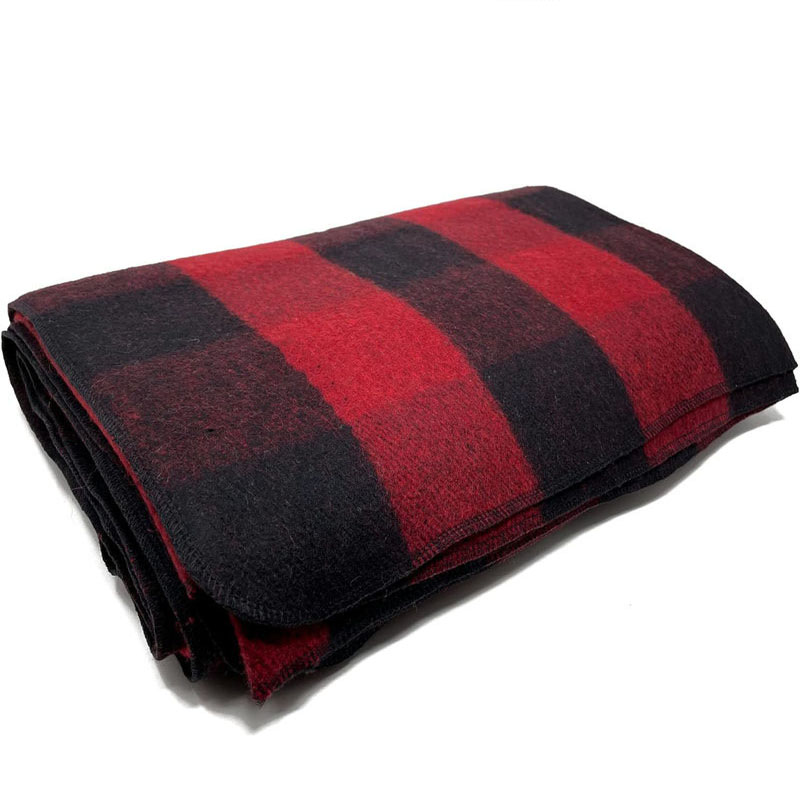
Wool-blend cold-protection blankets carry clear advantages in post-disaster thermal protection for high-altitude or high-latitude regions. The natural thermoregulatory properties of wool fibres provide comparatively stable thermal performance at lower temperatures. This material type carries a higher unit weight and higher unit cost, and is typically used as an upgraded configuration for winter or sub-arctic resettlement projects.
3.2 Key Workmanship Points
Beyond the material itself, workmanship details directly determine whether a product will pass the acceptance standards for emergency relief blankets:
Stitching: Seam density and edge reinforcement treatment are key indicators of whether the product can withstand repeated folding and unpackaging cycles;
Flame-retardant treatment: Whether the product has passed relevant flame-retardancy tests is a commonly mandatory acceptance requirement in government tenders and NGO projects;
Waterproof and anti-soiling coating: Surface treatment workmanship affects the practical service life of blankets in humid environments;
Harmful substance testing: For blankets distributed to children, the elderly, the injured, and other vulnerable groups, it is especially important to confirm conformity with textile safety standards for harmful substances — such as those covered by OEKO-TEX certification;
Batch consistency: Whether the deviation in weight, dimensions, and colour between individual units within a large order is controlled within a reasonable tolerance range directly affects the first-pass acceptance rate upon arrival.
Section 4: Specification Categories and Scenario Matching
4.1 Classification by Target User Group and Scenario
Emergency relief blanket specifications should correspond closely with the intended user groups and deployment scenarios:
Standard adult size: Suited to the majority of adult disaster survivors; the highest-volume specification distributed at post-disaster resettlement sites; emphasises stackability, ease of folding, and moderate unit weight;
Large or extended size: Suited to taller or larger-framed adults, or scenarios where a single blanket may serve multiple purposes — for example, doubling as a basic ground mat;
Children's and special-population dedicated size: For resettlement scenarios involving children, the elderly, and the injured, it is advisable to plan a separately sourced lightweight, soft option, with priority given to fabrics that have passed non-irritant skin-contact material tests, and with weight and dimensions adjusted accordingly;
Heavy-duty cold-protection size: Suited to high-latitude, high-altitude, or winter resettlement scenarios where higher thermal performance is required.
4.2 Colour and Identification Management
At large-scale resettlement operations, colour standardisation serves more than aesthetic purposes. Consistent colouring across batches facilitates zonal management and rapid distribution counting. Using distinguishable colours for special-population dedicated sizes allows priority distribution to be executed quickly in chaotic environments. It is advisable to specify colour requirements clearly in procurement specification documents and to require suppliers to provide colour fastness test reports.
Section 6: Pre-Disaster / During-Disaster / Post-Disaster Demand Differences (Timeline Perspective)
The core logic of the pre-disaster stockpiling phase is to select supplies with long storage lives, stable quality, and batch management compatibility within limited budgets and warehouse space. Key considerations during this phase include the compressed volume of folded blankets — which affects warehouse utilisation — the moisture and mould resistance of packaging, which affects actual usable years, and rotation cycle planning, which affects total ownership cost. Procurement parties should establish rotation trigger conditions and inspection mechanisms with suppliers at this stage and document them in the contract, not as a verbal agreement.
During the emergency response phase, the focus shifts from storage efficiency to distribution efficiency. Resettlement personnel must move supplies from warehouses to multiple sites and complete standardised distribution within extremely short timeframes. Operational details such as individual unit packaging weight, time to open and deploy, and ease of disinfection become more prominent concerns. This phase also frequently involves rapid supplementary procurement — which tests the supplier's ability to process urgent orders rather than simply the quality of their samples. The earlier a written emergency order response plan is reached with a backup supplier, the smaller the actual losses will be when a disaster strikes.
The demand cycle of the post-disaster recovery and extended resettlement phase is frequently underestimated. In some large-scale disaster events, affected populations may live in temporary resettlement sites for several months. This phase places higher demands on blanket washing and maintenance, disinfection and reuse procedures, and sustained replenishment capability. This phase is also an important checkpoint for assessing the condition of supplies already in use — which specifications performed well, which batches encountered problems — and these observations should be documented in writing and used directly to optimise the next procurement cycle.
Section 7: Adaptability Differences Across Countries and Climate Zones
In cross-border aid or multi-destination stockpiling projects, "one set of specifications for the whole world" is frequently a costly miscalculation.
Cold regions — high latitudes and high altitudes: Extremely low night-time temperatures place the highest demands on blanket thermal performance. Priority consideration should be given to heavy-duty sizes or wool-blend cold-protection blankets, and sample confirmation should include dedicated assessment of material extensibility at low temperatures to avoid cold-temperature embrittlement issues.
Tropical and subtropical regions: In high-temperature, high-humidity environments, the primary challenge for blankets is not thermal insulation but mould and bacterial resistance. Breathability, moisture-wicking capacity, and anti-mould treatment workmanship are the priority indicators. Where storage conditions are poor, attention must also be paid to material ageing and mould risk during long-term warehousing.
Coastal and island regions: Salt spray, high humidity, and seasonally extreme rainfall place dual demands on blanket packaging materials and moisture protection treatment. Salt-spray corrosion resistance should also be considered in the procurement assessment.
For cross-border aid projects covering multiple climate zones simultaneously, it is advisable to group destinations by climate during the plan design phase and develop differentiated specification combinations, rather than applying a single configuration across all destinations.
Section 8: Usage Experience and Safety Considerations
8.1 Key Usage Experience Points
Even in emergency scenarios, the usage experience of disaster survivors should not be entirely disregarded. Material irritation to skin, the ease of unfolding the blanket for use, and compatibility with resettlement site bedding or ground mats all affect actual satisfaction levels and the degree to which supplies are fully utilised.
8.2 Safety Considerations
Open flame and high temperatures: Any blanket that has not undergone professional flame-retardant treatment should be kept away from open flames and heating stoves. It is advisable to specify flame-retardancy performance requirements clearly in procurement documentation and to require suppliers to provide corresponding test reports — rather than relying on product labels;
Enclosed environment odour: Residual odours from materials or dyeing processes amplify rapidly inside enclosed tents, posing health risks to infants, the elderly, and individuals sensitive to chemical substances. A dedicated odour assessment is recommended during the sample confirmation phase;
Child safety: For sizes distributed to children, particular attention should be paid to the absence of harmful substances, safe edge and corner treatment, and whether coverage dimensions are appropriately adapted;
Mould prevention in humid environments: In extended resettlement scenarios, blankets that are folded and stored before fully drying after use will develop mould significantly faster. Project operational manuals should include clear guidance on usage and temporary storage requirements.
8.3 Special Population Configuration Recommendations
Children, the elderly, pregnant women, and the injured are the groups most in need of priority protection at resettlement sites. It is advisable to plan separately sourced supplies for these groups in supply configuration plans, with softer materials, lighter weights, adapted dimensions, and fabrics that have passed non-irritant skin-contact material tests. Such configurations typically constitute a small proportion of the total volume, but their impact on overall humanitarian aid quality far exceeds what those numbers alone suggest.
Section 9: Simple Configuration Estimation Example
Using a regional earthquake disaster temporary resettlement site requiring coverage for approximately 1,000 disaster survivors as an example, the following provides one estimation framework for reference. Actual plans should be adjusted based on specific circumstances.
Using one emergency relief blanket per person as the baseline, the theoretical requirement is 1,000 units;
Accounting for transportation losses, dynamic changes in resettlement site population, and supplementary needs for special populations, it is advisable to maintain a buffer stock above the theoretical quantity. The specific proportion should be agreed upon jointly with the supplier based on transport distance and project duration, rather than applying a fixed ratio;
For destinations with significant climate variation, it may be appropriate to split the total volume between standard and heavy-duty thermal sizes. The ratio of each should be determined based on actual temperatures and resettlement duration at the destination;
If the project duration exceeds one month, it is advisable to agree on a replenishment mechanism, minimum reorder quantity, and response lead time with the supplier at the same time as the initial procurement.
In actual projects, procurement quantities and specification combinations should be jointly confirmed by the procurement party and the supplier based on climate conditions, supply usage cycle, destination warehousing capacity, and budget framework, and clearly documented in the contract.
Section 10: Storage and Rotation Management
10.1 Storage Environment Requirements
Long-term stockpile blankets carry stricter warehousing requirements than everyday consumer goods, centred on moisture prevention, compression prevention, and contamination prevention:
Temperature and humidity control: Prolonged exposure to high-humidity environments should be avoided. Basic moisture-control facilities are recommended — such as pallet stacking, moisture barrier mats, and ventilation;
Light and heat shielding: Long-term direct sunlight accelerates fabric ageing. Supplies should be kept away from direct light sources and high-temperature areas;
Stack height: Follow the maximum stacking layers specified on packaging. Excessive stacking causes bottom-layer packaging deformation, affecting accessibility and storage condition;
Segregated storage: Avoid storing alongside sharp metal objects, corrosive chemicals, or highly volatile substances to prevent packaging damage and material contamination.
10.2 Rotation and Inspection Mechanism
Moisture-resistant emergency blankets stored under favourable conditions can maintain a reasonably long usable lifespan, but this does not mean they can be left without inspection indefinitely. It is advisable to establish a periodic inspection mechanism, focusing on packaging integrity, fabric appearance, whether odour is abnormal, and where necessary, conducting simple sample re-testing on key performance indicators such as water repellency and flame retardancy. Inspection cycles and rotation trigger conditions should be agreed upon jointly with the supplier in the contract or technical documentation, tied to actual storage conditions and material characteristics, rather than applying undifferentiated fixed timeframes across all products.
Section 11: Core Points for Bulk Procurement and Supply Chain Models
11.1 Procurement Scale and Demand Tiers
The first step in emergency supply blanket wholesale projects is to differentiate between demand tiers of varying scale:
Small-volume procurement: Typically used for trial runs or gap-filling; unit prices are relatively higher; emphasis is on delivery flexibility;
Mid-scale project procurement: Suitable for formal tendering or inquiry processes; emphasis is on quality consistency and delivery certainty;
Large-scale stockpiling or aid projects: Require advance negotiation with suppliers on production capacity and scheduling; call for phased delivery and quality sampling inspection mechanisms.
11.2 Planning Quantities by Emergency Level
It is advisable to plan regular stockpile quantities — baseline inventory for responding to small-scale or localised disasters — and major-disaster emergency surge quantities for rapid scale-up separately. Written agreement with suppliers on surge trigger conditions and urgent order response plans should be reached in advance, rather than negotiating these arrangements on an ad-hoc basis after a disaster has actually occurred.
11.3 Selecting a Supply Chain Model
Sourcing directly from the originating factory: Shorter communication chain and greater price transparency; suited to procurement parties with some degree of foreign trade experience. Requires the procurement party to handle customs documentation and quality tracking independently.
Selecting a comprehensive supplier with one-stop complementary capability: Allows blankets and complementary emergency supplies to be procured simultaneously; reduces the number of suppliers to manage; documentation and logistics are handled by the supplier. Suited to procurement parties with tight project timelines, a wide range of required supply types, and limited cross-border customs experience.
In UN disaster relief blanket and large-scale NGO aid blanket procurement, consolidating multiple supply categories with a single China emergency relief blanket supplier capable of one-stop provision often significantly reduces overall coordination costs and the number of customs clearance batches.
Section 12: What Are the Core Advantages of Sourcing Emergency Relief Blankets from China?
This is one of the most substantive questions raised by overseas B2B buyers during supplier comparison.
(1)Complete industrial chain and cluster effect: The competitiveness of China emergency relief blanket suppliers derives in large part from a complete upstream and downstream industrial chain — from fabric weaving, accessory processing, and filling material production to finished product sewing, inspection, packaging, and export — all with mature local supply networks in place. When demand surges, factories can rapidly coordinate raw materials and production capacity within the region, reducing supply interruption risk.
(2)Large-scale production capacity and urgent order response capability: Major emergency relief blanket manufacturers have the production capacity to handle orders ranging from a few thousand units to large-scale volumes. Collaboration among multiple factories within the industrial cluster can further expand peak capacity, providing a distinctive advantage during periods of surge demand following disasters.
(3)Mature foreign trade service infrastructure: China disaster relief blanket manufacturers have accumulated extensive practical experience in international trade documentation, customs clearance requirements, and multilingual communication. They can assist in preparing full sets of trade documents including invoices, packing lists, certificates of origin, and inspection certificates, and can adjust document content based on destination country requirements.
(4)One-stop complementary capability: Scaled Chinese suppliers can typically provide emergency tents, moisture-proof sleeping mats, folding beds, rescue clothing, first-aid kits, and other complementary supplies simultaneously, supporting the integrated procurement of multiple supply categories within a single contract framework and reducing customs clearance batches and coordination costs. This is particularly valuable for humanitarian aid blanket projects and comprehensive aid package programmes.
(5)Comprehensive cost-effectiveness: Within the bounds of meeting project technical standards and compliance requirements, Chinese manufacturing offers a relatively high level of comprehensive cost-effectiveness. Price should not be the sole decision criterion — quality consistency, delivery reliability, and complementary service capability all constitute important components of total procurement cost.
Section 13: Other Emergency Supplies Closely Associated with Emergency Relief Blankets
In real post-disaster resettlement projects, emergency relief blankets almost never appear in isolation. The composition of complementary supply combinations varies by project type and scenario. The following illustrates several typical configuration approaches for reference — readers are encouraged to select flexibly based on actual project needs rather than applying them mechanically:
Large open resettlement camp scenario: Family emergency tent + moisture-proof sleeping mat + emergency relief blanket + emergency lighting equipment + basic first-aid kit;
Indoor concentrated resettlement facility scenario such as a sports hall: Folding bed or basic cot + emergency relief blanket + personal hygiene kit + emergency food ration;
Remote or transport-challenged area aid scenario: Lightweight packaged emergency blanket + portable emergency bag + storage backpack + simple personal warming device;
Scenario with a large proportion of special populations including the elderly and children: Children's dedicated emergency blanket + children's first-aid supply kit + lightweight thermal outer garment + infant care supplies.
The above combinations are provided for reference only. In actual projects, customised design based on the demographic profile of affected populations, resettlement environment, and supply budget is strongly recommended over the direct application of standard checklists. Prioritising a source factory with one-stop multi-category supply capability can significantly reduce the coordination costs of multi-line procurement and the quality consistency risks associated with managing multiple suppliers.
Section 14: YRF Comprehensive Capability and Supply Solution
Among Chinese emergency supply manufacturers, YRF Emergency Relief Supplies has accumulated extensive project cooperation experience in government stockpiling, NGO aid, and cross-border aid projects through its focused capability in providing disaster relief blankets and related resettlement supplies as a one-stop supplier.
Product range and quality assurance: YRF's emergency relief blanket product line covers the major material and specification categories including polyester, polyester-cotton blend, fleece, and heavy-duty cold-weather versions. YRF holds OEKO-TEX certification for textile harmful substance safety and ISO quality management system certification, and can provide corresponding third-party inspection reports and declarations of conformity based on project requirements. Where a project carries additional specific certification requirements, YRF can assist in coordinating engagement with third-party certification bodies.
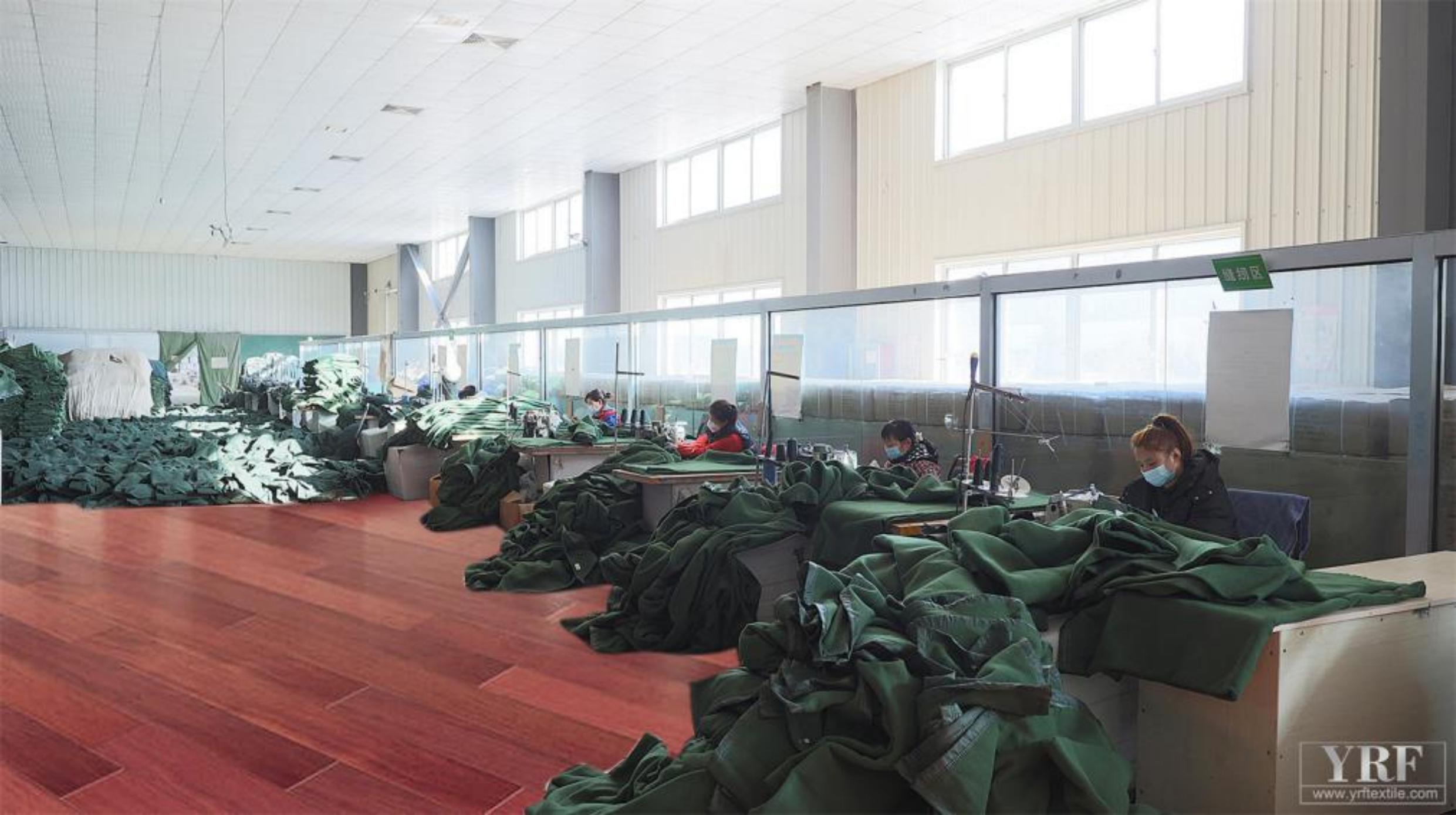
Production and delivery capability: YRF's factory covers approximately 30,000 square feet and is equipped with over 100 sets of production equipment, providing a stable production capacity base for medium and large-scale orders. With respect to urgent order scheduling, YRF can — subject to the current in-production order situation — support expedited delivery requirements for sudden disaster scenarios to a reasonable degree through priority scheduling and extended shift arrangements. Specific lead times are subject to actual project circumstances and the provisions of the contract agreed upon by both parties.
One-stop complementary service: Beyond bulk procurement of emergency relief blankets, YRF can provide emergency tents, folding beds, moisture-proof sleeping mats, rescue clothing, first-aid kits, and other complementary supplies within the same contract framework, supporting multi-category consolidated procurement. For international projects, YRF can assist in preparing complete foreign trade document sets and adjusting document content based on destination country customs requirements.
Suitable project types: YRF is particularly well suited to the following procurement needs: national or regional-level government stockpile blanket projects; large-scale flood and earthquake disaster emergency response projects; international NGO and United Nations agency UN disaster relief blanket aid distribution projects; and cross-border comprehensive aid projects where a one-stop multi-category procurement approach is the priority strategy.
For procurement parties planning medium-to-large emergency relief blanket projects and requiring one-stop complementary supply and technical specification support, project background information may be submitted via the contact form on this website. A general configuration plan example and technical specification reference template will be provided for internal discussion and benchmarking purposes only. All final terms are subject to the formal contract signed by both parties.
Section 15: Concluding Summary and Next-Step Action Recommendations
From materials and workmanship, specification categories, and pre/during/post-disaster demand differences, through climate adaptability, safe usage, storage and rotation, and bulk procurement — every decision point in the lifecycle of emergency relief blankets directly affects on-site protection outcomes and project compliance.
In practice, the most frequently overlooked and most costly categories of problems include: substituting ordinary household products for blankets specifically designed for disaster relief, leading to acceptance failure; failing to account for climate differences at destinations and applying a single specification across multiple climate zones; neglecting the dedicated configuration requirements of children, the elderly, and other special populations; and focusing on unit price alone while failing to incorporate storage lifespan, integrated complementary supply, and acceptance compliance into the cost assessment.
Next-step action recommendations — for procurement parties in the project initiation phase, the following steps are a practical starting point:
(1)Prepare a one-page project requirements summary: Specify the number of affected persons or persons to be covered by stockpiles, the climate conditions of the target region, the deployment scenario — indoor, tent, or open-air — whether special populations are included, the expected usage duration, and a rough budget framework;
(2)Draft a technical specification outline: Referencing the materials and workmanship and specification categories sections of this article, list at least three to five key technical indicators to form a preliminary technical specification clause suitable for inclusion in inquiry documents;
(3)Request samples from candidate suppliers and verify key indicators: Conduct a preliminary assessment against core indicators including flame-retardancy standards, harmful substance test reports, weight and dimensions, and odour. It is not advisable to conclude specification confirmation based solely on product catalogue photographs;
(4)Confirm customs clearance and logistics arrangements in advance: For cross-border projects, confirm with candidate China emergency relief blanket suppliers the documentation checklist required by the destination country's customs authority, assess clearance risks and logistics lead times, and incorporate relevant items into contract terms;
(5)Lock in key parameters and non-conforming product handling mechanisms in the contract: Clearly define specifications, inspection sampling ratios, non-conforming product disposal methods, delivery milestones, and default liability clauses to provide a traceable basis for subsequent acceptance and audit.
For further information on supplier screening and price evaluation, readers may consult How to Choose High-Quality Relief Blankets | 2026 Professional Procurement Guide for Government Emergency Reserves on this site. For information on leading Chinese manufacturers, readers may refer to Top 10 Emergency Relief Blanket Manufacturers in China | 2026 Official Purchase Recommendation.
These two articles together with the present guide form a complete content pathway — this article establishes the cognitive framework; the buying guide provides actionable selection methods; the manufacturer ranking helps narrow down candidate suppliers.
Main keyword: emergency relief sleeping bag
Long-tail keywords: emergency relief sleeping bag manufacturer, emergency relief sleeping bag supplier, bulk emergency relief sleeping bag, bulk emergency thermal sleeping bag, bulk emergency relief thermal sleeping bag supply, moisture-proof mold-resistant relief sleeping bag, high-insulation-rating relief sleeping bag, government-level emergency supply stockpiling, large-volume sleeping bag production capacity, one-stop emergency supply capability, bulk sleeping bag procurement total cost, emergency sleeping bag bulk procurement, long-term supplier for government emergency relief sleeping bags, disaster relief thermal supply, large-volume disaster relief sleeping bag procurement, OEKO-TEX certification, amfori BSCI certification
авторское право © Custom Disaster - Relief Bedding: Tents, Sleeping Bags, Blankets Все права защищены
профессиональная команда для обслуживания !