In our 20 years supplying emergency flashlights to government reserves, NGO programs and field teams, we have learned that sourcing starts with two main types: hand-crank flashlights that work without reliable power, and high-output field flashlights for patrol, inspection and search. Hand-crank models are chosen by energy recovery, mechanical durability and long-term reserve readiness. High-output models are chosen by beam distance, thermal management, battery type and build quality. Each type needs its own test method, accessory list, transport documents and packing standard.
This guide covers handheld emergency flashlights only. For wearable lighting, see our headlamp and portable light collection. For area lighting, see our camp lanterns and floodlights. Browse all handheld models on our emergency flashlight page.
Define the emergency-flashlight boundary
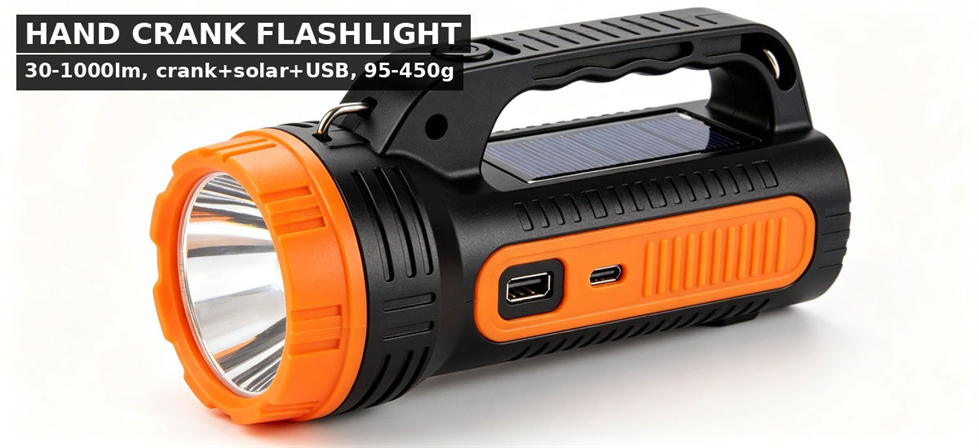
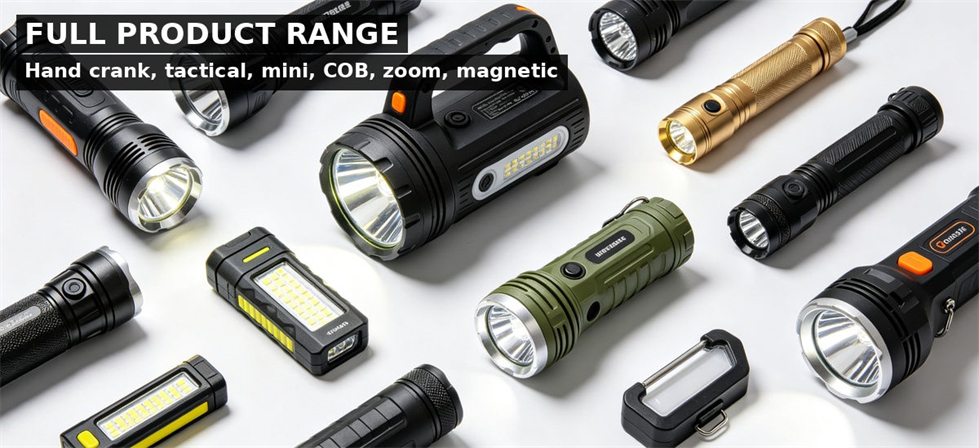
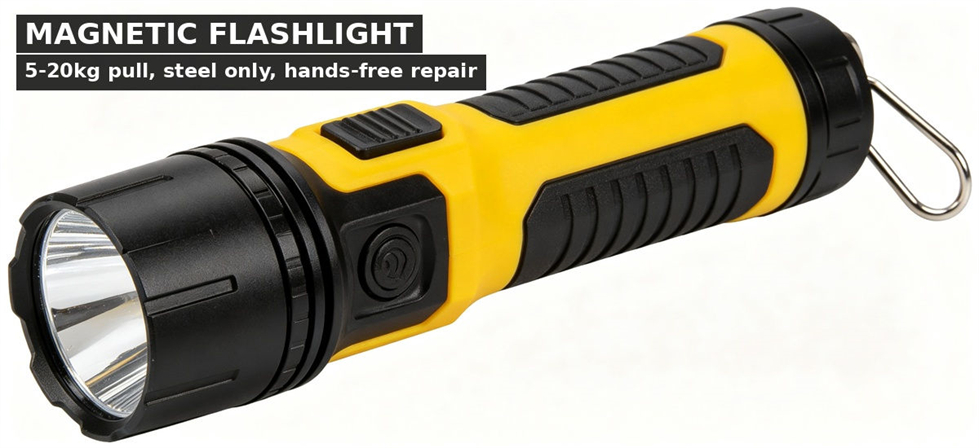
This page covers hand-crank emergency flashlights and high-output field flashlights. Headlamps are wearable lighting, while relief lanterns and floodlights cover diffused or area tasks. Window-break tips, side work lights, battery displays, zoom focus, magnetic bases and explosion protection are separate options within the high-output direction, not standard features on every model.
Buying boundary: Crank charging, solar panel, USB output, window-break tip, zoom focus, magnetic base and explosion protection must be selected separately. A category name does not mean one model includes all of them. Always confirm which features your project needs before ordering.
Turn a hand-crank flashlight into an acceptably testable specification
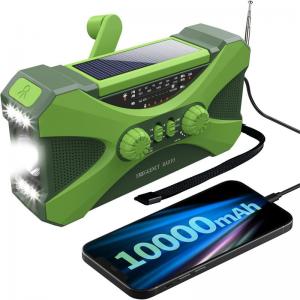
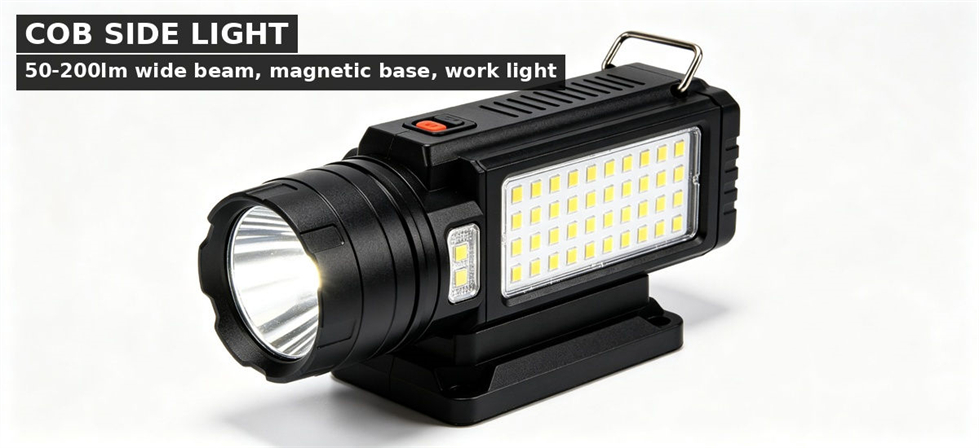
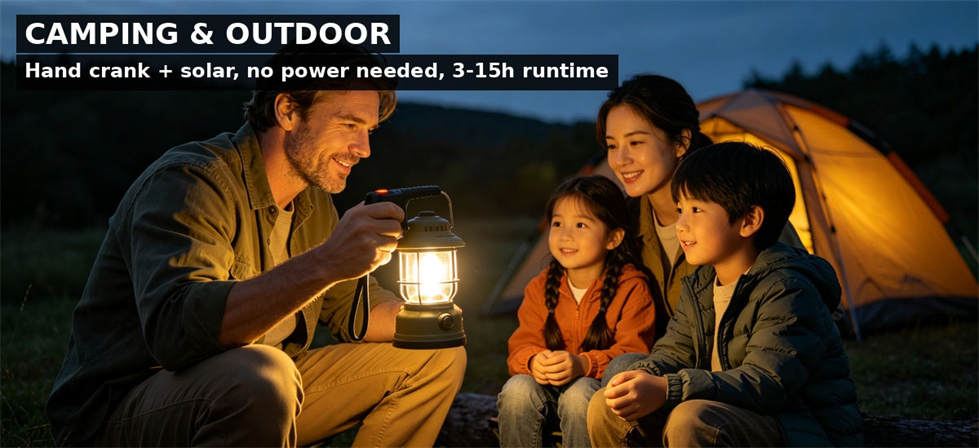
Hand-crank structures include elongated bodies with hanging holes, folding crank handles, compact colored bodies, side COB panels and small solar surfaces. Generator, gears, storage battery and interfaces vary by structure. State whether the unit serves a personal kit, vehicle reserve or long-term warehouse stock, then decide whether main beam, side light, warning flash, hanging hook and external USB output are needed.
Define crank-rate range, input time and starting charge, then record recovered watt-hours, lighting time by mode, crank torque, abnormal noise, gear slip and cycle count. Test the solar panel separately for input power and charging condition. Test USB output for voltage, current, protocol, reverse current and overcharge/over-discharge protection.
The sample package should return generator and drive structure, battery chemistry and watt-hours, LED beam and modes, input/output interfaces, attachment point, size and weight, warnings, inner box and carton. Long-term reserve programs also need storage charge level, periodic sampling schedule, recharge cycle and abnormal-battery isolation procedure.
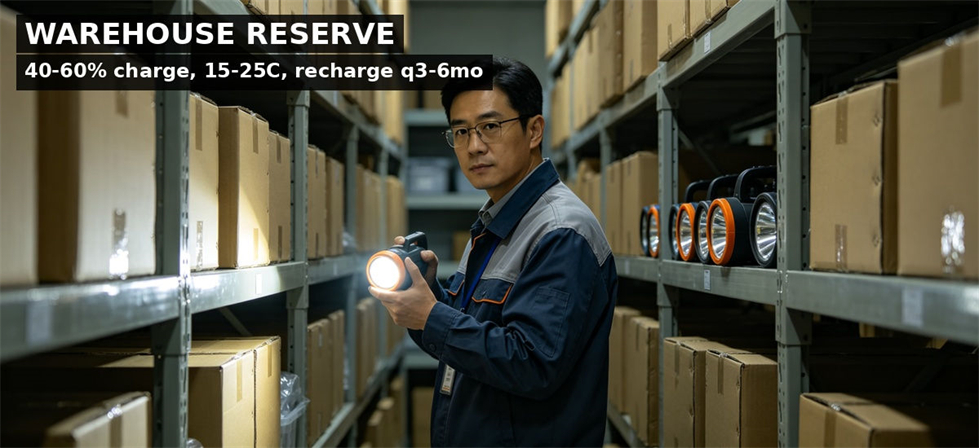
Reserve storage tip: Store hand-crank flashlights at 40–60% charge in a cool dry place (15–25°C / 59–77°F). Recharge every 3–6 months if using lithium batteries. A crank handle alone does not prove readiness after years in storage — always test a sample from stock before deployment.
Not sure which hand-crank configuration fits your reserve program? Send us your deployment scenario and storage conditions — we help match crank efficiency, battery capacity and charging options to your actual needs.View hand-crank flashlight models →
Compare high-output field flashlights correctly
Directions include display tube lights, side work lights, red/black tube lights, compact lights, general small flashlights, bar inspection lights and mini versions. Separate handheld tube, side-work, inspection-bar and special explosion-protected structures before comparing optics and batteries. Treating many different small flashlights as one SKU breaks the link between modes, cells, chargers and packing.
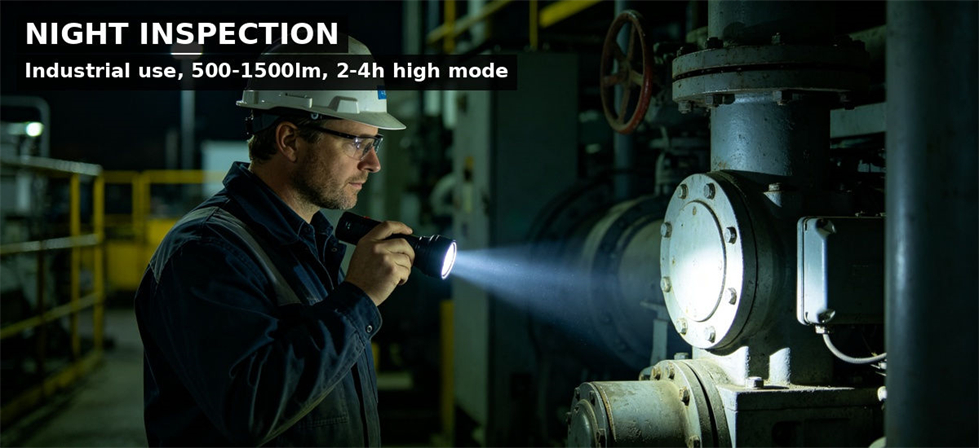
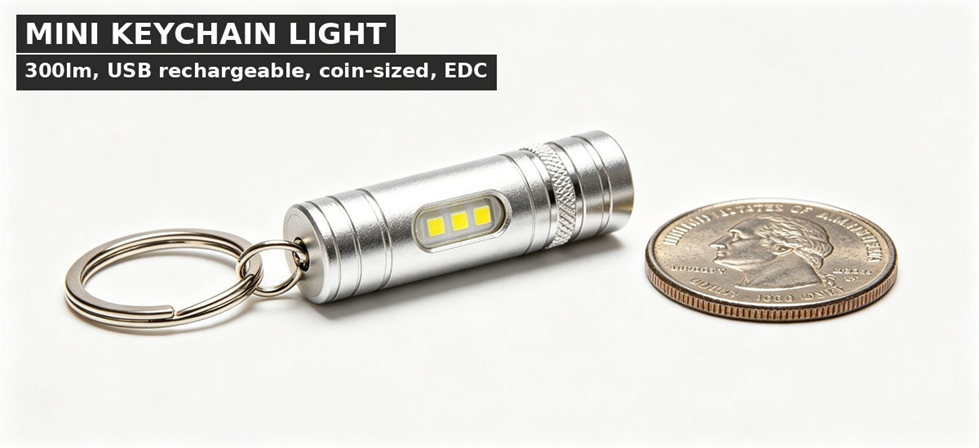
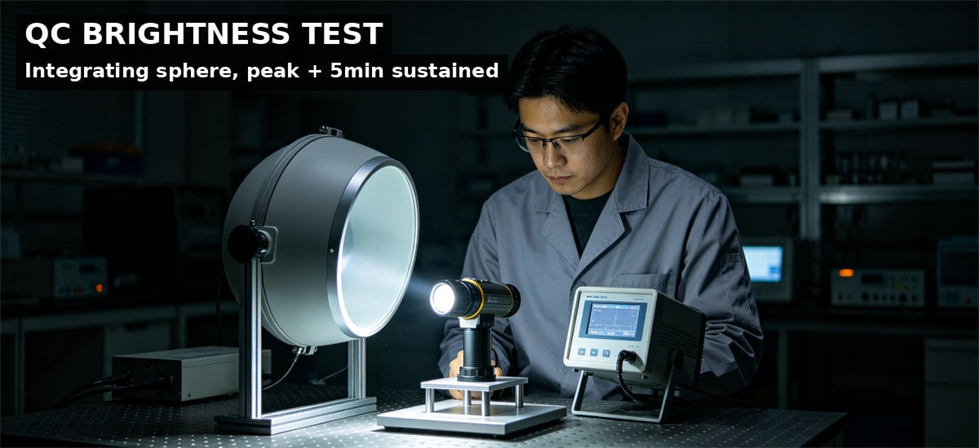
Industry note on lumen claims: Lumen labeling varies widely between suppliers. Some list extremely high numbers on a P50 chip that actually produces 1000–3000 lumens. Always request an integrating sphere test report (LM-79 or equivalent) and verify sustained output after 5 minutes of use, not just peak turn-on brightness.
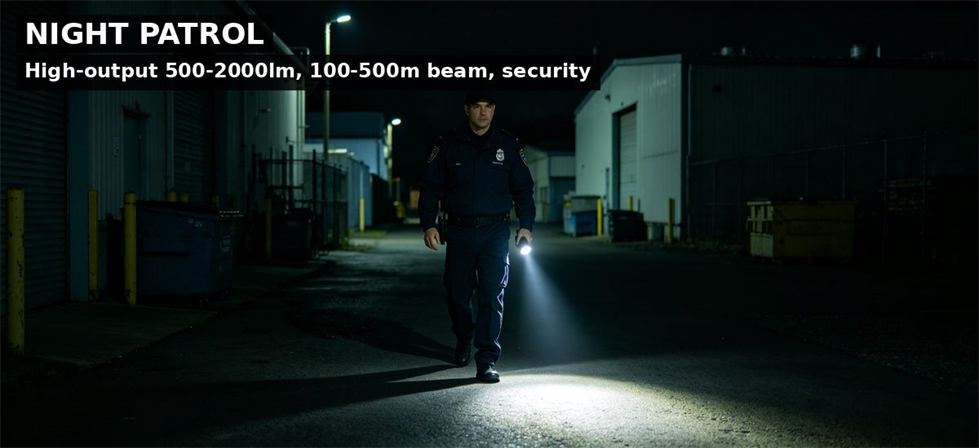
One common matched configuration uses an approximately 195mm body, 36mm diameter and 245g net weight, with a rechargeable lithium battery, Type-C charging, battery display, mechanical spot-to-flood focus and 5 modes: high, medium, low, strobe and SOS. Its packing record is an 18×5×5cm box and 50 units per 42×30×25cm carton. These values do not apply to magnetic, mini, explosion-protected or bar inspection versions.
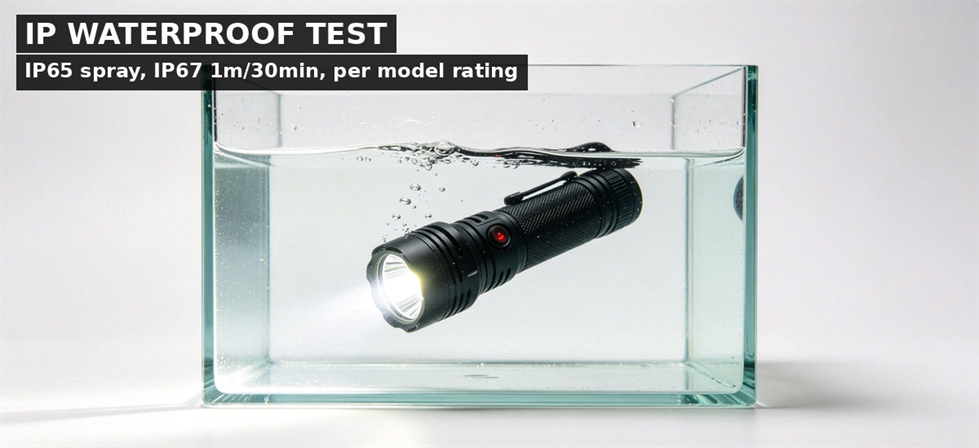
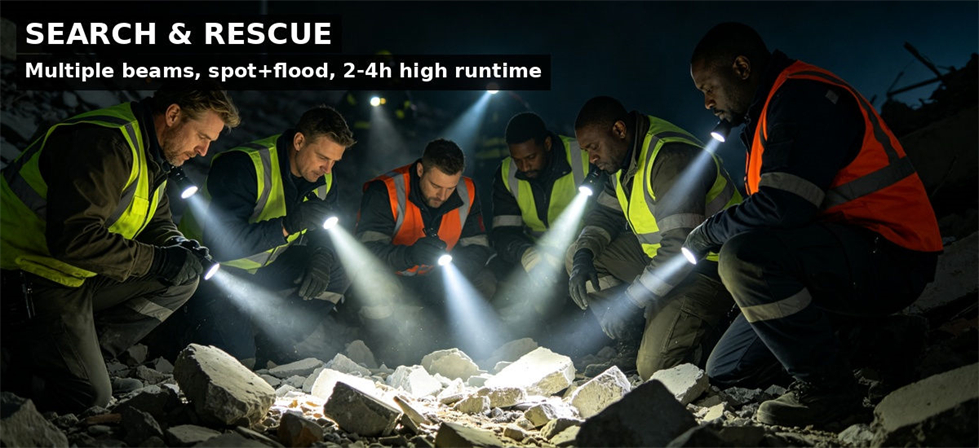
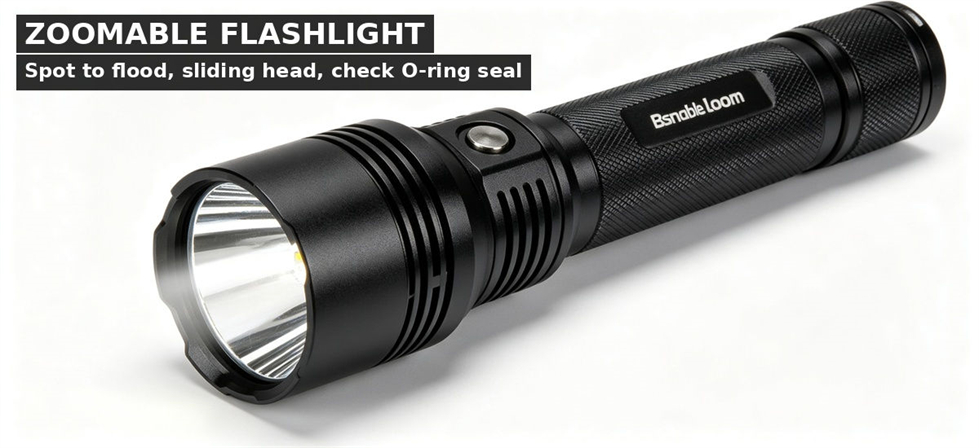
Compare lumen output, peak beam intensity, beam profile and distance under one test method instead of reading a wall hotspot or a "500m" label. High mode may decline as temperature rises — record initial output, output at 3-minute and 5-minute marks, body temperature, step-down time, runtime by mode and low-battery indication. For zoom models, inspect spot, flood, adjustment mechanism and position retention separately.
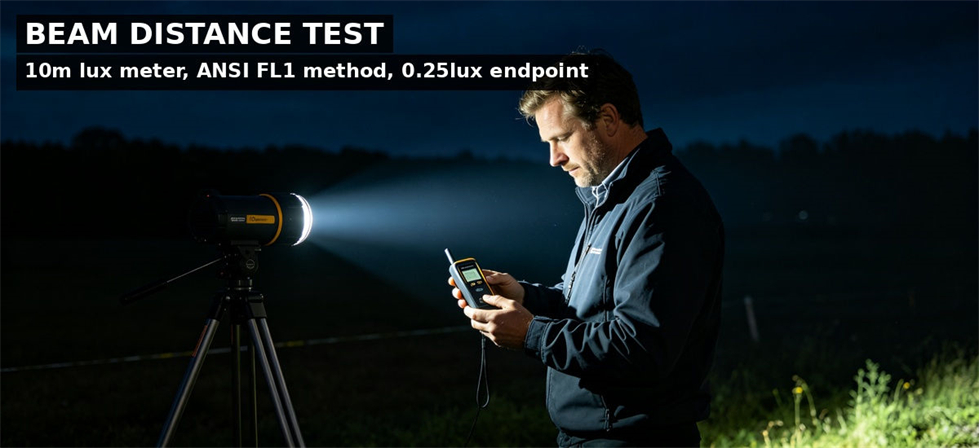
For patrol, search and security teams, the high-output direction is where most bulk orders go. Send us your beam distance requirement, duty shift length and battery preference — we help match chip type, cell size and thermal performance. View high-output flashlight models →
Lock the 2 purchasing routes in one table
|
Product group |
RFQ inputs |
Mismatch risk and acceptance output |
|
Hand-crank flashlight |
Drive type, crank rate, input time, recovered Wh, battery type and capacity, light modes, USB output, cycle count, attachment point |
Energy and runtime test record, cycle life check, USB output protection test, full BOM, storage and maintenance instructions |
|
High-output flashlight |
LED chip type, lumens, peak intensity, distance test method, beam profile, thermal step-down, battery Wh, charging type, material, IP/drop rating |
Optical and runtime test curves, temperature record, signed sample, accessory list, packing specification |
|
Special options |
Window-break tip, side light, battery display, zoom, magnetic base, explosion protection, wrist strap, holster, spare seals |
Option-specific tests, use boundary notes, separate certification documents, itemized quotation |
Factor
Hand-crank flashlight
High-output flashlight
Best for
Long-term reserve, personal emergency kits, vehicle backup, areas with unreliable power
Patrol, search and rescue, security, professional maintenance, outdoor work
Brightness
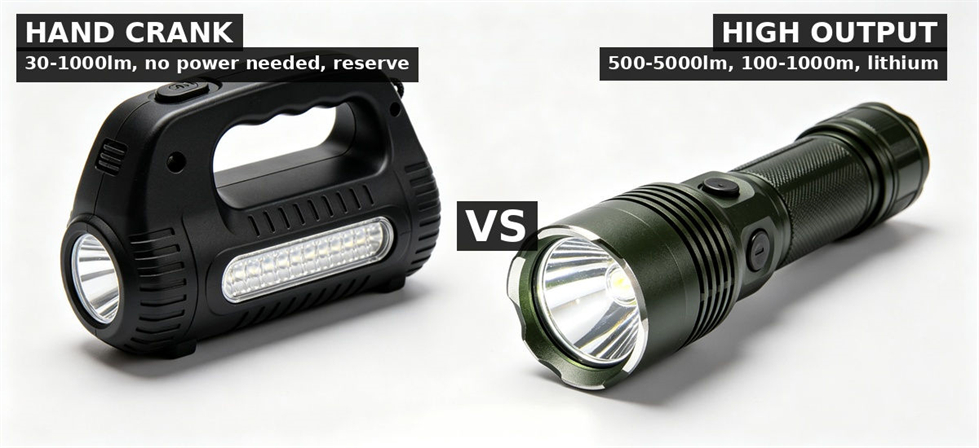
30–1000 lumens (most 100–300)
500–5000 lumens
Beam distance
20–100m
100–1000m
Power source
Crank + solar + USB + built-in battery
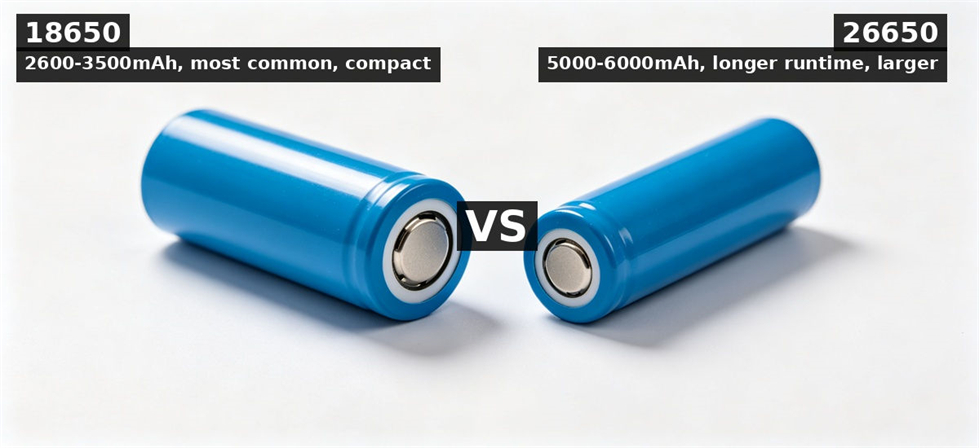
Rechargeable lithium (18650/21700/26650)
Runtime (low mode)
3–15 hours
8–20 hours
Weight
95–450g
90–350g
Maintenance
Recharge every 3–6 months in storage
Recharge before use, replace battery every 2–3 years
Key advantage
Never needs external power; ready after years in storage
High brightness and long beam for professional field use
Build the sample-test matrix and repeat-order baseline
Separate crank and high-output samples in the test matrix. For crank models, record energy input, lighting output, mechanical cycles, interface protection and reserve checks. For high-output models, record lumens, peak intensity, distance method, beam profile, thermal step-down, runtime by mode and low-battery indication. Size, weight, grip, switch order, charging, accessories, labels and packing are common checks, but results remain model-specific.
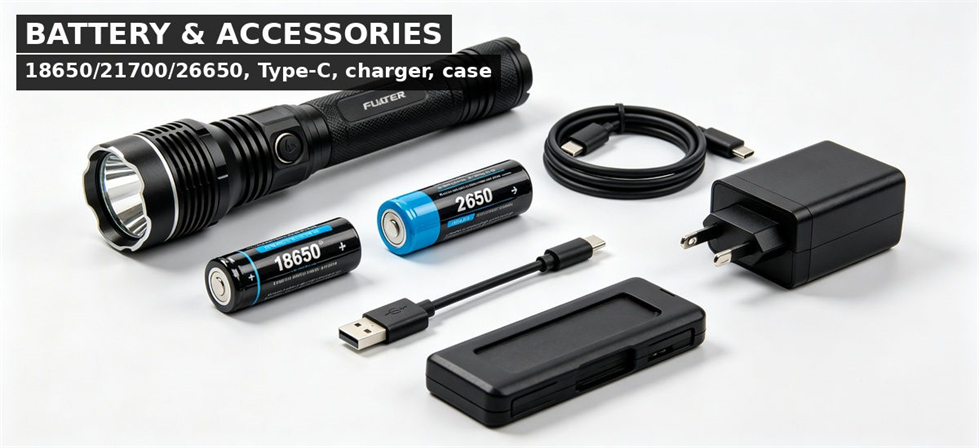

After sample testing, record body marking, battery cell or pack, charger, interface, LED and optics, switch program, seals, strap or holster, inner box and carton in the signed sample record. Bulk inspection uses the same record so a similar housing cannot hide a changed battery, mode sequence or charger. Drop, IP or explosion-protection requirements need their own sampling method and document scope.
A repeat order should cite the previous order or signed sample and state whether battery, interface, switch, beam, crank drive, carrying parts, labels or packing changed. Put any substitution into the itemized quotation and a new sample check first. This lets a warehouse replenish compatible batteries, chargers or carrying parts without repurchasing the whole set.
Control batteries, accessories, transport and receiving
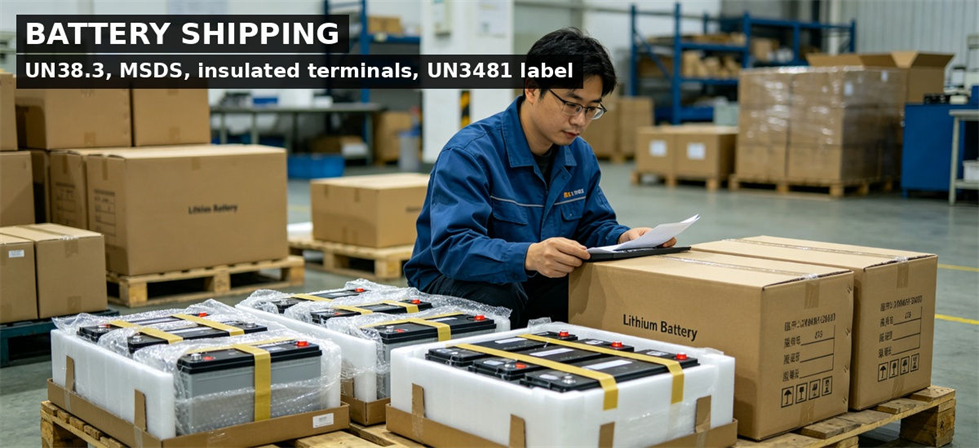
State battery chemistry, model, rated voltage, amp-hours, watt-hours, built-in or replaceable format, battery management system (BMS) and charging input. Chargers, Type-C cables, magnetic charging parts and dry-cell carriers are not interchangeable by appearance. Match lithium transport documents to the current cell, pack and flashlight model, then review UN38.3, MSDS or other requirements by destination and transport mode.
Itemize flashlight body, battery, charger or cable, wrist strap, attachment, holster, spare seals, manual, box and carton. At receiving, count by model and carton code before sampling switches, modes, charging, display, zoom, side light, window-break structure and labels.
MOQ, lead time and availability depend on model, quantity, customization, tests, accessories and packing. Standard production lead time: 7-15 working days for in-stock components, 25-40 working days for customized models or large orders. Emergency rush orders can start production within 72 hours for standard models with in-stock components (subject to factory capacity). Final lead time is confirmed in the contract.
Recommended RFQ input: Crank or high-output direction, intended use scenario, personnel/vehicle/kit quantity, target brightness and beam distance, operating period per charge, charging preference, special options needed, required test reports, destination country, packing preference and private-label scope.
We provide samples for quality evaluation before bulk orders. In-stock standard samples ship in 3–5 working days; the sample fee depends on the product type and model (we provide the specification sheet and quotation at no cost, while the physical sample itself is charged). Fully custom samples (logo, custom packaging, special battery) take 20–35 working days and are quoted based on complexity. Sample cost can be credited against a confirmed bulk order; the exact terms are confirmed in writing at order placement. Courier costs are paid by the buyer. We can also help arrange third-party test reports (CE, RoHS, FCC, UN38.3, IP rating) based on your project requirements; the buyer selects the standard and laboratory, and testing costs are covered by the buyer.
Emergency Flashlight Bulk Procurement FAQ
Can hand-crank and high-output flashlights share one specification?No. Hand-crank flashlights are designed for energy independence and long-term storage, with lower brightness (30–1000 lumens) and mechanical charging. High-output flashlights prioritize brightness (500–5000 lumens) and beam distance, using rechargeable lithium batteries. They have different test methods, accessory requirements and transport considerations. Keep them as separate line items in your order.
Fix the crank rate (typically 120rpm), starting charge level and light mode, then crank for exactly 1 minute and record how long the light stays on until it reaches the end-point brightness. Most quality models give 10–30 minutes of low-mode light per minute of cranking. Results vary by gear ratio, battery condition and temperature — always test in your actual environment.
Does a USB port prove that the flashlight can charge a phone?
No. A USB port only means the flashlight has an output connector. You must verify actual voltage (should be 5V), current (0.5A–2A), charging protocol compatibility, reverse-current protection and over-discharge protection. Test with your actual phone model before bulk ordering, as some low-current outputs cannot charge modern smartphones.
Generally no. A 0.2–0.5W solar panel on a hand-crank flashlight takes 6–8 hours of direct sunlight to fully charge the battery. It works well as a backup or trickle charger in sunny environments, but for regular use you should rely on USB charging or cranking. Test panel output at your deployment latitude and weather conditions before relying on it.
Both matter, but they measure different things. Lumens measure total light output (how bright the whole beam is). Beam distance measures how far the light reaches before it drops to 0.25 lux (moonlight level). A high-lumen flashlight with a wide flood beam may have shorter distance than a lower-lumen flashlight with a tight spot beam. Define your use case first — close inspection needs lumens, long search needs distance.
Why must high-mode thermal step-down be recorded?
LED flashlights get hot on high mode. To protect the LED and battery, most models automatically reduce brightness after 3–5 minutes — sometimes dropping significantly. If you only test peak turn-on brightness, you may buy a flashlight that cannot sustain its rated output. Record output at 1-minute, 3-minute and 5-minute marks, plus body temperature.
Inspect both spot and flood positions for beam uniformity (no dark rings or artifacts). Test the zoom mechanism for smooth operation and position retention — it should not slide on its own. Check the O-ring seal at the zoom joint, as this is the most common water-entry point. Test every mode in both spot and flood positions. Drop-test from 1m to verify the zoom head does not jam.
Can a window-break tip be used as a general breaching tool?
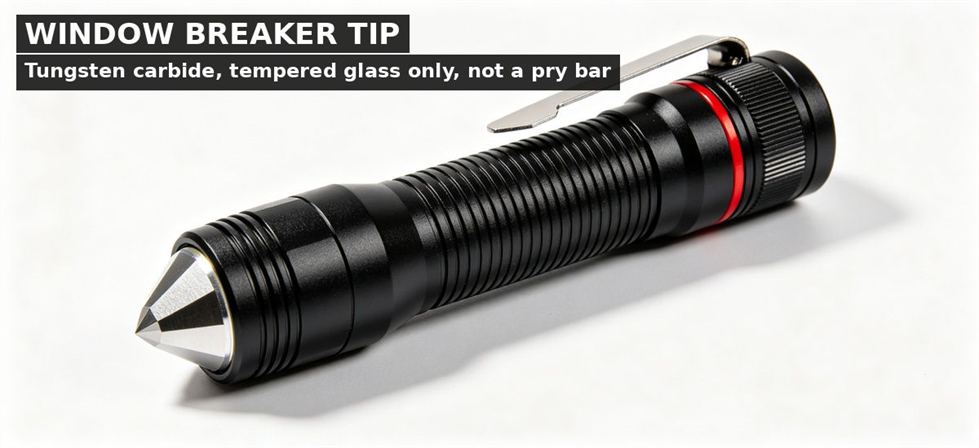
No. A tungsten carbide window-break tip is designed to shatter tempered automotive side and rear glass with a sharp tap. It is not a pry bar, crowbar or cutting tool. Using it for prying will dull or break the tip. It also cannot easily break laminated windshields, which have a plastic inner layer. Train users to strike the corner of the glass, not the center.
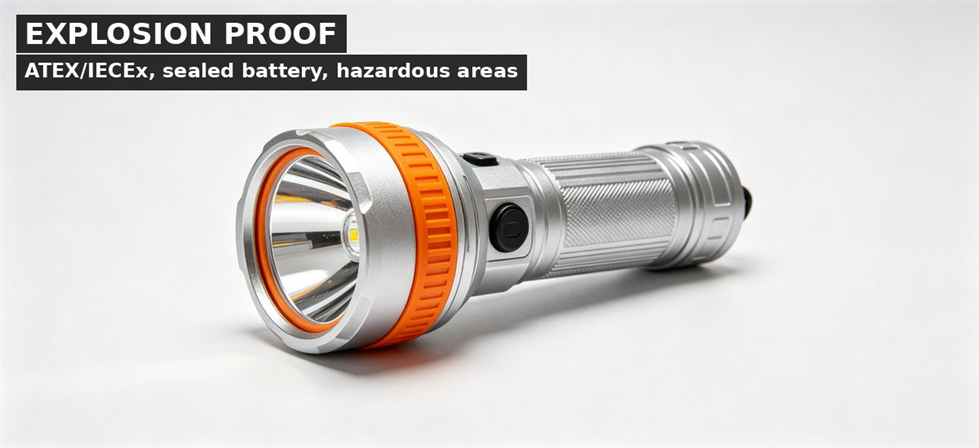
No. Explosion-protected (ATEX/IECEx) flashlights have certified sealed battery compartments, current-limiting circuits and specific marking requirements. Their test certificates, battery restrictions and charging rules are separate from standard models. Mixing them in one shipment without separate documentation can cause customs delays or safety violations in hazardous-area facilities.
What documents are needed for lithium flashlights?
For air or sea shipping, you need: UN38.3 test summary for the battery model, MSDS/SDS matching the exact battery, battery declaration letter from the supplier, and proper carton labeling (UN3481 for equipment with lithium batteries). Some countries also require CE, RoHS or FCC certification for the flashlight itself. Confirm requirements with your freight forwarder before shipping.
Use a model-specific bill of materials (BOM) and carton code system. At receiving, count flashlights, batteries, chargers, cables, wrist straps and manuals separately against the BOM. Test-charge 5% of units to verify charger compatibility. Check that battery labels match the specification — a similar-looking battery may have different capacity or chemistry. Randomly open 3 cartons from different production batches.
Only after you specify the exact model, quantity, customization (logo, color, packaging), required certifications, accessory list and destination country. MOQ and lead time vary by model and component availability. Stock changes weekly. Rush orders (72-hour production start) are possible only for standard models with in-stock components. Always confirm before issuing a PO.
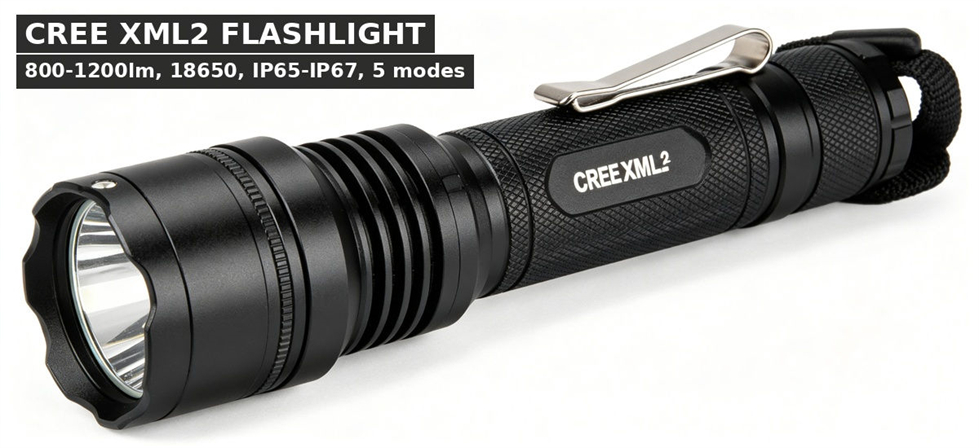
What is the difference between 18650, 21700 and 26650 batteries?
These are lithium-ion battery sizes. 18650 (18mm diameter × 65mm length) is the most common, 2600–3500mAh. 21700 (21mm × 70mm) holds 4000–5000mAh for longer runtime. 26650 (26mm × 65mm) holds 5000–6000mAh but is larger and heavier. The flashlight body must match the battery size — they are not interchangeable. For emergency reserve, 18650 is the most widely available replacement.
Store at 40–60% battery charge in a cool, dry place (15–25°C / 59–77°F). Avoid hot car interiors or direct sunlight, which degrade lithium batteries. Recharge every 3–6 months to prevent deep discharge. For hand-crank models, do a test crank once every 6 months to keep gears lubricated. Keep original packaging with desiccant if available. Replace batteries every 2–3 years even if unused.
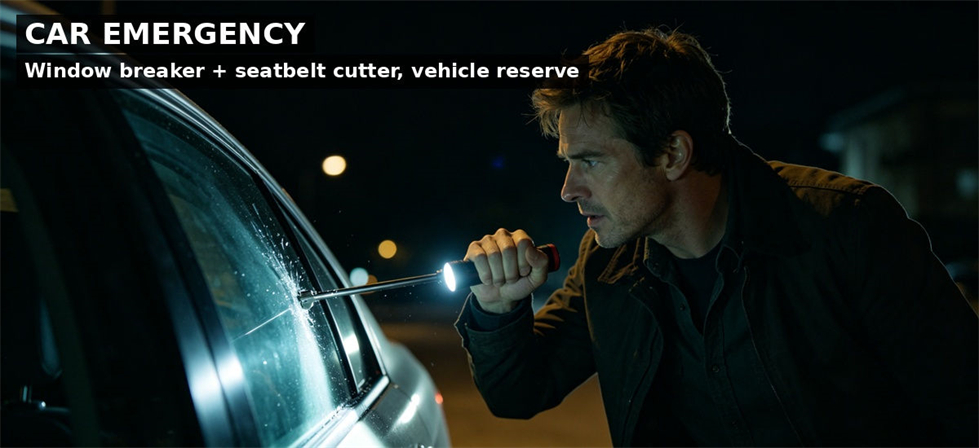
How many flashlights do I need per team or vehicle?
Planning baseline: personal kits = number of people x 1.2; vehicle reserve = number of vehicles x 1 (plus 10% spare); patrol/security = personnel x 1.5 (one per shift plus spare); warehouse reserve = base quantity + 10% for rotation. Chargers = units / 2 (shared charging), spare batteries = units x 0.3. Adjust based on your shift pattern and deployment plan.
No. For close work or shelter use, 100-300 lumens is comfortable and saves battery; 2000+ lumens in a tent causes glare and wastes power. For search and patrol at 200m+, you need high lumens with a focused reflector. Match output to the task, and always verify sustained lumens after 5 minutes — not just the peak number on the box.
|
Compare emergency-flashlight directions |
Send the urgent flashlight question |
 |
 |
|
Review beam, battery, structure and packing |
Discuss samples, tests and accessories |
YRF Textile · Emergency Flashlights for Bulk Procurement · info@yrftextile.com
Дружественные ссылки :
авторское право © Custom Disaster - Relief Bedding: Tents, Sleeping Bags, Blankets Все права защищены
профессиональная команда для обслуживания !