Published: October 12, 2026 | Last Updated: October 12, 2026
Wholesale Emergency Shelter Tents & Disaster Tarps Suppliers
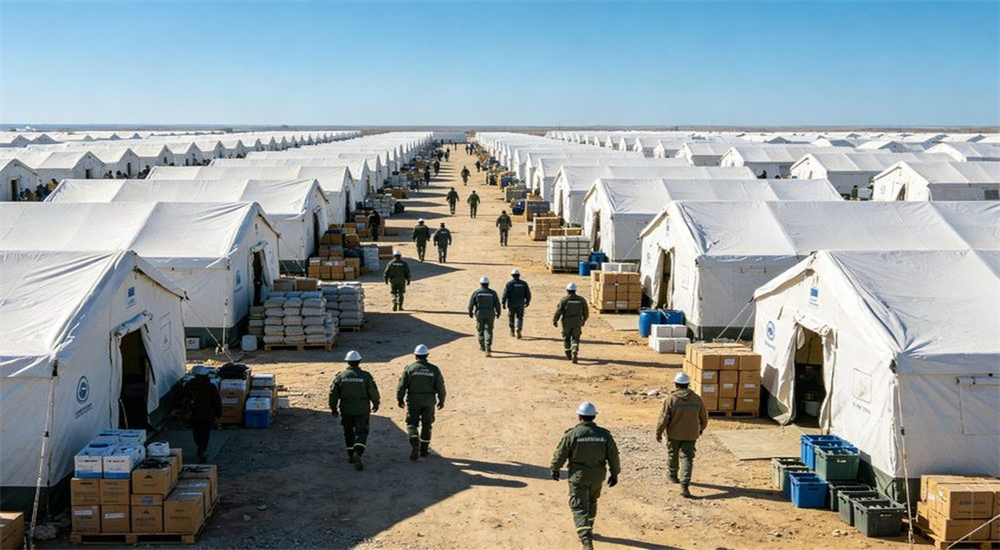
When disasters strike, shelters must arrive fast and deploy without specialized crews. As a wholesale disaster relief tents manufacturer in China, we supply field hospital tents, inflatable medical shelters, military canvas tents and heavy duty waterproof tarpaulin for government stockpiles, school shelters and aid programs. This guide helps procurement teams choose the right shelter quickly.
|
Selection Guide: Frame / Inflatable / Tarp |
Packaging & Delivery |
|
8 Core Models & Specifications |
Tarpaulin Grades |
|
Frame vs Inflatable vs Tarp |
Factory QC & Certifications |
|
6 Deployment Scenarios |
Transparent Pricing |
|
Order Checklist |
FAQ |
|
Specification Comparison |
Related Collections |
|
Capacity, Timeline & QC |
Payment & Trade Terms |
|
500-Tent Order Plan |
After-sales Support |
Every product in this catalog is produced from our own factory floor under documented quality checks, from steel frame poles to waterproof tarpaulin manufacturer coating lines. Below you will find model-by-model specifications, scenario-based selection advice, packaging details and clear trade terms. If you need a custom size, color or printed logo, send the requirement to our export team and we will confirm feasibility and lead time before you place the order.
Relief programs often run on tight timelines, so we keep a standard stock of the most common tent sizes and tarpaulin rolls. For large quantities, production runs weekly with pre-shipment inspection on every container. Continue reading to compare emergency shelter tents by structure, capacity and cost, then use the checklist at the end to build your order plan.
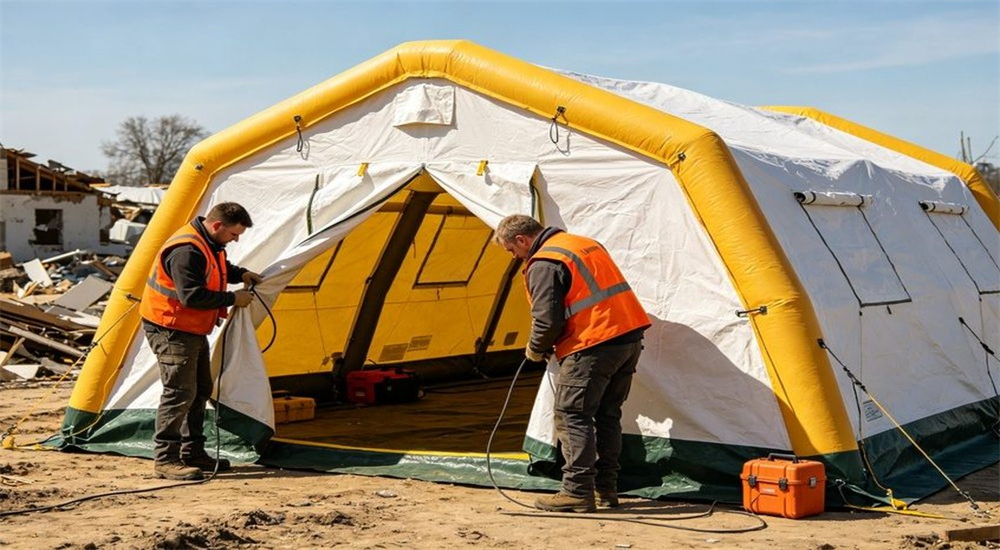
Crews inflate a medical tent in minutes, the key advantage of inflatable structures for first response.
This section summarizes how frame, inflatable and tarpaulin product lines differ, and which one matches your typical deployment. Use it as the first filter before reading detailed specifications.
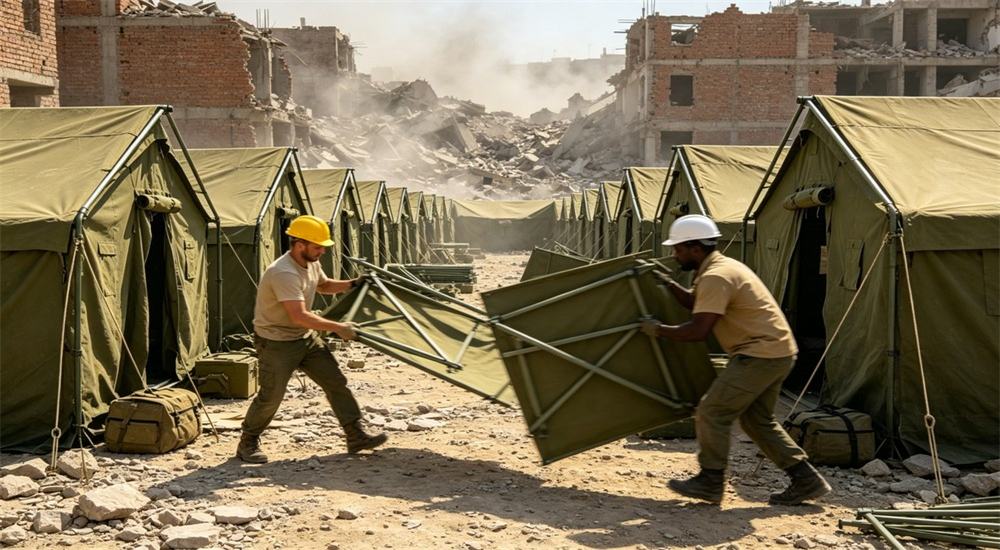
Relief workers assemble frame tents beside damaged buildings, rapid earthquake response with wholesale disaster relief tents.
The sections below explain each product line in detail and end with an ordering checklist you can hand to your procurement team.
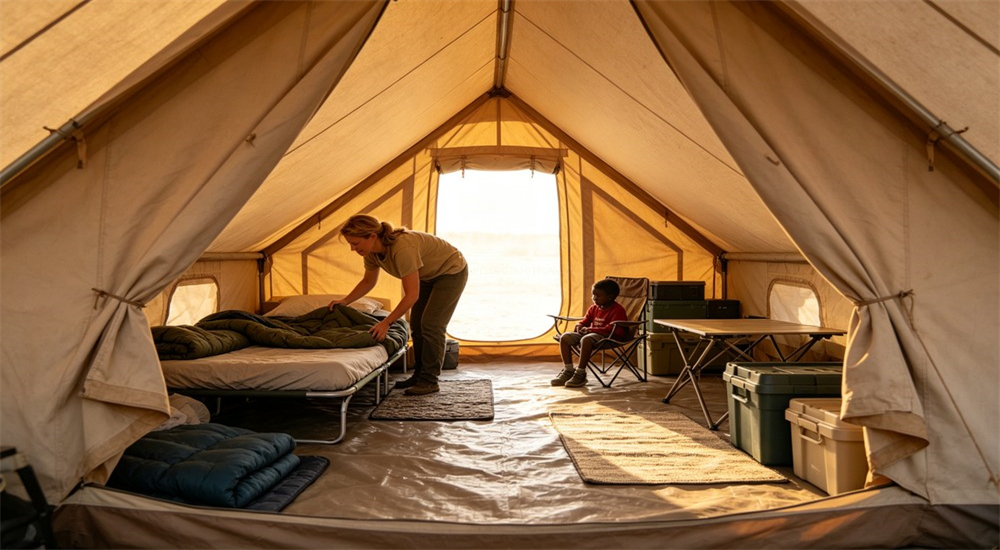
Inside a family shelter tent with beds and storage, refugee housing built for long-term camp life.
Use the table of contents above to jump to any section, or read straight through for a complete picture of our tents and tarpaulin range.
This section summarizes how frame, inflatable and tarpaulin product lines differ, and which one matches your typical deployment. Use it as the first filter before reading detailed specifications.
Frame tents use galvanized steel poles with waterproof oxford or PVC fabric, offering the best wind resistance and longest lifespan, which is why governments prefer them for wholesale disaster relief tents stockpiles. Inflatable tents use air beams that inflate in 3-5 minutes, cutting labor time sharply for inflatable medical tent field hospitals. Tarpaulin is the lightest option: a flat sheet with reinforced edges, used for ground cover, cargo protection and emergency roofing.
Setup speed is the biggest differentiator. A 40-square-meter frame tent takes four workers about 40 minutes; an equivalent inflatable tent takes two workers about 10 minutes. Durability favors frames: with proper care, a galvanized frame and coated fabric tent lasts 5-8 seasons, while air beams last 3-5 seasons before replacement. For aid agencies that deploy repeatedly, frame tents reduce lifecycle cost; for first-response teams, inflatable models save critical minutes.
|
Feature |
Frame Tent |
Inflatable Tent |
Tarpaulin |
|
Setup time |
30-60 min |
3-10 min |
5-15 min |
|
Wind resistance |
Excellent |
Good |
Fair (with ropes) |
|
Lifespan |
5-8 seasons |
3-5 seasons |
1-3 seasons |
|
Best use |
Stockpile & long camps |
Medical & rapid response |
Cover & ground sheet |
Emergency tents supplier teams usually buy a mix: 60-70% frame tents for accommodation and 30-40% inflatable models for medical or command functions, with tarpaulin added as protection layers. Tell us your typical scenario and we can propose a balanced package.
All frame components are interchangeable within the same series, so damaged poles or fabric panels can be replaced without replacing the whole tent. Spare kits are available for every model, which keeps long-term maintenance simple for government stockpiles.
Official emergency guidance from Ready.gov stresses that shelter materials should be storable, repairable and deployable by non-specialists. Our frame series matches that profile: poles, fabric and accessories are standard items, and a first-time team can assemble a unit from the illustrated manual in under an hour. For programs that must respond within 48 hours, we pre-pack standard kits so tents can be air-freighted immediately after order confirmation.

We list eight core models that cover most relief programs, from small first-aid posts to 500-person camps. Each specification below is confirmed on the production line and can be adjusted in size, color, fabric weight and printed marking.
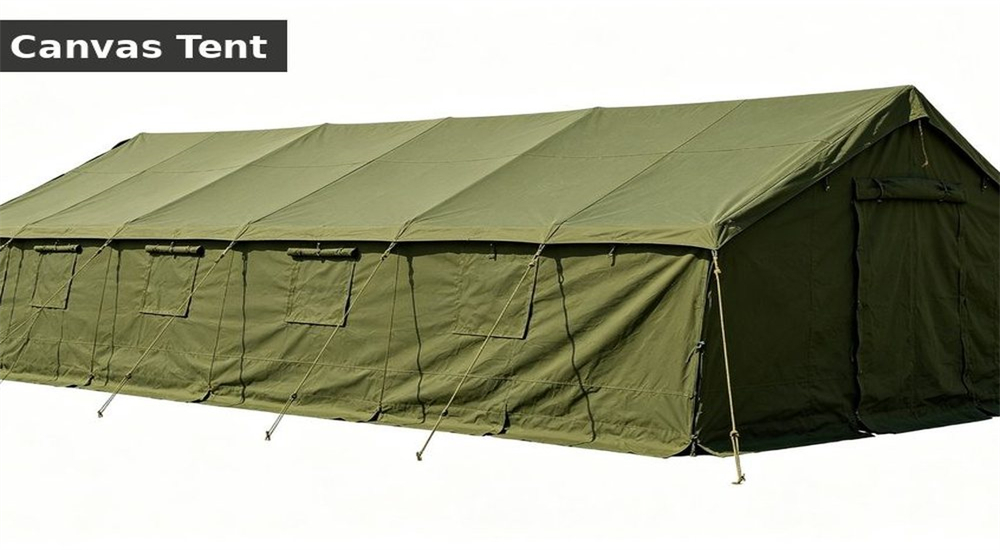
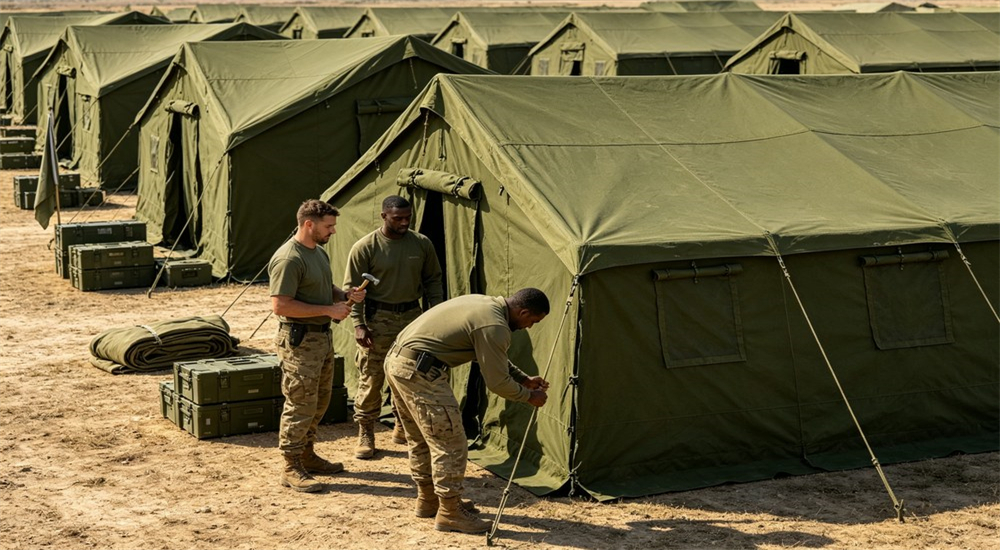
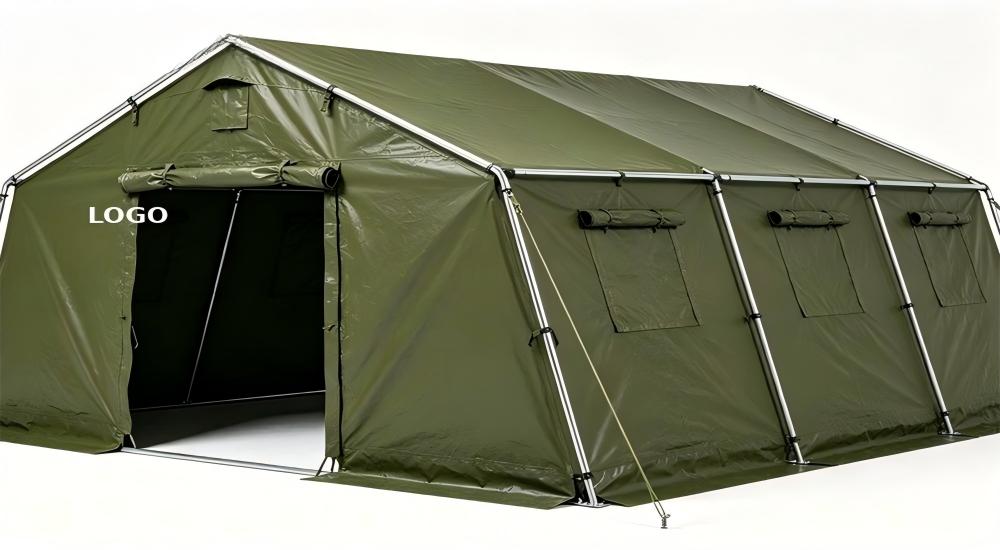
The military canvas tent is a long-standing favorite for army, police and outdoor training programs. Made from 260-340g cotton-polyester canvas with waterproof treatment, it breathes better than coated fabrics, reducing condensation in cold climates. Frame poles are 22-25mm galvanized steel; optional inner lining and stove vent are available for winter use.
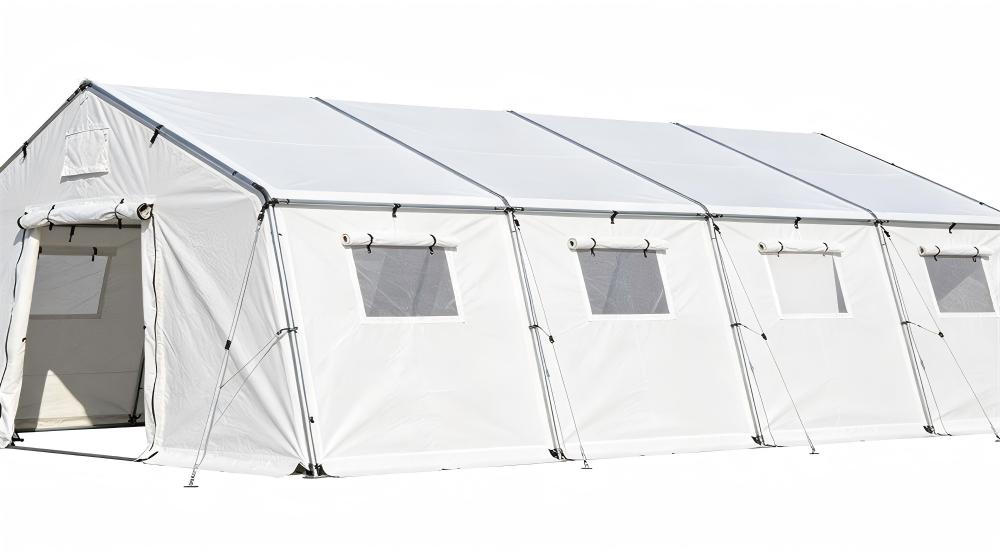
The field hospital tent is designed for medical teams: white canopy with blue trim, multiple compartments for triage, treatment and storage, plus transparent windows and cable ports. Fabric is 500D PVC-coated oxford with flame-retardant option to meet hospital safety requirements. Floor is welded PVC for easy cleaning and disinfection.
Other core models include the inflatable medical tent with air beam construction, the negative pressure isolation tent with sealed duct ports for infection control, the decontamination shower tent for hazmat teams, the heavy duty PVC tarpaulin for covers, the cold weather shelter tent with insulated walls, and the rapid response inflatable tent for first responders. All can be supplied with custom printing of agency names or flags.
Each model ships with its own specification sheet listing floor area, peak height, fabric weight, pole or beam size, packed weight and carton dimensions, so your logistics team can plan handling and storage before arrival. Where a program needs mixed functions, we bundle models into one container and pack each model separately for easy identification at the warehouse.
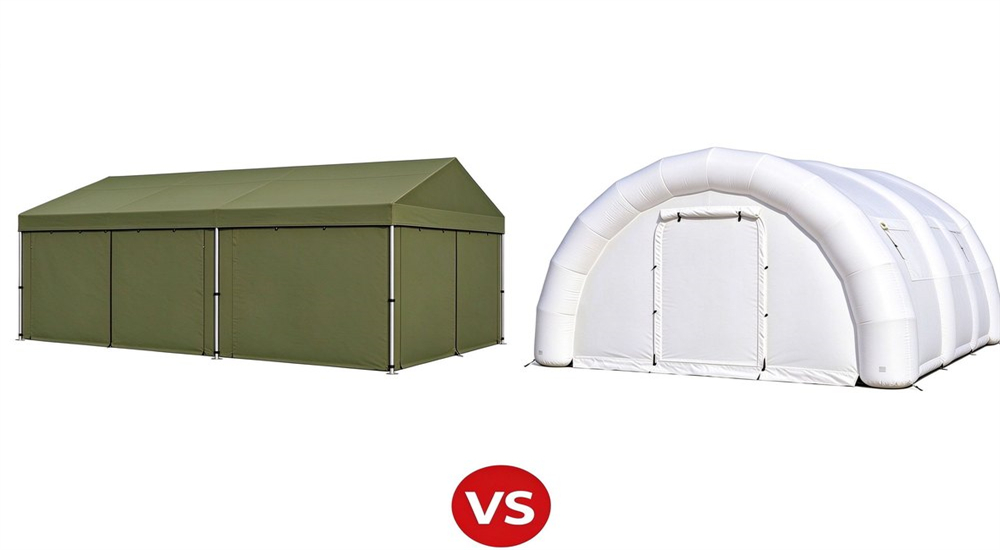
Buyers often ask which structure is objectively best. The answer depends on your program's timeline, team size and storage conditions. This comparison makes the trade-offs visible.
Frame tents excel in wind and snow loads because steel poles transfer load directly to anchors. Inflatable tents survive strong winds too, but require the air pressure to be maintained; most models include a manual pump and pressure relief valves. In extreme cold, air beams stiffen but remain serviceable down to about -20°C with quality TPU or PVC bladders.
Tarpaulin is not a shelter by itself, but it multiplies protection: laid under tents as a ground sheet, draped over frames as an extra roof, or used to wrap cargo. Aheavy duty PVC tarpaulin at 650-900g/m² resists tearing, UV and punctures far better than thin PE film, and is the grade most aid programs specify for long deployments.
Storage volume also matters: frame tents pack into bundles of poles plus rolled fabric, inflatable tents roll into single compact bags, and tarpaulin rolls take minimal warehouse space. If your program stores shelters for years before use, compact inflatable and tarpaulin options reduce warehouse cost significantly.
Lifecycle cost is the other side of the decision. A frame tent costs more to ship because of pole weight, but its longer lifespan spreads that cost over more seasons. Inflatable tents save freight weight and setup labor, which matters when field teams are small. Tarpaulin is the lowest-cost protection layer per square meter and should always be part of the package, whatever main shelter you choose.
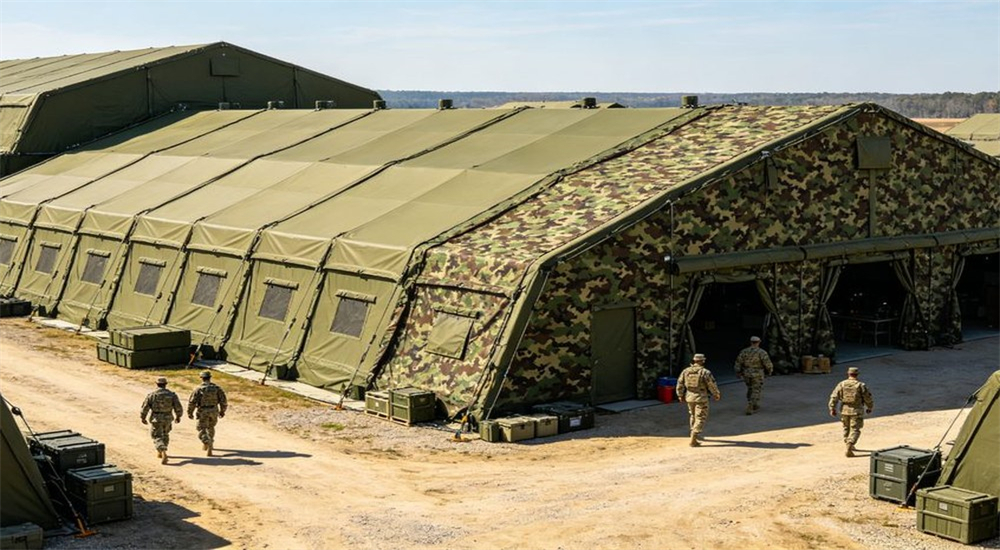
Different emergencies create different shelter demands. We mapped six common cases with the recommended product mix, so your team can spec confidently.
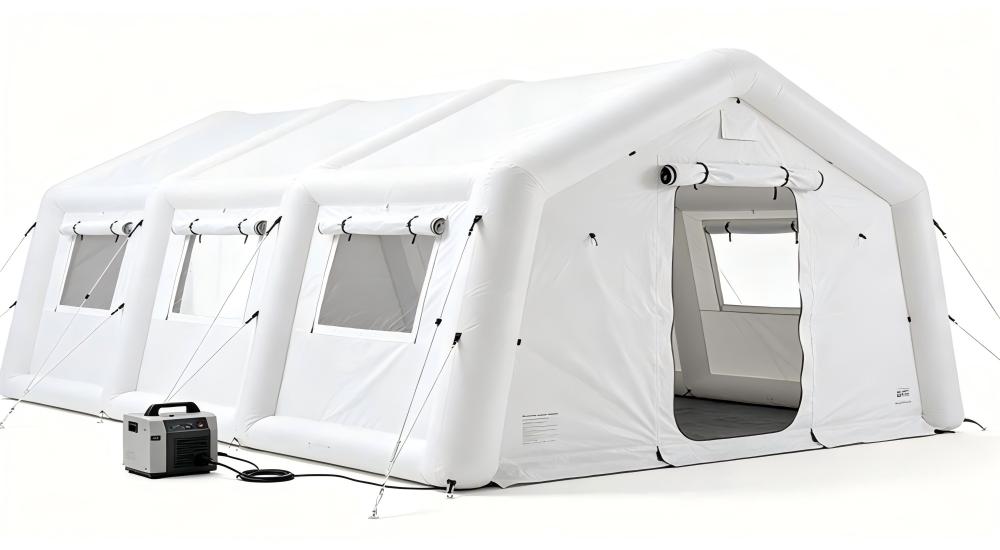
1. Earthquake response. Survivors need immediate covered space; frame tents with waterproof fabric and ground sheets are the standard. Add emergency shelter tents for family units and larger command tents for coordination.
2. Flood relief. Waterproofing is everything: heavy duty PVC tarpaulin for elevated floors, PE ground sheets and tents with sealed seams.
3. Field hospital support. Inflatable medical tents and negative pressure isolation tents keep clinical work separated from living quarters.
4. Fire and hazmat decontamination. Decontamination shower tents with internal plumbing points and quick drainage.
5. Refugee and IDP camps. Durable frame accommodation plus communal kitchen and storage tents; canvas models breathe better in hot climates.
6. Military and training. Olive green wholesale military canvas tents with stove vents for cold-weather exercises.
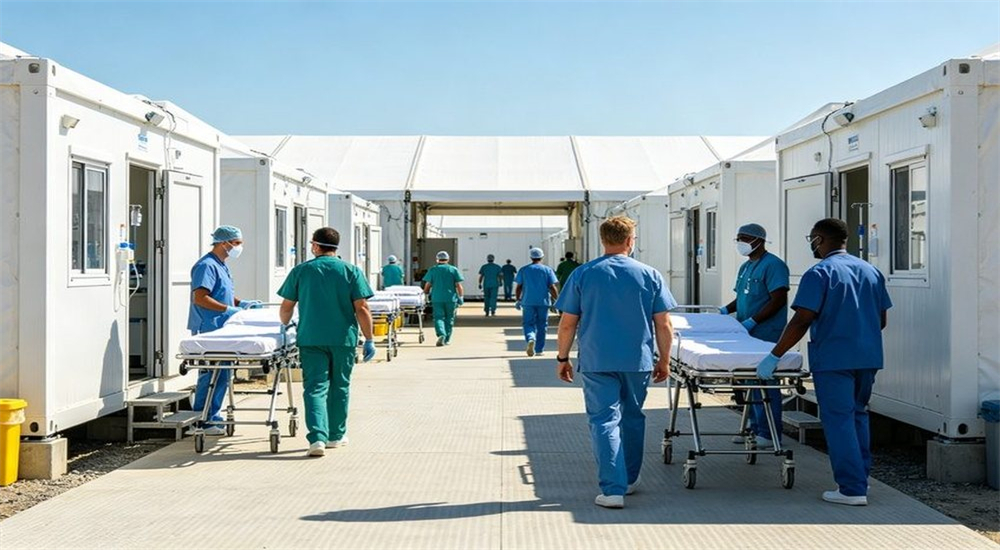
If your operation combines two cases, for example earthquake by heavy rain, we recommend pairing frame tents with extra tarpaulin layers. Tell us the environment and we will adjust fabric weight, seam taping and anchoring accessories in the quote.
Disaster response organizations including the American Red Cross consistently list waterproof shelter layers and secure anchoring among the first needs after floods and storms. That is why our flood-response package pairs elevated PVC floor sheets with sealed-seam tents and extra guy ropes, so shelters stay dry even on saturated ground.
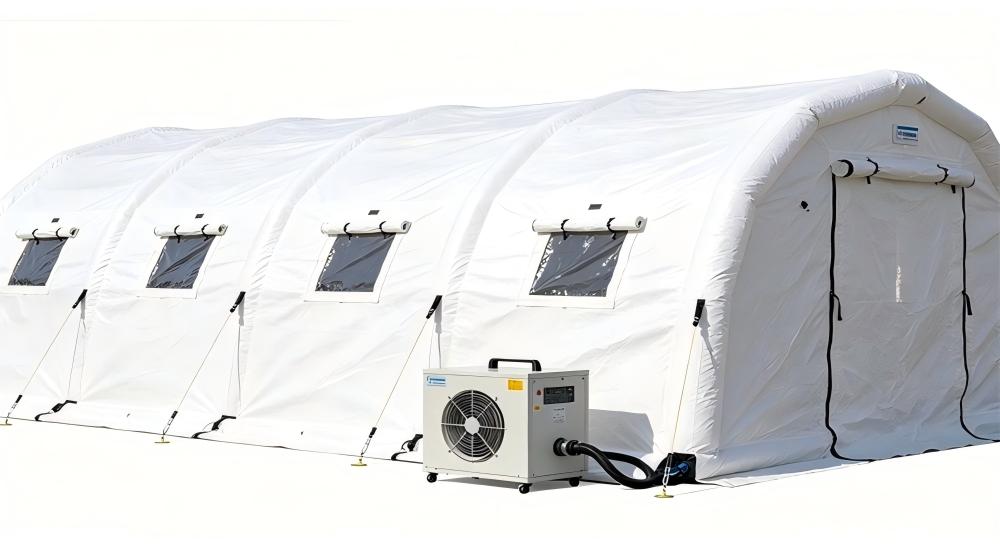
Before you send a purchase order, five points decide whether the delivery meets your program's needs.
1. Occupancy per unit. A 3m x 4m tent fits 4-6 people for sleeping; a 5m x 8m fits a small clinic room. Confirm headcount and furniture (beds, tables, medical equipment) before choosing sizes.
2. Climate. Hot regions need breathable canvas or vented oxford; cold regions need insulated walls and stove vents; coastal regions need anti-rust coated poles.
3. Fabric grade. For relief tents wholesale programs, 500D PVC-coated oxford with waterproof rating 3000mm+ is the common baseline; tarpaulin 650-900g for covers.
4. Marking and printing. Agency names, flags and logos can be printed on fabric panels; confirm artwork format and placement early because printing adds 7-10 days to lead time.
5. Accessories. Ground sheets, pegs, ropes, repair kits, spare poles and carrying bags are usually ordered together; listing them in the same PO avoids shipping gaps.
We confirm all five points in writing before production, and pre-shipment inspection checks them against your PO line by line. For first-time buyers, a sample unit or fabric swatch kit is recommended before the bulk run; sample cost is credited against the first order.
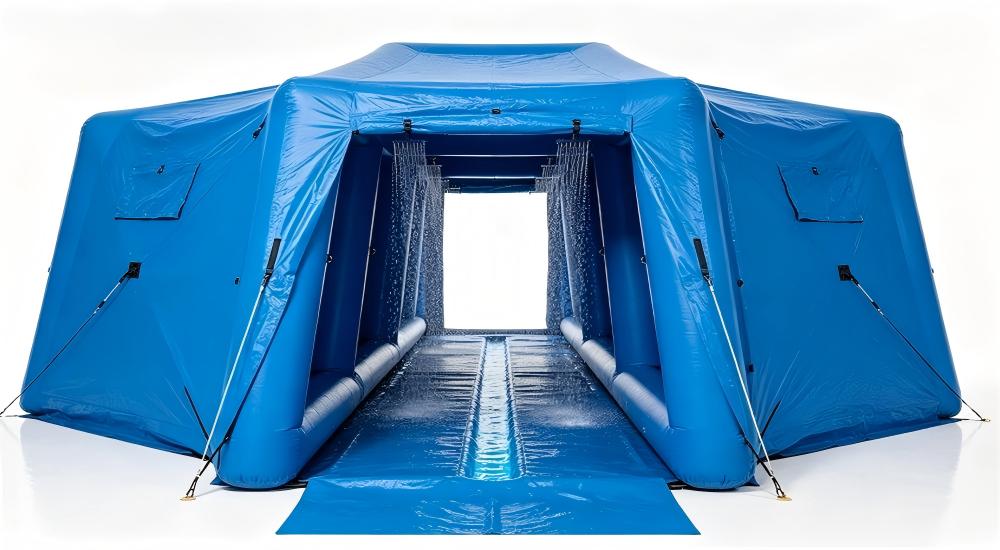
The table below lists our standard relief tent and tarpaulin series with the production defaults we recommend.
|
Model |
Size (m) |
Capacity |
Fabric / Poles |
|
Frame family tent |
3 x 4 |
4-6 pax |
500D oxford / 22mm steel |
|
Frame group tent |
5 x 8 |
10-15 pax |
500D oxford / 25mm steel |
|
Military canvas tent |
5 x 6 |
8-10 pax |
340g canvas / 22mm steel |
|
Field hospital tent |
6 x 12 |
2 wards + storage |
500D PVC-coated / frame |
|
Inflatable medical tent |
5 x 10 |
1-2 wards |
TPU air beams / PVC fabric |
|
Negative pressure tent |
3 x 6 |
Isolation room |
PVC coated / duct ports |
|
Decontamination tent |
3 x 5 |
Shower lane |
Inflatable PVC corridor |
|
Rapid response tent |
4 x 4 |
First aid post |
Air beams / quick pump |
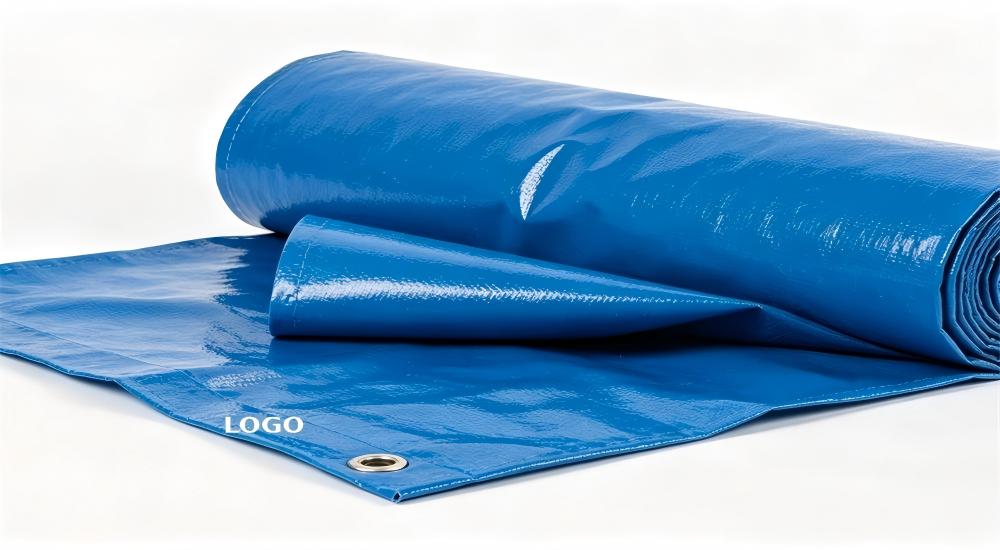
For waterproof tarpaulin manufacturer orders, we supply rolls from 2m to 20m widths, 120g to 900g weights, in blue, green, orange, white and custom colors. Edge reinforcement, eyelet spacing and printed stripes are specified per order.
All sizes listed are available from stock for standard colors; customized sizes run on a 2-3 week production schedule depending on quantity and printing. Ask our export team for the latest stock list before large orders.
Fabric weight directly controls price and performance. Thin 120-200g sheets suit temporary covers; 400-500g suits construction protection; 650-900g suits long-term outdoor covers and emergency roofing. We always confirm the intended use before recommending a weight.
Customization is routine on our line: sizes, colors, printed stripes, grommet spacing and hem styles can all be adjusted. Because we produce fabric and frames in-house, small engineering changes such as extra windows, double doors or reinforced anchor points are handled quickly without restarting the whole production plan.
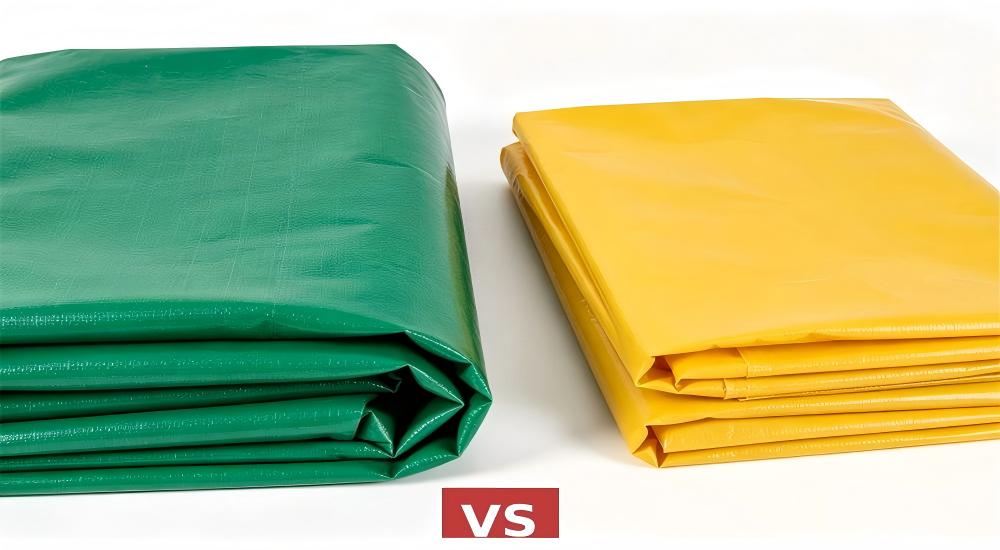
Capacity planning prevents both over-ordering and mid-operation shortages. Here is how we help buyers size quantities and schedule production.
A common planning rule is 3-4m² of floor space per person for sleeping-only shelters, and 6-8m² per person for combined living and storage. A 500-person camp therefore needs roughly 120-160 family tents (3x4m) plus command, kitchen, clinic and storage units. Our export team can draft a bill of quantities from your headcount and site layout.
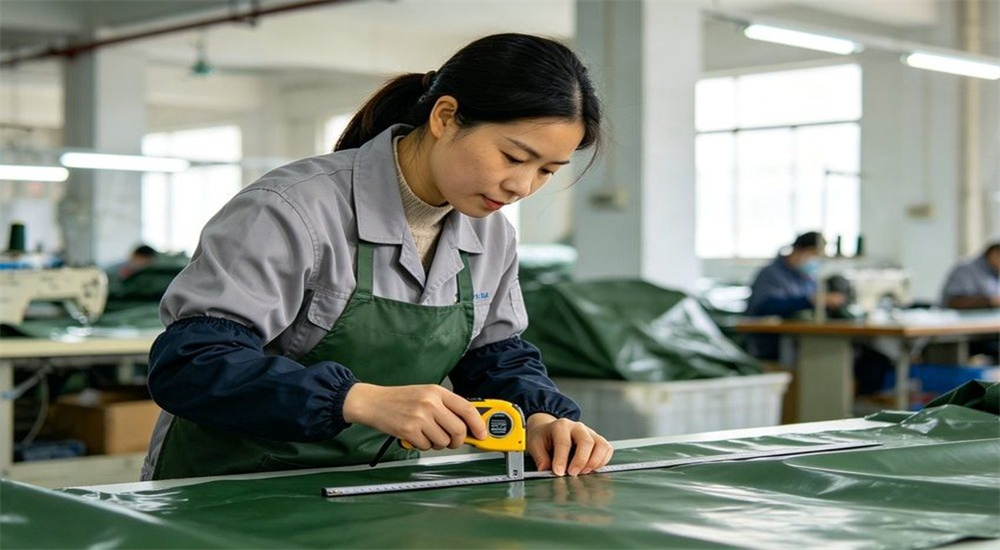
Production timelines are confirmed per order because they depend on fabric availability and printing. Standard stock items ship faster than custom printed orders; large emergency tents supplier contracts are scheduled in weekly production lots with milestone photos.
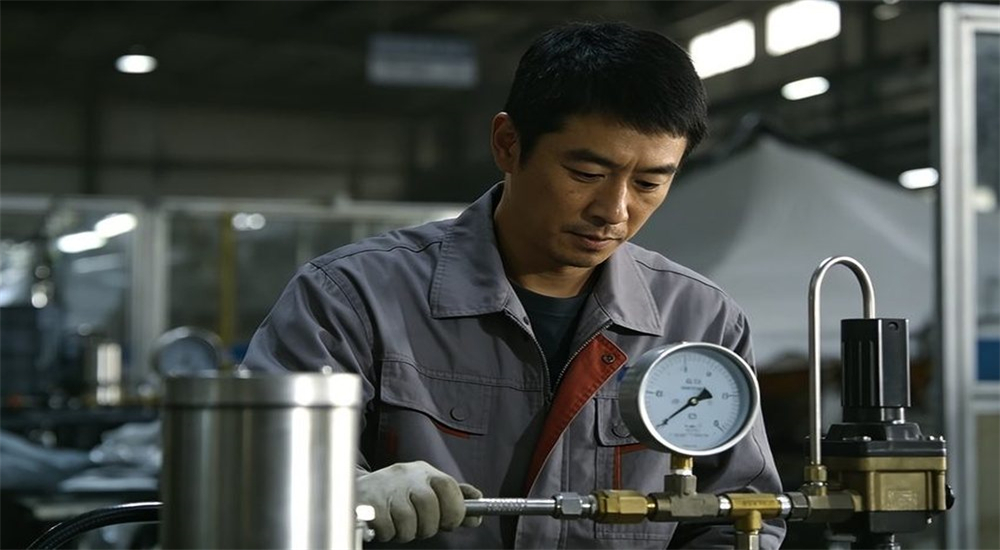
Quality checks happen at three stages: fabric roll inspection at incoming, seam and pole assembly during production, and a final 100% inspection before packing. For medical tents, air beam pressure retention is tested on every unit; for tarpaulin, coating adhesion and tear strength samples are tested per batch.
Stock management is designed around relief timelines. Standard sizes in standard colors are kept in rolling stock, while custom orders are scheduled to meet your shipment calendar. We share the stock list before large orders so you can combine fast-ship items with production items in one container.
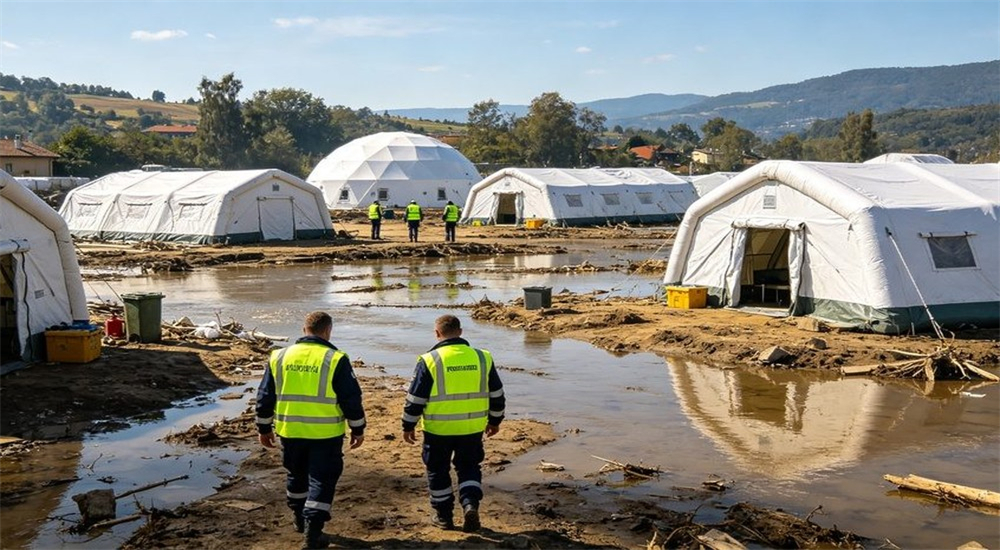
To make the planning concrete, here is a typical 500-tent camp bill built from our standard models. Use it as a starting template for your own quantity.
|
Item |
Qty |
Purpose |
Notes |
|
Frame family tent 3x4m |
320 |
Family accommodation |
With ground sheet + pegs |
|
Frame group tent 5x8m |
60 |
Kitchen / dining / meeting |
With ventilation windows |
|
Inflatable medical tent |
10 |
Field clinic |
With pressure pump |
|
Command & storage tent |
30 |
Coordination + warehouse |
Wide-span frame |
|
Heavy duty tarpaulin |
80 rolls |
Floor + roof protection |
650g PVC, custom size |
|
Repair kits & spare parts |
5% of tents |
Field maintenance |
Poles, patches, ropes |
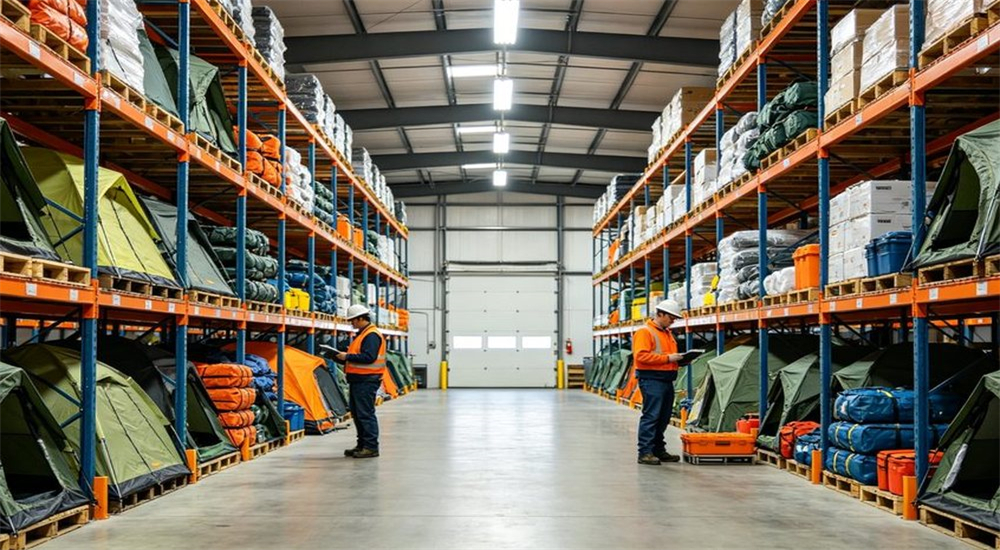
This mix balances emergency tents for government stockpile durability with fast medical deployment. Quantities scale linearly for smaller camps, and our engineers can adjust the ratio for climate, security or terrain conditions.
For government and UN-agency tenders, we provide full documentation: specifications, test reports, packing lists and certificate of origin. We also accept phased delivery schedules so large quantities can be shipped in batches matched to your warehouse capacity.
Phased delivery is managed against a confirmed shipment calendar, with each batch carrying its own packing list. This approach keeps inventory predictable and avoids paying for storage of unused tents.
Transport planning starts at quotation: we calculate carton volume and container utilization for your chosen models so freight cost is visible early. Mixed-model containers are arranged by our packing engineers to maximize load factor, and each carton is marked with model and quantity for fast offloading.
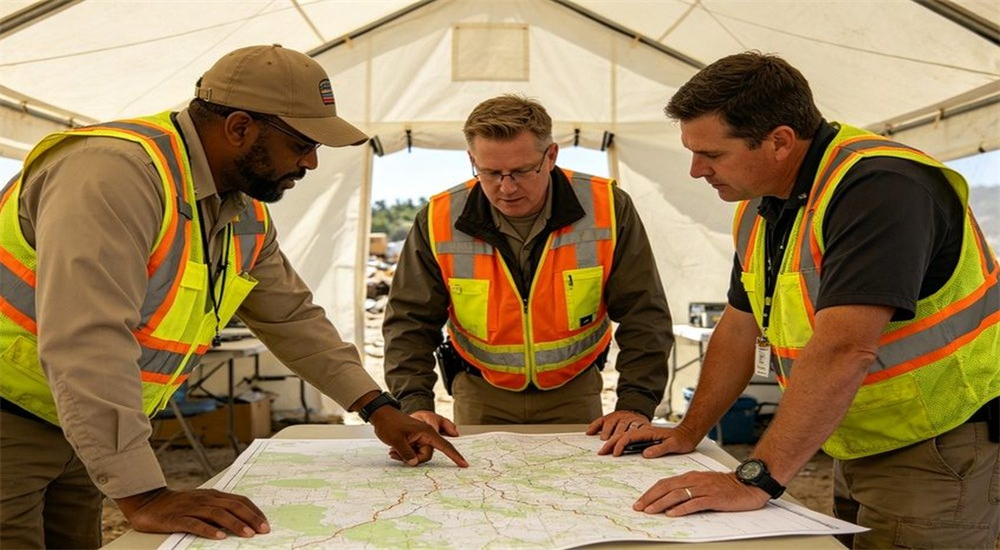
Packaging is where relief programs either save money or lose tents to damage. Our standard export packaging is designed for rough container handling.
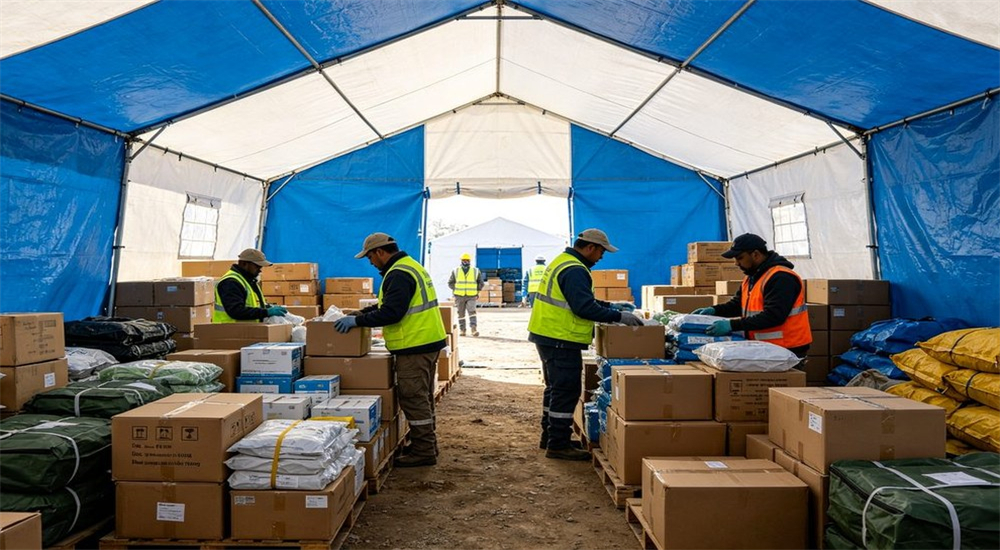
Frame tents ship as separate bundles: poles in canvas or PP bags, fabric folded with desiccant bags inside. Inflatable tents roll into single carry bags with the pump. Tarpaulin rolls are wrapped in kraft paper and PE film with edge protectors. Every carton is labeled with model, quantity and destination, and palletized where the port requires it.
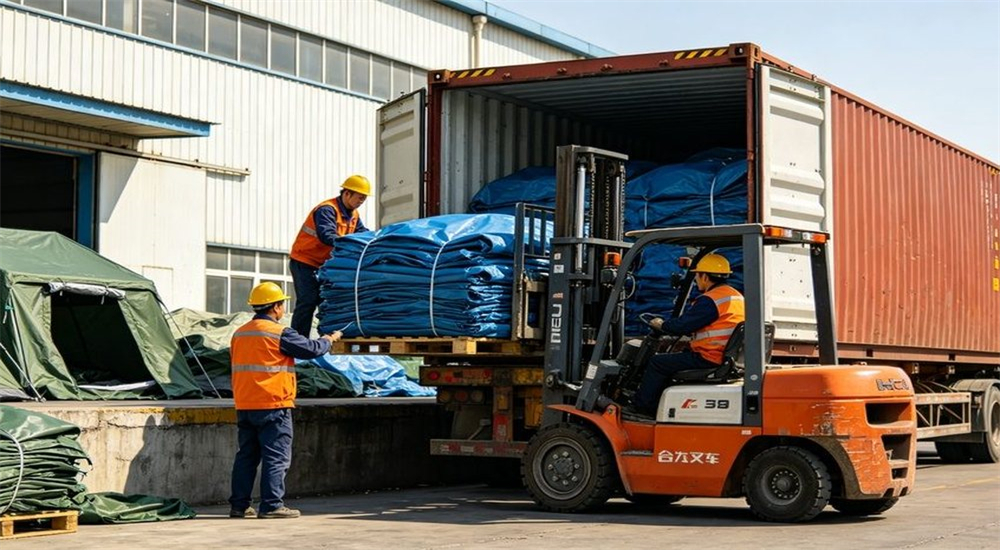
Loading is supervised with container photos and a loading report, so you can verify stowage before the vessel sails. For wholesale disaster relief tents orders, we commonly ship FOB or CIF to major ports, and can arrange sea freight, LCL consolidation or air freight for urgent medical equipment.
Emergency shelter kits are a popular packaging option: each kit contains one tent, ground sheet, pegs, ropes, a small repair kit and simple setup instructions, packed for one family unit. Kits simplify distribution in the field because every box is complete and ready to issue.
For destinations with customs restrictions, we prepare the required origin certificate, packing list and invoice documentation in advance. Confirm the Incoterm and port at ordering stage and we will lock the logistics plan.
Urgent medical programs sometimes need air freight. Inflatable tents and tarpaulin packs are compact enough for air cargo, and we prepare air-shippable packing for small quantities on request. For sea freight, standard cartons stack cleanly in 40HQ containers, and we provide a container loading plan with each order.
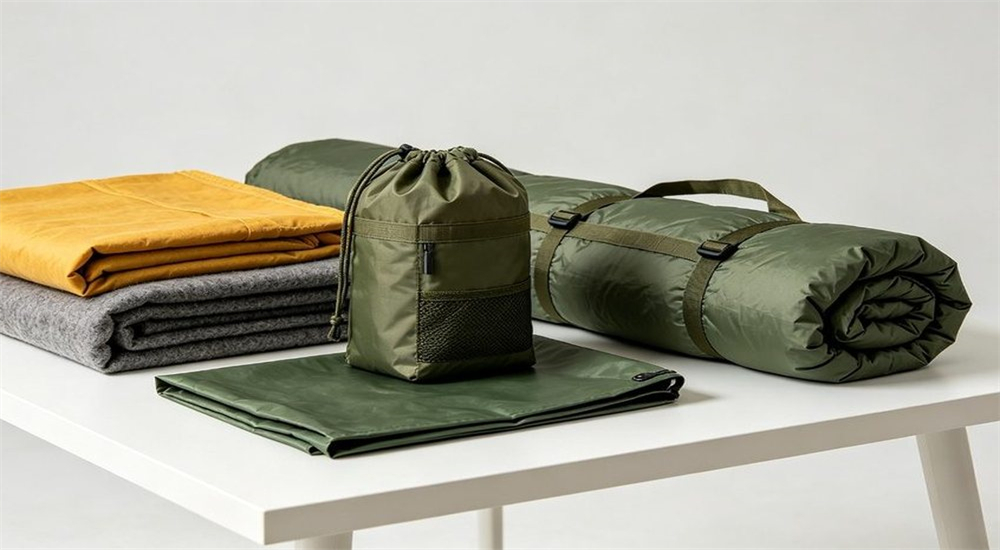
Correct setup and maintenance extend emergency shelter tents by years, and the same care rules apply to tarpaulins. We include illustrated instructions with every order and summarize the essentials here.
Frame tents: lay the floor sheet, assemble poles in pairs, raise the frame, attach the fabric and secure all anchors. On hard ground use steel pegs at 45 degrees; on soft ground use longer pegs or sandbags. Inflatable tents: unroll, connect the pump, inflate beams to the pressure marked on the valve, then anchor. Never operate the pump beyond rated pressure.
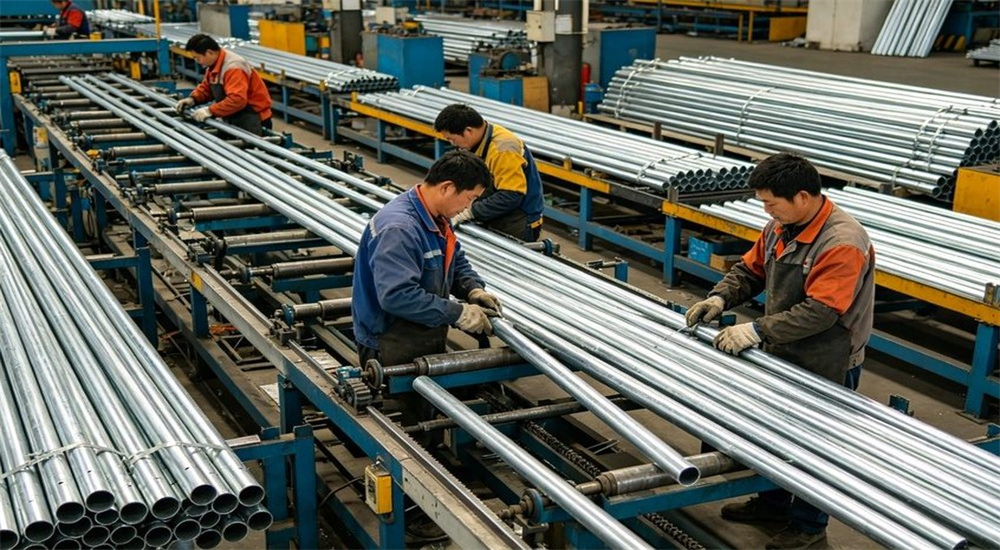
Fire safety is critical in camps: keep flames and heaters at least 1 meter from fabric, use stove vents where fitted, and install fire extinguishers at cooking areas. Our fire retardant tarpaulin and flame-retardant tent fabrics meet common NFPA 701 requirements and can be supplied with test certificates.
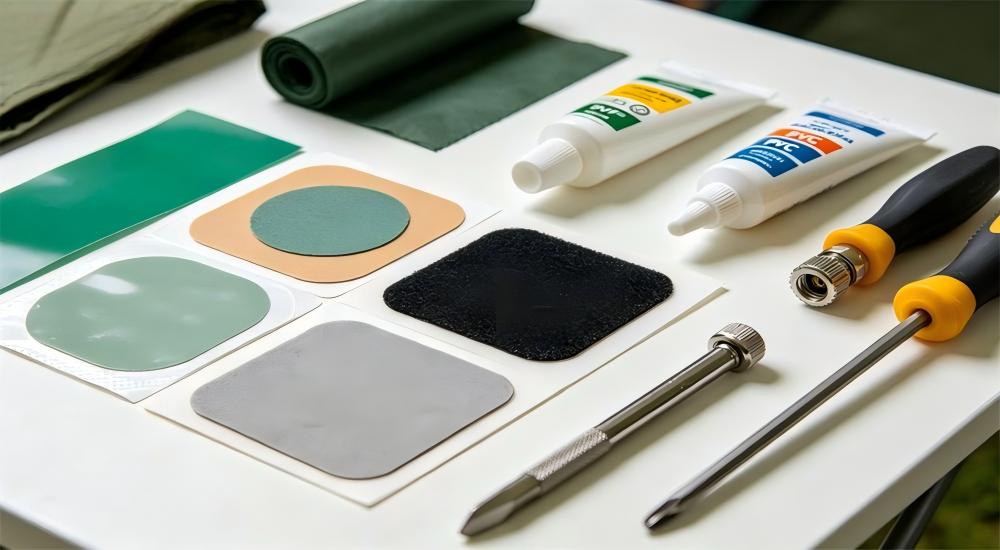
Maintenance is simple: dry the tent before packing, brush off dirt, check seams and poles for damage, and store in a dry, shaded place. A tent repair kit with patches and adhesive handles small tears in minutes, avoiding full replacement. Spare poles and beams are stocked for every model.
Workplace safety rules such as OSHA emergency preparedness guidance remind operators that emergency shelters must have clear exits, secure anchoring and safe clearances around heaters. We print setup and safety notes on the instruction sheet included in every carton, and the same rules apply whether the tent is used for housing, medical or command functions.
Tarpaulin is the most ordered emergency supply after tents themselves, yet grades vary widely. This section explains what to specify.
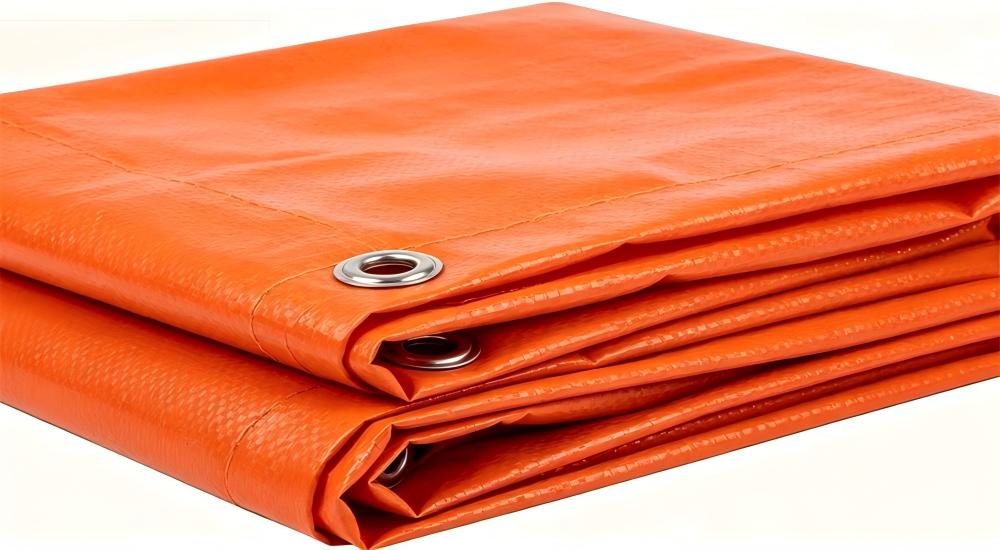
Heavy duty PVC tarpaulin: polyester scrim laminated between PVC layers, 400-900g/m². It is waterproof, UV-stable and tear-resistant, ideal for truck covers, construction, camp floors and emergency roofing. Specify gsm, color and eyelet spacing for your use.
PE tarpaulin: lighter and cheaper, 80-200g/m², suitable for short-term covers and single-season use. It degrades faster under UV and tears more easily, so treat it as disposable protection rather than long-term shelter material.
Canvas tarpaulin: breathable cotton or cotton-polyester, 300-500g/m², best where condensation must escape, such as over grain or in humid climates. It is not fully waterproof unless waxed or coated; for rain-critical covers choose PVC.
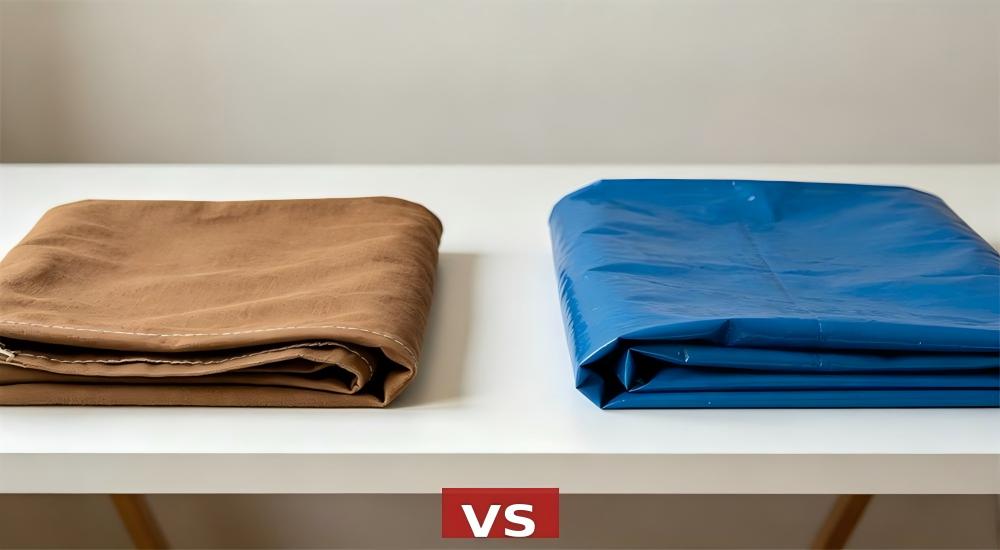
For aid programs, we usually recommend PVC at 650g for floors and roofs and PE at 150g for temporary wrapping. Both can be cut to custom sizes and printed with agency markings.
Every tarpaulin order includes reinforced edges and rust-proof eyelets as standard. If you need welded seams, grommet reinforcement or wind flaps, confirm them in the PO and we will add the corresponding workmanship.
Where flame resistance is required, our fire retardant tarpaulin is tested against standards such as NFPA 701, and the test report is supplied with the shipment. FR tarpaulin is commonly specified for event tents, welding screens and camp kitchens where open flame is present.
Grade selection is mostly about exposure: how long the cover must stay up, whether it sees strong sun or chemicals, and whether condensation is a risk. A practical rule is to treat PE as single-season disposable protection and PVC as multi-season infrastructure. Many programs carry both grades in one container, using PE for temporary wrapping and PVC for floors and roofs, so a single shipment covers both wet and dry conditions.
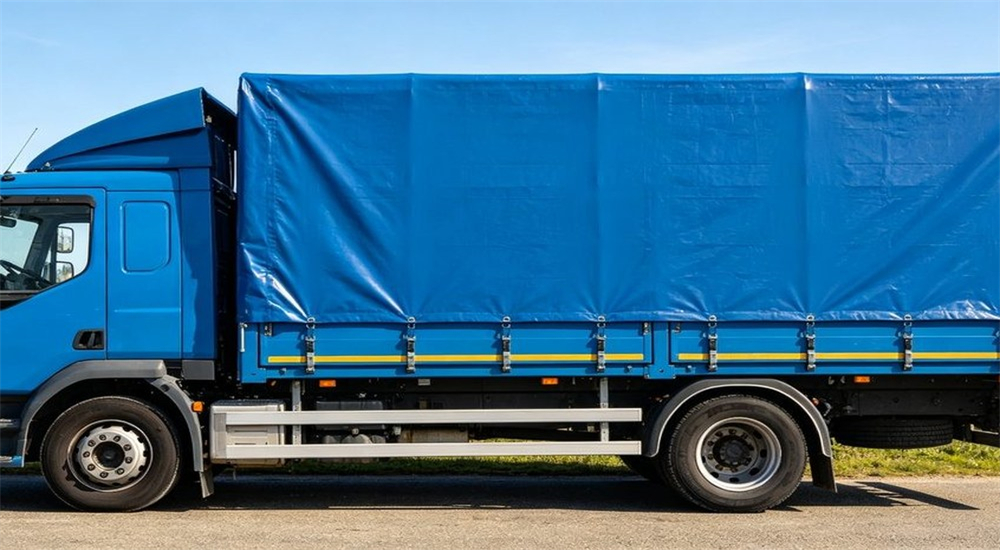
Quality claims only matter if they are documented. Our factory operates a documented QC system from fabric intake to finished goods.
Incoming fabric is checked for weight, coating adhesion and color fastness against the order specification. Production follows written work instructions for seam stitching, welding and pole assembly, with in-line inspectors at each stage. Finished tents are 100% inspected: seams, zippers, poles, valves, printing quality and packing completeness.
Test reports available on request include waterproof pressure, tear strength, UV resistance, flame retardancy (per NFPA 701 or equivalent) and air beam pressure retention. We can arrange third-party inspection such as SGS, BV or Intertek at the buyer's cost before shipment.
As a wholesale disaster relief tents factory, we keep the production line flexible so standard models, custom prints and mixed-container programs run in the same schedule. Export documents include packing list, commercial invoice, bill of lading and certificate of origin.
Test methods follow recognized procedures such as ASTM test standards for fabric strength where applicable, and our QC records are kept for every production lot. Buyers can request a copy of the lot record together with the test reports, which supports tender documentation for government and agency programs.
Certifications are checked against the actual goods, not just the paperwork. When a test report is required, the sample is drawn from the production lot that ships to you, and the report references the batch number on your packing list. This traceability lets tender reviewers verify the documentation end to end.
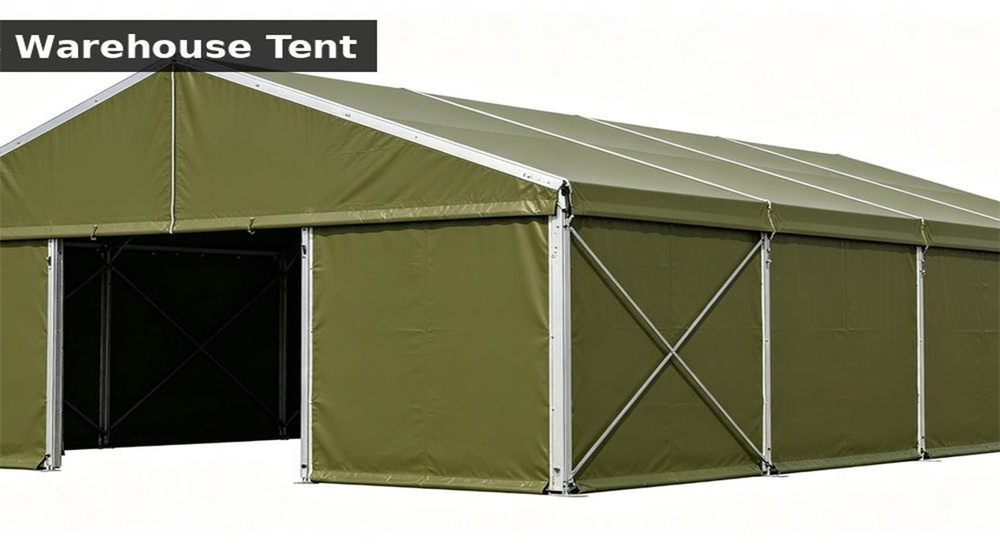
Quotes are built from actual material and labor costs, not rounded market guesses. This is what goes into every price we send.
Four factors drive the price: fabric grade and weight, frame or air beam type, size and printing, and quantity. A 3x4m family tent in 500D oxford costs less than the same size in 340g canvas or with PVC coating, and inflatable models add the pump and valve cost. Printing agency logos adds a small per-panel cost and 7-10 days to lead time.
Quantity discounts apply from 50 units, with the largest step at container quantities. We quote FOB, CIF or DDP depending on your logistics setup, and every quote states the basis clearly so you can compare suppliers fairly. Current emergency tent factory price levels for standard models can be shared in a price list on request.
There are no hidden charges in our quotes: the listed price covers the product, standard packaging and the agreed Incoterm. Freight, insurance and third-party inspection are quoted separately when requested.
To compare us fairly with other emergency tent factory price offers, check the specification basis behind the number: fabric weight, frame gauge, printing, packing and Incoterm all change the price. Our quotation sheet lists every variable, so the comparison is apples to apples rather than a single headline figure.
A transparent quote also makes negotiations faster: because every variable is visible, buyers can adjust fabric weight, printing or packaging themselves and see the price move immediately. For framework contracts, we fix standard-model prices for a validity period and notify in writing if raw material costs force an adjustment.
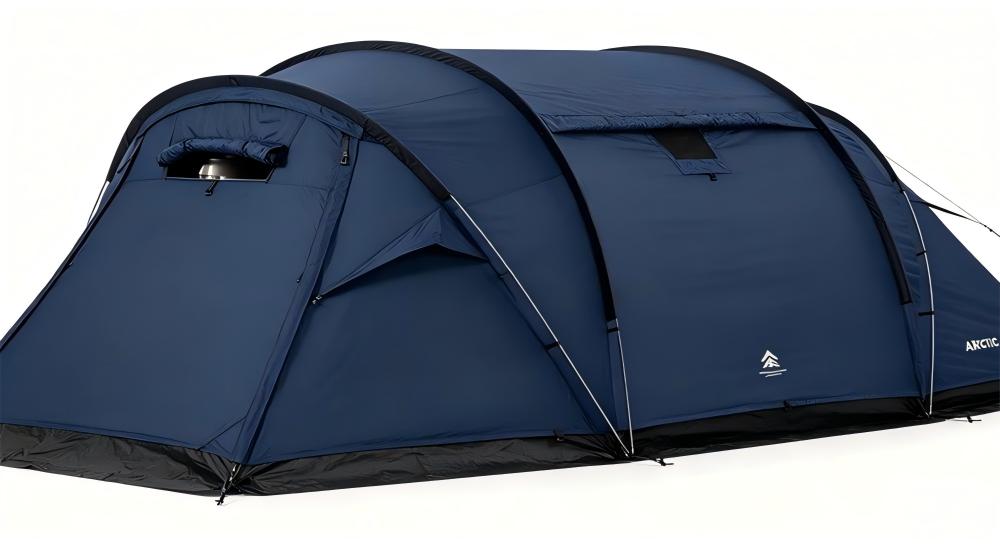
These are the questions procurement teams ask most before placing relief tents wholesale orders.
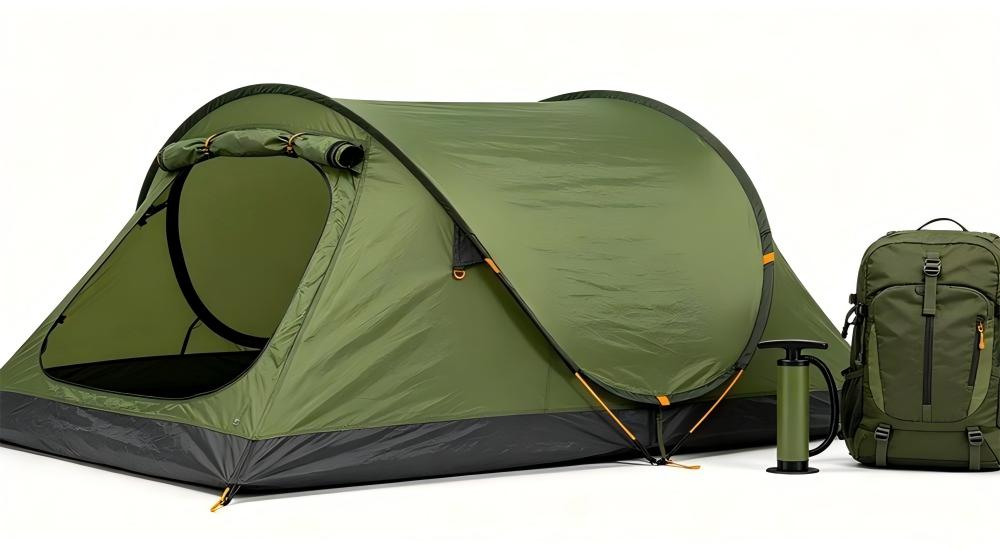
What is the MOQ for tents and tarpaulin?
MOQ depends on model and customization. Standard-color production lots are efficient for mid-size orders; samples are available in low quantity, and custom printing is confirmed per contract.
Can you print our agency logo on the tents?
Yes. We print agency names, flags and logos in any color. Send artwork and specify placement; the printing lead time is confirmed at ordering based on quantity.
Do inflatable tents come with a pump?
Yes, each inflatable tent includes a manual pump; electric pumps are optional. Air beams are factory-tested for pressure retention before packing.
What is the delivery time for standard stock tents?
Delivery time is confirmed at ordering: standard stock ships faster than custom printed or large quantity orders, and the exact schedule is locked in the sales contract.
Do you provide samples before bulk orders?
Yes, samples are available. Sample cost is charged and refunded against the bulk order per the terms confirmed in advance.
Can tents withstand strong winds and snow?
Frame tents with proper anchoring handle high winds and light snow well; quality emergency shelter tents use reinforced seams and tested anchoring points. Inflatable tents resist wind with maintained air pressure.
Are the fabrics flame retardant?
Flame-retardant fabric is available on most models, meeting standards such as NFPA 701; specify FR in the PO and we supply the test report.
What is the best fabric for hot and humid climates?
Breathable canvas tents reduce condensation in humid climates; vented oxford models balance waterproofing and airflow.
Do you offer repair kits and spare parts?
Yes, every model has a matching repair kit with patches, adhesive, pegs and ropes, plus spare poles and beams.
Yes. Send headcount, site size, climate and intended functions; our engineers draft a recommended quantity list with rationale.
We support FOB, CIF, CFR and DDP by sea, and air freight for urgent orders. Incoterm and port are locked at ordering stage.
Yes. SGS, BV, Intertek or buyer-nominated inspectors are welcome before shipment at the buyer's cost.
Yes, tarpaulin is cut, welded or sewn to custom sizes with reinforced edges and eyelets; confirm size, quantity and gsm.
Air emergency shelter tents fully before long storage, keep fabric dry, store poles separately, and check valves and seams periodically.
Standard documents include commercial invoice, packing list, bill of lading, certificate of origin and, where requested, test reports.
Yes, large orders can be scheduled in production lots with a shipment calendar, each batch with its own packing list.
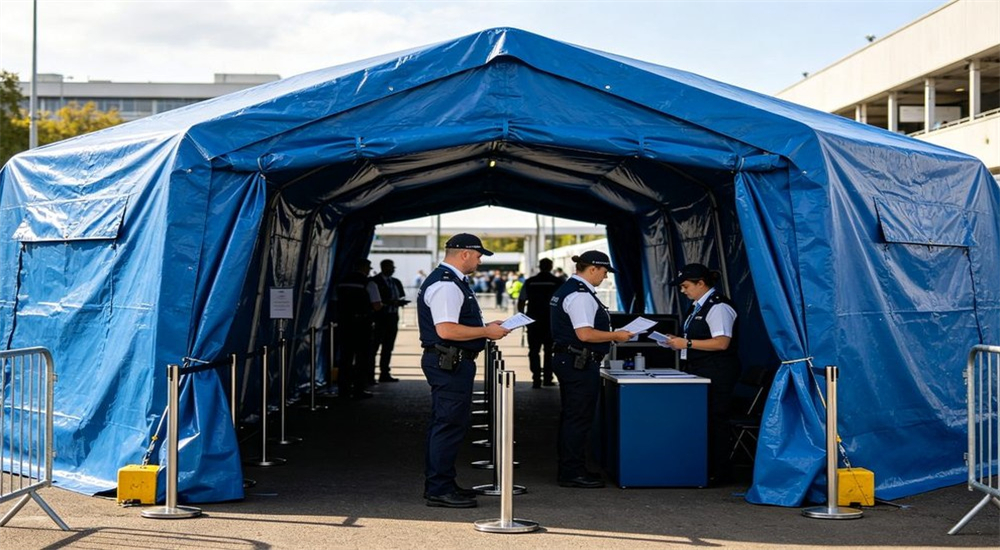
Relief programs rarely need emergency shelter tents alone; relief tents wholesale buyers usually plan several complementary lines at once. These product lines are produced in the same factory and can be consolidated into one shipment.
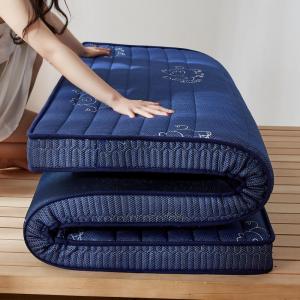
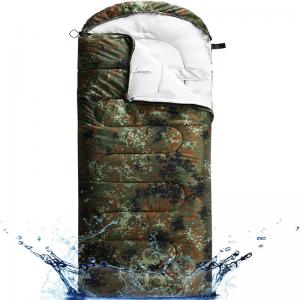
Emergency blankets and sleeping bags for cold-season camps, stretchers and first aid equipment for field clinics, water purification supplies, and disaster relief equipment supplier kits combining tarpaulin, ropes and fasteners are all available. Bundling products in one container reduces freight cost and simplifies customs paperwork.
If your program also needs garments, we supply protective coveralls, rainwear and cold-weather clothing from our textile lines. Ask for the combined catalog to plan a single consolidated order.
Shelter programs coordinated with agencies like UNHCR Emergency Handbook often require standard family kits that are simple to distribute. Our emergency shelter kit, containing one tent, ground sheet, pegs, ropes and a repair kit in a single carton, is built exactly for that workflow and can be branded with the program name.
Consolidated shipments match delivery calendars: stock items release first while custom lines follow later, keeping the camp operational from day one without waiting for the full catalog. A combined packing list speeds customs clearance in most destinations.
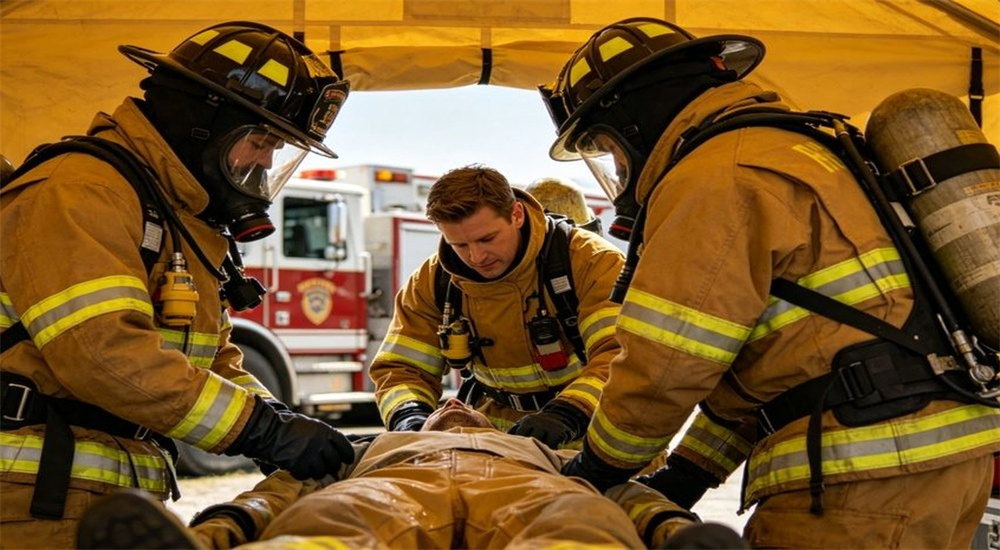
Clear trade terms protect both sides, especially on first orders. Our standard terms are simple and negotiable for long-term programs.
Term
Standard
Notes
Payment
30% deposit / 70% balance
Balance against B/L copy or before shipment
MOQ
Confirmed per contract
Lower for stock samples
Incoterm
FOB / CIF / DDP
Locked at ordering stage
Lead time
Stock items ship faster
Custom print confirmed at ordering
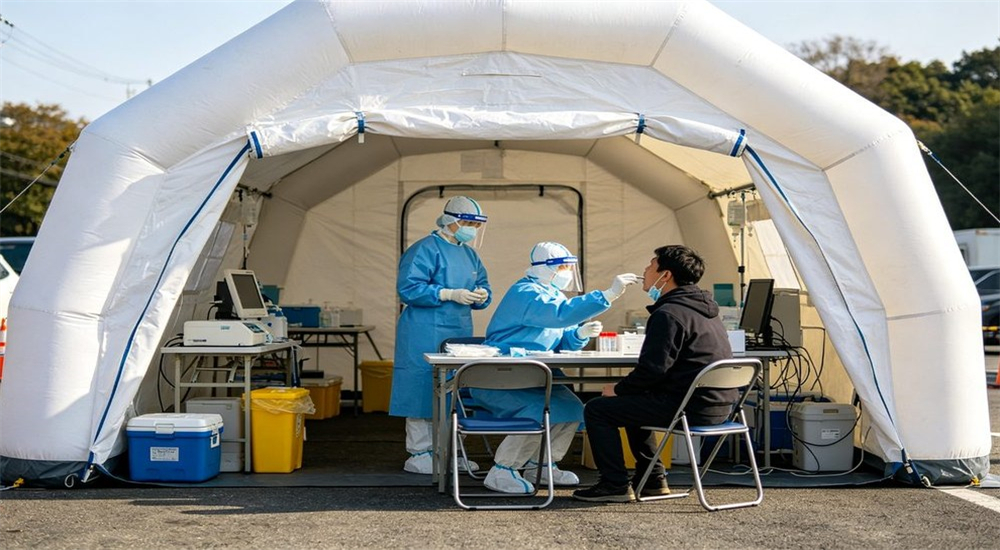
For government tenders and NGO framework contracts, we accept L/C at sight and can structure phased delivery against milestones. Emergency tents supplier credit terms for repeat buyers are reviewed per account.
All quotes include the product, standard packaging and agreed Incoterm. Freight, insurance, third-party inspection and special printing are itemized separately, so the final landed cost is fully visible before you sign.
For framework contracts and repeat programs, we maintain a fixed price list for standard models within the validity period, so budget planning is stable. Price adjustments, when raw material costs move significantly, are communicated in writing before any new order is placed.
For buyers with budget approval cycles, we issue a proforma invoice with a validity period so the amount is fixed for planning. Deposit terms, currency and banking details are confirmed with the order, and all payment correspondence is kept on record for audit.
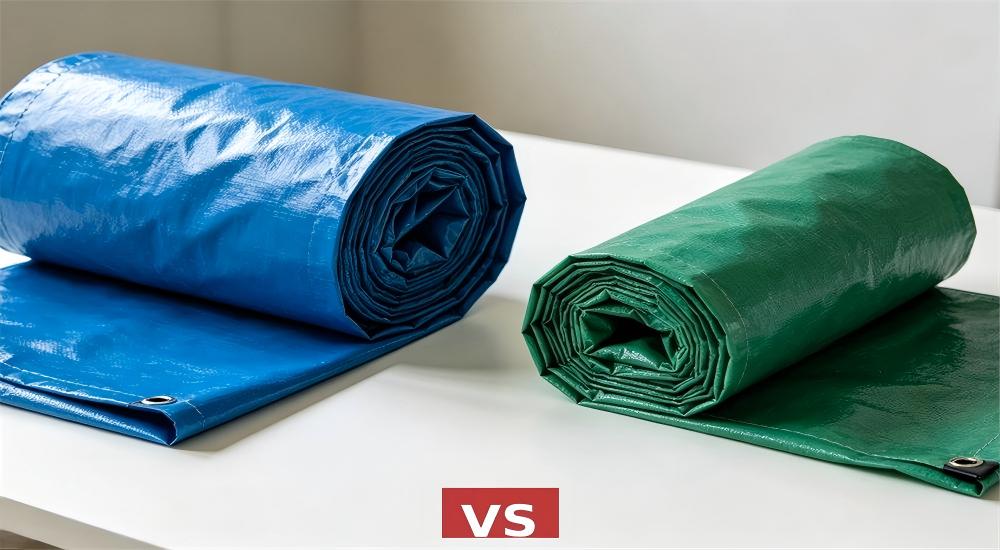
Relief tents work hard in the field, so after-sales support matters as much as the initial price. Our support system is built around three layers.
Warranty. Manufacturing defects in fabric, seams and frames are covered per the warranty confirmed in the contract, typically 12 months from shipment. Damage from misuse, storms beyond design limits or improper storage is excluded but supported with paid spare parts.
Spare parts. Poles, beams, valves, zippers, patches and ropes are stocked for every active model. A tent repair kit ordered with the tents covers most field damage, and spare kits can be reordered at any time.
Technical support. Our export team answers setup questions, provides replacement instructions and can advise on anchoring, climate adaptation and camp layout. For large programs, video support and site guidance documents are provided free of charge.
Long-term programs receive a simple reorder process: your model list and specifications are archived, so repeat orders are confirmed faster with consistent quality. This continuity is why many disaster relief tents wholesale buyers return season after season.
Field training is available on request: our export team provides a short video guide covering setup, anchoring, packing and maintenance for your specific models, free of charge with bulk orders. This reduces setup errors and extends the life of every tent in the field.
Every carton includes a printed setup and care card, and the same instructions are provided as PDF for reproduction. For multi-camp programs, we share a simple maintenance log template so site teams can track repairs and spare usage across locations; reorder lists can be generated from the same template, making repeat seasons faster.
Manufactured in China | MOQ, lead time and Incoterm confirmed per contract
Дружественные ссылки :
авторское право © Custom Disaster - Relief Bedding: Tents, Sleeping Bags, Blankets Все права защищены
профессиональная команда для обслуживания !